
Manufactured Home vs Site Built: Cost Comparison
Table of Contents
- Manufactured Home vs Site Built: The Core Cost Difference
- Cost Per Square Foot: Manufactured vs Site Built Breakdown
- Construction Timeline and Labor Cost Impact
- Financing a Manufactured Home vs Traditional Mortgage
- Manufactured Home Customization Options and Cost Implications
- Hidden Costs and Total Cost of Ownership Over 10-20 Years
- Resale Value, Appreciation, and Long-Term Investment Potential
- Which Option Fits Your Budget and Lifestyle
- Frequently Asked Questions
Last Updated: September 20, 2026
Manufactured Home vs Site Built: The Core Cost Difference
A manufactured home vs site built cost comparison reveals a fundamental difference: manufactured homes typically cost less upfront, but total cost of ownership is more nuanced than the initial sticker price.
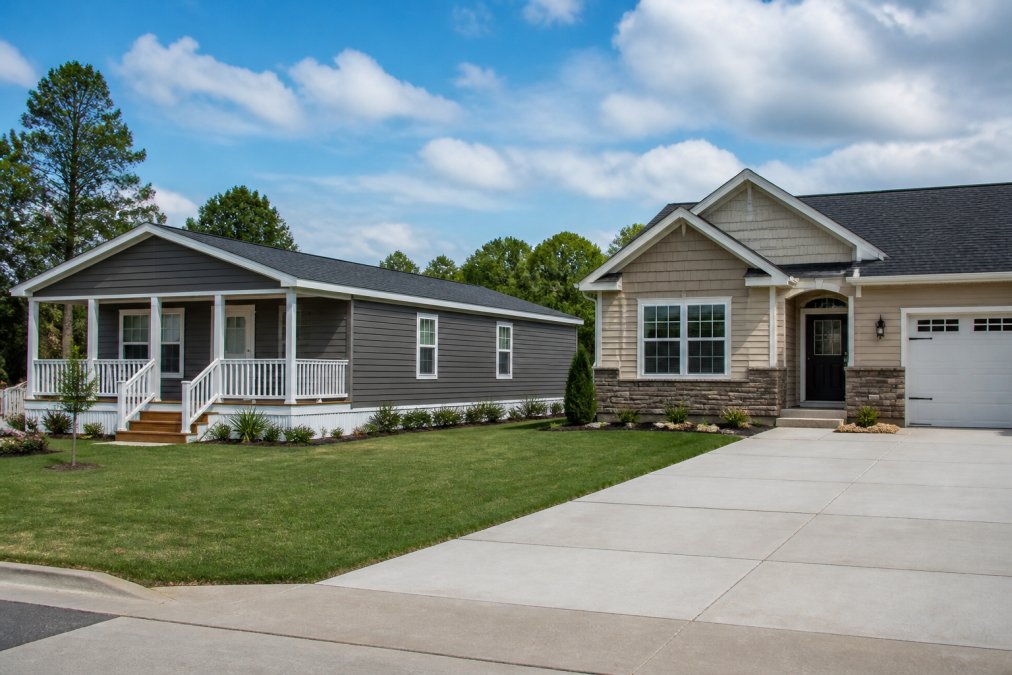
Manufactured homes are factory-built and transported to your lot; site-built homes are constructed on-site. Factory production reduces labor costs and material waste, making manufactured homes typically 20-40% cheaper per square foot.
The difference extends beyond purchase price: financing, appreciation, and ongoing costs vary significantly. We help buyers understand total value, not just the headline number.
Cost Per Square Foot: Manufactured vs Site Built Breakdown
Manufactured homes typically cost less per square foot than site-built homes, depending on location and finishes.
Factory construction achieves efficiency through repetition, bulk material ordering, and minimal waste. Weather doesn’t halt production.
Site-built construction involves sequential trades, weather delays, and subcontractor coordination, increasing time and cost.
Manufactured homes offer customization through available options; site-built homes allow unlimited modifications, driving costs higher.
Construction Timeline and Labor Cost Impact
Manufactured homes generally have a shorter construction timeline from order to move-in compared to site-built homes.
Shorter construction reduces carrying costs, every month of land financing or double rent adds up. Manufactured homes compress this timeline significantly.
Labor costs are the biggest variable in site-built construction. Sequential trades, coordination failures, and weather delays compound costs.
Manufactured homes handle structural assembly, electrical, and plumbing in the factory. On-site labor focuses on foundation, utilities, and final assembly, reducing total labor hours.
Financing a Manufactured Home vs Traditional Mortgage
Financing is where manufactured homes face their steepest hurdle. The gap isn’t just interest rates, it’s loan structure, approval criteria, down payments, and long-term payment impact.
Chattel Loans: The Default Manufactured Home Path
Without land ownership or a permanent foundation, you’ll typically use a chattel loan, treating the home as personal property rather than real estate.
- Interest rates: Chattel loans typically range from 8% to 13%, compared to 6% to 8% for traditional mortgages. That 2-5 percentage point spread compounds significantly over the life of the loan.
- Loan terms: Chattel loans max out at 15-20 years, rarely 25 years. Traditional mortgages run 30 years. Shorter terms mean higher monthly payments on the same principal.
- Down payment: Lenders typically require 10-20% down for chattel loans, versus 3-10% for mortgages. A $150,000 manufactured home requires $15,000-$30,000 upfront, a real barrier for first-time buyers.
- Credit requirements: Chattel lenders are stricter. A credit score below 650 may disqualify you entirely. Mortgage lenders work with scores in the 580-620 range, especially for first-time buyers.
- Approval timeline: Chattel loans close in 2-4 weeks. Mortgages take 30-45 days. Speed matters if you’re trying to move quickly, but it also reflects less rigorous underwriting.
Real Payment Impact
The monthly payment and total cost over the loan’s life can vary significantly depending on the loan type, interest rate, and term.
This is why financing structure matters more than the home’s purchase price.
Manufactured Home Mortgages: A Growing Alternative
Some lenders now offer manufactured home mortgages with longer terms and competitive rates. These often require:
- The home placed on a permanent foundation (concrete pad, piers, or full basement)
- The land owned free and clear, or financed separately
- The home titled as real property, not personal property
- A credit score typically above 640
Lenders offering these products include some credit unions, portfolio lenders, and specialty manufactured home lenders. The approval process is longer (45-60 days) but the terms are substantially better.
Land Financing Adds Another Layer
Land loans are harder to obtain than home mortgages. They typically require:
- A significant down payment
- Shorter terms compared to traditional mortgages
- Potentially higher interest rates than traditional mortgages
- Proof of a construction plan or home purchase agreement
The Financing Advantage of Site-Built Homes
Shopping Strategy
Manufactured Home Customization Options and Cost Implications
Manufactured homes do offer customization, it happens before construction, not after.
Hidden Costs and Total Cost of Ownership Over 10-20 Years
Total cost of ownership (TCO) over 10-20 years includes site prep, utilities, insurance, taxes, maintenance, repairs, and financing interest. Hidden costs can erase the manufactured home advantage.
Site Preparation and Foundation: The Biggest Variable
A manufactured home requires a level, stable foundation:
- Concrete pad: A concrete pad requires excavation, grading, and concrete work.
- Piers and blocks: Concrete piers or adjustable blocks cost $2,000-$6,000. Faster than a pad, but requires careful leveling. Timeline: 3-5 days.
- Full basement or crawlspace: A permanent foundation with basement costs $15,000-$30,000+. Adds usable space and resale value, but requires excavation and concrete work. Timeline: 4-8 weeks.
Soil conditions can dramatically impact foundation costs.
Utility Connections: Water, Sewer, Electric
- Municipal water and sewer: If available, connection costs $1,000-$3,000 per utility. You’re paying for line extension and hookup labor.
- Well and septic: If municipal utilities aren’t available, a well costs $3,000-$8,000 and a septic system costs $4,000-$15,000. Septic systems require soil testing (percolation test, $300-$500) and permitting. In some regions, septic systems are restricted or prohibited entirely.
- Electric: Connection to the grid costs $500-$2,000 if the line is nearby. If you need a new transformer or long-distance extension, costs spike to $5,000-$15,000+.
- Gas: If available, natural gas connection costs $500-$2,000. Propane tanks (if no natural gas) cost $1,000-$2,000 installed.
Grading, Driveway, and Site Work
- Driveway: A gravel driveway costs $500-$1,500. Asphalt costs $2,000-$5,000. Concrete costs $3,000-$8,000. Manufactured homes often sit on smaller lots with shorter driveways, reducing costs.
- Grading and drainage: Sloping the lot away from the foundation costs $500-$2,000. Poor drainage can lead to foundation problems, so this isn’t optional.
- Clearing and site prep: Removing trees, brush, or debris costs $500-$3,000 depending on lot condition.
Insurance: Lower Premiums, But With Caveats
Manufactured homes can often be less expensive to insure:
- Manufactured home insurance: $800-$1,400 per year for a $150,000 home.
- Site-built home insurance: $1,200-$2,000 per year for a $200,000 home.
Property Taxes: The Classification Problem
-
Real property: Taxed like any house, typically 0.5-1.5% of assessed value annually. A $150,000 home costs $750-$2,250 per year.
-
Personal property: Taxed like a vehicle, sometimes at higher rates. A $150,000 home might be taxed at 1-2% annually, or $1,500-$3,000 per year.
-
Whether the home is on a permanent foundation
-
Whether the land is owned or leased
-
Local county or state law
-
How the home is financed and titled
Maintenance and Repairs: Quality Control vs. Specialized Parts
- Specialized parts: HUD-code-compliant windows, doors, and siding are harder to source than standard parts. Replacement costs 10-30% more than standard equivalents.
- Roof life: Manufactured home roofs (typically asphalt shingles) last 15-20 years. Replacement costs $3,000-$6,000. Site-built roofs are similar.
- HVAC systems: Manufactured homes often use smaller, less robust HVAC systems. Replacement costs $2,500-$5,000. Site-built homes often have larger systems costing $4,000-$8,000.
- Plumbing and electrical: Simpler systems in manufactured homes mean fewer problems but less redundancy. A single failure can be more disruptive.
Total Cost of Ownership: A 20-Year Calculation
Manufactured Home on Permanent Foundation:
- Purchase price: $150,000
- Foundation and site prep: $8,000
- Utility connections: $4,000
- Driveway and grading: $2,000
- Financing interest (chattel loan, 10%, 15 years): $89,000
- Insurance (20 years): $20,000
- Property taxes (real property, 1%, 20 years): $30,000
- Maintenance and repairs (20 years): $8,000
- Total 20-year cost: Varies significantly
Site-Built Home on Comparable Lot:
- Purchase price: $250,000
- Foundation (included in build): $0
- Utility connections (often included): $0
- Driveway and grading (often included): $0
- Financing interest (mortgage, 7%, 30 years): $165,000
- Insurance (20 years): $32,000
- Property taxes (1%, 20 years): $50,000
- Maintenance and repairs (20 years): $12,000
- Total 20-year cost: Varies significantly
The Regional Reality Check
- High utility costs or septic requirements: Manufactured homes lose advantage
- High personal property taxes: Manufactured homes lose advantage
- Strong appreciation: Site-built homes gain advantage
- Limited site-built inventory: Manufactured homes gain advantage
Resale Value, Appreciation, and Long-Term Investment Potential
A manufactured home on a permanent foundation in a strong market can appreciate like site-built homes. A home on a temporary foundation in a weak market may depreciate.
Which Option Fits Your Budget and Lifestyle
Choose manufactured if you need affordability, faster move-in, factory-controlled quality, and customization without premium costs. Ideal for first-time buyers, retirees, and budget-conscious families.
Frequently Asked Questions
Is a manufactured home significantly cheaper than a site-built home?
Manufactured homes typically cost less per square foot than site-built homes because they’re constructed in a controlled factory environment using assembly-line methods. However, the total cost difference depends on site preparation, foundation type, utility connections, and financing terms. You’ll need to factor in land costs, foundation installation, and regional zoning requirements to compare true total cost of ownership.
What financing options are available for a manufactured home vs traditional mortgage?
Manufactured homes can be financed through chattel loans (personal property loans), traditional mortgages (if built on permanent foundations), or retail installment contracts. Traditional mortgages typically require a permanent foundation and may have longer approval timelines. Chattel loans can work with various credit situations, though terms vary by lender and whether the home sits on owned or leased land.
Do manufactured homes appreciate in value like site-built homes?
Manufactured homes on permanent foundations in owned land appreciate similarly to site-built homes, especially in markets with strong demand. However, homes on leased land or without permanent foundations typically depreciate over time. Resale value depends heavily on location, foundation type, condition, and regional market demand. In Western markets with limited affordable housing, newer manufactured homes with quality construction and customization hold value better than older models.
What hidden costs should I expect with a manufactured home or site-built home?
Manufactured homes incur site preparation, foundation installation, utility connections, and transportation logistics. Site-built homes can face labor cost overruns, permit delays, and change orders. Both require inspections, insurance, property taxes, and HOA fees. Manufactured homes may have higher property tax rates in some regions if classified differently. Budget extra for unexpected site-specific costs like grading, septic systems, or utility line extensions, especially in rural areas.
The manufactured home market offers genuine affordability and quality, but only if you approach it strategically. The difference between a smart purchase and a regrettable one often comes down to understanding financing options, choosing the right foundation type, and getting expert guidance early. Contact Patriot Homes today to explore how a customizable manufactured home can fit your budget and lifestyle without compromise on quality or value.