
Benefits of Modern Manufactured Home Construction
Table of Contents
- What Modern Manufactured Home Construction Actually Means
- HUD Code Manufactured Home Standards and Structural Integrity
- Cost Comparison: Manufactured vs Site-Built Homes
- Energy Efficiency in Manufactured Homes: Lower Monthly Bills
- Customization and Design Flexibility in Modern Manufactured Homes
- Site Preparation, Foundation Options, and Zoning Rules
- Resale Value, Appraisals, and Financing Options
- Frequently Asked Questions
Last Updated: October 4, 2026
What Modern Manufactured Home Construction Actually Means
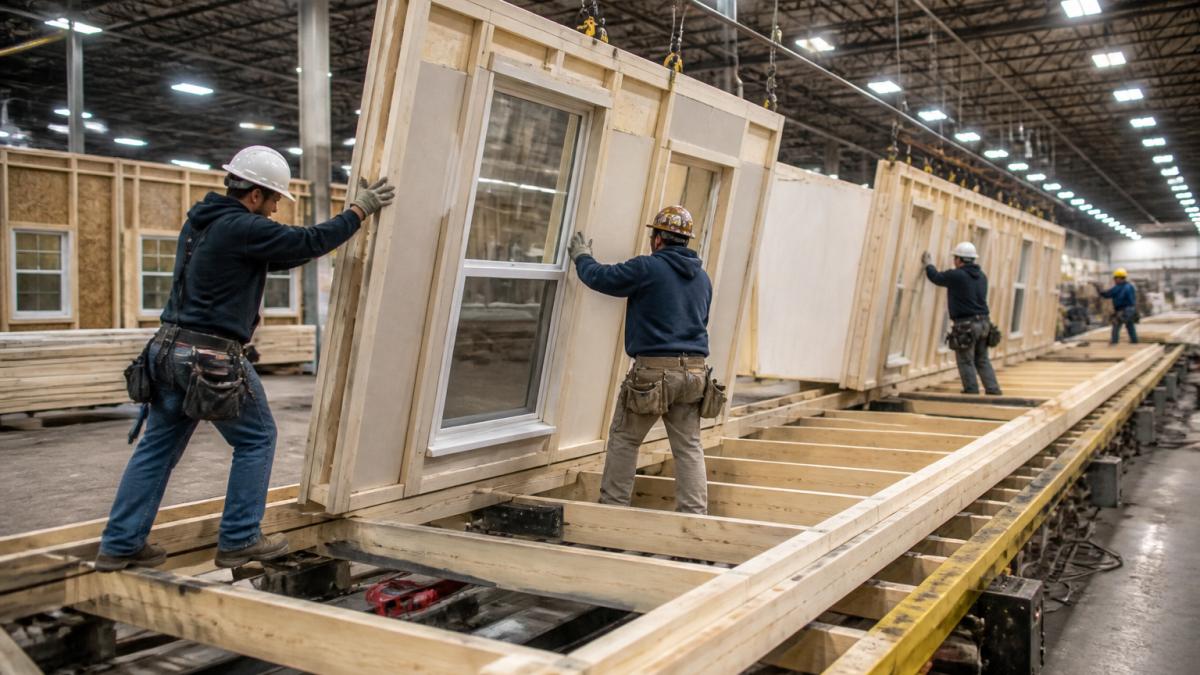
Modern manufactured home construction is the factory-based building method in which a home is assembled from pre-fabricated components on a climate-controlled assembly line, then transported to its permanent site.
Most guides describe manufactured homes as a compromise. They are not, they are a different production model, and that model is where the savings come from.
HUD Code Manufactured Home Standards and Structural Integrity
HUD code manufactured home standards are the federal construction requirements that every manufactured home must meet, covering structural design, fire safety, plumbing, heating, and electrical systems. The code is administered by the U.S.
That enforcement model is the quiet advantage. Inspectors review the home while it is still on the line, before drywall closes over the framing. Site-built homes are inspected in stages on a lot, where weather and scheduling can delay or skip a check.
Structural integrity comes from precision engineering: steel jigs hold walls square, and fasteners are placed to specification rather than by hand-eye judgment. You can read the current requirements through the HUD Manufactured Home Construction and Safety Standards.
Ask for the data plate and the HUD certification label before you sign anything. The label is affixed at the factory and is the document that proves the home was built to code. If a seller cannot produce it, walk away.
Cost Comparison: Manufactured vs Site-Built Homes
A cost comparison manufactured vs site-built comes down to where the labor happens. Factory production removes weather delays, buys materials in bulk, and repeats the same build sequence hundreds of times, so the cost-per-square-foot lands lower than a stick-built home of comparable size.
The savings do not come from thinner walls or cheaper parts, they come from the assembly line.
Where buyers get surprised is the total project cost. The home is one line item; site preparation, foundation, utility connections, delivery, and installation are separate and vary enormously by lot. Most guides stop at the sticker price, which is why the final number so often lands above budget.
| Cost Category | Manufactured | Site-Built |
|---|---|---|
| Home itself | Lower per square foot | Higher per square foot |
| Site preparation | Separate line item | Included in build |
| Foundation | Piers, slabs, or basements | Full poured foundation |
| Delivery and set | Separate line item | Not applicable |
| Weather delays | Minimal | Common |
| Timeline | Weeks, not months | Months |
The line items that decide the real number
The home price is the easy part to quote. The rest of the budget lives in the site work, where two identical homes on two different lots can end up thousands of dollars apart.
- Land. If you do not already own a lot, the land purchase is the largest single line item and it is not part of any home quote. Land in a serviced subdivision is priced very differently from raw acreage outside town.
- Site access and grading. A narrow road, a steep slope, or a lot without a cleared pad can require excavation, fill dirt, and a crane or larger delivery truck. Each of those is a separate charge.
- Foundation. Pier and anchor systems are the least expensive. A poured slab costs more. A full basement is the most expensive and is often what a lender wants for conventional real-property financing.
- Utility runs. Water, sewer or septic, electrical, and gas each have a connection fee plus a per-foot trenching cost. The farther the home sits from the utility stub, the higher the number.
- Delivery and set. Transport distance, permit escorts, and the set crew are billed separately from the home.
- Permits and inspections. Local fees for the foundation, utility connections, and final inspection are paid by the buyer, not the dealer.
How the two builds compare on financing
A site-built home is usually financed as a single construction-to-permanent loan covering land, labor, and materials. A manufactured home is often financed in pieces: a chattel loan for the home, a separate land loan or cash purchase for the lot, and out-of-pocket site work many lenders will not roll into the home loan. That split is why the manufactured path can feel cheaper on paper and more complicated in practice.
Buyers who already own land, or who buy a land-and-home package from one seller, close with far fewer surprises than those assembling the pieces themselves.
Pricing for any specific model depends on size, options, and delivery distance, so check our current pricing page for exact figures.
Ask for a written, itemized quote that lists the home, delivery, set, foundation, and utility connections as separate lines. A single bundled number hides the site costs that blow up budgets.
Energy Efficiency in Manufactured Homes: Lower Monthly Bills
Energy efficiency in manufactured homes has improved sharply because the same federal code that governs structure also governs thermal performance. Insulation, window ratings, and HVAC efficiency are all specified.
That tightness matters more than the insulation number alone.
Practical steps that lower the bill further:
- Specify energy-efficient appliances at order time, not after delivery
- Ask about the HVAC efficiency rating and confirm it suits your climate zone
- Choose a foundation type that keeps the underside of the home protected
- Confirm the home’s thermal performance documentation before installation
Do not assume a manufactured home is cheap to cool just because it is smaller. A poorly sited home with unshaded west-facing windows in a desert climate will run high cooling costs regardless of how it was built. Orientation and shading are decided at the lot, not the factory.
Customization and Design Flexibility in Modern Manufactured Homes
Customization in a modern manufactured home is built into the ordering process rather than added afterward. Buyers select bedroom and bathroom counts, then finishes, cabinetry, flooring, and layout variations before production begins.
Modern aesthetics have moved a long way from the boxy look people remember: open floor plans, vaulted ceilings, kitchen islands, and full-size primary suites are standard options across most model lines.
The question we hear most is whether options will blow up the budget.
Customizable floor plans generally fall into three tiers:
- Cosmetic changes: flooring, paint, countertops, cabinet hardware
- Layout changes: wall positions, door swings, room proportions within the existing footprint
- Structural changes: added bedrooms, expanded kitchens, additional bathrooms
If budget is the priority, spend on layout and leave finishes for later. Finishes are easy to upgrade in a manufactured home because the walls and floors are accessible.
Site Preparation, Foundation Options, and Zoning Rules
Site preparation and foundation requirements are where a manufactured home project is won or lost, and the part most buyers underestimate. The home cannot be delivered until the lot is graded, the foundation is set, and utility runs are stubbed in.
Foundation types include pier and anchor systems, poured concrete slabs, and full basements.
Zoning is the other gate. Local rules govern minimum lot size, setbacks, permanent-foundation requirements, and sometimes whether manufactured housing is permitted at all. Confirm requirements with your county planning office before committing to a lot.
Checklist before you order:
- Confirm the lot is zoned for manufactured housing
- Verify minimum square footage and setback rules
- Get soil and grading assessed
- Choose a foundation type that satisfies your lender
- Confirm utility hookup costs and distances
- Obtain required permits before delivery day
If you already own land in Arizona, California, Idaho, or Nevada, we can work with your existing lot.
Resale Value, Appraisals, and Financing Options
Resale value separates today’s manufactured homes from the trailers people remember, and the answer hinges on how the home is titled and sited. A manufactured home on owned land with a permanent foundation is generally treated as real property, so it can appreciate with the surrounding market and qualify for standard mortgage financing.
A manufactured home on rented land, or one still titled as personal property, is financed more like a vehicle and depreciates more like one. That distinction drives most of the value conversation.
Why most guides get the appreciation question wrong
Most articles stop at ‘manufactured homes depreciate.’ That is only true for homes titled as personal property on leased land. Once converted to real property, a manufactured home is appraised and sold on the same footing as a site-built home of similar size and condition in the same neighborhood, tracking the local market rather than a depreciation curve.
The conversion is the whole game. To move a home from personal property to real property, most lenders and jurisdictions expect three things to line up:
- The home sits on land you own, or land included in the same transaction
- It is installed on a permanent foundation that meets the lender’s or the applicable standard
- The title is retired and the home is recorded as part of the real estate
Get those three right and the resale conversation changes completely. Miss any one of them and the home stays in the chattel market, where buyers are fewer, terms are shorter, and values are compared against other chattel homes rather than the neighborhood.
How appraisals actually work
Lenders order an appraisal, and the appraiser compares your home to similar manufactured homes in the area that are also on permanent foundations and owned land. Comparable sales matter more than the original purchase price, and appraisers typically weight three factors most heavily:
- Whether the comparables are also real-property manufactured homes, not chattel
- The age and condition of the home relative to those comparables
- The land value underneath it, which often carries more of the total appraisal than the structure itself
This is why two identical homes in the same model line can appraise very differently. The land, the foundation, and the title do more work than the floor plan.
Financing options to expect
- Conventional mortgages for real-property manufactured homes
- FHA and VA programs, which have specific foundation and titling requirements
- Chattel loans for homes that remain personal property
- Land-and-home packages when you are buying both together
What supports resale over time
- Real-property titling. The single biggest driver of resale value.
- Permanent foundation. Required for most conventional financing and for real-property classification.
- Owned land. Removes the lease risk that suppresses chattel values.
- Transferable warranty. Confirm what transfers and for how long before you list; a remaining structural warranty is a selling point.
- Documentation. Keep the data plate, HUD certification label, foundation engineering, and permit records together. Buyers and appraisers ask for them.
- Maintenance history. A well-kept home appraises against well-kept comparables, not against the model line’s average.
The value of a manufactured home is set less by the factory and more by the land, the foundation, and the title. Get those three right and the resale conversation changes completely.
Documentation matters here too. The Consumer Financial Protection Bureau’s home loan toolkit explains how lenders assess property type and what disclosures you are entitled to. For construction and installation standards, the International Code Council publishes the model codes many jurisdictions adopt for on-site work. Buyers pursuing efficiency incentives can review ENERGY STAR certified homes for program details.
Frequently Asked Questions
What are the primary benefits of modern manufactured home construction?
Modern manufactured homes are built in climate-controlled factories, which protects materials from weather damage and allows precision engineering. They follow HUD code standards for safety and durability, cost less per square foot than site-built homes, and often include energy-efficient appliances and better insulation. Buyers also get faster installation timelines, customizable floor plans, and lower long-term maintenance costs compared to traditional stick-built construction.
How does the HUD code ensure quality in manufactured homes?
The HUD code sets federal construction and safety standards for manufactured homes, covering structural integrity, electrical systems, plumbing, heating, and fire safety. Every home receives a certification label after passing inspection. These standards apply regardless of where the home is installed, giving buyers consistent quality whether the home goes on a permanent foundation or a pier-and-beam setup.
Are modern manufactured homes energy efficient?
Yes. Modern manufactured homes often include energy-efficient appliances, tighter building envelopes, and improved insulation efficiency. Factory construction reduces air leaks because panels are cut and fitted precisely. Many homes meet or exceed Energy Star requirements, which can lower monthly HVAC costs. Thermal performance varies by model and climate zone, so check the home’s energy rating before buying.
Do manufactured homes hold their value or depreciate like a trailer?
Modern manufactured homes can appreciate in value when they are placed on owned land with a permanent foundation and maintained well. Appraisals treat them more like site-built homes in those cases. Homes on leased land or without permanent foundations tend to depreciate faster. Financing options, local zoning regulations, and resale value depend heavily on land ownership and installation type.