
Manufactured Homes Sacramento: A Complete Buying Guide
Table of Contents
- What Manufactured Homes in Sacramento Offer
- Manufactured Home Prices in California: What to Expect
- Exploring Manufactured Home Floor Plans and Customization
- Manufactured Homes vs. Modular Homes: Key Differences
- Your Manufactured Home Buying Checklist
- California Permits, Zoning, and Installation Requirements
- Financing Your Manufactured Home Purchase
- Total Cost of Ownership Beyond the Purchase Price
- Frequently Asked Questions
Last Updated: October 8, 2026
What Manufactured Homes in Sacramento Offer
Manufactured homes Sacramento offers residents an accessible path to homeownership without sacrificing quality or customization. Unlike site-built homes with lengthy timelines, they arrive largely complete, with options to personalize bedrooms, bathrooms, floor plans, and finishes. At Patriot Homes, we know finding the right home means balancing budget, design, and lifestyle, which is why manufactured homes have grown popular across California and the broader Western region.
These homes offer flexibility traditional construction often cannot: choose your floor plan, bedrooms, bathrooms, and finishes. Factory-based quality control also means consistent build standards and faster completion.
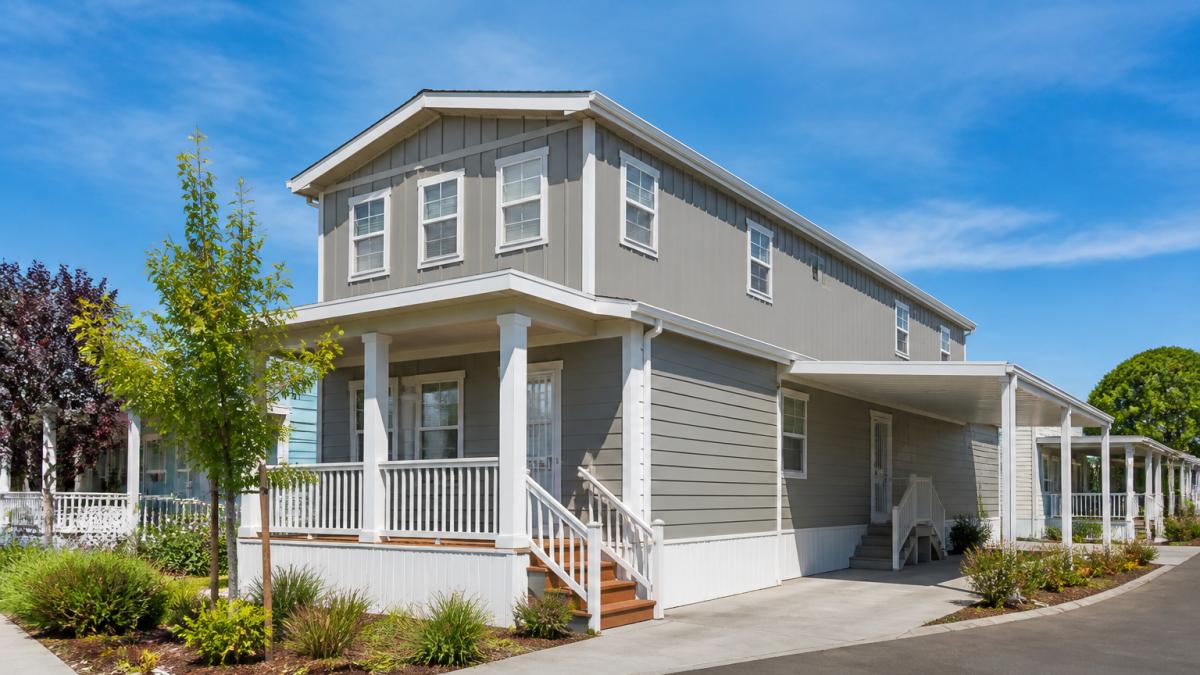
What buyers appreciate most is the value: manufactured homes typically cost less per square foot than comparable site-built homes, making homeownership achievable for first-time buyers, retirees, and families on tight budgets. Whether downsizing or building on land you own, they deliver practical solutions without the premium price tag.
Manufactured Home Prices in California: What to Expect
Understanding pricing is essential before purchasing manufactured homes Sacramento or elsewhere in the state. Costs vary by size, customization level, location, and whether you buy existing or order new. In California, prices reflect regional demand, lot availability, and installation complexity, factors that differ between Sacramento and other markets.
New manufactured homes generally start lower than site-built equivalents, though final pricing depends on your selections: floor plan size, bedrooms and bathrooms, upgrades, and finishes. Installation, foundation work, utility connections, and permitting, adds to your total investment and varies by property.
A common mistake is underestimating total cost of ownership. Beyond the purchase price, budget for lot rent (in a community), property taxes, insurance, maintenance, and utilities. Owning your land avoids lot rent but may mean higher upfront site preparation costs. For specific pricing and financing options, Patriot Homes provides transparent quotes tailored to your specifications and location.
Exploring Manufactured Home Floor Plans and Customization
Floor plans form the foundation of your decision. Designs range from compact one-bedroom layouts to spacious three-bedroom, two-bathroom configurations for families, each balancing livable square footage with practical functionality.
Customization is where manufactured homes shine. You’re not locked into one layout: select finishes, upgrade appliances, choose flooring, and adjust interior configurations within your floor plan’s parameters. This personalization, a Patriot Homes specialty, means your home reflects your tastes rather than a pre-built standard.
Square footage affects usability and resale potential: a 1,200 square-foot home suits different needs than a 2,000 square-foot model. Review floor plans carefully, traffic flow, bedroom placement, kitchen layout, outdoor space. Many buyers find thoughtfully designed smaller homes function better than poorly laid out larger ones.
Manufactured Homes vs. Modular Homes: Key Differences
The distinction between manufactured and modular homes confuses many buyers, yet it shapes your decision. Both are factory-built but follow different regulatory frameworks.
Manufactured homes are built to the Federal Manufactured Housing Construction and Safety Standards (HUD Code) and transported to your site on a permanent chassis (the frame and wheels remain part of the structure), meeting safety and construction requirements set by HUD.
Modular homes are built in sections, transported to your site, and assembled on a permanent foundation. They follow state and local building codes rather than federal HUD standards and sit on a traditional foundation without a chassis.
The practical difference: manufactured homes cost less and deploy faster, ideal for budget-conscious buyers. Modular homes command higher prices but may appreciate differently and face fewer zoning restrictions in some areas. Both deliver quality construction and customization, let your location, budget, and long-term plans guide the choice.
| Feature | Manufactured Homes | Modular Homes |
|---|---|---|
| Regulatory Standard | HUD Code (Federal) | State/Local Building Codes |
| Foundation | Permanent Chassis | Traditional Foundation |
| Typical Cost | Lower | Higher |
| Customization | Extensive | Extensive |
| Resale Considerations | Community-dependent | Similar to site-built homes |
| Zoning Restrictions | Varies by area | Generally fewer restrictions |
Your Manufactured Home Buying Checklist
Purchasing a manufactured home requires the same diligence as any major real estate transaction. Before committing, verify the home meets your needs and that you understand all costs and obligations.
Pre-Purchase Steps:
- Identify your budget, including down payment and monthly payment capacity
- Research zoning laws and community regulations in your desired location
- Get pre-qualified for financing to understand your borrowing power
- Review available floor plans and customization options
- Request detailed specifications and photos of model homes
- Verify the dealer’s reputation and customer support availability
Inspection and Documentation:
- Hire an independent inspector familiar with manufactured homes
- Review the manufacturer’s warranty and coverage details
- Confirm all promised customizations are documented in writing
- Verify that the home meets all California safety and environmental standards
- Check for any liens or title issues before purchase
Closing Preparation:
- Review the purchase agreement line-by-line
- Confirm all costs, including delivery, installation, and permits
- Arrange homeowners insurance before closing
- Schedule final walkthrough to verify customizations match your order
- Ensure all documents are signed and filed properly
California Permits, Zoning, and Installation Requirements
Most listing pages stop at the home itself. What actually determines whether your purchase closes on time is the local approval chain, where buyers lose weeks. Here is the sequence and documents involved.
Step 1: Confirm zoning allows a manufactured home on the parcel.
A HUD-code manufactured home is a distinct legal category from a site-built home, and local zoning ordinances treat it differently.
HUD Manufactured Housing program overview
Step 2: Pull the right permits.
A typical installation on private land requires several separate permits, often issued by different departments:
- Building permit for the foundation or pier system
- Electrical permit for the service connection and panel
- Plumbing permit for water and sewer or septic tie-in
- Mechanical permit if you are adding HVAC or gas lines
- Grading or encroachment permit if the site needs earthwork or a driveway approach
- Final occupancy or certificate of compliance before you can legally live in the home
Your dealer or installer usually pulls these, but the permit holder of record is often the property owner. Read the contract to see who is named.
Step 3: Meet foundation and installation standards.
A manufactured home must be supported by an approved foundation system: a concrete pier and pad system, a perimeter stem wall, or a full slab.
Step 4: Plan for the timeline.
Permit review times vary widely: some rural counties issue building permits in weeks, while urban planning departments may take months for a conditional use or design review.
Do not order a home or pay a deposit before you have written confirmation that the parcel is zoned for a manufactured home and that your intended foundation type is acceptable. Reversing a deposit after a zoning denial is difficult and expensive.
Step 5: Know the difference between a HUD-code home and a state-code home.
HUD-code homes carry a data plate and certification label. If a home predates current HUD standards or has been substantially altered, some jurisdictions require an inspection or state insignia before issuing an occupancy permit.
The zoning letter, the permit set, and the foundation approval are the three documents that decide your timeline. Get all three in writing before you commit to a delivery date.
Financing Your Manufactured Home Purchase
Financing is where manufactured homes diverge most sharply from site-built homes. The key variable isn’t the home, it’s whether the land is owned or leased, and whether the home is classified as real or personal property.
Real property vs. personal property.
A manufactured home is treated as personal property (chattel) unless permanently affixed to land you own and the title is converted under state law. That classification drives everything:
- Real property (home on owned land, affixed, title converted): eligible for conventional, FHA, VA, and USDA mortgage programs, with terms comparable to site-built homes.
- Personal property (home on leased land, or not affixed): financed with a chattel loan, which typically carries a higher interest rate and a shorter term.
If you own the land and plan to stay, converting the home to real property is usually worth the paperwork. It opens the door to lower rates and standard mortgage products.
Loan paths, side by side.
| Path | Land | Typical term | Notes |
|---|---|---|---|
| Conventional mortgage | Owned | 15-30 years | Requires affixed home and converted title |
| FHA Title II | Owned | Up to 30 years | Government-insured; property must meet FHA standards |
| VA | Owned | Up to 30 years | For eligible veterans and service members |
| USDA | Owned, rural | Up to 30 years | Income and location limits apply |
| FHA Title I | Owned or leased | Up to 20 years | Smaller loan amounts; personal property allowed |
| Chattel loan | Leased or owned | 15-20 years | Higher rate; faster approval; less documentation |
FHA manufactured home loan programs
Down payment and credit.
Down payment expectations vary by program: government-backed loans often allow lower down payments than conventional, while chattel loans frequently require more down because the collateral depreciates faster than land. Credit thresholds differ too, conventional and government programs expect stronger credit, while chattel lenders may accept a wider range at a higher rate.
What to ask every lender.
- Is this a real property loan or a chattel loan?
- What is the interest rate, and is it fixed or adjustable?
- What is the term, and is there a prepayment penalty?
- Does the loan cover delivery, installation, and site work, or only the home?
- What happens if the home is not affixed by the closing date?
A note on total cost.
A half-point rate difference on a 20-year loan changes your total by thousands. Because chattel loans and mortgages aren’t directly comparable, ask each lender for the total of payments over the loan’s life, not just the monthly figure, that single number makes the comparison honest.
If you are buying in a community on leased land, ask whether the community or an affiliated lender offers financing, and read the lot lease carefully. Financing terms and lease terms are separate contracts, and one can outlast the other.
Total Cost of Ownership Beyond the Purchase Price
The purchase price is only one component of manufactured home ownership. True affordability requires accounting for all ongoing costs.
Lot Rent and Community Fees:
If you place your home in a manufactured community, expect monthly lot rent based on location and amenities, plus possible fees for trash, water, or amenities.
Property Taxes:
Manufactured homes on land you own face property taxes similar to site-built homes; homes in communities may have different tax treatment depending on local assessment practices.
Insurance:
Manufactured home insurance costs less than site-built coverage but more than renters insurance. Premiums depend on the home’s age, condition, location, and coverage limits.
Maintenance and Repairs:
Manufactured homes require regular maintenance: roof inspection, seal checking around windows and doors, HVAC servicing, and appliance upkeep. Budget annually for preventive maintenance to avoid costly emergency repairs.
Utilities:
Energy costs depend on climate zone, insulation quality, and usage habits.
Your total monthly cost, loan payment, lot rent, taxes, insurance, utilities, and maintenance, should align with your budget.
Finding the right manufactured home means balancing affordability with quality and customization.
Frequently Asked Questions
What is the average cost of a manufactured home in California?
Manufactured home prices in California vary based on size, features, and customization. Pricing depends on the number of bedrooms, bathrooms, square footage, floor plan selections, and finish upgrades you choose. For current pricing on manufactured homes in Sacramento and surrounding areas, visit Patriot Homes’s pricing page or request a personalized quote based on your specific home preferences and budget.
How do manufactured homes differ from modular homes?
Manufactured homes are built entirely in a factory to federal HUD standards, then transported to your site as a complete unit. Modular homes are also factory-built but constructed in sections and assembled on-site to local building codes. Manufactured homes typically cost less and have a faster delivery timeline, while modular homes may offer more customization. Both offer quality construction and affordability compared to traditional site-built homes.
What costs should I consider beyond the home’s purchase price?
Beyond the home itself, budget for land (if you don’t own it), delivery and installation fees, foundation work, permits and inspections, utility connections, and site preparation. In California, you’ll also need to factor in ongoing property taxes, insurance, HOA fees (if in a community), maintenance, and utilities. Some communities include amenities in their fees. Calculating total cost of ownership helps you understand the true investment and monthly affordability of your manufactured home.
Can I place a manufactured home on my own land in Arizona or California?
Yes, you can place a manufactured home on land you own, but you must comply with local zoning laws, building codes, and permit requirements. California requires compliance with state-specific regulations for manufactured home installation. You’ll need to obtain permits from your county or local jurisdiction, arrange for proper foundation installation, and ensure utility connections meet code. Patriot Homes can guide you through the permitting and installation process for your land.