
Affordable Manufactured Homes for Families: 2026 Guide
Table of Contents
- Why Affordable Manufactured Homes Work for Families
- Manufactured Home Floor Plans That Fit Family Needs
- Manufactured Home Prices: What You’ll Actually Pay
- Manufactured Home Financing Options for First-Time Buyers
- Manufactured Home Costs Beyond the Purchase Price
- Quality and Durability: What Makes Homes Last
- How to Start Your Affordable Manufactured Home Search
- Frequently Asked Questions
Last Updated: October 10, 2026
Why Affordable Manufactured Homes Work for Families
Manufactured homes offer a practical pathway to homeownership for families priced out of traditional housing markets. At Patriot Homes, we’ve helped countless families find affordable manufactured homes for families that offer competitive pricing without sacrificing customization.
Beyond lower entry prices, families gain control over design choices, faster construction timelines, and transparent pricing, unlike site-built construction where costs spiral unpredictably.
Affordable manufactured homes deliver real homeownership at a fraction of traditional housing costs, with customization options that let families build exactly what they need.
Manufactured Home Floor Plans That Fit Family Needs
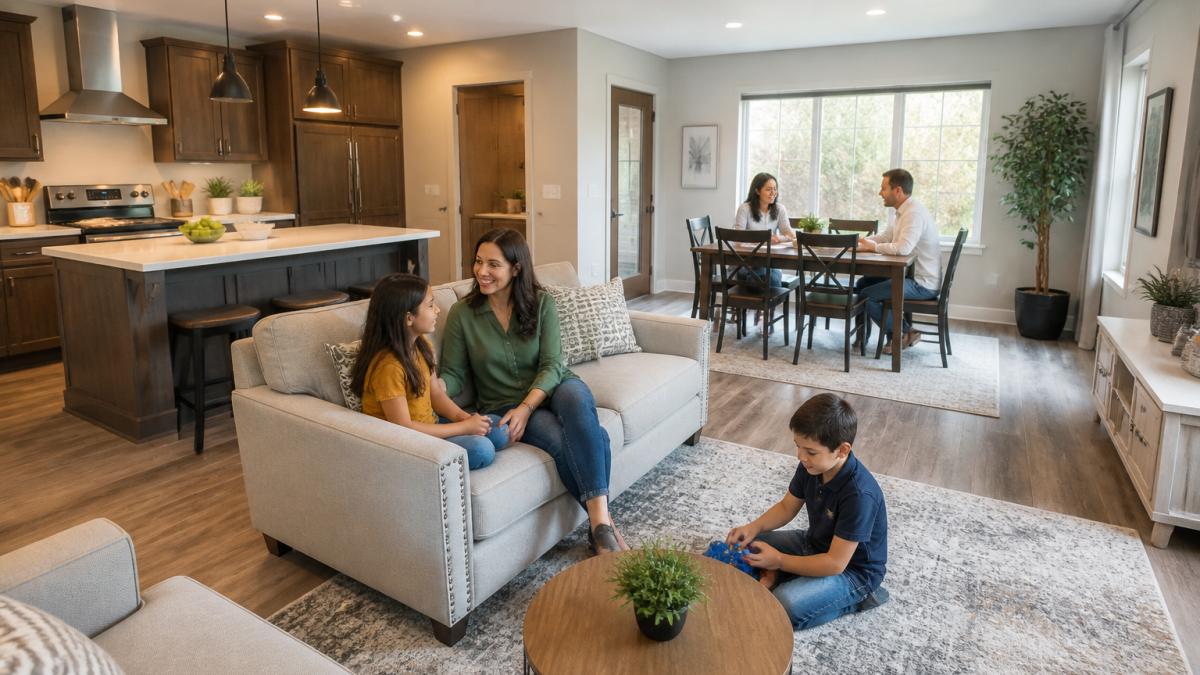
The right manufactured home floor plans determine whether a home feels spacious or functional. When selecting a layout, consider your family’s actual needs: dedicated home office, multiple bathrooms, or open kitchen.
Single-Wide and Double-Wide Layouts
Single-wide homes suit couples and small families; double-wide homes serve growing families while remaining significantly more affordable than comparable site-built homes.
Single-wide homes cost less upfront and require smaller land parcels; double-wide homes offer more room for growing families. Both deliver modern finishes and structural quality.
Customization Options for Your Space
A key advantage is customizing finishes and layouts before delivery. At Patriot Homes, families select bedroom and bathroom counts, flooring, cabinetry, and appliances, reflecting your preferences without custom site-built premiums.
Customization includes upgraded kitchens, flooring, siding colors, larger windows, premium insulation, and bathroom configurations, all selected during manufacturing, not after purchase, keeping costs predictable.
Request a detailed customization menu early in your process. Understanding what’s available before you commit helps you prioritize features that matter most to your family’s daily life.
Manufactured Home Prices: What You’ll Actually Pay
Manufactured home prices vary by size, features, and region, but follow a predictable cost structure tied to square footage and feature selection, unlike opaque site-built pricing.
Base Price by Home Type and Size
Pricing for single-wide homes depends on square footage, customization options, and delivery location. Upgraded kitchens, flooring, and siding will affect the final price.
Pricing for double-wide homes depends on square footage, customization options, and delivery location. Larger models with upgrades will affect the final price. Per-square-foot costs can decrease with size.
How Customization Affects Your Final Price
Customization adds predictable costs for upgraded kitchens, flooring upgrades, and premium siding.
Energy-efficiency upgrades can reduce utility costs.
Compare per-square-foot costs across models rather than absolute price to identify better value.
Regional Price Variations
Regional prices vary due to transportation, demand, and dealer markup. Shipping distance can affect the price. Competitive markets may offer better pricing than limited-inventory areas.
What the Price Does and Doesn’t Include
The home price covers structure, finishes, appliances, and delivery, but not land, site prep, foundation, utilities, permits, or installation. Budget for these to understand true total cost.
Request an itemized quote that separates the home price from delivery, site preparation, and installation costs. This clarity prevents sticker shock and helps you budget for the complete project.
Manufactured Home Financing Options for First-Time Buyers
Manufactured home financing differs from traditional mortgages. Lenders offer multiple pathways for buyers with various credit histories and down payment sizes, each with distinct terms and rates.
Loan Types: Chattel, Mortgage, and FHA-Backed Options
Chattel loans treat the home as personal property, requiring 10-20% down at 7-12% interest with fast approval (5-10 days) and flexible credit (580+). Trade-off: shorter terms (15-20 years) and higher rates than mortgages, but faster move-in.
Mortgage loans apply when you own land or purchase it with the home. Interest rates range 5-8% (credit 640+) over 25-30 years with 10-20% down (some lenders offer 5%). Lower monthly payments than chattel loans but longer approval (20-30 days) and appraisal required.
FHA-backed loans serve first-time buyers with lower credit (580+) and limited savings, requiring 3.5% down at 5.5-7.5% interest. Mortgage insurance (1.75% upfront + 0.5-1.3% annual) increases payments but makes homeownership accessible.
Credit Requirements and Down Payment Scenarios
Credit requirements vary by loan type.
Down payment size directly affects monthly payments. Explore FHA loans or assistance programs rather than stretching for a large down payment.
Monthly Payment Examples Across Loan Types
To illustrate how loan type and terms affect affordability, consider that different loan scenarios will result in varying monthly payments. FHA loans may require less upfront cash, but monthly payments can be higher due to insurance costs. Chattel loans may require a larger down payment. The “best” option depends on your down payment savings, credit score, and whether you own or plan to purchase land.
Working with Lenders Experienced in Manufactured Home Financing
Work with lenders specializing in manufactured housing rather than site-built-only banks. Specialists understand these homes, structure loans appropriately, and have multiple investor relationships for better rates.
Get pre-approval from at least two lenders to lock in rates for 30-60 days and show sellers you’re serious. Compare APR (not just interest rate) to see total borrowing cost including fees and insurance.
Avoid lenders who pressure you to accept the first offer or who are vague about fees and insurance costs. Reputable lenders provide itemized Loan Estimates within three business days of application, as required by the Truth in Lending Act.
Income and Debt-to-Income Ratios
Lenders typically cap housing payments at a percentage of gross income (What is a debt-to-income ratio?). Calculate this before shopping to determine your maximum affordable price.
Your total debt-to-income ratio (all monthly debt payments divided by gross income) also matters (What is a debt-to-income ratio?). Paying down existing debt before applying for a home loan can improve your approval odds and interest rate.
Manufactured Home Costs Beyond the Purchase Price
The total cost of manufactured home ownership extends beyond the purchase price. Understanding these additional expenses prevents surprises and helps you budget realistically. Several costs occur once: land preparation, installation, and permits. Others recur annually: insurance, property taxes, and maintenance.
Insurance and Registration
Manufactured home insurance rates vary by location, home age, and coverage type. Insurance typically covers the structure, contents, and liability. Registration requirements depend on whether the home is classified as real property (with land) or personal property.
Contact your state’s manufactured housing authority for specific registration requirements in your jurisdiction. Some states require annual inspections or recertifications; others have minimal ongoing requirements. Understanding these obligations prevents compliance issues and ensures your home maintains its value and insurability.
Land, Installation, and Setup
If you’re purchasing land separately, that cost is distinct from the home price. If you already own land, installation costs cover site preparation, foundation work, utility connections, and placement. Installation typically ranges based on site complexity: level, prepared ground costs less than sloped terrain requiring extensive grading.
Setup costs also include obtaining permits and inspections required by your county or municipality. These vary widely by location. Some areas have simplified processes for manufactured homes; others treat them more like traditional construction. Budget for these costs upfront rather than discovering them after purchase.
Maintenance and Long-Term Care
Manufactured homes require regular maintenance similar to site-built homes: roof inspection, siding care, HVAC servicing, and plumbing checks. Roofs and exterior siding require maintenance.
Set aside a maintenance reserve fund. This covers unexpected repairs and planned maintenance without straining your monthly budget.
Delaying roof or foundation maintenance can lead to costly structural damage. Inspect your home annually and address issues immediately rather than waiting for problems to compound.
Quality and Durability: What Makes Homes Last
Manufactured homes built to current standards are durable, weather-resistant structures. Federal construction standards (HUD Code) establish minimum requirements for structural integrity, insulation, and safety systems (HUD’s Office of Manufactured Housing Programs). Homes meeting these standards are durable when properly maintained.
Quality varies among manufacturers and models. Premium manufacturers may invest in better materials, superior insulation, and advanced construction techniques. These homes may command higher prices but can offer better energy efficiency and lower utility costs. When evaluating homes, compare insulation values, window quality, roofing materials, and warranty coverage.
How to Start Your Affordable Manufactured Home Search
Beginning your search with clear priorities simplifies the process. Determine your budget, desired square footage, number of bedrooms and bathrooms, and must-have features. Knowing these parameters before contacting dealers prevents wasting time on unsuitable options.
Connect with experienced dealers like Patriot Homes who understand your local market and can guide you through financing, customization, and installation. Our 24/7 support team helps first-time buyers navigate each step, from selecting a floor plan through final delivery and setup. We prioritize transparency about pricing and timelines so you can make confident decisions.
| Step | Focus | Timeline |
|---|---|---|
| Define needs | Budget, size, features | 1-2 weeks |
| Research options | Compare models and dealers | 2-3 weeks |
| Get pre-approved | Financing and loan terms | 1-2 weeks |
| Select home | Choose model and customizations | 2-4 weeks |
| Finalize details | Land, installation, permits | 2-4 weeks |
| Delivery & setup | Installation and move-in | 4-8 weeks |
Finding the right affordable manufactured home requires balancing budget, space needs, and long-term value. Patriot Homes specializes in helping families navigate this process with customizable options, transparent pricing, and expert guidance at every stage. Our team works with buyers across Arizona, California, Idaho, and Nevada to match them with homes that fit their lifestyle and budget. Contact us now to explore how an affordable manufactured home can give your family the stability and pride of homeownership without the financial strain of traditional housing markets.
Frequently Asked Questions
What is the typical price range for affordable manufactured homes for families?
Affordable manufactured homes start well below traditional site-built homes, with models available across a wide range of budgets. Pricing depends on square footage, customization options, and delivery location. For current pricing and specific models available in your area, visit Patriot Homes’ pricing page or contact their 24/7 team for a personalized quote based on your family’s needs and budget.
What manufactured home floor plans work best for families with children?
Family-friendly manufactured home floor plans typically feature 3-4 bedrooms, 2 bathrooms, and open-concept living areas for supervision and connection. Double-wide models offer more square footage and layout flexibility than single-wides. Look for plans with separate dining and living spaces, adequate storage, and layouts that allow parents to monitor multiple areas. Patriot Homes offers customizable floor plans so you can adjust bedrooms, bathrooms, and finishes to match your family’s specific needs.
Can I get financing for a manufactured home with less-than-perfect credit?
Many lenders offer manufactured home financing programs for borrowers with varied credit profiles. FHA loans, chattel loans, and personal property loans are common options. Requirements vary by lender and loan type. Patriot Homes’ 24/7 support team can discuss financing eligibility and options that may work for your situation, including down payment flexibility and competitive rates designed to make homeownership accessible.
What additional costs should I budget for beyond the home purchase price?
Total manufactured home costs include land purchase or lease, delivery and installation, foundation setup, insurance, registration, and ongoing maintenance. Utilities, property taxes, and HOA fees (if applicable) also apply. These costs vary significantly by location and whether you own or lease land. Getting a complete cost breakdown upfront helps you understand your total investment and monthly expenses before buying.