
Manufactured Home Maintenance Checklist: 2026 Guide
Table of Contents
- Your Manufactured Home Maintenance Checklist: How to Start
- Build a Manufactured Home Maintenance Schedule That Fits Your Climate
- Mobile Home Roof Maintenance: Inspect, Clean, and Seal
- Your Manufactured Home Inspection Checklist: Foundation, Piers, and Anchors
- Manufactured Home Winterization: Pipes, Skirting, and Seals
- Interior Systems: HVAC Filters, Plumbing Leaks, and Safety Checks
- Common Mistakes to Avoid (and How to Keep Records)
- Conclusion: Start Your Checklist This Month
- Frequently Asked Questions
Last Updated: October 12, 2026
Your Manufactured Home Maintenance Checklist: How to Start
A manufactured home maintenance checklist is a repeatable list of tasks that protects your home from water, pests, and wear. At Patriot Homes, we tell every new owner: small monthly checks prevent big repair bills later.
What You’ll Need Before You Begin
Gather a few basics first:
- A notebook or phone app for records
- Work gloves and safety glasses
- A flashlight for under-home checks
Safety comes first. Never climb a wet roof. Never crawl under the home alone. And always shut off power before checking outlets or fixtures.
Build a Manufactured Home Maintenance Schedule That Fits Your Climate
Climate shapes your schedule more than anything else, so your manufactured home maintenance schedule should match where you live: desert sun and dust, northern freeze-thaw cycles, or coastal salt and moisture.
Monthly Tasks That Take Under an Hour
Set aside one hour each month for this list:
- Check under sinks for plumbing leaks
- Test smoke and carbon monoxide alarms
- Look for new cracks in caulk around windows and doors
Write down anything unusual. A small drip today becomes a rotted floor later.
Seasonal and Annual Tasks by Region
| Season | Task | Frequency |
|---|---|---|
| Spring | Roof and gutter inspection | Annual |
| Spring | Exterior caulk check and reseal | Annual |
| Summer | HVAC system service | Annual |
| Fall | Winterization prep | Annual |
| Fall | Pipe insulation check | Annual |
| Winter | Ice dam watch after storms | As needed |
| Year-round | Under-home moisture check | Quarterly |
The U.S. Department of Energy home energy guide notes that sealing air leaks and maintaining insulation cuts energy waste. That advice applies directly to manufactured homes.
Mobile Home Roof Maintenance: Inspect, Clean, and Seal
Mobile home roof maintenance starts with two inspections a year, spring and fall. Look for cracked sealant, missing shingles, and ponding water; catching these early prevents leaks that rot the ceiling inside.
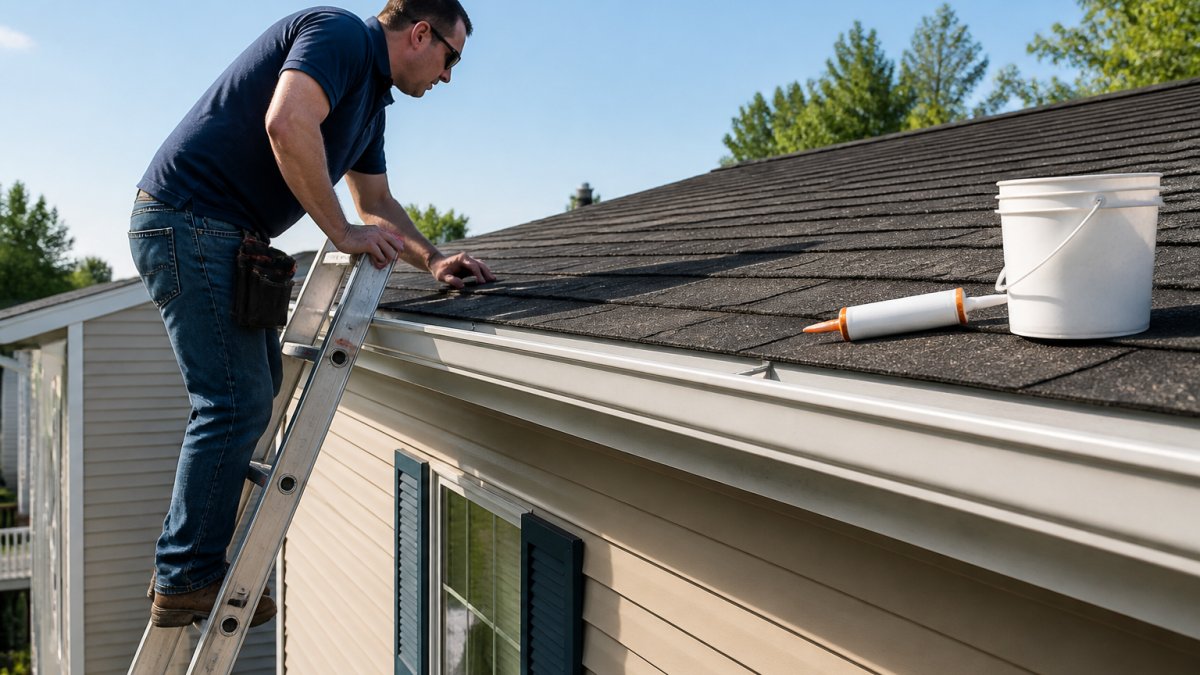
Metal roofs need different care: check seams and fastener seals. On shingle roofs, look for lifted or missing shingles and worn flashing.
Gutters, Downspouts, and Drainage Checks
Clogged gutters push water under the roof edge and down the siding. So clean them twice a year, and after any heavy storm.
- Flush gutters with a hose
- Check that downspouts point water away from the foundation
- Clear drain pipes of leaves and debris
Your Manufactured Home Inspection Checklist: Foundation, Piers, and Anchors
A manufactured home sits on a different support system than a site-built house: a steel chassis carried by concrete or masonry piers, held down by anchors and tie-downs, and enclosed by skirting.
Do this inspection twice a year, in spring and fall, and after any event that shakes the ground or house: high winds, nearby construction, or a minor earthquake.
What You Can Safely Inspect Yourself
Work from the outside in. You do not need to crawl under the home to catch most problems.
- Walk the full perimeter and look at the skirting line. It should be vertical and continuous, with no panels bowed out, missing, or pushed inward.
- Check the ground at each pier location from the access panel or crawlspace opening. Look for soft, spongy soil, fresh cracks in the concrete, or a pier that has tilted off vertical.
- Look at the pier itself. A sound pier is plumb, sits on a solid footing, and shows no more than minor surface rust. Rust that has flaked the steel, bent pier caps, or shims that have worked loose are all signs of movement.
Warning Signs That Mean Call a Professional
Some findings are beyond a homeowner’s scope. Stop and call a licensed manufactured-home contractor or a structural engineer if you see any of these:
- A pier that has tilted, cracked, or settled more than a fraction of an inch out of level
- A strap or anchor that is broken, severely corroded, or pulling out of the ground
- A chassis beam that is visibly bent, cracked, or rusted through
Anchoring requirements vary by wind zone, and the manufacturer’s data plate or installation manual lists your home’s tie-down specification. If you are unsure your anchoring matches that spec, a professional inspection is the fastest way to find out. Many jurisdictions also require a foundation or anchoring inspection before a manufactured home can be refinanced or sold, so records pay off at resale.
Moisture Control Beneath the Home
Moisture is the most common cause of long-term damage under a manufactured home: it rots floor joists, feeds mold, invites pests, and degrades the vapor barrier meant to keep it out.
Look for:
- Standing water or persistently damp soil
- A musty or earthy smell when you open the access panel
- Condensation on the underside of the floor or on the vapor barrier
Rules of thumb: the ground under the home should be dry to the touch, the vapor barrier should cover the entire footprint with no bare soil showing, and foundation vents should be open and clear.
Never crawl under a manufactured home alone, and never enter a crawlspace with standing water or a suspected gas or electrical problem. Shut off power at the panel before inspecting any wiring, and treat any sagging or cracked support as a stop-work condition until a professional has looked at it.
Log What You Find
Record the date, what you inspected, and anything that looked off, even if you did not fix it yet. Note the pier locations checked, the condition of each strap, and the state of the vapor barrier. A dated log of foundation and moisture checks is the difference between a covered repair and a denied warranty claim.
Manufactured Home Winterization: Pipes, Skirting, and Seals
Winter punishes manufactured homes hardest because so much of the plumbing and structure sits close to the ground in an enclosed but unheated space. Winterization is not just about keeping pipes from freezing, it is about keeping the under-home environment dry, ventilated, and sealed so cold air, moisture, and pests stay out. Do this work in fall, before the first hard freeze, and budget a full afternoon.
Start Under the Home
Most winter damage starts in the crawlspace. Before you touch anything inside, open the access panel and check the under-home environment.
- Vapor barrier. Confirm it covers the entire ground area with no bare soil showing. Patch tears with a compatible vapor barrier tape or a new section lapped at least 12 inches over the old one. A continuous barrier keeps ground moisture from rising into the floor system.
- Skirting. Walk the perimeter and look for gaps, cracks, or panels that have pulled loose. Seal small gaps with foam backer rod and exterior-grade sealant. Replace damaged panels rather than patching them with tape, which fails in freeze-thaw cycles.
- Foundation vents. These are a trade-off. Open vents let moist air escape in mild weather, but in deep winter they let cold air pour in around pipes. Follow the manufacturer’s guidance for your climate, many owners close or block the windward vents for the coldest months and reopen them in spring. Never seal every vent year-round; trapped moisture causes more damage than cold.
Seal the Envelope
Air leaks around windows, doors, and penetrations let cold air in, warm air out, and give moisture a place to condense.
- Feel around window and door frames for drafts on a cold, windy day.
- Add or replace weatherstripping where you feel air moving.
- Re-caulk exterior joints around windows, doors, vents, and utility penetrations with a sealant rated for exterior use and low-temperature application.
Protect the Water System
- Disconnect garden hoses and shut off and drain outdoor faucets. If the faucet has a shutoff valve inside, close it and open the outdoor spigot to drain the line.
- Insulate any exposed outdoor faucet or pipe stub with a foam cover.
- If you leave the home for an extended period, do not simply turn the heat down to nothing. Keep the thermostat at a level that keeps the under-home plumbing above freezing, and consider shutting off the main water supply and draining the lines if the home will be empty through a deep freeze.
Inside the Home
- Keep interior doors to utility closets and bathrooms open during cold snaps so warm air reaches the plumbing in those walls.
- Do not block heat registers with furniture or rugs; the heat needs to circulate to the exterior walls.
- Run a dehumidifier or improve ventilation if you notice condensation on windows or interior walls. Winter moisture inside the home is often a sign that the under-home vapor barrier or skirting has failed.
After the Storm
After a snow or ice event, check the roof edge for ice dams and the skirting for new gaps or damage. Clear snow away from foundation vents and the access panel so air can still move and you can still get under the home if you need to. Recheck the under-home area once the ground thaws in spring, freeze-thaw cycles are when small problems become structural ones.
Winterization is a moisture-control job as much as a freeze-protection job. A dry, ventilated, well-sealed under-home space is what keeps pipes, floors, and skirting intact through the coldest months. Log the date of each check and any repairs so you have a record if a warranty issue comes up later.
Interior Systems: HVAC Filters, Plumbing Leaks, and Safety Checks
Your HVAC system needs regular attention. Change filters every one to three months.
Check these items on your monthly round:
- HVAC filters and vents
- Under-sink pipes for leaks
- Toilet bases for wobble or water
Plumbing leaks often start small. A slow drip under a sink can rot a cabinet in weeks. So look closely and fix fast.
For fire safety, the U.S. Fire Administration home safety guidance recommends testing smoke alarms monthly and replacing batteries at least once a year.
Common Mistakes to Avoid (and How to Keep Records)
The biggest mistake is waiting for a problem to get big. Preventive maintenance is cheaper than repair, every time. A common error is skipping the under-home check because it’s uncomfortable.
Another mistake: no records. Keep a simple log of every task, date, and repair.
| Record Type | What to Log | Why It Matters |
|---|---|---|
| Inspection dates | Roof, foundation, HVAC | Shows routine care |
| Repairs made | Part, cost, date | Tracks home history |
| Warranties | Coverage and expiry | Protects your claims |
| Photos | Damage before and after | Proof for claims |
Good records protect your warranty. Many warranties require proof of routine care. Without records, a claim can be denied.
Photograph every repair with your phone and note the date. If a warranty dispute ever comes up, a dated photo log settles it faster than any receipt.
Conclusion: Start Your Checklist This Month
Maintaining a manufactured home comes down to routine, not luck. Monthly checks catch small issues before they grow. Seasonal prep protects you from weather.
If you’re still shopping for a home, Patriot Homes builds brand-new, customizable manufactured homes with options for bedrooms, bathrooms, and finishes.
Contact Patriot Homes today and start your home-buying journey with a team that walks you through it.
Frequently Asked Questions
What are the most common repairs needed in a manufactured home?
The most frequent repairs involve roof leaks, gutter clogs, HVAC filter neglect, plumbing drips, and worn caulking around windows and vents. Foundation piers and anchors also need periodic checks because shifting soil can loosen them. Handling these small items on a manufactured home maintenance checklist prevents bigger damage. For example, replacing a cracked shingle or resealing a window costs far less than repairing water intrusion later.
How often should you inspect a manufactured home?
Walk the exterior monthly, checking for loose skirting, damaged siding, and clogged gutters. Do a deeper manufactured home inspection checklist twice a year, in spring and fall, covering the roof, foundation, piers, anchors, and under-home moisture. Schedule professional HVAC service annually. After severe weather such as hail or high winds, inspect the roof and siding immediately, since damage may not be visible from the ground.
How do you maintain the roof of a manufactured home?
Clean gutters and downspouts at least twice a year, and remove debris after storms. Check shingles for cracks, curling, or missing pieces, and reseal around vents and flashings. Keep tree branches trimmed back. In colder regions, watch for ice dams and clear snow carefully with a plastic shovel. A mobile home roof maintenance routine twice a year extends roof life and prevents leaks that can damage ceilings and insulation.
How can you prevent moisture and mold problems in a manufactured home?
Ventilation and drainage are the two biggest factors. Make sure skirting vents are open and not blocked, and check the vapor barrier beneath the home for tears. Fix plumbing leaks quickly, run exhaust fans in bathrooms and kitchens, and keep indoor humidity in check. After winterization, inspect pipe insulation for condensation. If you notice musty odors or soft flooring, address the moisture source before mold spreads.