
Affordable Housing Solutions for Western States in 2026
Table of Contents
- Why Affordable Housing Solutions for Western States Matter in 2026
- Affordable Housing Programs by State: What Western States Offer
- Income Limits for Affordable Housing: Who Qualifies
- Manufactured Home Financing Options That Work in the West
- Manufactured Home Land Costs: Buying, Leasing, or Using Your Own Land
- How Patriot Homes Delivers Affordable Housing Solutions for Western States
- Conclusion: Taking the Next Step Toward Affordable Homeownership
- Frequently Asked Questions
Last Updated: October 12, 2026
Why Affordable Housing Solutions for Western States Matter in 2026
Finding affordable housing solutions for western states has become one of the toughest financial puzzles for working families. In many markets across Arizona, California, Idaho, and Nevada, the gap between what people earn and what a traditional site-built home costs keeps widening. That gap pushes renters further from stability and first-time buyers further from a down payment.
This guide from Patriot Homes breaks down what is actually available right now. Below, we cover state programs, income limits, manufactured home financing, and land costs, so you can see a realistic path instead of a dead end.
The stakes are simple. When housing costs eat most of a paycheck, everything else gets harder. A smaller, well-built manufactured home can change that math.
Affordable Housing Programs by State: What Western States Offer
Affordable housing programs by state vary widely, and knowing your own state’s rules is the first step. Each western state runs its own mix of rental help, down payment aid, and development funding, and each one is administered by a designated housing finance agency (HFA) that sets income limits, publishes waitlist status, and approves participating lenders. The table below names the agency you actually apply through, the flagship programs it runs, and the population each program is built to serve.
| State | Housing Finance Agency | Flagship Programs | Who It Helps |
|---|---|---|---|
| Arizona | Arizona Department of Housing (ADOH) | Housing Trust Fund rental assistance, HOME-funded down payment aid, State Housing Fund | First-time buyers, renters, tribal communities |
| California | California Housing Finance Agency (CalHFA) and HCD | MyHome Assistance, CalWORKs Housing Support, Section 8 vouchers via local PHAs, Low-Income Housing Tax Credit (LIHTC) units | Low-income families, renters, farmworkers |
| Idaho | Idaho Housing and Finance Association (IHFA) | Housing Choice Voucher program, HOME and National Housing Trust Fund allocations, down payment assistance | Rural and urban households, veterans |
| Nevada | Nevada Housing Division (NHD) and local PHAs | Home Is Possible down payment program, Housing Choice Vouchers, permanent supportive housing | Families, individuals, seniors |
How the Application Pathway Actually Works
Most state programs follow the same four-step sequence, and knowing it in advance is what separates an approval from a rejection:
- Confirm your area median income (AMI) bracket. Every program is tiered, commonly at 30%, 50%, 60%, or 80% of AMI for your county and household size. The HFA publishes a current income limit chart each year, usually in the spring.
- Pre-qualify with a participating lender or PHA. Down payment programs run through approved lenders; rental vouchers run through your local public housing agency (PHA), not the state office.
- Submit the document packet. Pay stubs (typically 30-60 days), two years of tax returns, bank statements, photo ID, and proof of citizenship or eligible immigration status.
- Enter the queue. Voucher waitlists frequently close for years at a time; down payment programs are usually first-come, first-served until funds are exhausted.
Arizona, California, Idaho, and Nevada Program Highlights
Arizona’s ADOH administers the State Housing Trust Fund and channels HOME funds to down payment assistance for first-time buyers, with set-asides for tribal lands. California layers CalHFA’s MyHome Assistance on top of a first mortgage and pairs it with LIHTC-funded units that carry rent caps tied to the county AMI. Idaho’s IHFA runs the state’s Housing Choice Voucher program directly (unusual, most states delegate to local PHAs) and targets rural counties where no local PHA exists. Nevada’s Home Is Possible program provides a below-market down payment grant that does not have to be repaid if you stay in the home for a set period.
Each state also partners with local agencies, which means two families in the same state may qualify for different help. Check your county or city housing office, not just the state website.
Waitlists move fastest when you apply the day they open. Sign up for email alerts from your state HFA and your local PHA so you are not caught off guard when a list reopens.
Income Limits for Affordable Housing: Who Qualifies
Income limits for affordable housing decide who gets in, and they are built on a single number: your area median income (AMI). HUD publishes AMI figures every year for every county and metropolitan area, and every state and federal program then sets its eligibility tiers as a percentage of that figure. A household earning below the tier threshold qualifies; above it, you do not. Limits shift by county, by household size, and by program.
How the AMI Tiers Work
Most programs sort applicants into one of four brackets:
- Extremely low income: at or below 30% of AMI, typically the priority tier for permanent supportive housing and Housing Choice Vouchers
- Very low income: at or below 50% of AMI, the standard threshold for most rental assistance and LIHTC units
- Low income: at or below 80% of AMI, the ceiling for many down payment assistance programs and HOME-funded units
- Moderate income: between 80% and 120% of AMI, sometimes eligible for state-specific first-time buyer programs, rarely for rental subsidies
Because AMI is set at the county level, the same dollar income can qualify a household in a rural Idaho county and disqualify it in coastal California. That is why the state website alone is not enough, you need your county’s current chart.
Estimating Your Own Eligibility
A common pattern practitioners recommend is to work the math backward before you apply:
- Add up every adult’s gross income before taxes, wages, self-employment, Social Security, disability, child support, and any recurring assistance.
- Count the people who will live in the home, including children and any dependents you claim.
- Look up your county’s current income limit chart on the HUD or state HFA website and find the row for your household size.
- Compare your total to the 30%, 50%, and 80% columns. That tells you which programs you can realistically pursue.
A household of four in a mid-range western county might fall under the 50% tier while a household of two in the same county lands in the 80% tier on the same paycheck, household size moves the ceiling more than most applicants expect.
Many applicants get rejected for paperwork, not income. Gather pay stubs, tax returns, and bank statements before you apply. Missing one document can push you to the back of a long waitlist.
What Happens If You Earn Too Much
If your income lands above the 80% tier, you are locked out of most subsidized rental programs and many down payment grants. That is the gap manufactured housing is built to fill: a household that earns too much for a voucher but too little to qualify for a site-built mortgage on western land prices can often finance a manufactured home through FHA, VA, or USDA channels. The income ceiling for those loan programs is generally higher than the subsidy tiers, which is why manufactured housing shows up as the practical middle path for working families in Arizona, California, Idaho, and Nevada.
Manufactured Home Financing Options That Work in the West
Manufactured home financing options open doors for buyers who cannot qualify for a traditional mortgage. Several loan types work specifically with manufactured homes, and each fits a different buyer.
FHA, VA, USDA, and Conventional Loans for Manufactured Homes
- FHA loans: Government-backed, lower down payment, good for first-time buyers (Loans)
- VA loans: For veterans and service members, often no down payment
- USDA loans: For rural areas, designed for lower-income households
- Conventional loans: Standard loans, best with strong credit
The U.S. Department of Housing and Urban Development explains how these programs support manufactured housing. The Consumer Financial Protection Bureau offers guidance on comparing loan offers before you sign.
A common mistake is assuming a manufactured home cannot get a normal mortgage. It can. The key is matching the loan to the home’s title and foundation type.
Manufactured Home Land Costs: Buying, Leasing, or Using Your Own Land
Manufactured home land costs often decide the total monthly payment. You have three main choices, and each changes your budget.
- Buy land: Highest upfront cost, but you own everything
- Lease a lot: Lower upfront cost, plus monthly lot rent
- Use your own land: No land purchase, but you cover site prep
If you already own land in Arizona, California, Idaho, or Nevada, you skip the biggest expense. If you do not, leasing keeps your entry cost low. Buying land builds long-term value.
Do not skip site prep costs. Water, sewer, power, and road access can add real money to a land project. Budget for these before you commit.
How Patriot Homes Delivers Affordable Housing Solutions for Western States
Patriot Homes delivers affordable housing solutions for western states by making brand-new, customizable manufactured homes simple to buy. We offer many model options, so you pick the bedrooms, bathrooms, and finishes that fit your life. You do not pay for space you will never use.
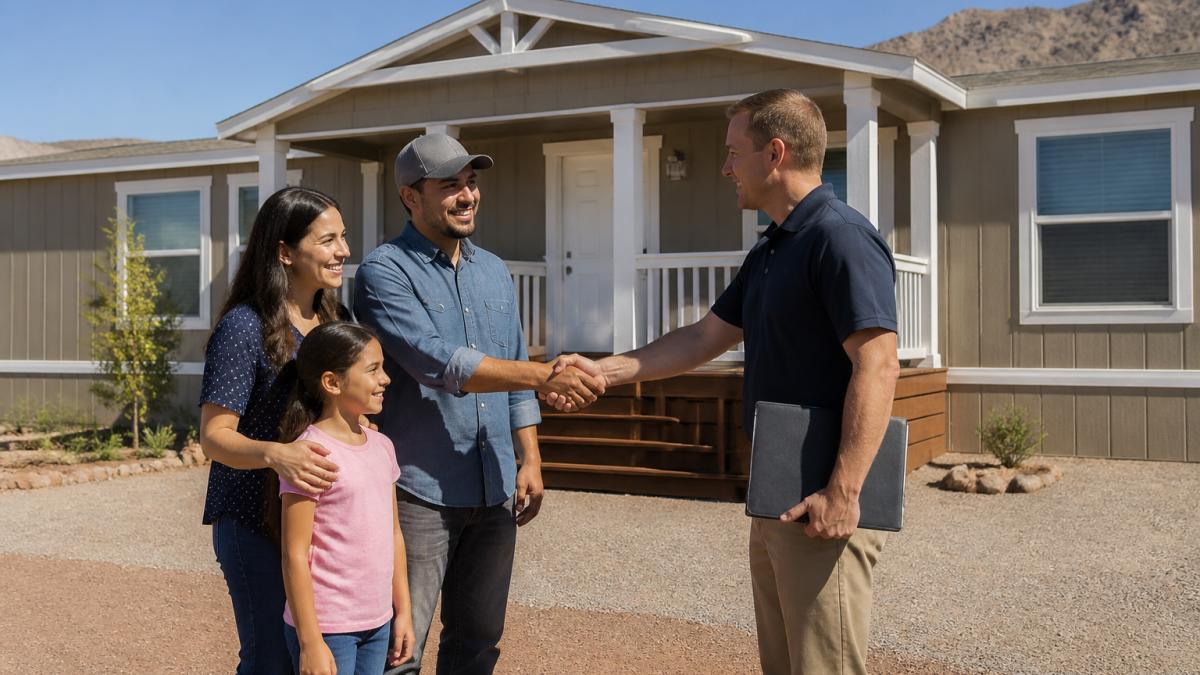
Our team is available 24/7 to guide you through every step. We focus on the lowest possible pricing and high value for your investment. If you own land, we can help you place a home on it.
The right manufactured home can turn a rent payment into homeownership without the site-built price tag. Matching the home to your land and loan is what makes it work.
Conclusion: Taking the Next Step Toward Affordable Homeownership
The biggest barrier to affordable housing is often not income, it is not knowing where to start. State programs, income limits, and financing rules can feel like a maze. But the path exists, and manufactured housing makes it shorter.
At Patriot Homes, we build customizable manufactured homes with competitive pricing and 24/7 support. You choose the layout and finishes, and we guide you through the process from first question to move-in day.
Get started with Patriot Homes and find a home that fits your budget and your land.
Frequently Asked Questions
Which Western states are the most affordable to live in?
Affordability varies by income and lifestyle, but states like Idaho and Nevada often have lower overall costs than California. Arizona also offers relatively affordable housing options in many areas. However, within each state, rural communities tend to have lower housing costs than urban centers. Manufactured homes can further reduce costs, with financing options and land costs playing a key role. For specific figures, check state housing agency websites and local listings.
What is the maximum income to qualify for affordable housing?
Income limits for affordable housing are set annually by HUD and vary by county and household size. In western states, limits often range from around $50,000 to over $100,000 for a family of four, depending on the area’s median income. For example, in many California counties, the low-income limit for a family of four exceeds $80,000. To find your local limit, visit HUD’s income limits page or your state housing agency.
Can manufactured homes help make homeownership more affordable?
Yes. Manufactured homes typically cost significantly less per square foot than site-built homes, and they can be financed with FHA, VA, USDA, or conventional loans. In western states, where land costs are high, placing a manufactured home on owned or leased land can reduce total housing expenses. Customizable options from dealers like Patriot Homes allow buyers to control finishes and layout, keeping costs aligned with budget.
What costs should I consider before buying a manufactured home?
Beyond the home price, budget for land (purchase or lease), site preparation, utility connections, foundation, delivery, and installation. In western states, land costs vary widely; rural lots may be cheaper but require infrastructure like water and power. Financing costs, property taxes, and insurance also apply. Ask your dealer for a detailed cost breakdown, and check state programs for down payment assistance or grants that can offset these expenses.