
Custom Home Finishes on a Budget: 2026 Guide
Table of Contents
- Custom Home Finishes on a Budget: What to Know First
- Cheap Materials That Look Expensive: Paint, Trim, and Lighting
- Budget-Friendly Home Upgrades for Kitchens and Bathrooms
- DIY Home Upgrades on a Budget: Window Treatments and Storage
- How to Make a Home Look Luxurious on a Budget
- Builder Allowances, Upgrades, and Change-Order Costs
- Where to Spend and Where to Save on Custom Home Finishes
- Conclusion
- Frequently Asked Questions
Last Updated: October 12, 2026
Custom Home Finishes on a Budget: What to Know First
Custom home finishes on a budget comes down to one idea: spend where your hands and eyes land every day, and save where they do not.
Custom home finishes are the visible surfaces and details that shape how a home feels: paint, trim, flooring, cabinets, hardware, and lighting.
Most of the “wow” comes from a handful of choices, not from spending more everywhere.
- Paint sets the mood for every room
- Trim and molding add instant character
- Lighting changes how everything else looks
- Hardware is a small cost with a big payoff
Below, we cover the finishes that matter most, what to spend on, where to save, and how builder allowances and upgrades work.
Focus your budget on the finishes people see and touch daily. Cheap materials that look expensive, like paint, trim, and hardware, deliver more impact per dollar than almost anything else.
Cheap Materials That Look Expensive: Paint, Trim, and Lighting
The fastest way to a high-end look is a fresh, well-chosen paint job. Paint is the cheapest material that looks expensive.
Stick with a neutral color palette. Warm whites, soft grays, and gentle beiges age well and make rooms feel larger. Then add one contrasting color for depth, like a darker trim or an accent wall.
Paint and Color Choices
Color does more for a room than any other finish: a calm base with one bold moment.
- Choose one neutral for walls across the whole home
- Use a slightly darker shade for trim to add contrast
- Paint the ceiling a soft white to bounce light
- Test colors on the wall, not just the swatch
The finish matters too. Flat paint hides wall flaws. Satin is easier to wipe clean in busy rooms like kitchens and bathrooms.
Architectural details: Molding, Trim, and Paneling
Architectural details make a plain room look custom. Molding, wall trim, and simple paneling add depth and shadow lines that read as quality.
You do not need heavy, ornate trim. Simple detailing often looks more modern and costs less. A basic baseboard, a picture rail, or a board-and-batten wall can transform a space.
- Crown molding at the ceiling
- Chair rail at mid-wall height
- Board-and-batten on one accent wall
- Simple baseboards throughout
Materials are cheap; labor is the bigger cost, so group trim work into one project to save on installation.
Budget-Friendly Home Upgrades for Kitchens and Bathrooms
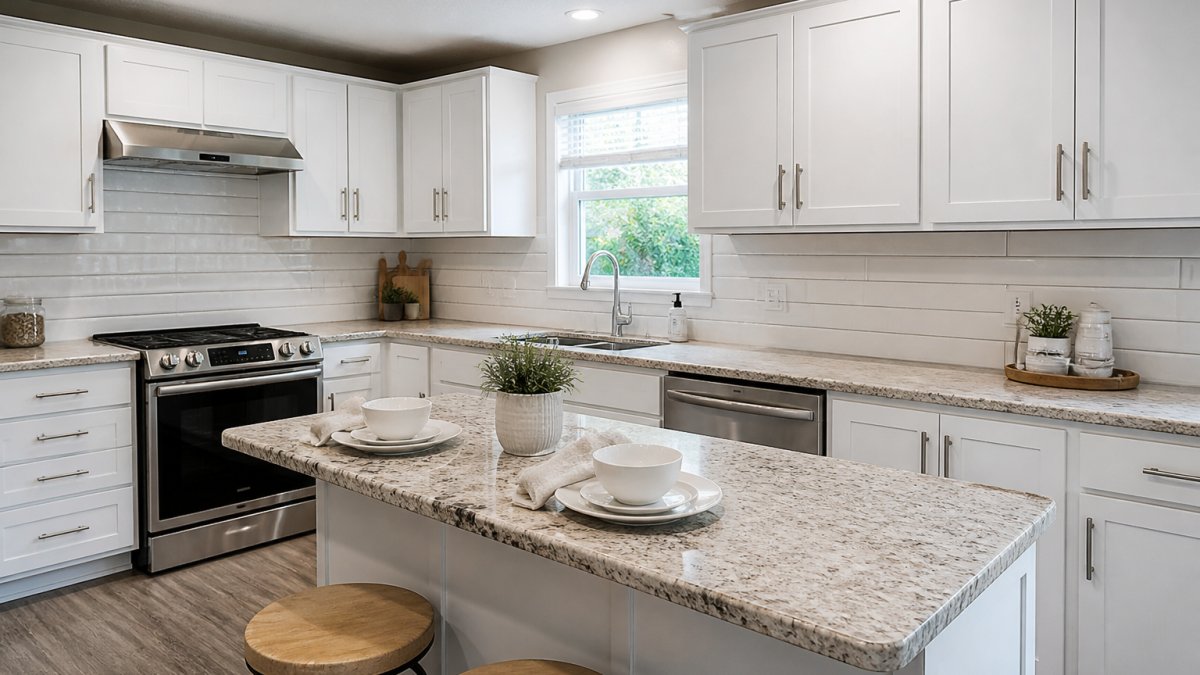
Kitchens and bathrooms carry the highest finish cost per square foot, so this is where a custom-home budget is won or lost. Put money into surfaces that take daily abuse and save on surfaces that are mostly seen.
Cabinetry and Hardware
Cabinets are usually the single largest line item in a kitchen.
A practical middle path is semi-custom boxes with simple, flat-panel or shaker doors. Flat-panel doors cost less than raised-panel or detailed styles and read as modern.
Hardware is the highest-impact, lowest-cost change in the room. A full kitchen typically needs 30 to 50 pieces. Bar pulls and knobs in a single finish keep the look cohesive, and soft-close hinges and glides are a modest upgrade buyers notice daily.
- Choose one metal finish and repeat it on faucets, cabinet hardware, and light fixtures
- Use simple door profiles to cut cost without cutting quality
- Add soft-close hardware where the budget allows, since it is used constantly
- Skip decorative crown on cabinets in low-visibility areas
Countertops, Backsplash, and Fixtures
Countertops are a place to spend, because they are touched, cleaned, and seen constantly.
Backsplash is a place to save. A simple ceramic or porcelain subway tile costs far less than natural stone slab and still looks clean and custom.
Fixtures follow the same logic. A mid-priced faucet from a well-known brand often uses the same internal cartridge as a premium model, so the difference is mostly finish and styling.
Bathroom Finishes That Hold Up
Bathrooms are wet, so durability matters more than trends. Porcelain tile is a strong value for floors and shower walls because it resists water and stains; natural stone looks rich but needs sealing and careful cleaning.
Vanity cabinets take the same approach as kitchen cabinets: simple doors, good hardware, and a durable finish. A framed mirror and a new light fixture change the room for far less than moving plumbing.
- Use porcelain tile in wet areas instead of natural stone
- Choose a solid-surface or quartz vanity top over marble
- Keep plumbing fixtures in one finish across the room
- Add a simple framed mirror rather than a custom built-in
Flooring and Floor Details
Flooring is a large visual surface, so choose a material that looks rich but holds up to daily life.
Luxury vinyl plank mimics real wood and handles moisture well, making it great for kitchens and baths (Vinyl Flooring That Looks Like Wood). Tile is another strong pick in wet areas.
Do not forget the small floor details. Floor grates, vents, and baseboards tie a room together. Painting vents to match the floor or wall makes them disappear.
| Upgrade | Best For | Why It Works |
|---|---|---|
| Paint refresh | Every room | Cheapest high-impact change |
| New hardware | Kitchen, bath | Small cost, big visual shift |
| Simple trim | Living areas | Adds custom character |
| Vinyl plank | High-traffic rooms | Looks like wood, easy care |
Order all your hardware, trim, and paint in one batch. Mixing dye lots or finishes later can leave slight color mismatches that are hard to fix.
DIY Home Upgrades on a Budget: Window Treatments and Storage
Some of the biggest wins come from projects you can do yourself, stretching every dollar further.
Window treatments are a perfect example: custom curtains cost a fortune, but you can get the same look for less.
- Hang curtains high and wide to make windows look bigger
- Choose ready-made panels over custom ones
- Layer a sheer with a heavier drape for depth
- Use simple rods in a matte finish
Storage is the other quiet luxury. A cluttered home never looks high-end, no matter what you spent.
- Add floating shelves in the kitchen
- Use baskets to organize open shelving
- Install a mudroom bench with hidden storage
- Add closet organizers to tame bedrooms
Decluttering costs nothing and instantly makes a home feel more expensive. Clear surfaces and open space read as calm and costly.
How to Make a Home Look Luxurious on a Budget
Learning how to make a home look luxurious on a budget is mostly about restraint. Fewer, better choices beat a room full of stuff.
Start with the finishes that touch everything else. Lighting is at the top of the list. The right light makes cheap materials look costly, and the wrong light makes expensive ones look cheap.
- Swap out dated fixtures for simple, modern ones
- Use warm light bulbs instead of harsh white
- Add dimmers to control the mood
- Layer table lamps with overhead light
Furniture and accessories finish the look. Add pieces slowly and choose quality over quantity.
Do not blow your whole budget on one showpiece item, like a fancy appliance or a statement light. If it leaves nothing for paint, trim, or hardware, the room still looks unfinished.
Builder Allowances, Upgrades, and Change-Order Costs
A builder allowance is the amount set aside in your contract for a given finish, like flooring, cabinets, tile, or lighting. It is a placeholder, not a price, and how you manage it decides whether your custom-home budget holds.
Allowances are usually set at a base or standard level. If your selections cost more than the allowance, you pay the difference at the upgrade price. If they cost less, some builders credit the savings back and some keep it.
How Upgrade Pricing Works
Upgrade pricing is rarely the retail difference between two products. Builders often apply a markup to cover ordering, storage, installation, and warranty handling, so a tile that costs a few dollars more per square foot at retail can add noticeably more to your contract.
A common pattern is that structural upgrades and finish upgrades are priced differently. Moving a wall or adding a window changes the plan and the trades, so it carries a higher cost than swapping a faucet finish.
- Ask what the standard option is for each allowance before you shop
- Request the upgrade price, not just the retail price, for each selection
- Confirm whether unused allowance dollars are refunded or forfeited
- Group finish selections so they can be ordered together
Change Orders and Late Changes
A change order is a request made after the plan is set, a material swap, layout change, or added feature.
The cheapest change order is the one you never have to write. The further along the build, the more a change costs, because work may need to be undone before the new work can start. A paint color change late in the process is minor.
- Lock finish selections before the order date, not after
- Confirm the cutoff date for changes in writing
- Expect a fee on top of material and labor for most change orders
- Treat any change after drywall as expensive
A Practical Selection Order
To keep allowances under control, make decisions in the order the build needs them: site and structural choices first, then rough-in items like plumbing and electrical locations, then finishes like cabinets, counters, tile, and paint.
A simple method is to assign each finish a priority: must-have, nice-to-have, or flexible. Spend the allowance on the must-haves, use standard options for the flexible items, and hold the nice-to-haves for later if the budget tightens.
Do not assume an allowance covers what you saw in a model home. Model homes are often built with upgrades well above the standard allowance, so ask for the standard specification list before you fall in love with a look.
Where to Spend and Where to Save on Custom Home Finishes
Knowing where to spend and where to save is the heart of custom home finishes on a budget. Put money into the finishes you see and touch daily. Save on the ones you rarely notice.
Spend on:
- Lighting, because it shapes every room
- Kitchen and bath hardware you use every day
- Flooring in high-traffic areas
- Paint and trim that set the tone
Save on:
- Decorative details in low-use rooms
- Trendy finishes that may date quickly
- Upgrades hidden behind closed doors
- Anything you can add later without a big project
The real difference between a costly home and a smart one is not the total spent. It is where the money went.
Budget-conscious buyers who want a high-end look without paying high-end prices. Focus on paint, trim, lighting, and hardware first.
Conclusion
Every buyer faces the same tension: you want a home that looks and feels custom, but the budget is real. The answer is not spending more everywhere.
At Patriot Homes, we make that easier. Our customizable manufactured homes let you choose your finishes and layout, backed by competitive pricing and a team available 24/7 to guide you.
Get started with Patriot Homes and build a home that looks expensive while staying within your budget.
Frequently Asked Questions
What are the best custom home finishes to prioritize on a budget?
Focus on finishes that add lasting value and visual impact: paint, lighting, and hardware. A neutral color palette and simple detailing cost less than structural changes but transform a space. Quality materials in high-touch areas like kitchen counters and bathroom floors also matter more than decorative accents. By prioritizing these, you can achieve a luxurious look without overspending.
How can I make a home look expensive without spending a lot?
Start with materials that look expensive, such as luxury vinyl plank flooring. Add architectural details like crown molding or wainscoting, which are cost-effective and easy to install. Swap out light bulbs to warm white LED and update cabinet hardware. These small changes create a high-end appearance.
Which home finishes are worth spending more on?
Spend more on finishes you touch daily and those that are hard to replace: countertops, flooring, and cabinetry. These see heavy use and affect durability. For example, quartz countertops resist stains better than laminate, and hardwood floors can be refinished. Save on decorative details like wallpaper or accent pillows. This balance keeps your project budget in check while ensuring long-term satisfaction.
How do I budget for upgrades when choosing finishes for a new home?
Ask your builder for the allowance list and upgrade pricing before signing. Allocate a contingency for change orders. Prioritize upgrades that improve energy efficiency or durability. Review pricing on the builder’s website and confirm what’s included to avoid surprises.