
New Manufactured Homes for Sale in Idaho: 2026 Guide
Table of Contents
- Where to Find New Manufactured Homes for Sale in Idaho
- Idaho Manufactured Home Prices: What to Expect in 2026
- Customizable Manufactured Homes: Layouts, Finishes, and Upgrades
- Manufactured Home Financing in Idaho: Loans, Vouchers, and Assistance
- Manufactured Home Delivery and Installation in Idaho
- How Patriot Homes Stands Out for Idaho Buyers
- Conclusion: Your Next Step to a New Idaho Manufactured Home
- Frequently Asked Questions
Last Updated: October 12, 2026
Where to Find New Manufactured Homes for Sale in Idaho
Shopping for new manufactured homes for sale in Idaho starts with two channels: in-state dealers with showrooms you can walk through, and online listing sites that show photos and asking prices before you call.
The catch: listings tell you what a home costs, not what it costs delivered, set, and connected, the gap where many Idaho buyers get surprised.
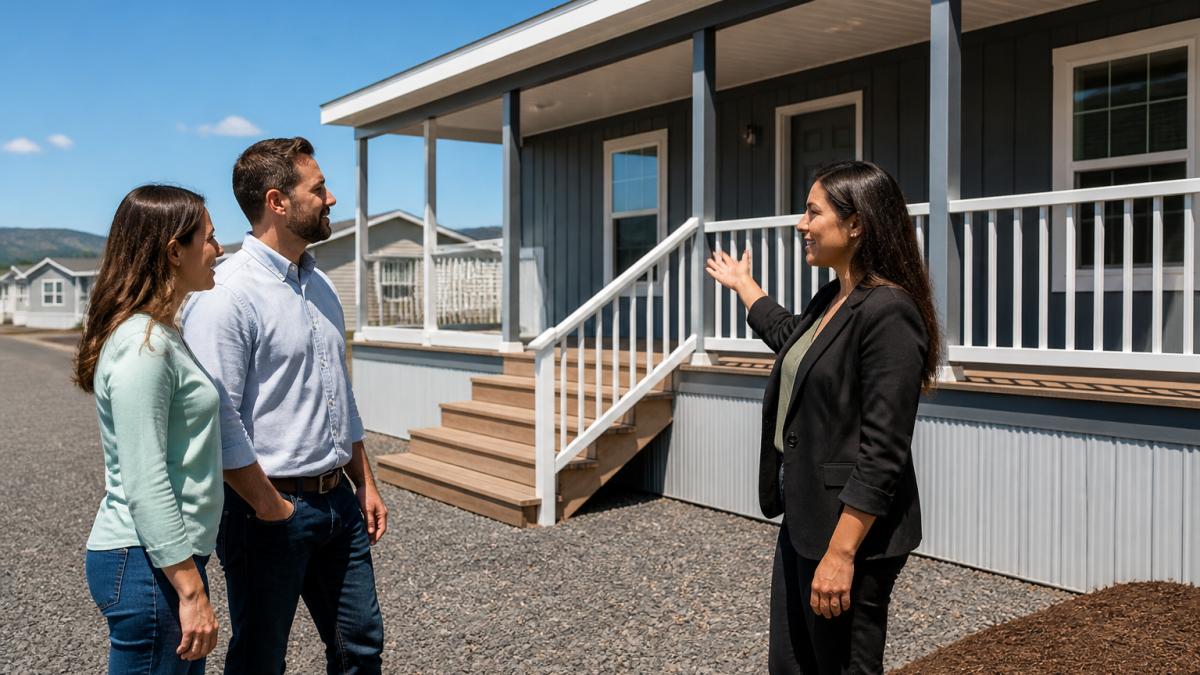
Dealers and Showrooms Across the State
Idaho has a solid spread of factory-built housing dealers, concentrated most heavily in the Treasure Valley and along the I-15 corridor.
- Boise and Nampa: Several dealers operate here, and a few, like United Family Homes in Nampa, offer model-home tours so you can see finishes and layouts in person.
- Idaho Falls: Dealers such as Clayton Homes of Idaho Falls list manufactured, modular, and mobile options and take inquiries by phone.
- Post Falls and North Idaho: Great Homes Inc. runs a showroom here and lists a large floor-plan catalog.
A showroom visit is the fastest way to learn which layouts work for how you live, walk through three homes and you will know more than a week of scrolling.
Online Listings and What They Show You
Listing sites are useful, with one caveat: they show asking prices, not total costs. Zillow’s Idaho search displays listing prices and property details but mixes new and resale homes, so filter hard and ask the dealer directly.
Third-party resource pages can help you set a rough budget before you talk to anyone. ManufacturedHomes.com’s Idaho state page publishes an average starting range of $55 to $75 per square foot, which gives you a ballpark to sanity-check quotes against.
When you compare online listings, note whether the price includes delivery, setup, and utility hookups. Two listings at the same number can differ by thousands of dollars once those line items are added.
Idaho Manufactured Home Prices: What to Expect in 2026
There is no single price for a manufactured home, and anyone quoting one number without asking about size, options, or site is guessing. Build an estimate from per-square-foot benchmarks, then adjust for your land and wish list.
Per-Square-Foot Benchmarks and What Drives Them
Start with a per-square-foot range. Third-party resource pages commonly publish an average starting range of roughly $55 to $75 per square foot for the home itself, so a 1,800-square-foot home lands in a wide band depending on what you choose. That covers the structure only, it is not your all-in number.
Four things move that number most:
- Size and layout. More square footage raises the base price, and complex layouts cost more to build than simple rectangles.
- Finish level. Standard countertops and flooring sit at the low end. Upgraded cabinets, hard flooring, and premium fixtures push toward the top.
- Site work. Foundation type, grading, and access for the delivery truck all affect your total.
| Cost Factor | What It Covers | Typical Impact |
|---|---|---|
| Home size | Base structure and layout | Largest single driver |
| Finish upgrades | Cabinets, flooring, fixtures | Moderate to high |
| Site preparation | Foundation, grading, access | Varies by land |
| Delivery distance | Transport from factory | Low to moderate |
| Utility hookups | Power, water, sewer or septic | Varies by site |
The Line Items the Sticker Price Leaves Out
This is the gap most buyers hit. The advertised price is the home. Your invoice is the home plus everything below.
- Delivery and transport. Distance from the factory, permit fees for oversized loads, and any escort requirements.
- Site preparation. Clearing, grading, driveway access, and a foundation, piers, a slab, or a full basement depending on your county’s requirements.
- Set and join. Crane time, crew labor, and sealing the marriage line on multi-section homes.
Together these add a meaningful percentage on top of the home price, swinging widely based on whether utilities are already at the lot line. A lot with power, water, and sewer stubbed in is a very different project from raw acreage needing a well and septic.
What This Means for Households at Different Income Levels
Affordability is not just the purchase price, it is the monthly payment relative to income. A common rule of thumb: keep housing costs at or below roughly 30% of gross monthly household income. Run your numbers against that benchmark before you fall in love with a floor plan.
- A single buyer on a modest fixed income is usually best served by a smaller two-bedroom home on land already owned, financed with the longest term the lender allows.
- A working family typically balances a three-bedroom layout against site costs, and often the smartest move is buying a lot with utilities already in place.
- A buyer with land and cash for site work has the most flexibility, because financing only the home keeps the loan smaller and the rate options wider.
Build your budget in this order: land, then site work and utilities, then the home, then finishes. Buyers who price the home first and discover site costs later are the ones who end up renegotiating or delaying.
Comparing per-square-foot figures across dealers only works if you confirm what is included. A lower number that excludes delivery and setup is not actually lower.
How to Get a Real Number Instead of a Range
Ask every dealer for a written, itemized quote separating the home, delivery, site preparation, set, and utility connections. Then ask what is excluded and what typically changes the final invoice. If a dealer will not put exclusions in writing, that is your answer.
For current pricing on specific models, Patriot Homes’ pricing page is the fastest way to see real numbers.
Customizable Manufactured Homes: Layouts, Finishes, and Upgrades
Customization is where manufactured housing has changed the most, and why many buyers no longer see it as a compromise.
Start with the structure. How many bedrooms and bathrooms do you actually need?
Then move to finishes. Flooring, countertops, cabinet styles, paint, and fixtures are selectable on most new builds.
Our advice: decide your non-negotiables first, then let the rest flex.
Manufactured Home Financing in Idaho: Loans, Vouchers, and Assistance
Financing stops people before they start, and it should not. Manufactured home financing comes through several paths, and the right one depends on whether you own land and how the home will be titled. The key question: real property or personal property? That answer determines your loan options, interest rate, and how the home is treated at resale.
The Main Loan Routes and Who Qualifies
- Conventional mortgages (real property). Available when the home is permanently affixed to land you own and titled as real property. These follow standard mortgage underwriting, credit score, debt-to-income ratio, down payment, and an appraisal. This is usually the lowest-rate path.
- FHA loans. Government-backed and designed in part for manufactured housing. The home must meet federal construction and installation standards, be permanently affixed, and be titled as real property. FHA allows lower credit scores and smaller down payments than many conventional loans, but the property must pass FHA appraisal requirements.
- VA loans. For eligible veterans, active-duty service members, and surviving spouses. VA-backed financing can cover manufactured homes that meet the program’s requirements, often with no down payment.
Income Limits, Credit, and Documents You Will Need
Government-backed programs come with income caps and credit requirements that vary by program, county, and household size. Income limits are set annually and differ between metro and non-metro counties, so your number depends on where the home will sit.
A typical application package includes:
- Proof of income. Recent pay stubs, W-2s or tax returns, and documentation of any other regular income.
- Proof of assets. Bank statements covering the lender’s required lookback period.
- Identification and status documents. Government-issued ID, and for VA or USDA programs, the eligibility documentation those agencies require.
Down Payment Assistance and Housing Programs
State and local down payment assistance programs shift over time, and what is active in one county may be closed in the next. The reliable way to find out what you qualify for now is a HUD-approved housing counselor, who can review your income, target county, and household size against current rules at no cost.
A practical sequence for applying:
- Get pre-qualified with a lender that writes manufactured home loans, so you know your realistic price range before you shop.
- Confirm your title path. Ask the lender directly whether the home will be real property or personal property, and get it in writing.
- Check program eligibility for FHA, VA, or USDA based on your status, income, and the lot’s location.
- Meet with a HUD-approved housing counselor to review down payment assistance and any local programs.
- Submit your full application with the document package above, and respond quickly to any lender requests.
HUD’s guidance on manufactured housing is the right place to verify program rules and buyer protections before you sign anything.
Ask any lender one question before you go further: “Will this be titled as real property or personal property?” That single answer determines your loan options, your interest rate, and how the home is treated at resale.
Income limits, credit minimums, and program availability change annually and vary by county. Confirm current numbers with the lender or the administering agency, do not rely on a figure you read last year.
Manufactured Home Delivery and Installation in Idaho
Delivery and installation is the step buyers underestimate most. The home arrives in sections on a truck, and the work is not finished when it rolls onto your lot.
Here is the sequence most Idaho installs follow:
- Site evaluation. The dealer or installer checks access, slope, soil, and where utilities will connect.
- Permitting. Your county or city issues permits for the foundation, electrical, and plumbing work.
- Site preparation. Grading, foundation piers or a slab, and driveway access for the transport truck.
- Delivery. The home travels from the factory to your lot, sometimes in two or more sections.
- Set and join. Crews position the sections, join them, and seal the marriage line.
- Utility connections. Power, water, and sewer or septic are tied in and inspected.
- Final inspection and handover. Once inspections pass, you get the keys.
Timelines vary by county, weather, and site complexity, so ask your dealer for a written schedule rather than a verbal estimate. Access is the most common delay: a narrow road or low tree branch can stall an otherwise ready delivery.
How Patriot Homes Stands Out for Idaho Buyers
For buyers who want a new manufactured home without the runaround, Patriot Homes offers a compelling solution.
We sell brand-new, customizable manufactured homes, with customization from bedroom and bathroom count to finishes.
Where we are strongest:
- Customization at the layout and finish level. You are not picking from a fixed catalog and living with it.
- Competitive pricing. We focus on keeping the total cost of the home down without cutting what you get.
- Guidance through the whole process. From first question to delivery day, you have someone to call.
The honest limitation: every home we sell is built to your specifications, so timelines depend on the factory schedule and your site readiness.
For current pricing on specific models, Patriot Homes’ pricing page is the fastest way to see real numbers.
Conclusion: Your Next Step to a New Idaho Manufactured Home
Patriot Homes offers customizable layouts and finishes, competitive pricing on every model, and 24/7 support from your first question through delivery day. Whether you own land or are still figuring out where to put a home, we will walk you through it.
Get started with Patriot Homes and move into a new manufactured home built around how you actually live.
Frequently Asked Questions
How much does a new manufactured home cost in Idaho?
New manufactured home prices depend on size, features, and customization. Patriot Homes offers customizable options at competitive prices. For a personalized quote, visit the Patriot Homes pricing page.
Where can I find new manufactured homes for sale in Idaho?
You can find new manufactured homes through dealerships, online listing platforms, and direct from manufacturers. Dealers like Patriot Homes offer customizable homes with 24/7 support. Other options include local showrooms and state-specific listing sites. Always verify the dealer’s reputation, ask about delivery and installation, and compare what’s included in the base price before deciding.
Can I customize a new manufactured home in Idaho?
Yes, many Idaho dealers offer customizable manufactured homes. You can choose the number of bedrooms and bathrooms, layout, flooring, cabinets, countertops, and other finishes. Patriot Homes specializes in personalization, letting you design a home that fits your lifestyle and budget. Customization costs vary by dealer and options selected, so request a detailed quote.
What costs should I budget for beyond the home itself?
Beyond the home price, budget for delivery, site preparation, foundation, utility connections, permits, and landscaping. In Idaho, delivery and installation costs depend on distance and site conditions. You may also need to purchase land if you don’t own a lot. Ask your dealer for a full breakdown. Patriot Homes provides transparent guidance on all associated costs.
Do I need land before buying a manufactured home?
You don’t need land to buy a manufactured home, but you need a place to put it. Options include purchasing land, leasing a lot in a manufactured home community, or placing it on family property. Some dealers, including Patriot Homes, can help you coordinate land acquisition or work with your existing land. Financing may cover both home and land in some cases.