
Manufactured Home Foundation Types Explained
Table of Contents
- Manufactured Home Foundation Types: An Overview
- Pier-and-Beam Foundations for Manufactured Homes
- Slab, Crawl Space, and Basement Foundations
- Permanent Foundation for Manufactured Homes
- Mobile Home Foundation Requirements and Building Codes
- Manufactured Home Foundation Cost and Installation Timeline
- Choosing the Right Foundation for Your Land and Climate
- Frequently Asked Questions
Last Updated: October 17, 2026
Manufactured Home Foundation Types: An Overview
A manufactured home foundation is the structural system that supports a factory-built home once it’s placed on your land. Unlike site-built homes, manufactured homes are constructed in a controlled factory environment and then transported to your property, which means the foundation type you choose directly impacts the home’s stability, longevity, durability, and financing options.
At Patriot Homes, we work with buyers across the Western states to help them understand how foundation choices affect both their immediate installation and long-term ownership experience.
There are several foundation types to consider, each with distinct advantages and trade-offs. Some are classified as permanent foundations, which can improve loan eligibility and property classification, while others are non-permanent and better suited to temporary placements or specific soil conditions. Understanding these options helps you make a decision aligned with your land, climate, and long-term goals.
Pier-and-Beam Foundations for Manufactured Homes
How Pier-and-Beam Works
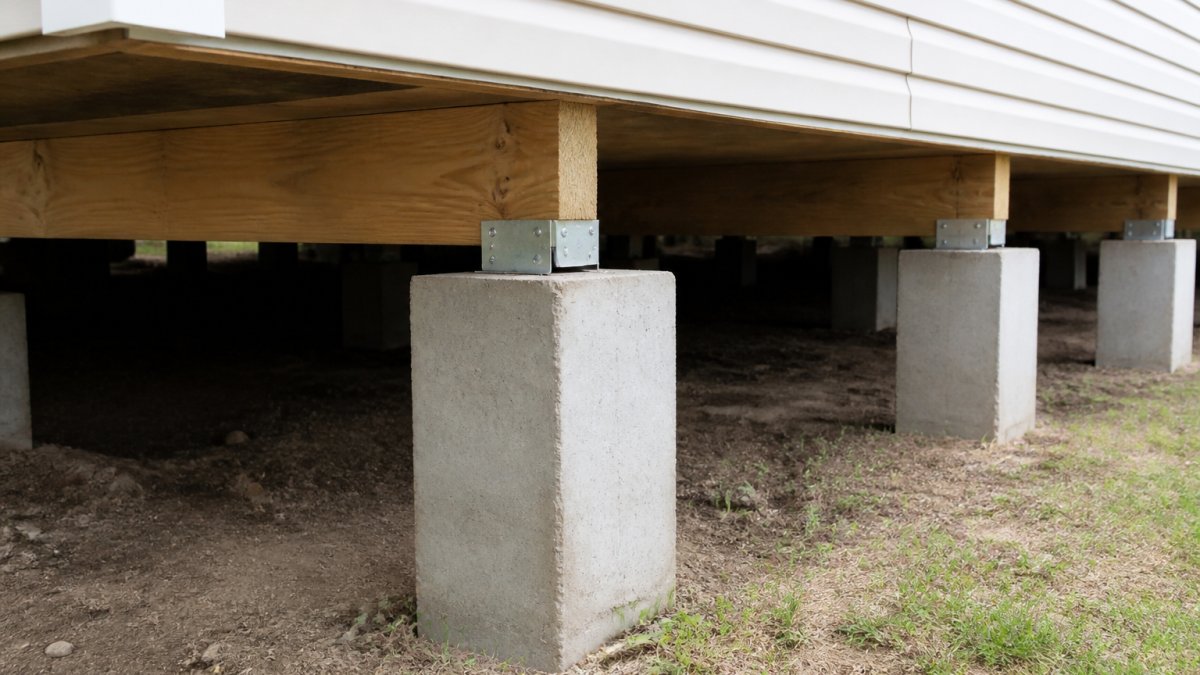
Pier-and-beam foundations use concrete piers or wooden posts set into the ground to elevate the manufactured home above the soil. The piers support wooden or steel beams that run beneath the home’s frame, creating an open space between the ground and the structure.
The system typically includes adjustable metal posts or concrete blocks positioned at regular intervals under the home’s frame. These supports transfer the home’s weight directly into the ground, while the open space underneath allows for air circulation and access to utilities like plumbing and electrical lines.
Advantages and Drawbacks
Pier-and-beam foundations offer real benefits for many homeowners. The open space underneath makes repairs and maintenance easier, if a pipe breaks or electrical work is needed, technicians can access those systems without major disruption. The elevated design also provides natural drainage, which helps in areas with poor soil conditions or seasonal moisture issues. Installation is typically faster than other foundation types, which can reduce your total project timeline.
The main limitation is that pier-and-beam systems are generally classified as non-permanent foundations. This means some lenders have stricter financing requirements, and the home may not qualify for conventional mortgages in all cases. The open space, while useful for maintenance, also requires additional insulation and protection from weather and pests, adding to long-term upkeep costs. In very cold climates with deep frost lines, this foundation type may require additional reinforcement.
Slab, Crawl Space, and Basement Foundations
Concrete Slab Foundations
A concrete slab foundation is a single, flat concrete pad poured directly on the ground. The manufactured home sits directly on this slab, creating a solid, permanent connection to the earth. This approach is popular in warmer climates where frost depth is minimal and soil conditions are stable.
Concrete slabs offer excellent stability and are typically classified as permanent foundations, which improves financing options and property classification. They require minimal site preparation compared to other methods and provide a clean, finished look. The slab also creates a moisture barrier between the home and the ground.
The trade-off is that utilities, plumbing, electrical, and HVAC lines, are either embedded in the slab during pouring or run along the exterior, making repairs more complicated if problems develop later.
Crawl-Space Foundations
Crawl-space foundations combine elements of pier-and-beam and slab approaches. The home is elevated on short concrete or masonry walls (typically 1-3 feet high), creating a confined space underneath that’s larger than a pier-and-beam gap but smaller than a full basement.
Crawl spaces are classified as permanent foundations in most jurisdictions, which opens financing options. They work well in moderate climates where some elevation is beneficial but a full basement isn’t necessary or practical. The confined space requires proper ventilation to prevent moisture buildup and must be sealed to keep out pests and water.
The main consideration is that crawl spaces need regular inspection and maintenance. If moisture problems develop, they can be expensive to remediate. In areas with high water tables or frequent flooding, crawl spaces may not be suitable.
Basement Foundations
A basement foundation involves excavating below grade and pouring concrete walls and a floor to create a full basement beneath the manufactured home. This provides the most usable space and is considered a permanent foundation in all cases.
Basements offer significant advantages: they provide additional living or storage space, excellent structural support, and strong financing eligibility. In cold climates with deep frost lines, basements are often the best choice because they place the home’s foundation below the frost line, preventing frost heave damage.
The primary drawback is cost and complexity. Basement excavation, concrete work, and waterproofing are labor-intensive and expensive. In areas with high water tables, poor drainage, or rocky soil, basement construction becomes even more complicated. Installation timelines are significantly longer than other foundation types.
Permanent Foundation for Manufactured Homes
A permanent foundation for manufactured homes is one that meets local building codes and HUD standards for long-term structural support. Permanent foundations typically include concrete slabs, crawl spaces with masonry walls, or basements.
Permanent foundations have direct financial and legal consequences. Homes on permanent foundations often qualify for conventional mortgage financing, which typically offers better interest rates and terms than manufactured-home-specific loans. The property may also be classified as real property rather than personal property, which affects tax treatment, insurance, and resale value.
Most states and lenders require or strongly prefer permanent foundations for new manufactured home installations. The specific requirements vary by jurisdiction, so checking with your local building department and lender early in the process is essential.
Mobile Home Foundation Requirements and Building Codes
Building codes and HUD standards establish minimum requirements for manufactured home foundations. The HUD Code (established by the Department of Housing and Urban Development) sets national standards for manufactured home construction, including foundation specifications (HUD’s Office of Manufactured Housing Programs).
Requirements typically address:
- Anchoring systems that secure the home against wind and seismic forces
- Load-bearing capacity to safely support the home’s weight and occupant loads
- Frost protection in cold climates, requiring foundations to extend below the local frost line
- Drainage to prevent water accumulation around or under the foundation
- Access to utilities and structural components for inspection and maintenance
Local building departments in your county or city have the final authority on what’s acceptable in your area. Some regions require permanent foundations for all new installations, while others allow non-permanent systems under specific conditions. Flood zones, seismic areas, and regions with severe weather have stricter requirements.
Before selecting a foundation type, contact your local building department to request the specific codes that apply to your property. Lenders will also review foundation requirements as part of the loan approval process, so understanding these rules early prevents costly changes later.
Manufactured Home Foundation Cost and Installation Timeline
Cost Ranges by Foundation Type
Foundation costs vary significantly based on type, site conditions, and local labor rates. Pier-and-beam systems are typically the most affordable option, while basement foundations are the most expensive. Concrete slab and crawl-space foundations fall in the middle range.
Site preparation, soil conditions, and accessibility all affect final costs. A property with stable, well-drained soil and easy access will cost less to prepare than one requiring extensive grading, drainage work, or fill material. Your specific location, lot size, and existing site conditions are the primary cost drivers.
At Patriot Homes, we recommend getting quotes from local foundation contractors in your area. They can assess your specific land and provide accurate pricing. We’re available 24/7 to discuss how foundation choices interact with your home selection and financing options.
Installation Timeframe and Site Preparation
Installation timelines depend on foundation type and site conditions. Pier-and-beam systems can often be installed in a few days once site preparation is complete. Concrete slabs typically take 1-2 weeks (including curing time). Crawl spaces require similar timelines to slabs. Basement foundations are the most time-intensive, often taking 4-8 weeks or longer depending on excavation and soil conditions.
Site preparation, grading, drainage work, utility rough-ins, and permit inspections, often takes longer than the foundation itself. Budget 2-4 weeks for permitting and inspections in most jurisdictions. In areas with complex soil conditions or environmental reviews, timelines can extend further.
Planning ahead with your local building department and selecting your foundation type early helps avoid delays. The Patriot Homes team can coordinate with your local foundation contractor and help you understand realistic timelines for your specific project.
Choosing the Right Foundation for Your Land and Climate
Soil Conditions and Drainage
Soil type is one of the most important factors in foundation selection. Sandy or gravelly soil drains well and provides stable support, making most foundation types viable. Expansive clay (which swells when wet and shrinks when dry) can crack slabs and damage pier-and-beam systems (Environmental Characteristics of Clays and Clay Mineral Deposits).
Poor drainage, whether from high water tables, seasonal flooding, or low-lying land, favors elevated foundations like pier-and-beam or crawl spaces. Basement foundations in areas with poor drainage require extensive waterproofing and can be impractical or very expensive.
Have a soil test performed before finalizing your foundation choice. A professional soil evaluation identifies soil type, bearing capacity, and drainage characteristics, providing the information you need to make a confident decision. This investment typically costs a few hundred dollars and can prevent thousands in foundation problems later.
Frost Depth and Climate Suitability
Frost depth, how deep the ground freezes in winter, directly affects foundation design in cold climates. When soil freezes, it expands, a process called frost heave. If a foundation isn’t placed below the frost line, this expansion can lift and crack the structure.
In areas with shallow frost depths (under 2 feet), pier-and-beam or slab foundations often work fine with proper design. In regions with deep frost lines (3 feet or deeper), basements or deeper pier systems are more appropriate. Your local building code specifies the frost depth for your area.
Warmer climates with minimal freezing don’t have frost-depth concerns, allowing greater flexibility in foundation choice. In moderate climates with occasional freezing, proper insulation and drainage become more important than depth.
Financing and Real-Property Classification
Foundation type affects how lenders view your home and what financing options are available. Homes on permanent foundations typically qualify for conventional mortgages, while non-permanent foundations may require manufactured-home-specific loans with higher interest rates.
Some lenders and jurisdictions also classify homes on permanent foundations as real property (like site-built homes), while non-permanent foundations may result in personal-property classification. Real-property status can improve financing terms, affect property taxes, and influence resale value.
Before committing to a foundation type, discuss financing implications with a lender. Many lenders have specific foundation requirements, and understanding these early helps you avoid surprises.
Choosing a manufactured home foundation is one of the most important decisions in your home-buying journey. The right foundation supports your home’s stability, determines your financing options, and affects your long-term ownership experience.
Frequently Asked Questions
What type of foundation is best for a manufactured home?
The best foundation depends on your soil, climate, and financing goals. Pier-and-beam works well for sloped or wet terrain and allows utility access. Concrete slabs suit stable, well-draining soil and offer permanence for financing. Crawl spaces provide storage and ventilation. Basements maximize usable space but cost more and require stable soil. Consult your local building department and a foundation contractor to match your land’s conditions with the right system.
What is considered a permanent foundation under a manufactured home?
A permanent foundation is one designed to support the home indefinitely without removal. Concrete slabs, basement foundations, and mortared-masonry crawl-space walls typically qualify as permanent under HUD standards and most lender requirements. Pier-and-beam and treated-wood foundations are usually classified as non-permanent. Permanent foundations often unlock better financing terms and may improve appraisal value, making them attractive for long-term homeowners.
How much does a manufactured home foundation cost?
Foundation costs vary widely by type and site conditions. Site preparation, soil conditions, local labor rates, and permitting fees all affect the final cost. Contact Patriot Homes for a site-specific quote based on your land and chosen foundation type.
Do manufactured homes need a permanent foundation?
No, but it depends on your financing and long-term plans. Many lenders prefer or require permanent foundations to approve conventional mortgages, which offer better rates than personal property loans. Non-permanent foundations like pier-and-beam cost less upfront and work well for temporary placements or challenging terrain. If you plan to stay long-term or refinance, a permanent foundation is worth the extra investment. Your lender and local codes will guide what qualifies in your area.