
Affordable Home Options in Western US: 2026 Guide
Last Updated: October 23, 2026
Quick Summary
Affordable home options in the Western US include manufactured homes on owned land, manufactured homes in land-lease communities, modular builds, and smaller site-built homes. Manufactured housing usually offers the lowest entry price because the home is built in a factory and assembled on site.
- The median U.S. home sales price rose from $313,000 in early 2019 to $403,200 in early 2026.
- In California, only about 44% of households would likely qualify for a bottom-tier mortgage in 2026.
- We serve homeowners across Arizona, California, Idaho, and Nevada with custom manufactured options.
- Floor plans range from compact 1-bedroom ADUs to spacious 4-bedroom models.
- Ask your lender whether the home will be titled as real property or personal property.
Table of Contents
- Why Affordable Home Options in the Western US Matter in 2026
- Comparing Affordable Home Options Across the Western US
- Manufactured Home Floor Plans That Fit Real Budgets
- Manufactured Home Land Requirements You Need to Know
- Manufactured Home Financing: Paths for Real Buyers
- Manufactured Home Installation and Site Preparation Costs
- Climate, Hazard, and Remote-Work Trade-Offs by Region
- Conclusion: Your Next Step Toward Affordable Homeownership
- Frequently Asked Questions
Why Affordable Home Options in the Western US Matter in 2026
The median U.S. home sales price climbed from $313,000 in the first quarter of 2019 to $403,200 in the first quarter of 2026, according to WalletHub’s national home-price comparison.
That leaves a real gap. At Patriot Homes, we fill it with brand-new, customizable manufactured homes built to fit your budget and your life. We proudly serve local homeowners across Arizona, California, Idaho, and Nevada with custom manufactured options.
Comparing Affordable Home Options Across the Western US
Affordable home options in the Western US fall into a few clear buckets: manufactured homes on owned land, manufactured homes in land-lease communities, and smaller site-built homes.
Most national rankings lean on Midwest and Southern towns, which is not useful if you want to stay in the West. The shortlist below focuses only on Western states and pairs each with the ownership costs that drive the monthly payment.
State-by-State Affordability Snapshot
The Western states differ sharply on housing costs. California sits at the high end, while inland states offer more room for a first-time budget. The table below compares relative pressure and the home type that fits each market.
| State | Housing Cost Pressure | Property Tax Pattern | Insurance Pressure | Best Fit for Budget Buyers |
|---|---|---|---|---|
| California | Highest | Prop. 13 caps annual increases for owners who hold title | Wildfire and heat drive premiums in foothill and desert counties | Manufactured homes on family land; land-lease communities inland |
| Nevada | Moderate | No state income tax; property taxes capped for primary homes | Heat and flash-flood exposure in Clark County | Manufactured homes on owned lots outside Las Vegas |
| Arizona | Moderate | Lower effective rates than coastal states | Monsoon, heat, and wildfire smoke in northern counties | Manufactured and modular builds on owned land |
| Idaho | Lower | Modest effective rates | Wildfire risk in forested counties | Modular and manufactured builds on rural lots |
| Utah | Moderate | Uniform statewide assessment rate | Wildfire and drought in the Wasatch foothills | Manufactured homes in land-lease communities |
| New Mexico | Lower | Low effective rates | Wildfire and water scarcity | Manufactured homes on owned land |
| Oregon | Moderate to high | Measure 5 limits permanent rates | Wildfire in the Cascades and coast range | Manufactured homes outside metro Portland |
| Washington | High | State levy plus local levies | Wildfire east of the Cascades | Manufactured homes in rural counties |
Why Each State Lands Where It Does
- California: The coastal metros carry the highest prices, but inland counties and desert communities are far more reachable. Proposition 13, the landmark 1978 property tax limit, keeps annual increases predictable for owners who hold title, which matters for long-term budgeting.
- Nevada and Arizona: No state income tax in Nevada and lower effective property rates in both states help monthly cash flow. Cooling bills run high in summer, so an efficient build pays for itself.
- Idaho: Lower housing pressure and modest property taxes make this state attractive for buyers who can work remotely or already have land.
Total Monthly Ownership Cost vs. Sticker Price
Sticker price is only half the story. Your real monthly cost includes the mortgage payment, property taxes, homeowners insurance, utilities, and maintenance. A lower purchase price with high utility bills can cost more than a slightly higher price with an efficient build.
For Western buyers, insurance and utilities swing the monthly number more than the loan does. Wildfire exposure in foothill and forested counties can push premiums up sharply or make coverage hard to place, and extreme heat in desert counties raises summer cooling bills.
Affordability by Household Budget
Rather than guess, match the location to your budget band:
- Entry budget: Land-lease manufactured communities inland, where you rent the lot and keep the home payment low.
- Mid budget: Manufactured homes on owned rural lots in Nevada, Arizona, Idaho, or New Mexico.
- Stretch budget: Modular builds on owned land near growing inland metros.
We proudly serve local homeowners across Arizona, California, Idaho, and Nevada with custom manufactured options, from 1-bedroom ADUs to spacious 4-bedroom models. Why pay more when you can have quality, style, and affordability all in one? Call our 24/7 team at (888) 765-1776 for a pricing matrix built around your state and budget, or request a quote from our website.
Manufactured Home Floor Plans That Fit Real Budgets
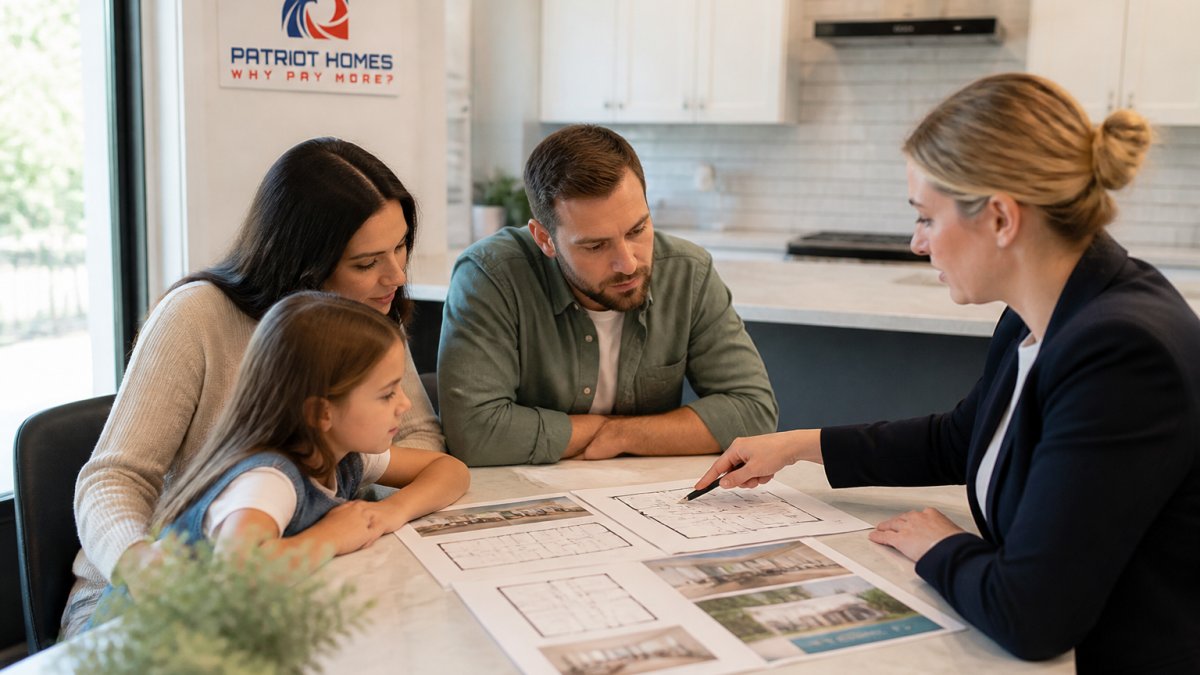
Floor plans are where budget meets lifestyle. We offer many floor plans, from compact 1-bedroom ADUs to spacious 4-bedroom models, because a single retiree and a family of five should not be shopping the same layout.
- 1-bedroom ADU: Best for retirees, downsizers, and rental income.
- 2-bedroom: A solid fit for couples and small families.
- 3-bedroom: The most popular pick for growing households.
- 4-bedroom: Space for larger families without the site-built price tag.
Customization is the part buyers worry about. With traditional builders, upgrades can add serious cost per square foot.
Manufactured Home Land Requirements You Need to Know
Land requirements are the most common surprise in this process. You need a legal, buildable lot with proper zoning, clear access, and utility connections before a home can be placed.
- Zoning: Confirm the lot allows manufactured housing.
- Access: The site needs a clear path for delivery and setup.
- Utilities: Water, power, and sewer or septic must be available.
- Grading: The pad must be level and properly prepared.
Own land in Arizona or Nevada already? We can place a home on your lot. No land yet? Our team walks you through your options.
Manufactured Home Financing: Paths for Real Buyers
Financing is where imperfect credit stops scaring people off. Manufactured home financing comes through several paths, and not every buyer needs perfect credit or a large down payment.
- FHA loans: Government-backed and built for lower down payments.
- VA loans: For eligible veterans and service members.
- Conventional loans: Available through many lenders for manufactured housing.
- Chattel loans: For homes not titled as real property.
Ask your lender whether the home will be titled as real property or personal property. That single detail changes which loan programs you can use, and it is the step most first-time buyers skip.
Manufactured Home Installation and Site Preparation Costs
Installation and site prep are real line items that vary by lot. Site preparation covers grading, the foundation or pier system, utility hookups, and delivery, and a flat, ready lot costs far less to prep than a sloped or unimproved parcel. Ask for a written site-prep estimate before you sign anything so there are no surprises at delivery.
Climate, Hazard, and Remote-Work Trade-Offs by Region
Most affordability lists stop at the purchase price. In the West, climate and hazard exposure can change your true cost of ownership more than the home does. Here are the trade-offs the national rankings skip.
How Hazard Exposure Shows Up in Your Budget
- Wildfire: In foothill and forested counties, insurers may raise premiums, require defensible-space clearing, or decline to write new policies. A home in a high-risk zone can cost more to insure than to finance.
- Drought and water: Water restrictions and well costs affect rural parcels. Confirm water rights and well output before you buy land.
- Flood: Flash-flood zones in desert counties can require separate flood coverage that standard policies exclude.
- Extreme heat: Desert counties push summer cooling bills up. A tight, efficient manufactured build with proper insulation and shade reduces that swing.
Regional Trade-Offs at a Glance
| Region | Main Hazard | Ownership Cost Effect | Remote-Work Fit |
|---|---|---|---|
| Coastal metros | Moisture, salt air | Higher maintenance; limited land | Strong broadband; high cost |
| Inland valleys | Heat, wildfire smoke | Higher cooling bills; variable insurance | Good broadband near metros |
| Desert counties | Extreme heat, flash flood | High cooling; flood coverage gaps | Broadband varies by community |
| Mountain and foothill counties | Wildfire, snow load | Insurance pressure; roof and access costs | Weak in remote pockets |
| Rural agricultural counties | Water scarcity, dust | Well and water costs; maintenance | Check coverage before you commit |
Remote-Work and Connectivity Checks
If you plan to work from a smaller or rural Western community, verify these before you fall in love with a lot:
- Broadband: Confirm the address has fiber, cable, or fixed wireless. Satellite works but adds latency and cost.
- Distance to services: Measure drive time to groceries, healthcare, and schools, not just to the nearest town on a map.
- Coworking and shipping: Smaller communities may lack coworking space; confirm package delivery and cell coverage at the specific parcel.
- Power reliability: Rural grids can see more outages; a backup plan matters if you work from home.
A Note on Local Rules
Local zoning and land-use rules drive what you can actually build and afford. Research on low-rise multifamily zoning in Seattle markets found housing supply rose 2.5% annually in affected areas, per a ScienceDirect study led by T. Peter. The lesson: check your specific county before you buy, because rules and conditions vary block by block.
Ask your insurer for a quote on the exact parcel before you make an offer. Hazard exposure is property-specific, and a quote from the next county over tells you nothing about your lot.
We help buyers weigh these trade-offs across Arizona, California, Idaho, and Nevada, with custom manufactured options from 1-bedroom ADUs to spacious 4-bedroom models. Call our 24/7 team at (888) 765-1776 to talk through climate, connectivity, and customization for your region, or request a quote from our website.
Conclusion: Your Next Step Toward Affordable Homeownership
The gap between median home prices and median incomes is not closing on its own. Manufactured housing gives budget-conscious buyers a real path in, with customizable layouts, competitive pricing, and expert guidance from start to finish.
Call (888) 765-1776 today for a pricing matrix, to talk customization, or to request a quote from our website. Why pay more when you can have quality, style, and affordability all in one?
Frequently Asked Questions
What should I compare when looking for affordable home options in the Western US?
Compare more than the sticker price. Look at total monthly ownership cost: mortgage payment, property taxes, homeowners insurance, utilities, and maintenance. Also check local land requirements, installation and site preparation costs, and financing terms. In 2026, about 44% of California households would likely qualify for a bottom-tier mortgage based on income, according to the California Legislative Analyst’s Office, so affordability depends heavily on the full cost picture. Call Patriot Homes at (888) 765-1776 for a side-by-side pricing matrix.
Can I place a manufactured home on land I already own?
Yes, in many cases. Patriot Homes works with landowners in Arizona, California, Idaho, and Nevada who want to place a new manufactured home on their property. You will need to confirm local zoning, access, utility connections, and site preparation requirements before installation. Our team can walk you through manufactured home land requirements and coordinate installation and site preparation. Call (888) 765-1776 to discuss your land and get a custom quote.
What costs should I consider beyond the home itself?
Budget for land or lot rent, site preparation, foundation and installation, utility hookups, permits, landscaping, and moving costs. Ongoing costs include property taxes, homeowners insurance, utilities, and maintenance. Manufactured home financing may also require a down payment and closing costs. Because pricing depends on your site, floor plan, and options, Patriot Homes provides a personalized pricing matrix rather than a one-size-fits-all number. Call (888) 765-1776 to request a quote from our website or speak with our 24/7 team.
How do I choose a manufactured home floor plan that fits my budget?
Start with the number of bedrooms and bathrooms you actually need, then compare layouts that use square footage efficiently. Patriot Homes offers floor plans from 1-bedroom ADUs to spacious 4-bedroom models, so you can match the home to your household and budget. Ask about customization options for finishes and layout, and request a pricing matrix that shows how each choice affects your total. Our 24/7 team can help you compare manufactured home floor plans at (888) 765-1776.
