
How to Choose the Right Foundation for Manufactured Homes
Last Updated: October 24, 2026
Quick Summary
The foundation for manufactured homes you choose depends on your site conditions, budget, and long-term plans. Permanent foundations like slabs, crawl spaces, and basements offer better financing options and resale value, while non-permanent options like pier-and-beam work well for sloped lots and tighter budgets.
- Permanent foundations qualify for more loan programs and protect resale value compared to non-permanent options.
- Pier-and-beam foundations cost less upfront and work well on sloped terrain but require ongoing maintenance.
- Slab foundations are permanent, low-maintenance, and work best on flat, level lots in dry climates.
- Professional site assessment evaluates soil type, slope, drainage, and frost depth to determine what foundation types are actually possible.
- Local building codes and HUD standards vary by jurisdiction, so always check requirements with your building department before deciding.
Table of Contents
- Why Foundation Choice Matters for Your Manufactured Home
- Manufactured Home Foundation Types Explained
- Permanent Foundation vs. Non-Permanent: What’s the Difference
- Manufactured Home Foundation Requirements You Need to Know
- Assessing Your Site: Manufactured Home Site Preparation Essentials
- Step-by-Step Guide to Choosing Your Foundation
- Common Mistakes to Avoid When Selecting a Foundation
- Get Expert Guidance on Your Foundation Choice
- Frequently Asked Questions
Why Foundation Choice Matters for Your Manufactured Home
Choosing the right foundation for manufactured homes is one of the most important decisions you’ll make.
A solid foundation means fewer repairs, better resale value, and peace of mind. A poor choice can cost you thousands in fixes and limit your options later.
Ready to make an informed decision? Call our 24/7 team at (888) 765-1776 to discuss which foundation option works best for your situation and budget.
Manufactured Home Foundation Types Explained
Each foundation type has real trade-offs in cost, permanence, and suitability for different lots. Learn more about each foundation type in detail to understand which option fits your needs. Here are the five most common choices.
Pier-and-Beam Foundations
A pier-and-beam foundation uses concrete piers set into the ground to support your home above the surface, with wooden or metal beams resting on those piers.
Why choose it:
- Lower upfront installation cost
- Allows access underneath the home for utilities and repairs
- Works well on sloped or uneven terrain
Where it works best:
- Lots with moderate slope
- Areas with good drainage
- Properties where you need future access to plumbing or electrical
The catch: Pier-and-beam foundations are non-permanent in most states, and some lenders won’t finance a home on one. You’ll also need to maintain the space underneath, watch for moisture, and ensure proper ventilation.
If you choose pier-and-beam, ask your installer about enclosure options. Enclosure can improve loan eligibility and protect against weather damage.
Slab Foundations
A slab foundation is a concrete pad poured directly on the ground, with your home sitting flat on top.
Why choose it:
- Permanent foundation in most states
- Lowest maintenance of any option
- Clean, finished look with no exposed space underneath
Where it works best:
- Flat terrain with stable soil
- Dry climates with low flood risk
- Buyers prioritizing permanence for financing
The catch: Slabs don’t work well on sloped lots, and repairs to plumbing or electrical lines buried in concrete become expensive. They also require excellent drainage planning.
Crawl Space Foundations
A crawl space creates a small gap between the ground and your home, typically 18-48 inches tall.
Why choose it:
- Moderate cost between pier-and-beam and slab
- Allows some access to utilities
- Better than slab for sloped terrain
Where it works best:
- Moderately sloped lots
- Areas with potential moisture concerns
- Homes needing utility access
The catch: Crawl spaces need proper ventilation and moisture control, or they can develop mold or pest issues. They require regular inspection and upkeep.
Basement Foundations
A basement foundation digs below grade to create usable living or storage space beneath your home.
Why choose it:
- Adds valuable square footage
- Permanent foundation status
- Excellent for cold climates (protects from frost)
Where it works best:
- Cold regions with deep frost lines
- Buyers wanting extra square footage
- Properties with stable soil
The catch: Basements are expensive, require extensive excavation and waterproofing, and not all soils support them safely. You’ll need professional engineering to assess feasibility.
Runner Foundations
Runner foundations use treated wood or metal rails placed on the ground to support the home and distribute weight across the lot.
Why choose it:
- Simple, low-cost installation
- Works on varied terrain
- Allows some future adjustability
Where it works best:
- Temporary or semi-permanent setups
- Budget-conscious buyers on suitable lots
- Properties where you may relocate the home later
The catch: Runner foundations are typically non-permanent, and most lenders won’t finance a home on runners alone. They require more maintenance and offer less stability than other options.
Permanent Foundation vs. Non-Permanent: What’s the Difference
The distinction between permanent and non-permanent foundations affects your financing, resale value, and long-term options.
A permanent foundation is engineered to keep your home in place indefinitely.
A non-permanent foundation allows the home to be moved or adjusted.
Why does this matter? Many loan programs require a permanent foundation.
Check with your lender early. Ask specifically whether your chosen foundation type qualifies as permanent in your state.
Permanent foundations open more financing doors and protect resale value. If you plan to stay long-term and might refinance, prioritize permanence.
Manufactured Home Foundation Requirements You Need to Know
Your foundation must meet standards set by HUD (the U.S.
Local Building Codes:
Your city or county has its own rules.
Soil and Site Requirements:
Your soil must support the foundation type you choose.
Anchoring and Tie-Downs:
All manufactured homes must be anchored to their foundation. This prevents wind damage and shifting.
Permits and Inspections:
You’ll need permits before installation.
Skipping permits or inspections can void your warranty, make refinancing impossible, and create liability issues. Always work with a licensed installer who handles permits properly.
Assessing Your Site: Manufactured Home Site Preparation Essentials
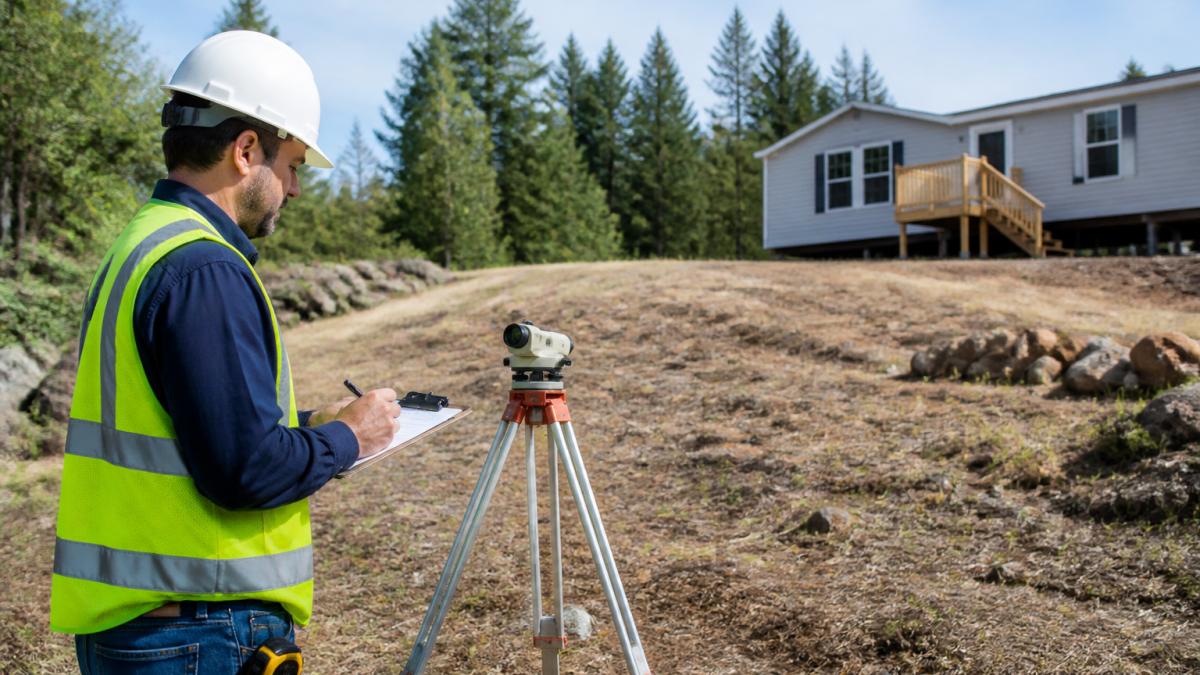
Before you choose a foundation, your site must be evaluated to determine what’s actually possible on your property.
Evaluating Lot Terrain and Soil Conditions
Start by understanding your lot. Is it flat or sloped? What’s the soil like?
A sloped lot limits your options. Flat lots give you more flexibility.
Soil type matters enormously. Rocky soil, clay, sand, and silt all have different load-bearing capacities.
What to evaluate:
- Lot slope and grade
- Soil type and composition
- Drainage patterns
Consider consulting a land survey professional for residential property assessment to understand your site’s characteristics.
Drainage, Grading, and Flood Risk
Water is your foundation’s enemy. Poor drainage causes settling, mold, and structural damage. Grading (the slope of your land) directs water away from your home or toward it.
Check whether your lot sits in a flood zone. Flood zones require specific foundation designs and often mandate permanent foundations.
Grading should slope away from your home on all sides. Water should flow naturally away from the foundation.
Drainage essentials:
- Slope away from home foundation
- Surface water management (gutters, downspouts)
- Subsurface drainage if needed
Frost Depth and Climate Considerations
Cold climates have frost lines. In winter, the ground freezes to a certain depth.
Frost depth varies by region. Northern areas have deeper frost lines than southern ones.
Climate also affects your foundation choice. Hot, dry climates favor slabs. Cold, wet climates favor basements or crawl spaces.
Check FEMA guidance on climate resilience for residential foundations to understand how your climate affects foundation durability and maintenance needs.
Step-by-Step Guide to Choosing Your Foundation
Now let’s walk through the decision process. This framework helps you narrow down your options.
Step 1: Determine Your Budget and Long-Term Plans
Start with money. Foundation costs vary widely. Pier-and-beam is often among the lower-cost options, while basements can be the most expensive.
Think beyond installation. Consider maintenance costs. Pier-and-beam requires ongoing upkeep. Slabs need less maintenance but are harder to repair if problems arise.
Ask yourself: How long do I plan to stay? Do I want to refinance later? Will I eventually sell?
Budget questions:
- What’s my upfront budget?
- Can I afford ongoing maintenance?
- Do I plan to refinance or sell?
Step 2: Review Local Building Codes and Permit Requirements
Call your local building department. Ask what foundation types are allowed in your area. Ask about permanent versus non-permanent rules.
Get the answers in writing if possible. Building codes change and vary by jurisdiction. What works in one county may not work in another.
Ask about permits and inspection fees. Understand the timeline. Permits can take weeks. Budget time and money accordingly.
Step 3: Have Your Site Assessed by a Professional
Hire a professional to evaluate your lot. This might be a surveyor, engineer, or experienced installer. They’ll assess soil, slope, drainage, and utilities.
A professional assessment costs money. It can prevent expensive mistakes and help ensure your foundation is designed for your specific site.
The assessment should include:
- Soil testing and bearing capacity
- Slope and grading analysis
- Drainage evaluation
Step 4: Compare Your Options and Make Your Decision
Now you have the information. Your site assessment tells you what’s possible. Your budget tells you what you can afford.
Compare your realistic options:
| Foundation Type | Permanence | Cost Level | Maintenance | Best For |
|---|---|---|---|---|
| Pier-and-Beam | Non-permanent | Low | Moderate | Budget buyers, sloped lots |
| Slab | Permanent | Medium | Low | Flat lots, dry climates |
| Crawl Space | Permanent | Medium | Moderate | Moderate slopes, utility access |
| Basement | Permanent | High | Low | Cold climates, extra space |
| Runner | Non-permanent | Low | High | Temporary setups, relocation |
Pick the option that fits your site, budget, and plans. If you’re torn between options, talk to our team at Patriot Homes.
Call (888) 765-1776 to discuss your specific situation. Our 24/7 team can explain how each foundation type affects financing, resale value, and your long-term costs.
Common Mistakes to Avoid When Selecting a Foundation
Learning from others’ mistakes saves you time and money.
Mistake 1: Choosing based on cost alone. The cheapest foundation isn’t always the best value.
Mistake 3: Skipping professional site assessment. Guessing about soil, slope, and drainage leads to problems.
Mistake 4: Not thinking about resale. If you might sell someday, permanence matters.
Mistake 5: Forgetting about maintenance. Every foundation type requires upkeep. Plan for it.
The biggest mistake is rushing the decision. Foundation choice affects your home for decades. Take time. Get professional input. Ask questions. There’s no penalty for being thorough.
Get Expert Guidance on Your Foundation Choice
You don’t have to figure this out alone.
We proudly serve homeowners with custom manufactured and modular options.
Ready to move forward? Learn how to choose the right manufactured home dealer who can guide you through foundation selection and installation.
Questions about your specific site or budget? Call our 24/7 team at (888) 765-1776. We’ll discuss your property, your plans, and your budget. We’ll explain how different foundation types affect your financing, resale value, and monthly costs. We’ll help you make the choice that’s right for you.
You can also request a quote from our website to explore customization options and get pricing information tailored to your needs.
Choosing the right foundation for manufactured homes shapes your entire homeownership experience.
Frequently Asked Questions
What type of foundation is best for a manufactured home?
The best foundation depends on your site conditions, local building codes, budget, and long-term plans. Permanent foundations like concrete slabs or crawl spaces typically support better resale value and financing eligibility. Non-permanent options like pier-and-beam work well for temporary placements or challenging terrain. Your local regulations and soil conditions are the primary deciding factors. Call Patriot Homes at (888) 765-1776 to discuss your specific situation with our 24/7 team.
What is the difference between a permanent and nonpermanent manufactured home foundation?
Permanent foundations, such as concrete slabs and full basements, are designed to last indefinitely and meet HUD standards for long-term placement. They improve financing options and resale value. Non-permanent foundations, like pier-and-beam systems, allow for easier relocation and work on uneven terrain but may not qualify for certain loans. Permanent foundations require more site preparation and typically higher upfront costs. Local building codes determine which option is allowed in your area.
Does a manufactured home foundation need to meet local building codes?
Yes. All manufactured home foundations must comply with local building codes, HUD standards, and any county or municipal requirements specific to your area. Building codes address structural support, anchoring, tie-downs, drainage, and flood protection. Before choosing a foundation, verify requirements with your local building department. Patriot Homes proudly serves homeowners across multiple counties and can guide you through local compliance. Contact our team at (888) 765-1776 for assistance navigating your area’s requirements.
How much does site preparation cost for a manufactured home foundation?
Site preparation considerations depend on lot terrain, soil conditions, grading needs, and the foundation type you select. Factors like slope, drainage work, and any necessary soil testing affect the overall project. For an accurate estimate tailored to your property, request a quote from our website or call Patriot Homes at (888) 765-1776. Our 24/7 team can review your site details and provide information based on your specific needs.
