
Are Manufactured Homes Good Affordable Housing for Retirees?
Last Updated: October 30, 2026
Quick Summary
Manufactured homes are a real affordable housing solution for retirees because they skip subsidized program waitlists entirely and let you control both the home and the monthly payment. At Patriot Homes, we build brand-new, customizable manufactured homes for retirees across the West, with floor plans from 1-bedroom ADUs to spacious 4-bedroom models. Call our 24/7 team at (888) 765-1776 for a pricing matrix or to talk through customization options.
- National senior housing occupancy hit 88.7% in the third quarter of 2025, the 17th straight quarter of growth.
- Subsidized rent is not always 30% of income; LIHTC rent is capped at a percentage of area median income.
- Manufactured homes follow the federal HUD code; modular homes follow local codes and need a permanent foundation.
- Owned land with a permanent foundation opens conventional, FHA, and VA loan paths; leased land usually means a chattel loan.
- Many retirees find a 2-bedroom layout offers enough room for a guest, a hobby space, or a caregiver.
Table of Contents
- Why Manufactured Homes Are a Real Affordable Housing Solution for Retirees
- The Limits of Subsidized Housing Programs
- Manufactured vs. Modular Homes: What Retirees Need to Know
- Choosing Manufactured Home Floor Plans for Your Retirement Years
- Accessible Manufactured Homes: Designing for Comfort and Safety
- Manufactured Home Financing Options for Retirees on a Fixed Income
- Get Your Custom Home Quote from Patriot Homes
- Frequently Asked Questions
Why Manufactured Homes Are a Real Affordable Housing Solution for Retirees
Retirees searching for affordable housing solutions for retirees often find themselves stuck between waiting lists and rising rents.
At Patriot Homes, we build brand-new, customizable manufactured homes for retirees across the West, and we hear the same question every week: is there anything left that a fixed income can actually afford?
Below, we break down how manufactured homes compare to subsidized programs, what financing looks like on a fixed income, and how to pick a floor plan that works for the long haul.
The Limits of Subsidized Housing Programs
Subsidized housing programs help millions of older adults, but they were never designed to house everyone who qualifies. The National Council on Aging’s senior housing options guide notes that affordable senior communities often require both age and income eligibility, and Harvard’s Joint Center for Housing Studies has found that demand for service-enriched affordable housing outstrips supply. A qualifying applicant can still wait years for a unit.
How the Main Federal Programs Compare
| Program | What It Provides | Who Qualifies | How Rent Is Set | Key Limitation |
|---|---|---|---|---|
| Housing Choice Voucher (Section 8) | Rental help in the private market | Very low-income households, generally at or below 50% of area median income | Tenant pays roughly 30% of adjusted income; the voucher covers the rest up to local payment standards | Local waitlists, limited vouchers, landlord must accept the voucher |
| Public Housing | Income-based rental units owned by a housing authority | Low-income households | Rent generally capped at 30% of adjusted income | Limited availability, long waits, aging inventory |
| Section 202 Supportive Housing | HUD-funded apartments for seniors 62+ with supportive services | Very low-income seniors | Income-based rent | Nonprofit-operated, few vacancies, service-rich but scarce |
| Low-Income Housing Tax Credit (LIHTC) Properties | Privately built affordable apartments funded by tax credits | Income-qualified renters, often with senior set-asides | Rent capped at a percentage of area median income, not 30% of your income | Rent is fixed, not income-adjusted; screening and credit checks apply |
| Rural Rental Assistance | Rental help in rural areas | Low-income rural residents | Income-based | Rural areas only |
The HUD senior citizen resource page lists vouchers, public housing, and rural rental help as starting points. These programs are worth applying to. They should not be your only plan.
Eligibility, Documents, and the Application Sequence
The process generally follows the same rough order, whether you apply through a public housing authority or a LIHTC property:
- Check income limits first. Each program publishes area median income (AMI) thresholds. Income limits for each program are set as a percentage of area median income (AMI). If your Social Security, pension, and annuity income sits above the threshold, you will not qualify regardless of assets.
- Confirm the age threshold. Many senior-focused properties set age minimums, so confirm the requirement for each one. Public housing and vouchers have no age minimum but serve seniors through preferences.
- Gather documents before the window opens. Expect to provide photo ID, Social Security cards for all household members, proof of all income sources, bank statements, and prior landlord references. Missing paperwork is the most common reason an application stalls.
- Apply to multiple waitlists at once. Vouchers and public housing are administered locally, so you can apply to every housing authority in your region. LIHTC properties are managed property by property, so contact each one directly.
- Track your position and update your file. Waitlists can open and close without notice. Keep your contact information current and respond to any recertification request quickly, a missed letter can remove you from the list.
What Rent Actually Costs in These Programs
A common misconception is that subsidized rent is always 30% of income. That is true for vouchers and public housing, but not for LIHTC units, where rent is capped at a percentage of area median income and can exceed 30% of a retiree’s actual income. Always ask the property manager which rent formula applies before you sign.
Where Manufactured Housing Fits
Subsidized programs are a safety net, not a strategy. A retiree who owns land or can finance a manufactured home can skip the waitlist entirely and control both the home and the monthly payment. We proudly serve local homeowners with custom manufactured and modular options. Call our 24/7 team at (888) 765-1776 for a pricing matrix or to compare your options side by side.
Manufactured vs. Modular Homes: What Retirees Need to Know
Manufactured homes are built to the federal HUD code in a factory, then delivered and set on your land or in a community.
- Manufactured homes follow the federal HUD code, can sit on owned or leased land, and are often titled as personal property unless permanently affixed.
- Modular homes follow local building codes, require a permanent foundation, and are typically financed and taxed as real property.
For a retiree who owns land, a manufactured home can be a practical path to consider. If you want a deeper side-by-side breakdown before deciding, read our guide on manufactured home vs modular home options and which fits your land.
Choosing Manufactured Home Floor Plans for Your Retirement Years
The right layout for retirement is not the biggest one. It is the one you can live in comfortably for twenty years without remodeling.
Our floor plans run from compact 1-bedroom ADUs to spacious 4-bedroom models.
Three questions decide most floor plan choices:
- Do you need a guest room, or would a den serve you better?
- Is the laundry on the same level as the bedroom?
- Does the entry have room for a ramp or a no-step approach later?
If you want a structured way to work through it, our 7-step guide to choosing floor plans covers lifestyle, lot fit, and budget in order.
Accessible Manufactured Homes: Designing for Comfort and Safety
Accessible features such as wider doorways and no-step entries are often easier to plan during construction than to add later.
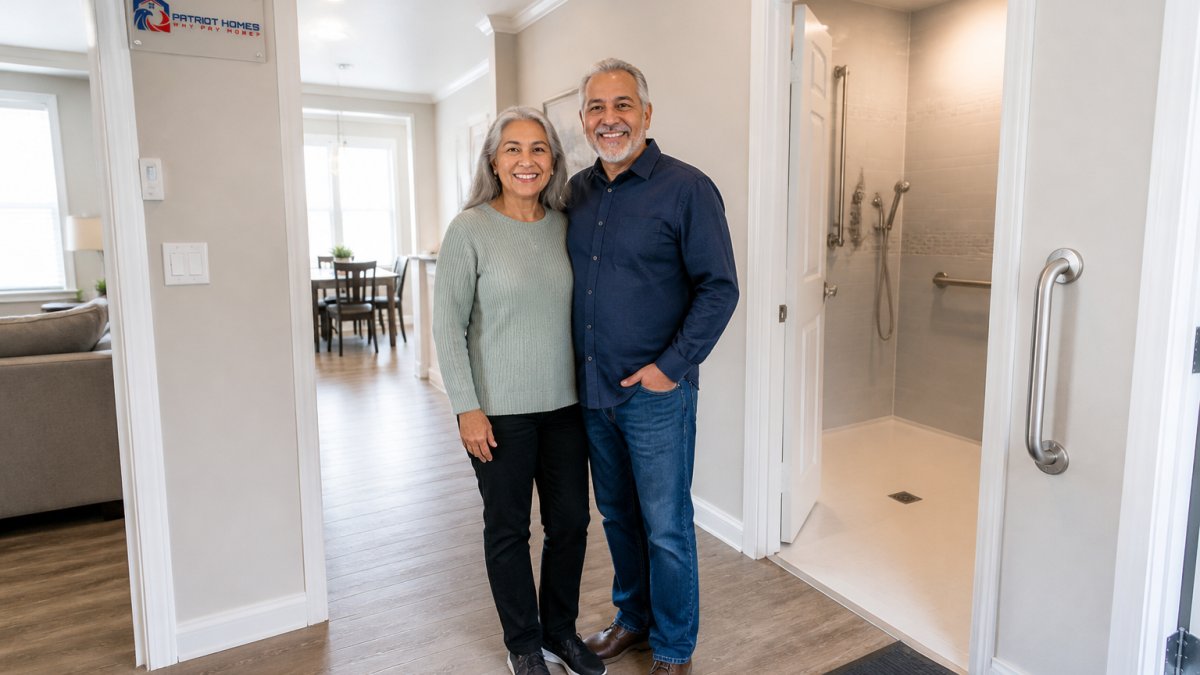
Buyers planning for aging in place can discuss accessibility options with our team. Retirees can also explore low maintenance homes for retirees in Nevada to see retiree-friendly options in their region.
Manufactured Home Financing Options for Retirees on a Fixed Income
Many fixed-income buyers worry about being turned away when seeking financing. The real question is not whether a lender will say yes, it is which loan structure fits your land, your title, and your income mix. Here is how the main paths differ, and what underwriters actually look at.
The Four Financing Paths
- Conventional loans for manufactured homes often require the home to be titled as real property and set on a permanent foundation.
- FHA-insured loans may be available for manufactured homes on owned land or in approved communities. Eligibility depends on the home and site meeting program requirements.
- VA loans may be available to eligible veterans and service members, subject to program requirements.
What Underwriters Look At on a Fixed Income
A common mistake is assuming you need perfect credit. Some lenders who specialize in manufactured housing work with a range of credit profiles. What matters more is the debt-to-income ratio and whether the home is on owned land or in a leased community. Lenders typically focus on four things:
- Stable, documented income. Social Security, pensions, annuities, and IRA distributions all count. Lenders want to see consistent deposits, not a single good month.
- Debt-to-income ratio. Total monthly debt payments divided by gross monthly income. A lower ratio offsets a thinner credit file.
- Land status and title. Owned land with a permanent foundation opens conventional, FHA, and VA paths. Leased land usually means a chattel loan.
- Cash reserves. Lenders like to see a few months of housing payments set aside, especially for retirees on fixed incomes.
Total Costs Beyond the Loan Payment
A monthly loan payment is not the whole budget. Retirees should plan for:
- Land lease or lot rent if the home sits in a community, which can rise over time.
- Property taxes if the home is titled as real property; personal-property taxes may apply if it is titled as chattel.
- Homeowners insurance, which for manufactured homes can run higher than for site-built homes depending on age, foundation, and location.
- Utilities, deposits, and setup costs, including delivery, foundation, and utility hookups.
Getting a Straight Answer
If your credit is less than perfect, our team can walk you through the financing options that may be available. Readers can also review our manufactured home financing for bad credit guide for paths suited to less-than-perfect credit. For current rates, program availability, and a pricing matrix tailored to your land and income, call (888) 765-1776 and our 24/7 team will walk you through the options that fit your situation.
Get Your Custom Home Quote from Patriot Homes
We proudly serve local homeowners across California, Arizona, Idaho, and Nevada, with custom manufactured and modular options built to your budget. Why pay more when you can have quality, style, and affordability all in one?
Our homes offer a wide range of floor plans, from 1-bedroom ADUs to spacious 4-bedroom models, with a variety of finish options. Our team is available 24/7 to guide you through pricing, customization, and next steps.
Frequently Asked Questions
Are manufactured homes a good option for retirees?
Yes, for many retirees they are. Manufactured homes offer a path to affordable housing that doesn’t rely on long waitlists for subsidized programs. They are built in a factory, which is a different process from traditional site construction. Retirees on a fixed income often find that a new manufactured home provides predictable monthly costs and low maintenance compared to an older site-built house. You can also customize the layout and finishes to fit your needs, from a small one-bedroom to a spacious four-bedroom model.
What should retirees consider when choosing a manufactured home?
Focus on total costs beyond the home price, including land (if you don’t own it), utility hookups, and any community fees. Consider the floor plan carefully: single-level layouts with wide doorways and no-step entries work well for aging in place. Ask about financing options for retirees, since some lenders have specific requirements for manufactured homes. Finally, work with a dealer who can walk you through customization and answer questions about long-term durability and maintenance. A 24/7 team like Patriot Homes can help you compare options and get a quote.
Can retirees customize a manufactured home to meet accessibility needs?
Yes. Accessibility needs can be discussed with the dealer when planning a home. You can also consider a single-story floor plan to reduce stairs. Patriot Homes offers customizable options and can help you think through a layout for comfort and safety.
How do manufactured home financing options work for retirees?
Financing for a manufactured home can come from several sources: traditional mortgage lenders, specialized manufactured home lenders, or government-backed loans like FHA or VA (if you qualify). Retirees on a fixed income should compare interest rates, loan terms, and down payment requirements. Some lenders require the home to be permanently affixed to land you own. It’s wise to get pre-approved before you shop so you know your budget.
The gap between what subsidized programs can offer and what retirees actually need is real, and it is not closing fast. A manufactured home puts you in control of your housing cost instead of a waitlist. Call Patriot Homes at (888) 765-1776 for a pricing matrix and customization options, or request a quote on our website and get started on a home that fits your fixed income.
