
Land-Home Loans vs Chattel Loans: Which Fits Your Land?
Last Updated: November 5, 2026
Quick Summary
Land-home loans finance the manufactured home and the land together as real property, which can mean lower mortgage-style rates, longer terms, and equity that builds on both the structure and the land. Chattel loans finance only the home as personal property, and the average chattel loan costs consumers 4.4 percentage points more per year than a mortgage.
- A $100,000 mortgage saves a typical borrower roughly $49,000 over the life of the loan compared with home-only financing.
- Chattel loans aren’t eligible for conventional mortgage products, which contributes to a thinner secondary market and higher rates.
- Land-home financing requires permanent installation, title surrender, and recording before the home counts as real property.
- Leased land is a hard stop: you cannot mortgage a parcel you do not own, so chattel is the path.
- Check mortgage eligibility before assuming chattel is your only route, since many chattel borrowers may have qualified for a mortgage.
Table of Contents
- Land-Home Loans vs Chattel Loans: The Difference That Decides Your Rate
- Side-by-Side Comparison: Cost, Term, and Property Classification
- Chattel Loan Requirements: What Lenders Look For
- Land-Home Loan Requirements: Real Property, Title, and Foundation Rules
- Using a Chattel Loan Calculator to Compare Monthly Payments
- Buying a Manufactured Home With Bad Credit: Which Loan Path Stays Open
- Land Ownership, Leased Land, and the Scenarios That Flip the Decision
- Get Your Financing Questions Answered: Call (888) 765-1776
- Frequently Asked Questions
Land-Home Loans vs Chattel Loans: The Difference That Decides Your Rate
According to Pew Charitable Trusts research on manufactured home financing, a $100,000 mortgage saves a typical borrower roughly $49,000 over the life of the loan compared with home-only financing.
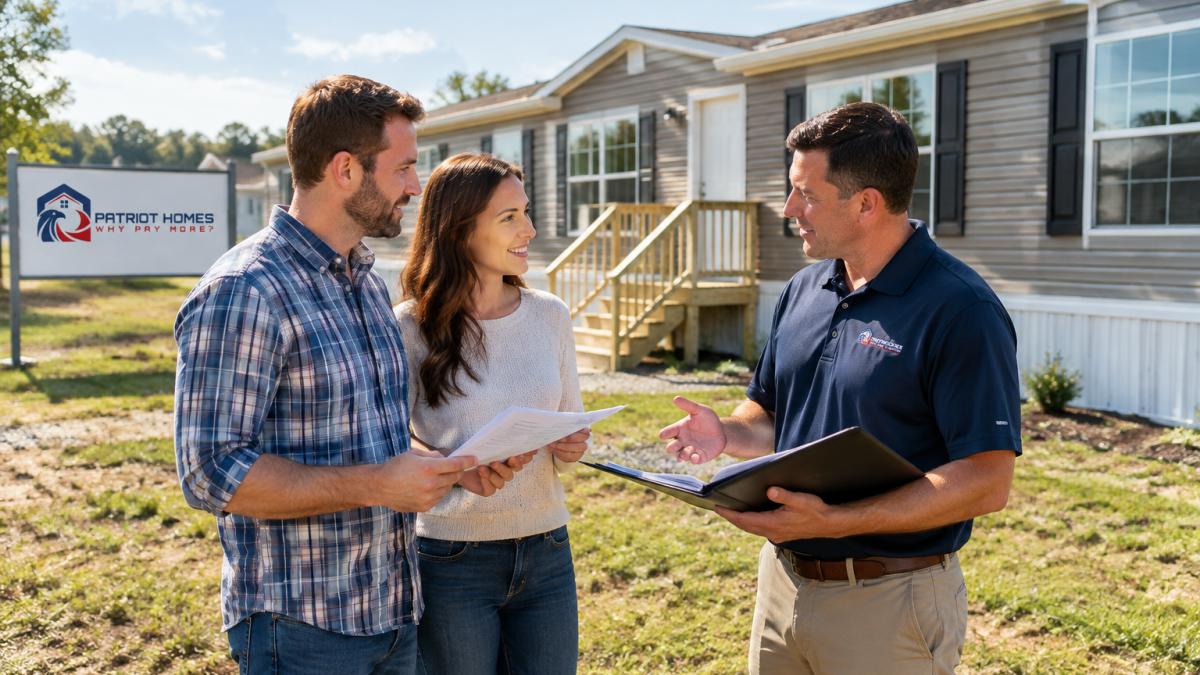
What a Chattel Loan Actually Finances
A chattel loan is financing secured by personal property, meaning the manufactured home itself, not the land beneath it. The home stays titled as personal property, much like a vehicle. That structure works when you lease a lot in a community or haven’t bought land yet. It also comes with trade-offs: Urban Institute’s HMDA analysis found the average chattel loan costs consumers 4.4 percentage points more per year than a mortgage.
What a Land-Home Loan Actually Finances
A land-home loan is a mortgage that finances the manufactured home and the land together as one piece of real property. Because the home becomes real estate, it can qualify for conventional mortgage products, which can mean longer terms and equity that builds on both the structure and the land. If you’re weighing how this works on private acreage, our guide on how to finance a manufactured home on private land covers the full picture.
Side-by-Side Comparison: Cost, Term, and Property Classification
The table below summarizes how the two paths differ on the factors that hit your wallet hardest. Treat it as a map, then read the worked example underneath, because the table alone hides how much the gap compounds.
| Factor | Chattel Loan | Land-Home Loan |
|---|---|---|
| Property classification | Personal property | Real property |
| Collateral | Home only | Home plus land |
| Typical term | Shorter repayment period | Longer, mortgage-style term |
| Interest cost | Higher annual percentage rate | Lower rate |
| Down payment | Often lower | Generally higher |
| Processing speed | Faster processing | Standard underwriting |
| Equity | Home only | Home and land |
| Refinance path | Limited; conversion required | Conventional refinance available |
| Resale treatment | Depreciating personal asset in many buyers’ eyes | Appraised real estate |
A Worked Example Using the Same Loan Amount
Pricing depends on loan amount, credit, down payment, and loan structure, so here is the mechanism rather than a quote. Take an identical amount borrowed on the same home in the same market, and change only the loan type:
- Chattel scenario: shorter amortization, higher annual percentage rate, home-only collateral. The monthly payment is spread over fewer years, so principal retires faster but each payment is larger.
- Land-home scenario: longer amortization, mortgage-style rate, home-plus-land collateral. The monthly payment is lower, but the term runs longer, so total interest depends on how long you actually keep the loan.
The honest comparison is not “which monthly payment is smaller”, it is total interest paid plus fees, divided by the years you expect to own the home. A shorter chattel term can occasionally produce a lower lifetime interest figure than a long mortgage, but only if you keep the chattel loan to maturity and never refinance. Most buyers sell or refinance before then, which is why the land-home structure usually wins on lifetime cost.
The Structural Reason Chattel Costs More
The Federal Reserve Bank of St. Louis notes that chattel loans aren’t eligible for conventional mortgage products, which contributes to a thinner secondary market. Fewer buyers means less competition on rates. That’s the structural reason chattel borrowing costs more, it is a market-liquidity problem, not a credit-score problem.
What the Table Does Not Show
- Escrow and impounds. Land-home loans commonly escrow property taxes and homeowners insurance; chattel loans often do not, so the cash-flow comparison is not apples to apples.
- Equity build. A land-home loan amortizes against two appreciating-or-stable assets; a chattel loan amortizes against a structure that many appraisers treat as depreciating.
- Exit cost. Selling a home titled as personal property can require a title transfer and a buyer who can obtain chattel financing, a narrower pool.
If you want the numbers run against your land, credit, and down payment, call our 24/7 team at (888) 765-1776 or request a quote from our website. We proudly serve local homeowners across Alameda County, Los Angeles County, San Bernardino County, Riverside County, Orange County, San Diego County, and the surrounding communities with custom manufactured and modular options, from 1-bedroom ADUs to spacious 4-bedroom models.
Chattel Loan Requirements: What Lenders Look For
Chattel underwriting is often more flexible than mortgage underwriting, but it isn’t a free pass. Lenders typically review:
- Credit score, with more tolerance for imperfect credit
- Debt-to-income ratio on the home payment alone
- Down payment, which can be lower than mortgage requirements
Watch out: a shorter repayment period on a chattel loan can push the monthly payment higher than a mortgage on the same home, even at a lower purchase price. Run the numbers before you sign. Our team at (888) 765-1776 can walk you through what lenders actually ask for. For the full walkthrough, see our guide on how to get approved for manufactured home financing.
Land-Home Loan Requirements: Real Property, Title, and Foundation Rules
Land-home financing follows mortgage rules, which means the property has to qualify as real estate before a lender will underwrite it that way. In practice, that means:
- You own the land outright or are buying it in the same transaction
- The home is permanently installed on an approved foundation
- The title is surrendered and the home is recorded as real property
The Conversion Sequence, Step by Step
The personal-to-real-property conversion is generally handled as a sequence rather than a single event:
- Permanent installation. The home is set on a foundation that meets the lender’s and the local building authority’s requirements, with the hitch and running gear removed where required.
- Title surrender. The manufactured home’s certificate of title is retired with the state motor-vehicle or housing agency, and a new title is issued showing the home as real property.
- Recording. A document tying the home to the land, often a manufactured home affidavit or a deed amendment, is recorded with the county recorder so the home and parcel are legally joined.
- Appraisal and underwriting. The appraiser values the home and land as one improved parcel, and the lender underwrites against that combined value.
Watch out: if any step in that chain is skipped, especially title surrender, the lender may still treat the home as personal property and price the loan as chattel, even though the home sits on your land.
Why State Rules Matter More Than Most Buyers Expect
Conversion requirements are set at the state level, so the paperwork, the agency involved, and the recording documents differ depending on where the property sits. A package that closes cleanly in one state can require additional affidavits or inspections in another. Local recorder and building department requirements can shape the timeline, which is one reason we ask for the parcel and the installation plan early in the process.
Foundation and Installation Details That Decide Classification
- Permanent foundation systems, engineered piers, footings, and anchoring designed to meet the applicable foundation standard, are the usual baseline for real-property treatment.
- HUD-code compliance on the home itself, plus local installation permits, is typically reviewed alongside the foundation.
- Site-built attachments such as garages, porches, and permanent steps can strengthen the real-property case; temporary skirting and tie-downs alone usually do not.
Our breakdown of manufactured home foundation types explains which installations support real-property classification. Getting this wrong can flip the loan back to chattel pricing, so confirm the classification early.
What to Bring to the First Conversation
To get a real answer instead of a general one, have these ready: the parcel number and land status, the home’s year, make, and HUD label, the proposed foundation and installation plan, and your target down payment. With those in hand, our 24/7 team at (888) 765-1776 can tell you whether the property is likely to qualify as real property and what the conversion path looks like.
Using a Chattel Loan Calculator to Compare Monthly Payments
A chattel loan calculator shows you the monthly payment on the home alone. That’s useful, but incomplete. To compare fairly, run both scenarios with the same loan amount and see where the total interest lands. A worked example helps: our guide on planning your monthly payment on a $100,000 mobile home walks through the math step by step.
The gap compounds. Over a 30-year term, even a modest difference in monthly payment can reshape your budget.
Buying a Manufactured Home With Bad Credit: Which Loan Path Stays Open
Bad credit can narrow your options, but it doesn’t necessarily close them. CFPB research on manufactured housing finance found chattel borrowers face higher denial rates than borrowers applying for other financing types.
So the practical move is to check mortgage eligibility before assuming chattel is your only route. Our manufactured home financing guide for bad credit compares chattel loans, FHA Title I, and land-home packages side by side.
Land Ownership, Leased Land, and the Scenarios That Flip the Decision
Own the land? A land-home loan almost always wins. You get real-property status, mortgage rates, and equity in both assets.
Lease the land? Chattel is your path. You can’t mortgage land you don’t own.
Planning to sell? Real property typically resells more easily and appraises higher.
We proudly serve local homeowners with custom manufactured and modular options, from 1-bedroom ADUs to spacious 4-bedroom models.
Get Your Financing Questions Answered: Call (888) 765-1776
The right loan depends on your land, your credit, and how long you plan to stay. Our 24/7 team can walk you through customization options and immediate assistance. Call (888) 765-1776 or request a quote from our website.
Frequently Asked Questions
Is a chattel loan a good idea for a manufactured home?
It depends on whether you own the land. A chattel loan finances the home as personal property, so it suits buyers who lease land or live in a manufactured-home community. The trade-off is cost: an Urban Institute analysis of HMDA data found the average chattel loan costs consumers 4.4 percentage points more per year than a mortgage. If you own land or plan to buy it, a land-home loan usually wins on total borrowing cost.
What is the difference between a land-home loan and a chattel loan?
A land-home loan is a mortgage secured by real property: the home and the land together, with the home permanently installed on an approved foundation. A chattel loan is secured by the home alone as personal property, so the land stays out of the deal. That classification drives everything else, including interest rate, loan term, and whether the lender can pursue foreclosure instead of repossession.
Which usually has lower interest rates, a land-home loan or a chattel loan?
Land-home loans usually carry lower rates. Chattel loans generally carry higher rates than land-home loans, in part because they are not eligible for conventional mortgage products.
Can I get approved for a chattel loan with bad credit?
Chattel lending often has more flexible credit standards than mortgage underwriting, but approval is not guaranteed and rates climb as credit risk rises. Chattel borrowers can face higher denial rates than some other financing types. Before you apply, pull your credit reports, lower your debt-to-income ratio, and ask a dealer to walk you through both paths. Call (888) 765-1776 to talk through your situation.
Do land-home loan requirements include a permanent foundation?
Yes. Mortgage financing generally requires the home to be permanently installed on an approved foundation and classified as real property, which is why land-home loan requirements include the land itself, a clear title, and an appraisal. Chattel financing does not carry the same real-property requirement, which is why it fits leased-land and community settings. Confirm the installation standard with your lender before you order the home.
The financing decision shapes everything that follows, and getting it wrong costs real money over decades. Patriot Homes builds brand-new, customizable manufactured homes with the layouts and finishes you actually want, backed by a team that answers the phone at 2 a.m. if that’s when the question hits you. Get started with Patriot Homes and lock in the home and the loan that fit your land.
