
How to Pest-Proof a Manufactured Home Step by Step
Last Updated: November 6, 2026
Quick Summary
Manufactured home pest prevention starts with sealing entry points like gaps under the skirting, vent openings, and utility penetrations. Inspect the exterior each season, use metal mesh for rodent gaps, and remove food, water, and shelter sources around the home.
- Mice can enter through a gap about the size of a dime.
- Inspect the exterior every spring and fall, plus after severe storms.
- Seal rodent gaps with metal mesh or hardware cloth, then caulk or foam.
- Keep crawlspace vents open and screened rather than covered.
- Stop sealing and start removing if you see droppings or gnaw marks.
Table of Contents
- Why Manufactured Homes Attract Pests and Where They Get In
- Inspect the Exterior for Gaps, Cracks and Openings
- How to Rodent Proof a Manufactured Home
- Installing a Mobile Home Rodent Barrier Under the Home
- How to Get Rid of Rodents Under a Mobile Home
- Stopping Pests From Nesting Under a Mobile Home
- Booking Your Pest Prevention Plan With Patriot Homes
- Frequently Asked Questions
Why Manufactured Homes Attract Pests and Where They Get In
Pests look for three things: food, water, and shelter. A manufactured home can offer all three, especially where skirting is loose and the area under the home stays damp and cluttered. Patriot Homes sells customizable manufactured homes, and we want every owner to keep their home protected from day one.
Most pest problems start with a few preventable openings. Mice need a gap about the size of a dime, and roaches can enter through cracks no wider than a pencil line. Here is where most entry points show up:
- Gaps between the skirting and the ground
- Openings around exterior vents and air conditioner lines
- Cracks where siding meets the frame
- Utility lines that pass through the floor or wall
EPA’s IPM principles, which combine pest knowledge and control methods to manage pests safely and economically. The EPA’s approach starts with prevention, and that is exactly where this guide begins.
Want a plan built for your home? Call our 24/7 team at (888) 765-1776 or request a quote from our website. We can help you choose the right floor plan from 1-bedroom ADUs to spacious 4-bedroom models.
Inspect the Exterior for Gaps, Cracks and Openings
A single walk-around is not enough. Pests exploit the same weak points year after year, and those weak points change with the seasons. Build a repeatable inspection schedule and you will catch most problems while they are still cheap to fix.
Build a Seasonal Inspection Schedule
Regular passes through the year help you catch problems early. Put these on your calendar and treat them like any other home maintenance task:
- Early spring: Check skirting for winter damage, confirm vent screens are intact, and clear debris. This is when rodents and insects begin scouting for nesting sites.
- Late spring: Re-check seals around utility lines and outdoor faucets after heavy rains, and confirm the vapor barrier is intact.
- Late summer: Look for new cracks in siding and trim from heat expansion, and check that branches and shrubs have not grown against the structure.
- Fall: The most important pass. Seal every gap before cold weather drives rodents indoors, clear gutters and downspouts, and pull firewood and stored items away from the walls.
Add an extra inspection after any severe storm, since wind and rain can loosen skirting and open new gaps overnight.
What to Inspect and What to Look For
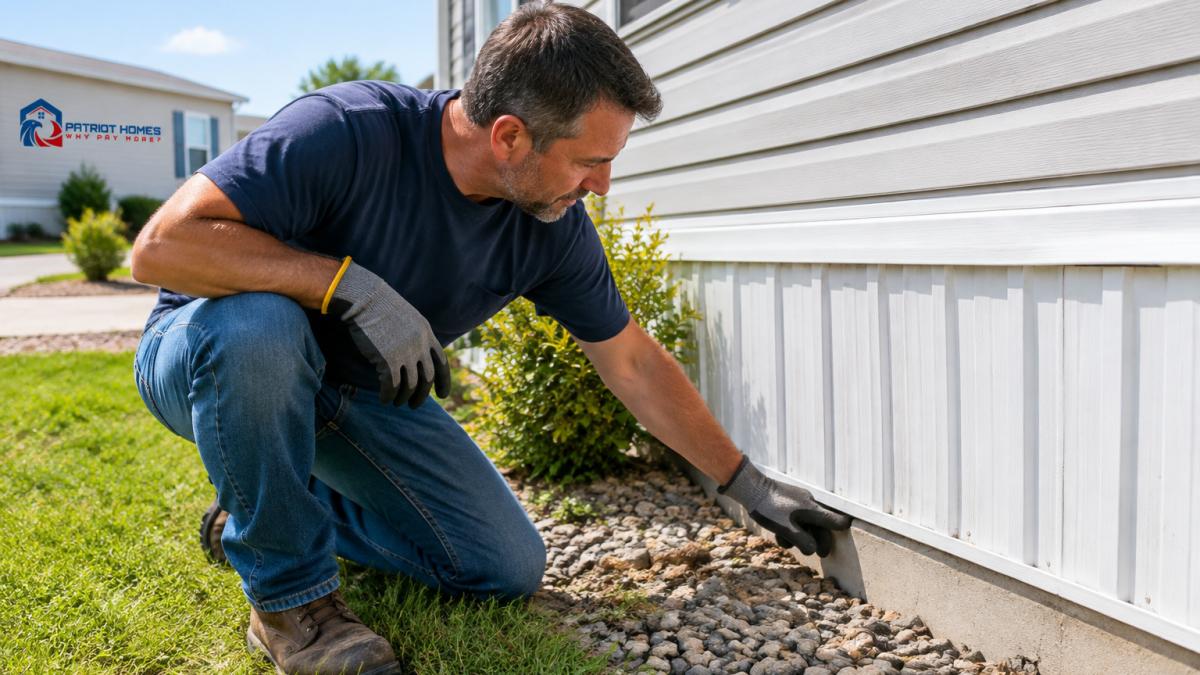
Walk the entire perimeter with a flashlight and a roll of painter’s tape. Mark each problem spot so you can find it again when you start repairs.
- Skirting line: Look for tears, sagging panels, and any gap where the skirting meets the ground. A gap wider than a dime is a rodent doorway.
- Vent covers: Confirm every crawlspace and attic vent has an intact screen. Cracked or missing screens are a common entry point.
- Siding seams and trim joints: Check for visible separation, especially at corners and around windows and doors.
- Utility penetrations: Where water, gas, electric, and cable lines enter the home, look for space around the pipe or wire.
Match the Fix to the Pest
Different pests exploit different openings, so the inspection should tell you what kind of repair to make:
- Rodents (mice and rats): Focus on the skirting line, utility penetrations, and eave gaps. Seal with metal mesh or hardware cloth first, then cover with caulk or foam. Mice can chew through soft materials, so metal is the barrier that holds.
- Cockroaches: Look for cracks no wider than a pencil line around siding, trim, and plumbing penetrations. Caulk these tightly and reduce moisture nearby.
- Ants: Follow trails to the smallest cracks around the foundation edge and utility lines. Seal them and keep soil and mulch from touching the siding.
- Termites: Check for wood that contacts the ground, mud tubes near the skirting, and soft or hollow-sounding wood. Termites need moisture and wood-to-soil contact, so correcting both is the priority.
Watch out: Do not seal a gap if you already see droppings, gnaw marks, or nesting material inside it, you may trap animals in the crawlspace. Clear the activity first, then seal.
Want a plan built for your home? Call our 24/7 team at (888) 765-1776 or request a quote from our website. We proudly serve local homeowners with custom manufactured and modular options, and we can help you choose the right floor plan from 1-bedroom ADUs to spacious 4-bedroom models.
How to Rodent Proof a Manufactured Home
Rodent control starts with sealing. Mice and rats can chew through soft materials, so use metal mesh, steel wool, or hardware cloth in gaps before covering them with caulk or foam.
A simple order of work helps:
- Seal the largest openings first, especially at the skirting line
- Cover vent openings with fine metal mesh
- Seal around utility lines with expanding foam or metal flashing
- Trim tree branches and shrubs that touch the home
- Keep firewood and stored items at least a few feet from the structure
Sealing Utility Penetrations, Vents and Eaves
Utility penetrations are a common weak point. Where water, gas, electric, or cable lines enter the home, check for space around the pipe or wire. Fill those gaps with a durable sealant, then cover larger openings with metal.
Eaves and vent openings need the same attention. Install screens over attic and crawlspace vents, and repair any damaged eave trim so small animals cannot nest in the cavity.
Installing a Mobile Home Rodent Barrier Under the Home
A rodent barrier can help keep animals out of the crawlspace and the area under the home drier.
Choose a barrier made from galvanized steel mesh or hardware cloth, since rodents chew through plastic and thin fabric.
Material and fit matter more than brand name. If you are comparing manufactured home brands, compare build quality and value before you decide.
Installation details depend on your home’s design, so review the manufacturer’s guidance and local code before you begin.
How to Get Rid of Rodents Under a Mobile Home
If you already see signs of rodents, such as droppings, gnaw marks, or nesting material under the home, act quickly.
Traps and bait can help, but use them carefully. Check traps often. Always follow the product label when using any pesticide, and keep bait stations out of reach of children and pets.
If the problem continues after you seal the home, consider calling a licensed pest control professional. They can confirm the species and recommend a targeted treatment plan.
Stopping Pests From Nesting Under a Mobile Home
Nesting usually happens in places that stay dark, damp, and quiet. The area under a manufactured home is ideal, unless you make it hostile to pests. That means addressing construction details, not just tidying up.
Understand the Under-Home Construction
The space beneath your home is defined by a few components. Knowing what each one does tells you where to focus:
- Skirting: The panels that enclose the crawlspace. Metal or fiber-cement skirting resists chewing better than some other materials. Whatever the material, the bottom edge must meet the ground with no gap.
- Vapor barrier: A plastic sheet over the exposed ground that blocks ground moisture from rising into the crawlspace. A torn or missing barrier leaves the soil damp, which attracts insects and gives rodents a reason to stay.
- Crawlspace vents: These allow air to move through and reduce humidity. They must stay open and screened, covering them to ‘seal out pests’ traps moisture instead.
- Plumbing and utility penetrations: Every pipe and wire that passes through the floor is a potential gap. These are the most commonly missed entry points.
- Access panels: The hatch or panel used for service access. Confirm it closes flush and latches securely; a loose panel is an open door.
Make the Space Hostile to Pests
Once you know the components, the habits below keep the space dry, clear, and unappealing:
- Remove trash, leaves, and cardboard from under the home
- Keep garbage and recycling bins tightly closed and away from the structure
- Fix leaking pipes and clear standing water around the home
- Repair or replace any torn section of the vapor barrier
- Store pet food indoors overnight
Moisture control ties these together. Damp soil attracts insects and gives rodents a reason to stay, so improve drainage and repair leaks as soon as you find them.
Know When Prevention Is No Longer Enough
Prevention and active infestation call for different responses. Use these signs to decide which stage you are in:
- Prevention stage: No droppings, no gnaw marks, no recurring sightings. Keep up the seasonal inspections and sealing.
- Active infestation: You find droppings, gnaw marks, nesting material, grease rub marks along walls, or you see the same pest repeatedly over several days.
If you are in the active stage, stop sealing and start removing.
Watch out: Keep bait stations out of reach of children and pets.
At Patriot Homes, our team can help you think through layout and finish choices before your home is built.
The table below summarises the main nesting conditions and the fix for each, as described in the section.
| Condition | Why it attracts pests | Fix |
|---|---|---|
| Damp soil under the home | Attracts insects and gives rodents a reason to stay | Improve drainage and repair leaks |
| Torn or missing vapor barrier | Leaves ground moisture rising into the crawlspace | Repair or replace the torn section |
| Trash, leaves and cardboard | Provides dark, quiet nesting material | Remove from under the home |
| Covered crawlspace vents | Traps moisture instead of keeping air moving | Keep vents open and screened |
| Loose skirting edge | Leaves a gap between skirting and ground | Extend the bottom edge fully to the ground |
| Pet food left out | Provides a food source overnight | Store pet food indoors overnight |
Booking Your Pest Prevention Plan With Patriot Homes
A good prevention plan protects your investment for years. At Patriot Homes, our team can help you think through skirting, ventilation, and layout choices before your home is built, so you start with a more secure structure.
Call (888) 765-1776 to speak with our 24/7 team about pricing matrices, customization options, or immediate assistance. You can also request a quote from our website. Whether you are buying your first home or downsizing, we are here to help.
Frequently Asked Questions
How do you rodent-proof a manufactured home?
Start by sealing gaps around utility lines, vents, eaves and the belly of the home. Use metal mesh, because mice can squeeze through small openings. Keep shrubs and firewood away from the skirting, close garbage bins tightly, and check seals each season. For help planning an inspection, call Patriot Homes at (888) 765-1776.
What can you put under a manufactured home to keep animals away?
A rodent barrier made of hardware cloth or metal mesh, combined with properly installed and maintained skirting, is the most effective option. Vapor barriers help control moisture, which discourages insects. Avoid loose insulation or wood in direct contact with the soil, since these give pests nesting material and shelter. Call (888) 765-1776 to ask our 24/7 team about options for your home.
How do you get rid of rodents under a mobile home?
Remove food sources, standing water and debris first, then trap or bait according to the product label. Once activity stops, seal the entry points you find, because rodents return to any gap they used before. Professional pest control may be needed for a heavy infestation. Our team can answer questions about your home at (888) 765-1776.
How often should you inspect a manufactured home for pests?
Inspect the exterior and the area under the home at least twice a year, typically in early spring and late fall, and after severe weather. Look for droppings, gnaw marks, mud tubes and daylight showing around skirting. Quick seasonal checks catch small gaps before they become nesting sites. Call (888) 765-1776 to schedule guidance from Patriot Homes.
