
7 Financing Options for Manufactured Homes to Know
Last Updated: November 12, 2026
Quick Summary
The main financing options for manufactured homes are real-property loans, such as conventional, FHA 203(b), VA and USDA mortgages, and home-only chattel loans. Real-property loans usually cost less over time, while chattel loans close faster but carry higher interest rates. Your land ownership and titling status decide which path you qualify for.
- Chattel loans are secured by the home alone and generally cost more than real-property mortgages.
- FHA Title I loans are personal-property loans and fit leased-lot situations.
- FHA 203(b) requires the home and land financed together and titled as real estate.
- Financing a home and land together as one package is usually the most cost-effective structure.
- Budget lot rent into your monthly payment, since it can rival the loan’s principal and interest.
Table of Contents
- Quick Comparison of Manufactured Home Financing Options
- Conventional Mortgages for a Manufactured Home
- FHA Manufactured Home Loan Basics
- Chattel Loan for Mobile Home Buyers
- Financing for Mobile Homes in Parks
- Manufactured Home and Land Financing
- Get Your Manufactured Home Financing Quote Today
- Frequently Asked Questions
Quick Comparison of Manufactured Home Financing Options
Financing options for manufactured homes fall into two broad families: loans secured by real property and loans secured by the home itself, often called chattel or personal-property loans. The first group usually costs less over time. The second group is faster and more flexible but typically carries a higher interest rate.
That distinction drives almost every decision that follows. According to Pew Charitable Trusts research on contract financing, roughly 20% of manufactured-home borrowers use some form of contract financing, which Pew characterizes as risky. More than half a million Americans sit in that bucket.
Here is the short version before we go deeper:
| Loan Type | Secured By | Best For | Key Trade-Off |
|---|---|---|---|
| Conventional mortgage | Home and land | Buyers with strong credit and owned land | Stricter eligibility rules |
| FHA Title I | Home | Buyers who need a federal program | Lender-dependent terms |
| Chattel loan | Home only | Leased lots, faster closings | Higher rates than mortgages |
| VA loan | Home and land | Eligible veterans and service members | Certificate of eligibility required |
| USDA loan | Home and land | Rural buyers with modest income | Property location must qualify |
| Land-home package | Home and land | Buyers starting from scratch | Requires more upfront coordination |
| Dealer-arranged financing | Varies | Buyers who want one point of contact | Less rate shopping |
At Patriot Homes, we walk buyers through these choices every day, and the honest answer is that no single option wins for everyone. Once you have a direction, our guide on how to lower monthly mortgage costs covers practical ways to reduce what you pay each month.
Conventional Mortgages for a Manufactured Home
A conventional mortgage for a manufactured home works much like a site-built mortgage: the loan is secured by both the home and the land it sits on, and the home is typically titled as real property.
Fannie Mae offers conventional financing for eligible manufactured homes, including its MH Advantage program for homes with site-built-style features. Freddie Mac, by contrast, generally treats modular homes as site-built single-family homes while mobile homes are ineligible for its financing.
What most guides miss is that the land matters as much as the house. If you own the lot and the home is permanently affixed, you are in conventional territory. If you rent the lot, you are probably not.
First-time buyers should start with our guide to manufactured home mortgage options for first-time buyers before applying anywhere.
FHA Manufactured Home Loan Basics
The FHA manufactured home loan route runs through the Title I program, which lets FHA-approved lenders make loans to eligible borrowers to purchase or refinance a manufactured home. You apply through a lender, not through HUD directly, and the lender sets the specific terms within FHA’s framework.
There are two distinct FHA paths, and confusing them is the most common mistake buyers make:
- Title I loans are personal-property loans. The home is the collateral, the loan is not secured by real estate, and the home does not have to be permanently affixed to a foundation. This is the path that fits leased-lot situations.
- FHA-insured real-property mortgages (Section 203(b)) require the home and land to be financed together, the home to be permanently affixed, and the property to be titled as real estate. This path behaves much more like a standard mortgage.
What Title I actually requires
- The home must be built to the federal HUD Code and carry a HUD label (the certification tag affixed at the factory).
- The lender must be an FHA-approved Title I lender; not every manufactured-home lender is.
- The borrower must meet credit, debt-to-income, and minimum-investment standards set by the lender within FHA guidelines.
- The home must be in good condition and meet FHA’s property standards, which the lender verifies.
What the 203(b) path adds
- The home must be permanently affixed to a foundation and titled as real property.
- The land must be included in the loan, or already owned by the borrower and pledged as security.
- A standard appraisal of the real property is required, not just a home valuation.
HUD’s own guidance lists conventional, government-insured, and nonconforming financing as the broad categories available, which is a useful reminder that FHA is one lane, not the highway. You can also review first time home buyer programs in Arizona to see which assistance programs you may qualify for.
Watch out: applying for FHA financing before confirming the home carries a HUD label and meets program property standards wastes weeks, verify the home’s eligibility first, then submit the loan application. Call (888) 765-1776 and our 24/7 team will help you confirm which FHA path fits your home and land situation before you apply.
Chattel Loan for Mobile Home Buyers
A chattel loan for a mobile home is a personal-property loan secured by the home alone, not the land beneath it.
The catch is cost. Chattel financing is generally more expensive than real-property mortgage financing, and that gap shows up in the interest rate and terms. You pay for the flexibility.
Chattel loans do have real advantages. Closings move faster, the paperwork is lighter, and lenders evaluate the home and borrower without waiting on a land appraisal. For a buyer who has found the right home in a park and does not want to lose it, speed matters.
If traditional financing does not fit, our overview of alternatives to traditional home financing lays out the paths buyers actually use.
Financing for Mobile Homes in Parks
Financing for mobile homes in parks is the scenario that trips up the most buyers, and it comes down to one question: do you own the land? When you lease the lot, the home is personal property, and that pushes you toward chattel or personal-property financing rather than a standard mortgage.
Most guides stop there. The part they skip is how a lender actually evaluates a home on a rented lot, and that evaluation is where deals succeed or fall apart.
What lenders look at beyond the home
- The lease itself. A long-term lease with clear renewal terms, a stated rent, and a defined escalation schedule is far easier to finance than a month-to-month arrangement. Lenders want to see that your right to keep the home on the lot will outlast the loan.
- Park approval and rules. Many communities require the park to approve the buyer and the financing arrangement, and some parks restrict which lenders or loan types they will accept. Confirm park requirements before you apply anywhere.
- Title and titling status. Whether the home is titled as personal property or has been converted to real property changes which loan programs are even available. A home on a leased lot is almost always personal property.
- Home age and condition. Older homes and homes that have been relocated can face tighter lender standards. A HUD label and a clean inspection history help.
The monthly-payment math buyers miss
Budget for the lot rent as part of your monthly payment calculation, not as an afterthought. A payment that looks comfortable on the home loan alone can strain a budget once space rent, taxes, and insurance land on top of it. A common pattern is for lot rent to rival or exceed the principal-and-interest portion of a chattel loan, so run the full number before you commit.
When a park home makes sense, and when it doesn’t
A park home financed with a chattel loan can be the fastest path to ownership for a buyer who has found the right home and does not want to lose it. It is a weaker fit when you plan to stay long-term and could instead buy land and finance the home as real property, which typically costs less over the life of the loan.
If traditional financing does not fit, our overview of alternatives to traditional home financing lays out the paths buyers actually use. Our 24/7 team at (888) 765-1776 can review your lease, titling status, and park requirements and tell you which financing structures are realistically available, call us or request a quote from our website before you sign anything.
Manufactured Home and Land Financing
Manufactured home and land financing bundles the home and the lot into a single transaction, and it is usually the most cost-effective structure available. A land-home package lets you finance everything together and often qualifies for real-property mortgage terms.
The Consumer Financial Protection Bureau’s analysis of manufactured housing finance data shows how much loan structure shapes borrower outcomes. Where the home and land are financed together as real property, borrowers tend to see better terms than home-only arrangements.
If you already own land, you are ahead: many lenders will finance just the home and use your existing property as security. Buyers exploring this route can review affordable home options across the western states to see what is available in their area.
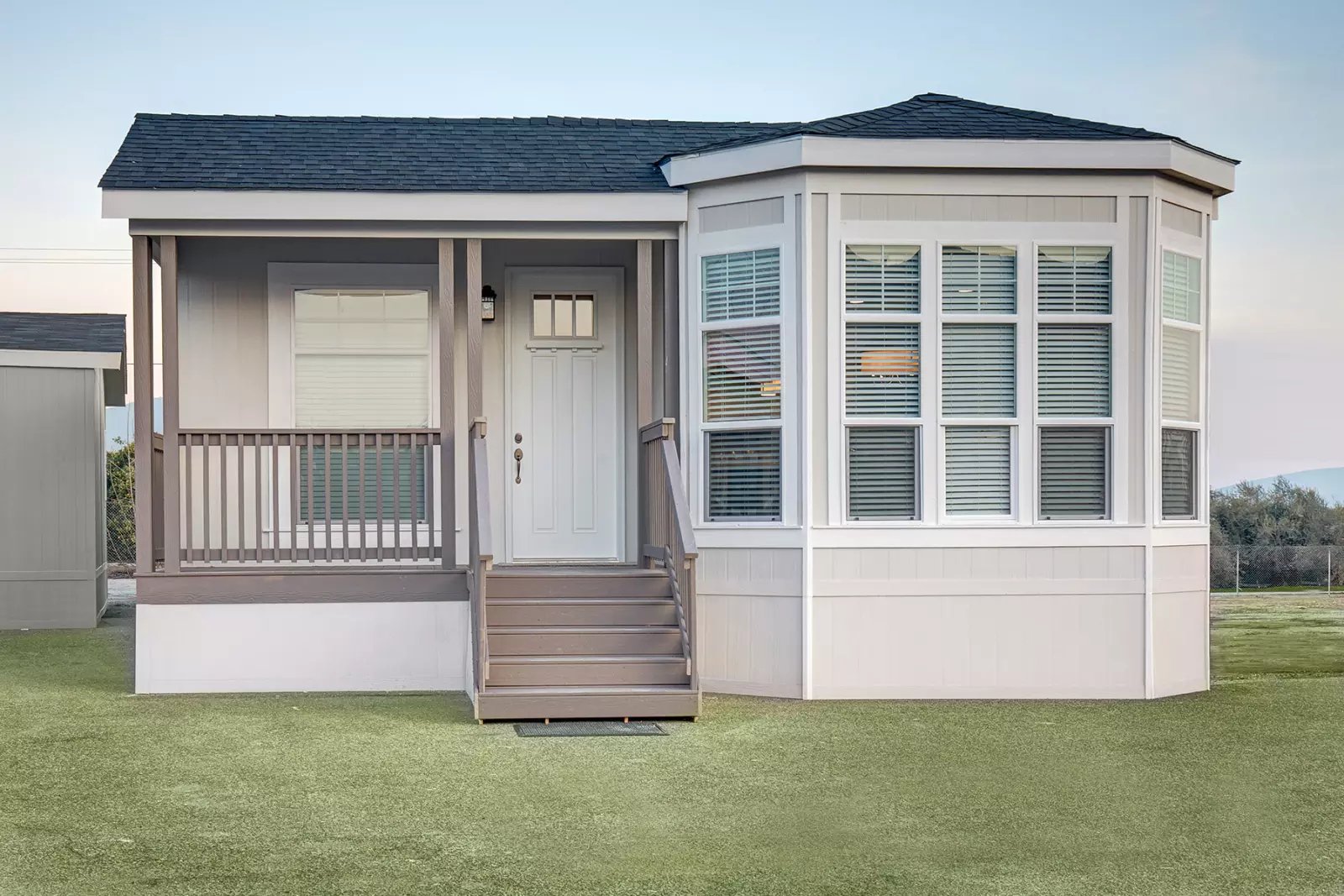
Get Your Manufactured Home Financing Quote Today
The right financing option depends on three things: whether you own the land, how the home will be titled, and what your credit profile looks like. Get those three answers straight and you can narrow the loan type quickly.
Patriot Homes proudly serves local homeowners with custom manufactured and modular options, from 1-bedroom ADUs to spacious 4-bedroom models. Why pay more when you can have quality, style, and affordability all in one?
Before you commit to any lender, get a second set of eyes on the numbers. Our 24/7 team can walk you through pricing matrices, customization options, and the financing structures that fit your land situation.
Financing a manufactured home does not have to mean settling for the first loan a dealer hands you. Start with your land status and your title, then match the program to it.
Frequently Asked Questions
Is it difficult to finance a manufactured home?
It can be straightforward if you choose the right loan for your situation. Conventional mortgages work for homes titled as real property, while chattel loans suit homes on leased land. Credit score, down payment, and land ownership affect approval. Contract financing is generally riskier than standard mortgages. Call (888) 765-1776 to review your options.
What type of loan is best for a manufactured home?
The best loan depends on whether you own the land. A conventional mortgage or FHA manufactured home loan fits when the home is titled as real property. A chattel loan for mobile home buyers works when the home stays personal property, such as in a park. VA and USDA loans offer low down payments for eligible buyers. Compare rates and terms with a lender before deciding.
Can you finance a manufactured home in a park?
Yes. Financing for mobile homes in parks usually means a chattel loan, because the home sits on leased land you do not own. These loans often carry higher interest rates than mortgages. Some lenders also require park approval and a long-term lease. Get prequalified early so you know your budget before you shop for a home.
Can you get an FHA loan for a manufactured home?
Yes. The FHA manufactured home loan program, including FHA Title I, lets approved lenders finance eligible purchases or refinances. The home must meet HUD code and lender requirements. Borrowers need acceptable credit and a down payment. Ask an FHA-approved lender about eligibility, since terms vary by lender and property.
Can you finance a manufactured home and land together?
Yes. Manufactured home and land financing bundles the home and the property into one loan, often a conventional or FHA mortgage. This usually means a lower interest rate than a chattel loan and may let you build equity. You will need a down payment and the land must be titled with the home as real property.
