
7 Government Grants for First Time Mobile Home Buyers
Last Updated: November 15, 2026
Quick Summary
True government grants for first time mobile home buyers are rare, since most programs labeled grants are actually deferred-payment loans, forgivable loans, or loan guarantees. Start with USA.gov’s home buying assistance page, then check your state housing finance agency, county housing department, city community development office, and HUD-approved counseling agencies.
- Down Payment Resource counted 2,833 homeownership programs in Q3 2026, up 87 programs from Q2 2026.
- USDA manufactured home loans require an eligible rural area, income limits, and a home permanently attached to the land.
- New York’s Manufactured Home Loan Program lists up to $30,000, but it is a loan, not a grant.
- Ask whether a program covers manufactured homes, allows leased land, and can stack with your first mortgage.
- Start the assistance application before you fall in love with a floor plan, since it runs parallel to your mortgage.
Table of Contents
- The Grant-vs-Loan Reality Check Every Mobile Home Buyer Needs
- 1. Federal Programs: Where Government Grants for First Time Mobile Home Buyers Begin
- 2. USDA Manufactured Home Loan Requirements You Must Meet
- 3. Down Payment Assistance for Mobile Homes: State and Local Programs
- 4. How to Finance a Custom Manufactured Home on Your Own Land
- 5. Stacking Grants, Loans, and Seller Credits: What Programs Allow
- 6. Your Application Checklist and Timeline, Step by Step
- Call Patriot Homes for a Free Grant and Financing Walkthrough
- Frequently Asked Questions
The Grant-vs-Loan Reality Check Every Mobile Home Buyer Needs
Here’s the hard truth most guides skip: government grants for first time mobile home buyers are rarer than the internet suggests.
Down Payment Resource counted 2,833 homeownership programs in Q3 2026, up 87 programs, or 3.2%, from Q2 2026, according to Down Payment Resource program tracking.
The people who succeed read the fine print before they fall in love with a floor plan.
1. Federal Programs: Where Government Grants for First Time Mobile Home Buyers Begin
Start with the official federal guide. USA.gov’s home buying assistance page lists loans, mortgage assistance, and vouchers for first-time buyers, and it’s free. It won’t hand you a check, but it tells you which agencies run which programs.
FHA-Backed Financing and Down Payment Help
FHA loans can allow lower credit scores and smaller down payments than many conventional products. Down payment assistance is sometimes paired with FHA financing, but confirm whether a given program accepts manufactured homes.
Checking Eligibility Before You Apply
Lenders look at credit score, debt-to-income ratio, household income, and the home itself. If your credit is the worry, our guide to manufactured home financing for bad credit covers what lenders actually accept.
2. USDA Manufactured Home Loan Requirements You Must Meet
USDA manufactured home loan requirements are stricter than most buyers expect. The home must be in an eligible rural area, you must meet income limits for your household size, and the property must be your primary residence.
Get prequalified before you shop. A USDA approval letter tells you your real budget, and it stops you from touring homes you can’t finance. Call (888) 765-1776 and our team will walk you through next steps.
3. Down Payment Assistance for Mobile Homes: State and Local Programs
Down payment assistance for mobile homes exists, but it is almost never run from Washington. It is run by state housing finance agencies, county housing departments, city community development blocks, and nonprofit housing counseling agencies, and each one sets its own rules about whether a manufactured home counts.
The Four Places to Look, in Order
Work this list top to bottom. Most buyers find their program at step two or three, not step one.
- State housing finance agency (HFA). Every state has one. HFAs issue mortgage revenue bonds and run down payment assistance programs, often paired with FHA, VA, or USDA first mortgages. Ask whether the program’s property standards accept a HUD-code manufactured home and whether the home must be on owned land.
- County housing department. County programs are frequently targeted at specific income bands and areas, rural counties, unincorporated areas, or designated census tracts. A county program may accept manufactured homes that the state program excludes.
- City community development department. Larger cities run their own down payment and closing-cost programs, sometimes funded through federal Community Development Block Grant dollars. These tend to be smaller awards with tighter income caps.
What a Real Program Looks Like
New York’s Manufactured Home Loan Program lists up to $30,000 for eligible purchase-related costs and existing personal-property loan debt, per New York State Homes and Community Renewal.
Use that as your template for what to ask about any program. The structure, a capped award, a defined list of eligible costs, a repayment schedule, repeats across the country even when the dollar figures and names change.
The Five Questions That Screen a Program in Five Minutes
Ask every provider these before you invest time in an application:
- Is it a grant, a forgivable loan, or a deferred-payment loan? A forgivable loan usually carries a forgiveness period, often 5 to 15 years, and converts to a repayable balance if you sell or refinance early.
- Does it cover manufactured homes, and under what standard? Some programs require the home to be permanently affixed to a foundation on land you own. Others accept a titled manufactured home in a resident-owned community. A few exclude manufactured housing entirely.
- Does it allow the home on leased land? This is the most common disqualifier for mobile home buyers. If the program requires a recorded deed to the land, a leased-lot purchase is out.
- What is the income limit for my household size? Limits are set as a percentage of area median income and change annually. A household of one and a household of four face different ceilings in the same county.
- Can it be stacked with my first mortgage? Some programs pair only with FHA or USDA loans; others prohibit combining with certain assistance types or require a minimum borrower contribution.
Watch the Recipient, Not Just the Program Name
A program described as “mobile home assistance” may fund park acquisition or resident-owned community infrastructure, not an individual buyer. Always ask who receives the money, you, the seller, the park, or the community, before you assume it applies to your purchase.
Where This Fits Locally
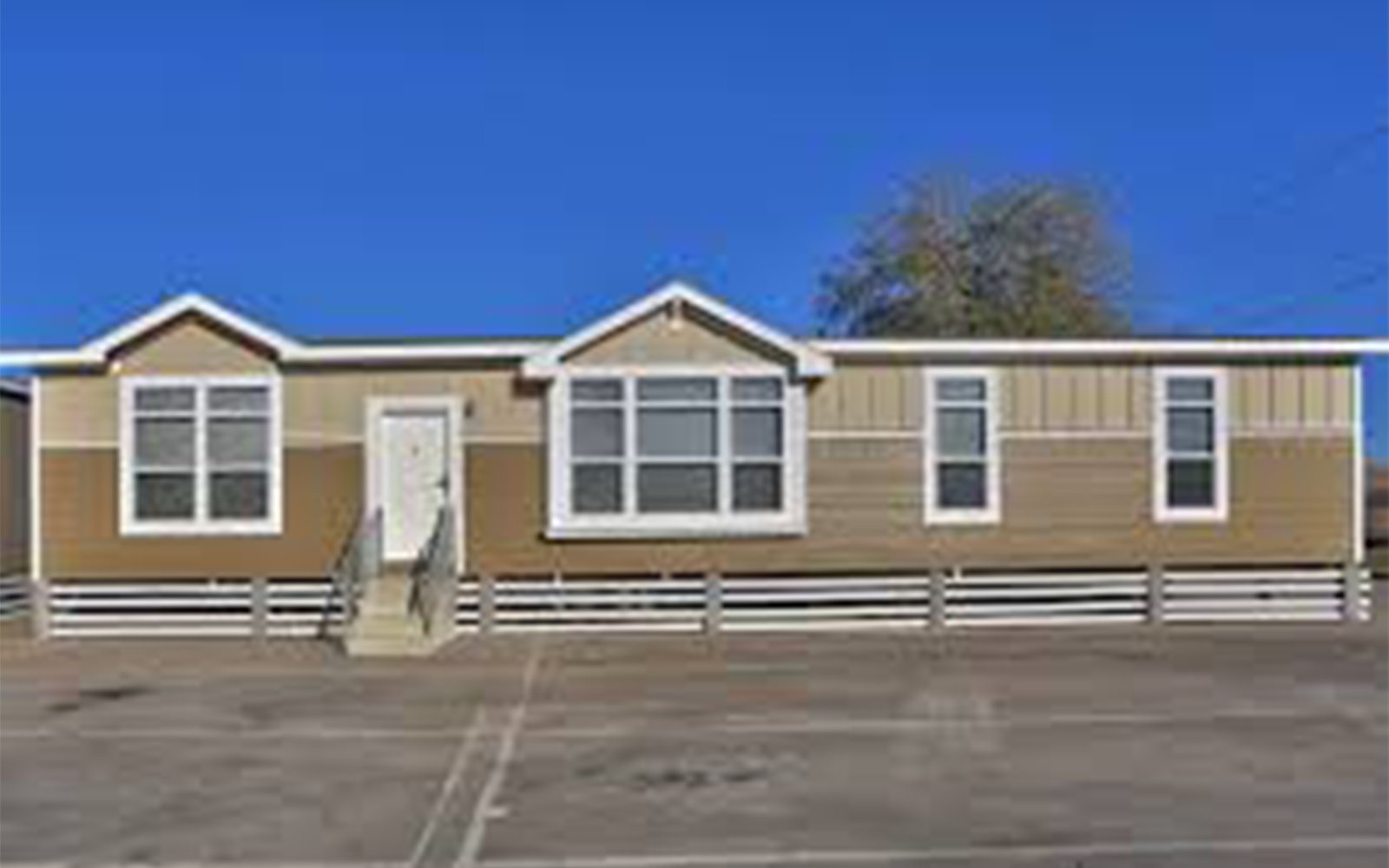
We proudly serve local homeowners across California and the surrounding counties with custom manufactured and modular options, from 1-bedroom ADUs to spacious 4-bedroom models. Why pay more when you can have quality, style, and affordability all in one?
4. How to Finance a Custom Manufactured Home on Your Own Land
Financing a custom manufactured home on land you already own is often simpler than buyers fear. Some lenders structure these loans as construction-to-permanent arrangements, which may convert to a standard mortgage once the home is set and inspected.
The catch is sequencing. Land ownership, site prep, utility hookups, and foundation type all get reviewed before closing. Our step-by-step guide on how to finance a manufactured home on private land breaks down the full process.
5. Stacking Grants, Loans, and Seller Credits: What Programs Allow
Stacking is where careful buyers save real money. Many programs permit combining a first mortgage with down payment assistance, closing-cost help, and seller credits, provided total assistance stays under the program’s cap.
Not every combination is allowed. Some programs prohibit stacking with certain loan types, and others require housing counseling first. Ask each provider what it permits before you commit.
| Assistance Type | Repay? | Typical Use | Stacking Notes |
|---|---|---|---|
| True grant | No | Down payment, closing costs | Rare; often capped by income |
| Forgivable loan | No, if terms met | Down payment | Forgiveness period usually 5-15 years |
| Deferred-payment loan | Yes, later | Down payment, closing | Often zero interest until sale |
| Loan guarantee | Yes | Reduces lender risk | Not cash to you |
| Seller credit | No | Closing costs | Limited by loan program rules |
6. Your Application Checklist and Timeline, Step by Step
Expect the assistance application to run on a parallel track with your first mortgage rather than after it. Buyers who close on time start the assistance paperwork before they fall in love with a floor plan.
Phase 1: Before You Shop (Weeks 1-2)
- Pull your credit reports from all three bureaus and dispute any errors
- Gather two years of federal tax returns, recent pay stubs covering at least 30 days, and statements for every asset account
- Collect documentation of any other income: Social Security, disability, pension, child support, or self-employment profit-and-loss statements
Phase 2: Confirm the Property Qualifies (Weeks 2-4)
- Confirm the home meets program property standards, HUD-code construction, permanent foundation where required, and a clear title
- Verify land status: owned land, leased lot, or resident-owned community. Each program treats these differently
- Obtain the home’s HUD data plate and certification label information, which lenders and appraisers will request
Phase 3: Submit the Assistance Application (Weeks 3-6)
- Submit the assistance application with your signed purchase contract and the lender’s preapproval letter
- Complete any required homebuyer education course and submit the certificate
- Provide the program with your first mortgage terms so it can confirm stacking is permitted
Phase 4: Close (Weeks 6-9)
- Lock your rate once the property clears underwriting
- Schedule the site inspection and utility hookup timeline with the dealer and installer
- Review your closing disclosure well before closing
Stacking Rules That Affect the Sequence
A common pattern is that the assistance provider needs your first mortgage’s loan estimate before it will issue a commitment, which means the lender and the assistance agency have to talk to each other. If either side will not coordinate, that is a warning sign.
Where Buyers Get Stuck
Watch out: a purchase contract with a short financing contingency can expire while the assistance file is still in underwriting, so negotiate a closing date that accounts for both tracks.
Our guide on getting approved for manufactured home financing covers each document in detail. When you are ready to match a floor plan to your approved budget, call (888) 765-1776 and our 24/7 team will walk you through pricing matrices, customization options, and immediate assistance, or request a quote from our website.
Call Patriot Homes for a Free Grant and Financing Walkthrough
The programs are out there. The paperwork is the hard part, and nobody should face it alone.
We proudly serve local homeowners across California and the surrounding counties with custom manufactured and modular options, from 1-bedroom ADUs to spacious 4-bedroom models. Read our first-time home buyer tips for manufactured homes before you call, then reach us at (888) 765-1776 or request a quote from our website.
The gap between “I can’t afford this” and “I’m moving in” is usually information, not income. Patriot Homes builds brand-new, customizable manufactured homes at the lowest possible pricing, with a team available around the clock to guide you from preapproval to keys.
Frequently Asked Questions
Are there government grants specifically for mobile home buyers?
True grants earmarked only for mobile homes are rare. Most help comes as down payment assistance, forgivable loans, or deferred-payment loans that may cover manufactured homes. Many homeownership programs exist, though not all accept manufactured housing. Always confirm whether an offer is a grant or a loan before you count on it, and ask the program administrator directly about manufactured-home eligibility.
Does the USDA offer financing for manufactured homes?
USDA-backed purchase loans may apply to some manufactured homes that meet program standards. Eligibility depends on factors such as location, income, and the home itself. Review the USDA manufactured home loan requirements with a participating lender before you shop, since a home that fails one standard can disqualify the whole application.
How can I find down payment assistance for a manufactured home?
Start with your state housing finance agency and county or city housing department, then ask local lenders which programs they work with. Down payment assistance for mobile homes often comes through these agencies rather than a single national fund. Confirm three things: whether the program accepts manufactured housing, whether the home must sit on owned land, and whether the money is a grant, a forgivable loan, or a deferred-payment loan.
What are the eligibility requirements for first-time homebuyer grants?
Most programs look at household income against area limits, credit score, debt-to-income ratio, and whether you have owned a home in the past three years. Some add homebuyer education through a housing counseling agency. Many programs are open to first-time buyers. Requirements differ by program, so read each one and gather pay stubs, tax returns, and bank statements early.
Can I use FHA loans to purchase a manufactured home?
FHA-insured loans can finance some manufactured homes that meet FHA standards. FHA down payment assistance programs may then help with the upfront costs, but you must confirm the specific program accepts manufactured housing. Ask your lender to verify the home’s eligibility before you sign a purchase agreement, then call Patriot Homes at (888) 765-1776 for help matching a floor plan to your financing.
