
Affordable Family Homes in Idaho 2026
Table of Contents
- Affordable Family Homes in Idaho 2026: What You Need to Know
- Quick Comparison: Affordable Housing Options for Families
- Cheap Homes for Sale in Idaho by Region
- Affordable Places to Live in Idaho for Growing Families
- Manufactured Homes in Idaho: An Affordable Path to Ownership
- Idaho First-Time Homebuyer Programs and Down Payment Assistance
- Total Cost of Ownership: Beyond the Listing Price
- How to Find and Evaluate Affordable Homes in Idaho
- Frequently Asked Questions
Last Updated: October 17, 2026
Affordable Family Homes in Idaho 2026: What You Need to Know
Finding affordable family homes in Idaho in 2026 is achievable if you know where to look. Idaho offers genuine opportunities for families priced out of coastal markets, with strong schools, outdoor recreation, and reasonable living costs.
The challenge isn’t finding cheap homes, it’s finding affordable homes that won’t drain your budget through hidden costs, long commutes, or poor neighborhood fit. At Patriot Homes, we’ve helped families navigate this.
Quick Comparison: Affordable Housing Options for Families
| Housing Type | Typical Price Range | Best For | Key Advantage |
|---|---|---|---|
| Single-family homes (3-4 bed) | Varies by region | Families wanting traditional ownership | Equity building, customization |
| Manufactured homes | Lower entry point | Budget-conscious families | Affordability without sacrificing quality |
| Multifamily (duplex/triplex) | Varies by region | Families open to rental income | Offset mortgage with tenant payments |
| Homes on acreage | Varies by region | Families wanting land and privacy | Rural lifestyle, expansion potential |
Cheap Homes for Sale in Idaho by Region
Idaho’s affordable housing market splits into distinct regions with different price bands, inventory patterns, and family trade-offs. Here, a home counts as “affordable” when estimated all-in monthly housing cost (principal, interest, property taxes, insurance, and a maintenance reserve) stays at or below 28% of gross monthly income. At $75,000 household income, that caps all-in housing at about $1,750 per month; at $100,000, about $2,333.
| Region | Anchor Communities | Typical Affordable Segment | Family Trade-off |
|---|---|---|---|
| Southeast | Pocatello, Blackfoot, Burley | Entry-level single-family and manufactured homes | Long drives to the Boise metro and limited high-wage employment |
| South Central | Twin Falls, Jerome | Single-family homes and small acreage | Smaller rental and childcare supply; steady but thin inventory |
| Lewis-Clark Valley | Lewiston, Clarkston (WA) | Older single-family homes, some with acreage | Isolated from major metros; outdoor access is the draw |
| Southwest exurbs | Caldwell, Nampa, Middleton | Smaller single-family homes and townhomes | Commute into the Boise job base; prices rising fastest here |
| North | Coeur d’Alene outskirts, Post Falls, Sandpoint periphery | Limited entry-level stock; manufactured and rural homes | Highest prices in the state outside Boise; short inventory windows |
Southeast Idaho: Pocatello, Blackfoot, and Burley
Southeast Idaho is where the 28% test is easiest to pass. Pocatello (Bannock County) anchors the region with a university, a regional medical center, and a diversified job base.
The trade-off is distance and employment depth. Search tools like Zillow’s Idaho homes for sale and Homes.com’s Idaho home search let you filter by county and set alerts, which matters because the best-priced homes in this region often go under contract within a couple of weeks.
South Central Idaho: Twin Falls and Jerome
Twin Falls is the largest city in the Magic Valley and the region’s service hub, with a hospital system, a college, and a retail base smaller towns lack. Jerome sits about 15 minutes west and typically prices below Twin Falls for similar homes.
Inventory in South Central Idaho is thinner than in the southeast, so set alerts and be ready to tour quickly. Rural properties with a few acres are more common here, but verify water rights, well condition, and septic permits before you fall for the land.
Lewis-Clark Valley: Lewiston
Lewiston sits at the confluence of the Snake and Clearwater rivers near the Washington border. It functions as its own affordable market: older single-family homes, some with acreage, and a cost of living below the state average.
The trade-off is isolation. Lewiston is a long drive from Boise and most high-wage job centers, so it suits remote workers, retirees, and families with local employment. Because the housing stock skews older, budget for inspection findings on roofs, wiring, and foundations rather than assuming the lower list price is the whole story.
Southwest Idaho Exurbs: Caldwell, Nampa, and Middleton
This is the most competitive affordable region in the state, combining access to the Boise job base with prices below Boise proper. Caldwell, Nampa, and Middleton offer smaller single-family homes and townhomes that can still pass the 28% test for households earning $90,000-$110,000, though the margin is tighter than in the southeast.
Expect faster-moving inventory and more competition. Get pre-approved before you tour, and expect to decide within days rather than weeks. The upside is manageable commutes to Boise-area employers, exactly the trade-off families moving from higher-cost states are trying to make.
North Idaho: Coeur d’Alene Outskirts, Post Falls, and Sandpoint Periphery
North Idaho is the most expensive region outside Boise, driven by in-migration and limited buildable land.
Inventory windows are short and prices are the least forgiving in the state. If North Idaho is your target, the 28% test will eliminate most listings unless your income is well above the state median, so run the math before you fall in love with the scenery.
Apply the same 28% test in every region before you tour. A home that passes in Pocatello may fail in Post Falls at the same list price once taxes, insurance, and commute costs are added.
Affordable Places to Live in Idaho for Growing Families
Choosing where to live matters as much as what you buy.
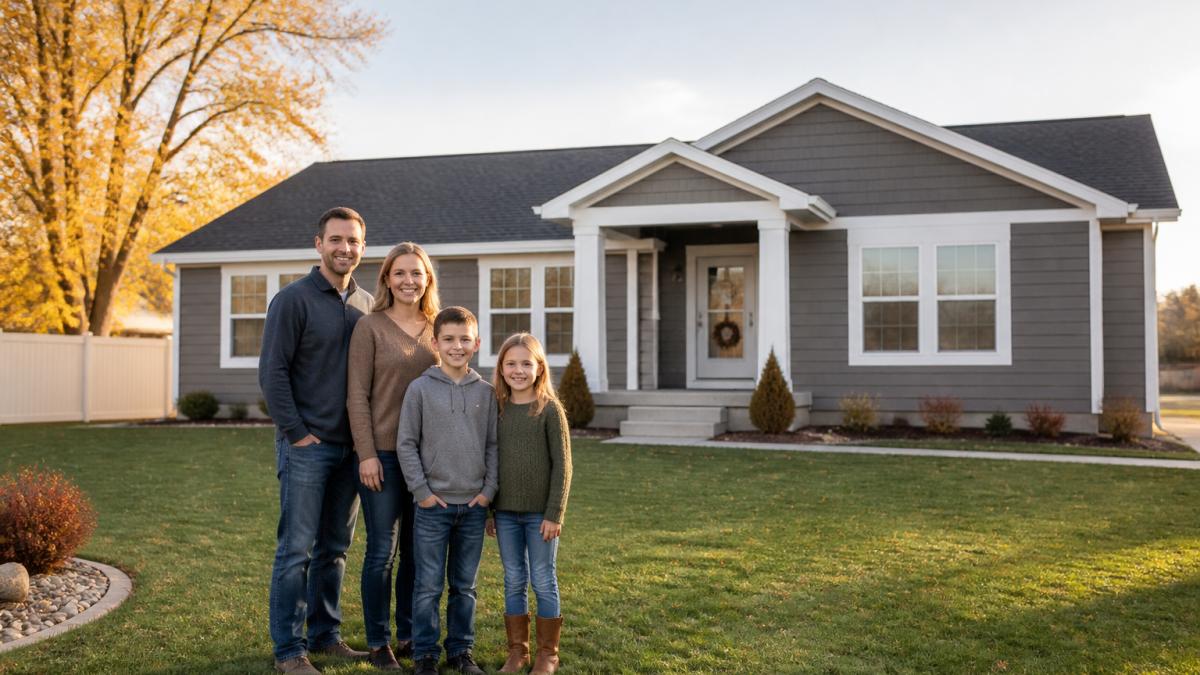
Define “affordable” for your family first. Affordable means the lowest total cost of ownership relative to household income, not the lowest price.
Beyond price, the key factors are school quality, childcare availability, healthcare access, and lifestyle fit. A family with young children needs different things than one with teenagers.
Start by identifying 2-3 communities that match your lifestyle priorities, then search for affordable homes within them.
Manufactured Homes in Idaho: An Affordable Path to Ownership
Manufactured homes have shed their outdated reputation. Modern models deliver quality construction, customizable layouts, and genuine affordability, often 20-40% less than comparable site-built homes.
The appeal is straightforward: a real home with real finishes and real equity, without the inflated land and labor costs of traditional construction.
The manufactured home path works especially well if you own land or can place a home on affordable land, or if you’re willing to move to an established manufactured home community with amenities and maintenance many families prefer.
The key distinction: manufactured homes placed on land you own build equity just like site-built homes. Homes in communities where you rent the lot are more like long-term rentals with ownership benefits.
Idaho First-Time Homebuyer Programs and Down Payment Assistance
Idaho offers several pathways to reduce your down payment burden, making homeownership achievable even without $80,000 saved.
Many first-time buyers don’t realize that conventional loans now accept down payments as low as 3-5% on qualified properties. FHA loans, backed by the Federal Housing Administration, allow down payments as low as 3.5% for first-time buyers, though you’ll pay mortgage insurance.
Beyond federal programs, Idaho has state-level assistance.
The real barrier for most families isn’t the down payment but closing costs and reserves. A 3% down payment on a $200,000 home is $6,000, but closing costs can add $4,000-$6,000.
Don’t assume you can’t afford to buy. Talk to a lender about your actual options before you decide to rent another year.
Total Cost of Ownership: Beyond the Listing Price
Most guides quote a listing price and stop. Real affordability is a monthly number: principal and interest, property taxes, insurance, maintenance reserves, utilities, and commute costs, measured against gross monthly income. The worked example below shows the mechanism so you can substitute your own figures.
A worked monthly budget
Assume a $250,000 home, a 30-year fixed-rate mortgage, and a 5% down payment ($12,500), leaving a $237,500 loan. At a 6.5% interest rate, principal and interest comes to roughly $1,500 per month. Layer on the rest:
| Cost line | How to estimate it | Rough monthly figure on a $250,000 home |
|---|---|---|
| Principal and interest | Loan amount at current 30-year rate | ~$1,500 |
| Property taxes | Idaho effective rates run well below the national average; confirm the county assessor’s figure for the specific parcel | ~$120-$170 |
| Homeowners insurance | Varies by location, age, and roof; get a quote before you offer | ~$80-$150 |
| Maintenance reserve | Common rule of thumb is 1% of home value per year | ~$210 |
| Utilities | Climate and home size drive this; a 2,000 sq ft home in Pocatello heats and cools for less than the same home in Boise | ~$200-$300 |
| Commute | Fuel plus wear; a 45-minute one-way drive can add several hundred dollars a month | $0-$400 |
| All-in total | ~$2,100-$2,730 |
At the low end, that all-in figure is about 34% of a $75,000 household income and about 25% of $100,000. At the high end, it exceeds 43% of $75,000. That gap is the point: the same $250,000 list price is affordable for one family and not another, driven by taxes, insurance, utilities, and commute, not the sticker price.
Why the line items move so much
Property taxes in Idaho are levied by county and taxing district, so two homes at the same price in different counties can carry noticeably different bills.
Insurance is the line item families most often underestimate.
Maintenance reserves are not optional. A 1% annual reserve on a $250,000 home is $2,500 per year, and older homes in Lewis-Clark Valley or rural acreage properties often need more.
Utilities and commute are where rural properties quietly lose their price advantage. Acreage homes may need well maintenance, septic pump-outs, and longer utility runs.
The 28% test is a starting filter, not a guarantee. Lenders may approve you at a higher debt-to-income ratio, but a family with childcare, student loans, or irregular income should run the all-in number against take-home pay, not gross income, before committing.
Run your own numbers before you tour
Build the table above with your actual income, your target county’s tax rate, an insurance quote, and your real commute. If the all-in figure exceeds 28% of gross monthly income, the home isn’t affordable for your family regardless of the list price. If it fits with room to spare, you’ve found a genuine candidate rather than a cheap listing that becomes expensive after move-in.
How to Find and Evaluate Affordable Homes in Idaho
Start your search on the major listing platforms. Zillow’s Idaho home search gives you photos, sales history, and filters.
Set up alerts for new listings in your target communities. The best deals sell fast. Alerts let you move quickly when something matches your criteria.
Visit properties in person.
Get a pre-approval letter before you make an offer. It shows sellers you’re serious and ready to close.
Work with a real estate agent who knows the local market.
Consider manufactured homes seriously if you’re open to them.
Finding affordable family homes in Idaho in 2026 means looking beyond listing prices to total ownership costs, regional trade-offs, and your family’s actual priorities. Our 24/7 team can walk you through financing, customization, and placement on your own land or in established communities.
Frequently Asked Questions
Where are the most affordable places to buy a family home in Idaho in 2026?
Southeast Idaho cities like Burley, Pocatello, and Blackfoot consistently rank among the most affordable places to live. Central Idaho communities including Lewiston and Jerome also offer lower median home values. North Idaho towns such as Preston and Payette provide budget-friendly options for families. Each region balances affordability with access to schools, healthcare, and family amenities. Research specific neighborhoods and current listings to compare median home values and available inventory in your target area.
What is a realistic budget for buying an affordable family home in Idaho?
Realistic budgets vary by location and family size. Statewide, many affordable family homes in rural and smaller communities are available. Your actual budget depends on down payment savings, credit profile, and financing options. First-time homebuyer programs and manufactured home options can lower entry costs. Contact a lender or real estate professional to determine what monthly payment fits your household income and expenses.
Are manufactured homes an affordable option for families in Idaho?
Yes. Manufactured homes offer one of the most affordable paths to homeownership for families in Idaho. They provide customizable layouts, modern finishes, and significantly lower price points than traditional site-built homes. Families can select the number of bedrooms, bathrooms, and finishes to match their needs and budget. Many manufactured home dealers, including Patriot Homes, offer expert guidance and financing support. Manufactured homes hold value well when placed on owned land or in established communities with strong resale markets.
What programs help first-time homebuyers in Idaho?
Idaho offers several first-time homebuyer resources. The Idaho Housing and Finance Association (IHFA) provides down payment assistance, favorable loan terms, and education programs for qualified buyers. Many lenders offer first-time buyer mortgages with lower down payment requirements and competitive rates. Manufactured home dealers often work with first-time buyers and offer flexible financing. Research IHFA programs, explore FHA loans, and consult with local lenders to identify assistance matching your financial situation and goals.