
Alternatives to Traditional Septic Systems for Rural Land
Last Updated: October 23, 2026
Quick Summary
The EPA-recognized alternatives to traditional septic systems for rural land include mound systems, aerobic treatment units, drip distribution, recirculating sand filters, and constructed wetlands. Each suits sites where shallow soil, heavy clay, a high water table, or a small lot rules out a standard drain field. Verify your soil and local requirements before finalizing a home model.
- Alternative systems carry more moving parts, pumps, alarms, and greater complexity than conventional designs.
- A mound system raises the treatment bed above natural soil for shallow or wet sites.
- Aerobic treatment units inject oxygen into wastewater but need consistent power and regular service.
- Bedroom count drives tank sizing, so choose your floor plan and septic plan together.
- Get a soil evaluation and perc test before finalizing a home model or placement.
Table of Contents
- Why Rural Land Often Needs a Septic Alternative
- Quick Comparison: Rural Septic Alternatives at a Glance
- Septic Systems for Difficult Sites: What Actually Works
- Mound Septic System: Pros, Cons, and Best Use Cases
- Aerobic Treatment Unit: How It Works and When to Choose One
- Rural Property Septic System Requirements You Must Verify
- Matching Your Home to Your Septic Plan
- Frequently Asked Questions
Why Rural Land Often Needs a Septic Alternative
Not every parcel of rural land can handle a conventional septic system, and that reality shapes how you plan a homesite before you ever pour a foundation. The EPA’s overview of septic system types lists several alternatives to traditional septic systems for rural land, including mound systems, aerobic treatment units, drip distribution, recirculating sand filters, and constructed wetlands. Each exists because the standard gravity-fed tank-and-leach-field design has limits.
Those limits usually come down to soil. Shallow bedrock, heavy clay, a high water table, or a lot that’s simply too small for a drain field can rule out the conventional approach. When that happens, you’re not out of options. You’re choosing a different design.
At Patriot Homes, we work with landowners across Arizona, California, Idaho, or Nevada who are placing manufactured homes on rural parcels, and the septic question comes up in almost every conversation. We proudly serve local homeowners with custom manufactured and modular options, and we’ve learned that the smartest move is planning the wastewater system and the home together.
Here’s the good news: solving the septic puzzle doesn’t have to blow your budget. Below, we’ll walk through what actually works, what each option costs you in maintenance and complexity, and how to match a floor plan to your site. Have questions about your specific parcel? Call our 24/7 team at (888) 765-1776 for pricing information and immediate guidance.
Quick Comparison: Rural Septic Alternatives at a Glance
The right system depends on your soil, your slope, and how much upkeep you’re willing to take on. This table gives you the short version before we dig into each option.
| System | Best For | Complexity | Upkeep |
|---|---|---|---|
| Mound system | Shallow soil, high water table | Moderate | Periodic inspection |
| Aerobic treatment unit | Tight lots, sensitive sites | Higher (pumps, alarms) | Regular service |
| Drip distribution | Sloped or marginal soil | Higher | Filter and line care |
| Recirculating sand filter | Sites needing extra treatment | Moderate to high | Media and pump checks |
| Constructed wetland | Low-impact, patient owners | Moderate | Seasonal plant care |
One honest caveat: alternatives to traditional septic systems for rural land can be more complex and costly than the conventional version. BuildingAdvisor notes that alternative systems carry more moving parts, electrical components like pumps, monitors, and alarms, and greater overall complexity. That’s a real trade-off, not a sales pitch.
Septic Systems for Difficult Sites: What Actually Works
Septic systems for difficult sites solve a specific problem: the ground won’t treat wastewater the way a standard drain field needs it to. When soil is shallow, poorly draining, or too close to groundwater, the system has to compensate with elevation, added oxygen, or filtration.
The EPA lists several proven approaches for exactly these conditions. A mound system raises the treatment area above the natural soil. An aerobic treatment unit adds oxygen to speed up waste breakdown. Drip distribution spreads effluent in small, controlled doses. Recirculating sand filters push wastewater through a filter bed before release.
What most guides miss is that “difficult” is a soil-test verdict, not a permanent label. A perc test and a site evaluation tell you which of these systems your parcel can actually support. Skip that step and you’re guessing with your foundation budget.
Get your soil evaluation done before you finalize a home model or placement. Moving a manufactured home a few feet to accommodate a mound or drip field is far cheaper than redesigning the system after the fact.
Mound Septic System: Pros, Cons, and Best Use Cases
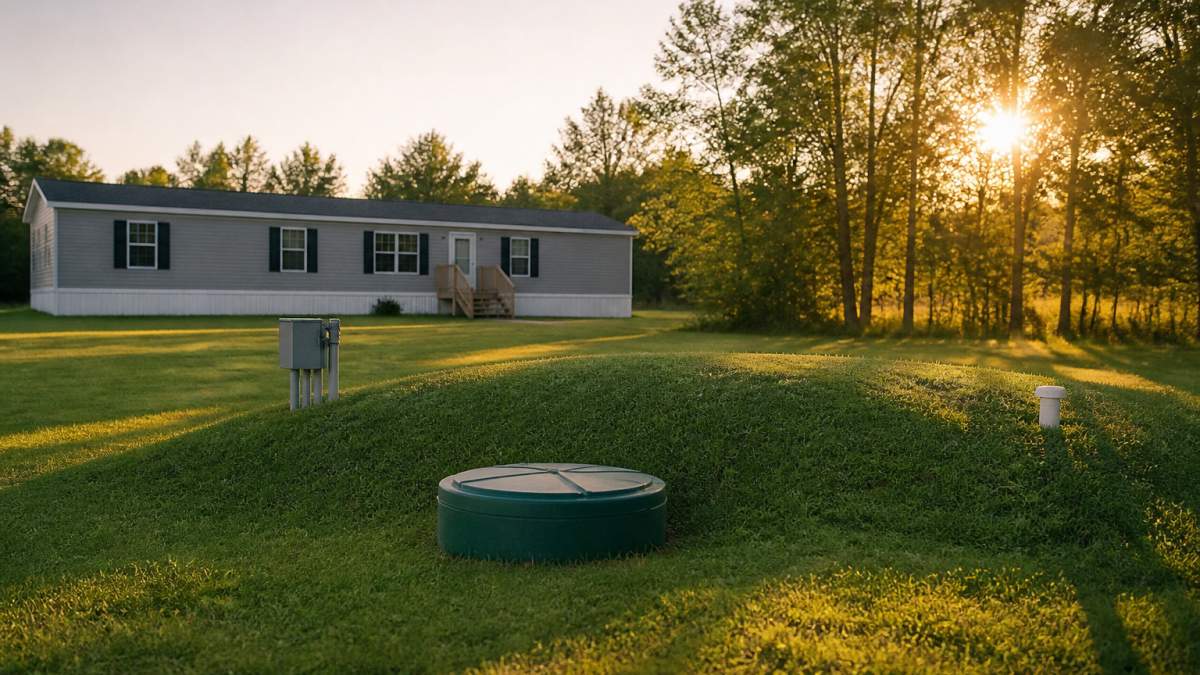
A mound septic system is a raised treatment bed built above the natural ground, used when the existing soil is too shallow or too wet for a conventional drain field. Effluent is pumped or gravity-fed into the mound, where it filters through engineered fill before reaching the native soil.
Pros:
- Works where topsoil is thin or the water table sits high
- No deep excavation required
- A well-understood design that many local health departments review routinely
Cons:
- Takes up visible yard space and changes your landscaping
- Requires a pump in many installations, which means electricity and service
- Needs periodic inspection to keep the mound functioning
The mound is a strong fit for flat or gently sloped lots with marginal soil. It’s a poor fit if you want a completely unobstructed yard or you’re trying to avoid mechanical components entirely.
Skipping the pump alarm or letting the mound go uninspected is the most common way these systems fail. A failed mound can mean a soggy, unusable yard and a repair bill that dwarfs routine service.
Aerobic Treatment Unit: How It Works and When to Choose One
An aerobic treatment unit is an onsite system that injects oxygen into the wastewater to accelerate bacterial breakdown, producing cleaner effluent than a standard tank. That extra treatment step makes it a candidate for smaller lots or sites near sensitive water.
The EPA includes aerobic treatment units among the recognized alternative system types. In practice, they suit properties where a conventional drain field won’t fit or where local rules demand a higher treatment level.
Where it falls short: aerobic units rely on pumps, blowers, and alarms, so they need consistent power and regular professional service. If you’re retired and want low-maintenance living, this is the option to weigh carefully against a simpler design.
Rural Property Septic System Requirements You Must Verify
Rural property septic system requirements are set locally, and they vary enough that you can’t assume your neighbor’s setup will be approved for your lot. Before you commit to land or a home placement, verify these items with your county health department.
- Soil evaluation or perc test results for your specific parcel
- Minimum setback distances from wells, property lines, and waterways
- Required tank size based on bedroom count
- Whether your site qualifies for a conventional system or needs an alternative
- Permit fees and inspection schedule
- Any deed restrictions or HOA rules on system type
- Power access for systems with pumps or blowers
Bedroom count matters more than square footage in most sizing rules. That’s why the home you choose and the septic plan have to be decided together.
Matching Your Home to Your Septic Plan
Here’s the part that saves rural buyers the most money: pick the home and the wastewater system as a package. A four-bedroom model may trigger a larger tank and a bigger treatment area than a two-bedroom plan, and that changes your site layout and budget.
This is where Patriot Homes earns its keep. We offer many floor plans, from 1-bedroom ADUs to spacious 4-bedroom models, and we help you match the home to what your land can support. Why pay more when you can have quality, style, and affordability all in one? Our team walks you through customization, from bedroom count to finishes, so your home and your septic plan line up from day one.
Choose your floor plan and your septic system at the same time. Bedroom count drives tank sizing, and system type drives site layout. Deciding them separately is how budgets blow up.
Frequently Asked Questions
What are the alternatives to a traditional septic system?
The EPA lists several alternatives, including drip distribution, aerobic treatment units, mound systems, recirculating sand filters, evapotranspiration systems, and constructed wetlands. Each suits different soil and site conditions. Mound systems work where permeable soil is lacking, while aerobic treatment units add oxygen to break down waste faster. Before choosing, have a soil evaluation done and confirm local approval. For help planning a home on your rural lot, call (888) 765-1776.
What is the best septic system for rural land with poor soil?
A mound septic system is often considered when permeable soil is lacking, because the raised design provides treatment above the native soil. Aerobic treatment units and recirculating sand filters are also options for challenging sites. The right choice depends on your soil test, water table, lot size, and local health department rules. A site evaluation is the only way to know what your parcel can support. Our team can walk you through rural septic alternatives at (888) 765-1776.
Do alternative septic systems require more maintenance than conventional systems?
Often, yes. Alternative systems can have more moving parts, electrical components such as pumps, monitors, and alarms, and greater complexity, which can mean more maintenance and higher costs than a conventional system. Drip irrigation and constructed wetlands can suit challenging soils but require more maintenance. Budget for regular service visits and keep records. Ask your installer for a maintenance schedule before you commit.
How do I find out which wastewater system my property can support?
Start with a soil evaluation and a site assessment from a licensed professional, then check with your local health department about rural property septic system requirements. They will tell you what tests are needed and which system types are allowed on your lot. Bring your parcel size, slope, and water table information. Getting this step right early avoids costly redesigns later. Call (888) 765-1776 for guidance on matching your home plans to your septic plan.
