
Best Clayton Homes Alternatives for Budget Buyers
Table of Contents
- Why Buyers Look for Clayton Homes Alternatives
- Patriot Homes: Customizable and Budget-Friendly
- TRU Homes: Entry-Level Affordability
- Champion Homes: Flexibility and Design Options
- Clayton Homes vs Cavco Homes Price Comparison
- How to Finance a Manufactured Home
- Fleetwood Homes: Durability on a Budget
- Conclusion: Choosing the Right Budget Alternative
- Frequently Asked Questions
Last Updated: September 27, 2026
Why Buyers Look for Clayton Homes Alternatives
Clayton Homes dominates manufactured housing, but dominance rarely means best value. Buyers searching for the best Clayton Homes alternatives for budget find Clayton’s scale brings trade-offs: limited customization at entry-level price points, regional pricing variations, and an impersonal dealer network.
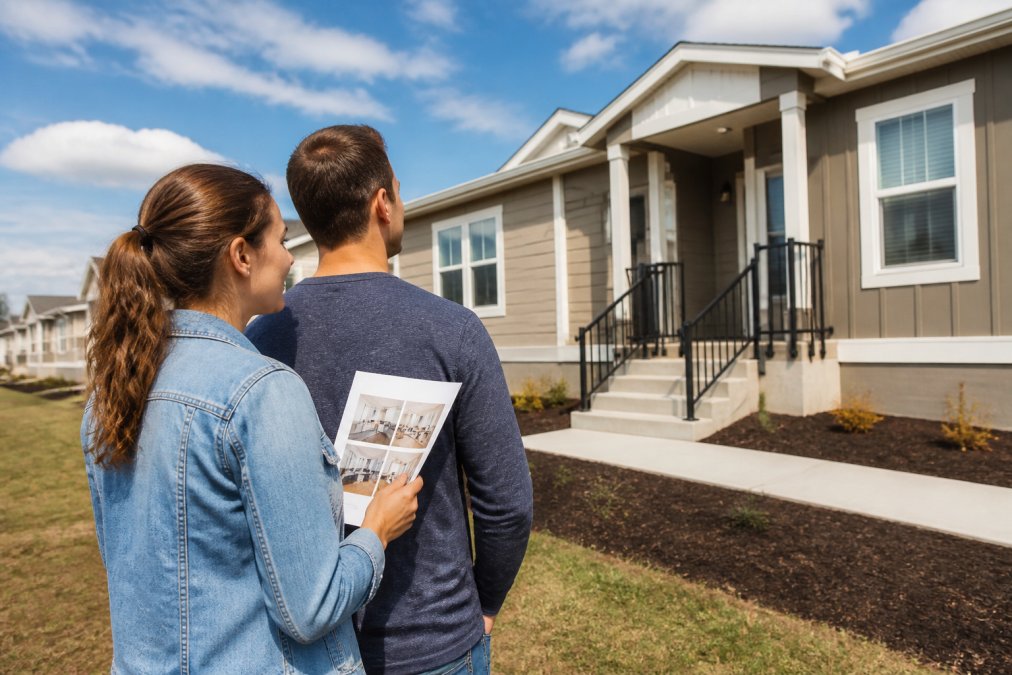
The HUD Code guarantees minimum safety and construction standards. It does not guarantee comparable quality between manufacturers. Always compare specific build specs, not just the code stamp.
Patriot Homes: Customizable and Budget-Friendly
Patriot Homes is a dealer of brand-new, customizable manufactured homes for buyers who want control over layout and finishes without custom-builder prices. You choose bedrooms, bathrooms, and finishes to match your budget.
Three things set Patriot Homes apart for budget buyers:
- Transparent pricing published on the website, so you can compare before committing
- 24/7 customer support that answers questions throughout the buying process
- Many model options covering different sizes and configurations
Budget-conscious buyers who want customization without the premium pricing that traditional builders charge for upgrades.
TRU Homes: Entry-Level Affordability
TRU Homes targets the lowest entry price point in manufactured housing. As a Clayton subsidiary, it uses simplified floor plans and standardized finishes to cut costs. If your only goal is the lowest sticker price, TRU is worth a look.
Champion Homes: Flexibility and Design Options
Champion Homes sits in the middle ground: more affordable than premium builders, more flexible than entry-level brands. Regional manufacturing facilities reduce shipping costs and can lower the final price.
Clayton Homes vs Cavco Homes Price Comparison
Most factory-built brand comparisons are marketing pages dressed up as reviews. This one is built around the two numbers that decide a budget purchase: price per square foot and resale performance. Neither Clayton nor Cavco publishes list pricing, so compare the structural factors that move price per square foot, then run the same comparison for any builder.
Why price per square foot is the only fair starting metric
A $70,000 single-wide and a $180,000 double-wide are not competing products. Divide base price by finished square footage and the picture changes: single-wides carry the lowest sticker price but the highest price per square foot, while multi-section homes spread fixed costs across more square footage. That is why “cheapest home” and “best value” are frequently different answers.
When you collect quotes, ask each builder for:
- Base price and finished square footage
- Which options are included versus priced as upgrades
- Delivery distance from the nearest plant
- Whether the quoted foundation is certified for real-property titling
Structural comparison
| Factor | Clayton Homes | Cavco Homes |
|---|---|---|
| Base price positioning | Volume-driven, competitive on entry models | Mid-to-upper range |
| Price per square foot | Lowest on single-wide, rises with options | Higher entry, more consistent across sizes |
| Customization | Limited at entry level | Moderate across brand lines |
| Energy efficiency | Standard | Emphasized in construction |
| Regional availability | Broad national dealer network | Depends on plant locations |
| Resale profile | Large installed base, easier to comp | Smaller installed base, harder to comp in some markets |
| Best for | Lowest upfront cost | Durability and efficiency |
Resale value: the angle most comparisons skip
Factory-built homes do not depreciate like cars, but they do not appreciate like site-built homes either. Resale depends far more on how the home is titled and where it sits than on the brand.
- Real-property titling on owned land is the strongest resale position. The home can be appraised alongside the land, financed with a mortgage by the next buyer, and comped against nearby site-built sales.
- Personal-property titling in a leased-lot community is the weakest resale position. The next buyer usually needs chattel financing, the pool of lenders is smaller, and the lot lease terms become part of the negotiation.
- Brand matters less than you would expect. Appraisers comp manufactured homes against other manufactured homes in the same market, not against the original builder’s reputation. A well-maintained home from a smaller builder can appraise alongside a comparable home from a national brand.
How to run this comparison for any builder
- Get a written quote from at least three builders, including Patriot Homes, with the same bedroom count and square footage.
- Ask each for the delivered-and-set price, not the factory-gate price.
- Ask each whether their standard foundation is certified for real-property titling.
- Pull three recent comparable sales in your county for manufactured homes of similar size and age, and note whether each sold as real property or personal property.
- Divide each quote by finished square footage and compare against the comps.
The honest take: if upfront price is your only metric, Clayton and TRU win on entry models. If total cost of ownership over ten or fifteen years matters more, Cavco’s efficiency focus can close the gap. For buyers who want both affordability and customization, Patriot Homes offers a middle path with flexible finishes.
How to Finance a Manufactured Home
Financing is where sticker price stops mattering and total cost of ownership begins. A manufactured home can be financed as real property or personal property, and that classification drives your interest rate, loan term, down payment, and interest deductibility.
The classification decision comes first
Lenders sort manufactured homes into two buckets based on how the home is titled and how it sits on the land:
- Real property (mortgage financing). The home is permanently affixed to land you own, the title is surrendered and the home is rolled into the deed, and the loan is secured like a site-built mortgage. This unlocks conventional, FHA, VA, and USDA products.
- Personal property (chattel financing). The home keeps its own title and is financed like a vehicle or a boat. Rates run higher and terms run shorter because the lender has weaker collateral rights.
The four main loan paths
- FHA Title I and FHA Title II. Title I covers the home only (and some site work) and is capped at a low loan amount, fitting single-wide purchases. Title II is a full mortgage on home and land together and requires a permanent foundation, HUD-approved foundation certification, and real-property titling. FHA loans allow lower credit scores than conventional loans but require mortgage insurance.
- VA loans. Available to eligible service members, veterans, and surviving spouses. VA recognizes manufactured homes as real property when permanently affixed and the foundation meets VA requirements. VA loans typically require no down payment, but the property must pass VA appraisal and foundation standards, a home that fails the foundation inspection cannot close regardless of the buyer’s eligibility.
- USDA Section 502. For eligible rural areas, this can finance the home, land, and site work with no down payment for qualifying households. Income limits and geographic eligibility apply, and the property must be real property.
- Chattel loans. Used when the home stays personal property, common when you lease the lot or place the home in a park. Chattel loans are typically shorter-term and higher-rate than mortgages, and some lenders require larger down payments.
What actually moves your rate and payment
- Land ownership. Owning the land under the home is the single biggest lever. It enables real-property financing and removes lot rent from your monthly obligation.
- Foundation type. A permanent foundation engineered and certified to HUD standards is what allows real-property titling. A pier-and-block setup that is not certified usually forces chattel financing.
- Down payment. FHA and VA programs allow low or zero down for qualifying buyers, but a larger down payment can move you out of mortgage insurance or into a better rate tier.
- Credit profile. Chattel lenders often have tighter credit overlays than mortgage lenders, so a buyer who qualifies for a mortgage may still be declined for a chattel loan.
- Loan term. Stretching a chattel loan to match a 30-year mortgage term is not always possible, which raises the monthly payment even when the rate looks competitive.
The total cost of ownership angle most buyers miss
- Home price (base plus options)
- Land (purchase price or capitalized lot rent over your expected holding period)
- Site preparation, clearing, grading, driveway, utility trenching, and permits
- Foundation, pier-and-block, slab, or a certified permanent foundation
- Delivery and set, transport, crane, and crew, which scale with distance from the factory and site access
- Utility hookups, water, sewer or septic, electric, and gas
- Loan costs, origination, appraisal, foundation certification, title work, and the interest-rate spread between chattel and mortgage financing
- Ongoing costs, property taxes, insurance (manufactured home policies can price differently from site-built policies), lot rent if applicable, and maintenance
Signing a chattel loan without comparing it to a real-property mortgage can cost you tens of thousands in extra interest over the loan term. Confirm your foundation type and titling options before you finance, and ask each lender for a Loan Estimate so you can compare the same line items across offers.
The Consumer Financial Protection Bureau publishes guidance on mortgage and chattel loan disclosures, including the Loan Estimate and Closing Disclosure forms, that every buyer should review before signing.
Financing classification, real property versus personal property, is the highest-leverage decision in a manufactured home purchase. Settle the land, foundation, and titling questions before you compare builder prices, because they determine which loan products you can even access.
Fleetwood Homes: Durability on a Budget
Fleetwood Homes builds for structural longevity, emphasizing heavy-duty materials and interior durability, suited to high-traffic households and buyers who plan to keep the home for decades.
Conclusion: Choosing the Right Budget Alternative
Every alternative here solves a different problem. TRU wins on entry price. Champion balances cost and design. Cavco emphasizes efficiency and durability. Fleetwood prioritizes structural longevity. Patriot Homes delivers customization with published pricing and round-the-clock support.
Frequently Asked Questions
Who is Clayton Homes’ biggest competitor?
Clayton Homes faces competition from several large manufacturers, including Cavco Homes, Champion Homes, and Fleetwood Homes. Cavco is often considered a major competitor due to its diverse brand portfolio and strong regional presence. Champion Homes also competes on customization and scale. For budget-focused buyers, TRU Homes, a Clayton subsidiary, offers entry-level options, but independent dealers like Patriot Homes provide personalized service and competitive pricing. When comparing Clayton Homes alternatives, consider factors like customization, financing, and local availability.
What factors should I consider when comparing manufactured home builders for budget?
Focus on total cost of ownership, not just sticker price. Consider base price, customization fees, delivery and setup costs, land preparation, and utility hookups. Financing terms vary; some builders offer in-house lending, while others work with third-party lenders. Energy efficiency affects monthly utility bills. Construction quality and warranty coverage impact long-term maintenance. Also check regional availability, as some manufacturers only serve certain states. For budget buyers, prioritize builders that offer transparent pricing and flexible floor plans without hidden fees.
How do Cavco Homes and Clayton Homes compare in terms of pricing and construction?
Both Cavco and Clayton build HUD-code manufactured homes, but pricing varies by region and model. Clayton often has a broader retail network with company-owned stores, while Cavco sells through independent dealers. Cavco emphasizes energy-efficient features and durable construction, which can reduce long-term costs. Clayton’s TRU Homes line targets entry-level buyers with streamlined designs. For a direct price comparison, request quotes from local dealers, as shipping distances and dealer markups affect final costs. Neither brand publishes nationwide pricing.
Are there specific manufactured home brands known for better value than Clayton?
Several brands offer strong value. Patriot Homes provides customizable manufactured homes with competitive pricing and 24/7 support, appealing to budget-conscious buyers. Champion Homes offers a wide range of floor plans with regional manufacturing that can lower shipping costs. Fleetwood Homes focuses on structural durability, which can mean fewer repairs over time. TRU Homes, a Clayton subsidiary, is among the most affordable but with limited customization. Evaluate value based on your priorities: upfront price, customization, energy efficiency, or long-term durability.