
Best Manufactured Home Builders 2026: Top Picks & Costs
Table of Contents
- How to Compare the Best Manufactured Home Builders in 2026
- Quick Comparison: Top Manufactured Home Builders at a Glance
- Manufactured Home Prices 2026: What Each Builder Tier Costs
- Manufactured Home Floor Plans: Single-Section vs. Multi-Section
- Manufactured Home Setup Costs: Site Prep, Delivery and Installation
- Manufactured Home Buying Checklist: Warranty, Financing and Land
- Which Builder Fits Your Situation?
- Conclusion: Choosing Among the Best Manufactured Home Builders
- Frequently Asked Questions
Last Updated: October 9, 2026
How to Compare the Best Manufactured Home Builders in 2026
Finding the best manufactured home builders 2026 has to offer starts with understanding who you are actually buying from. That single distinction, builder versus dealer, shapes your pricing, your warranty, and how much say you get over the final home.
A manufactured home is a home built to the federal HUD Code in a factory, then transported in sections and assembled on your land. That federal construction standard is what separates a manufactured home from a modular home, which is built to state and local codes instead.
Most buyers assume the factory name on the brochure is who they deal with. It rarely is.
Builder vs. Dealer: Who You Actually Buy From
The builder manufactures the home. The dealer sells it, arranges delivery, coordinates setup, and often handles financing and warranty paperwork. Two buyers can purchase the identical floor plan from two different dealers and walk away with very different experiences.
That is why “best builder” lists only tell half the story. The builder sets construction quality and materials. The dealer controls pricing, customization options, and post-sale service.
Ask any dealer for the manufacturer’s warranty document before you sign, not after. The warranty is issued by the builder, but the dealer is who you call when something needs fixing.
Quick Comparison: Top Manufactured Home Builders at a Glance
Most “best builder” lists ask you to trust a ranking without showing the scoring. This one shows the criteria first, so you can reweight them for your own situation.
How We Score Builders
We evaluate every builder and its dealer network against six weighted factors:
- Price transparency (20%), Does the builder or dealer publish model pricing, or at least a documented quote process, before you sign?
- Construction quality and materials (20%), What does the builder disclose about framing, insulation, roofing, and finish-grade options?
- Customization range (15%), Can you change bedroom and bathroom counts, kitchen layout, and finishes before the home is built?
- Dealer accountability (15%), Is there a named local retailer and installer responsible for delivery, setup, and service?
- Warranty and post-sale service (15%), What is the written warranty duration, what does it exclude, and who handles claims?
- Availability (15%), In which states does the builder sell and install, and through how many dealers?
We score each factor on a 1-5 scale and weight the result. A builder that scores well on brand recognition but poorly on price transparency will not rank at the top here, because brand recognition does not lower your monthly payment.
The Comparison
| Builder | Known For | Availability | Warranty Handling | Best For |
|---|---|---|---|---|
| Patriot Homes (dealer) | Customization and guided buying | Western states | Dealer-coordinated, manufacturer-issued | Buyers who want input on layout and finishes |
| Skyline Homes | Established national brand | Multi-state dealer network | Manufacturer-issued, dealer-serviced | Buyers comparing long-track-record brands |
| Champion Homes | Broad manufactured and mobile home catalog | Nationwide | Manufacturer-issued, dealer-serviced | Buyers who want the widest model selection |
| TRU Homes | Entry-level pricing | Regional | Manufacturer-issued, dealer-serviced | Budget-focused first comparisons |
How to Read This Table
Three cautions apply to every row:
- The factory name is not who you buy from. In most transactions you sign with a dealer, and that dealer controls pricing, delivery, setup, and the service experience. Two buyers can purchase the same floor plan from two dealers and get very different results.
- Availability is state-by-state, not national. A builder that sells in forty states may have no active dealer where your land sits. Confirm the specific dealer and installer before you compare prices.
- Warranty terms are issued by the manufacturer but administered locally. Ask for the written warranty document and the name of the service contact before you sign.
Score each builder yourself using the six factors above. If a builder will not disclose pricing or warranty terms in writing before you commit, that is itself a data point.
HUD Manufactured Home Construction and Safety Standards
Manufactured Home Prices 2026: What Each Builder Tier Costs
Most builder pages quote a base home price and stop there. That number is not your project cost. The gap between the sticker price and what you actually pay is where budgets break, so this section breaks out every line item you should expect to see on a quote.
The Full Cost Stack
A manufactured home project has eight cost categories. Ask any dealer to itemize all eight in writing:
- Home price, the base model plus any finish upgrades, options, and structural changes.
- Land, purchase price if you do not already own a lot, plus any back taxes or liens.
- Site work, clearing, grading, leveling, drainage, driveway, and any soil testing or engineering.
- Foundation, piers, slab, or a permanent foundation, depending on your financing and local code.
- Transportation, factory-to-site delivery, which scales with distance, section count, and permit requirements for oversize loads.
- Installation, joining sections, securing the home to the foundation, and finishing exterior seams and trim.
- Utility connections, water, sewer or septic, electricity, and gas, including any trenching or meter work.
- Permits and inspections, local building, zoning, and utility permits, plus any required inspections.
What Drives Each Tier
Pricing varies too much by configuration for a single national number to be honest. What is consistent is which variables move the total:
- Section count. A multi-section home costs more than a single-section home of similar square footage because of additional framing, joining labor, and transport.
- Finish level. Flooring, cabinetry, and countertops are the fastest way to move a quote up or down.
- Delivery distance. Transport cost rises with mileage and with the number of oversize-load permits required along the route.
- Site conditions. A flat, cleared, prepared lot costs far less to build on than a sloped, wooded, or poorly drained one.
- Foundation type. A permanent foundation typically costs more upfront but can unlock conventional financing and may improve resale.
How to Compare Quotes Fairly
When you collect quotes from two or more dealers, normalize them before comparing:
- Ask each dealer to quote the same floor plan, same finish package, and same foundation type.
- Require a line-item breakdown across all eight categories above, not a single bundled figure.
- Confirm whether permits, utility trenching, and final grading are included or billed separately.
- Ask what happens to the price if delivery distance or site conditions change after the contract is signed.
The most common budget surprise is not the home price. It is site work and utility connections, which are frequently quoted as estimates and settled after the home is ordered. Get these as fixed figures or clearly defined allowances before you sign.
Financing and Insurance Affect the Real Cost
Your total cost also depends on how the home is classified and financed. Many lenders treat manufactured homes differently from site-built homes, and loan options such as FHA, VA, and conventional manufactured home loans each carry their own foundation, land, and eligibility requirements. Insurance requirements vary by state and by foundation type.
For current model pricing, see the Patriot Homes pricing page.
FHA manufactured home loan requirements
Manufactured Home Floor Plans: Single-Section vs. Multi-Section
Manufactured home floor plans come in two broad categories, and the choice affects both budget and livability.
Single-section homes are built as one unit, typically narrower, and cost less to deliver and set. They suit single buyers, couples, and retirees who want low maintenance.
Multi-section homes are built as two or more units joined on site. They offer more square footage, wider rooms, and the layout flexibility most families want.
Customization is where the two paths diverge.
Manufactured Home Setup Costs: Site Prep, Delivery and Installation
Manufactured home setup costs are the line item buyers underestimate most. The home itself is only part of the total project cost.
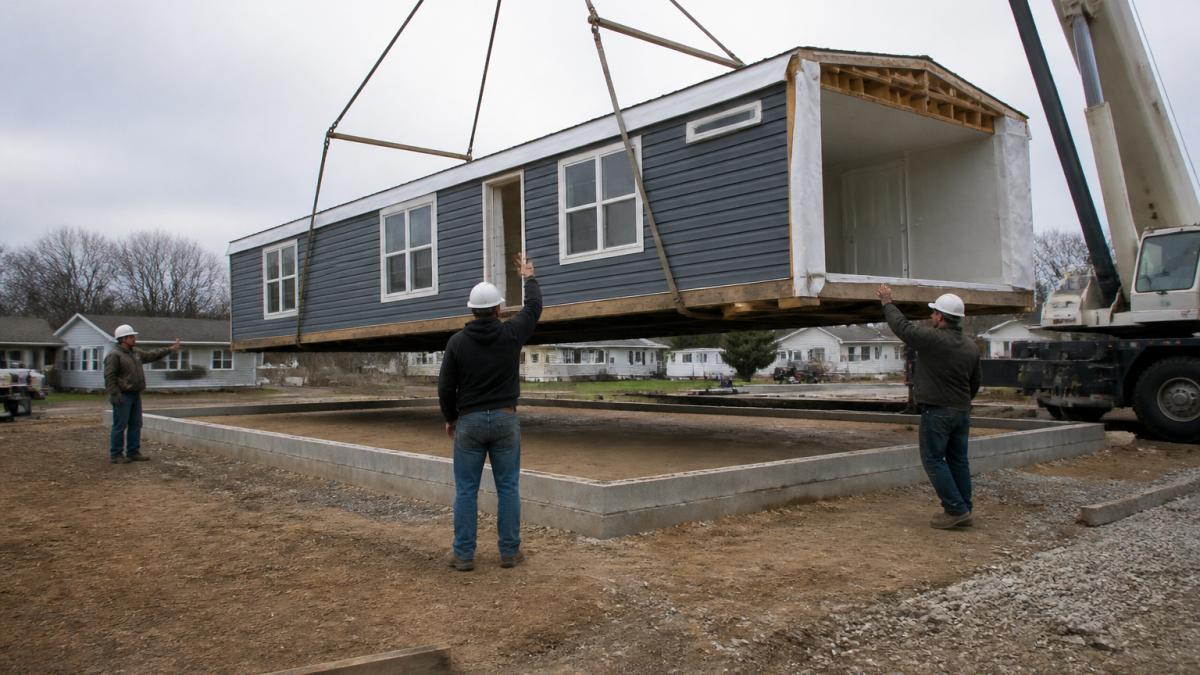
Setup covers several distinct stages:
- Site preparation, clearing, grading, and leveling the lot
- Foundation, a permanent foundation, piers, or a slab, depending on your financing and local requirements
- Delivery, transporting the sections from the factory to your land
- Installation, joining sections, securing the home, and finishing exterior work
- Utility connections, water, sewer, electricity, and gas hookups
Permits add another layer. Requirements differ by state and county, so confirm local rules before you commit to a budget.
Skipping a proper site inspection before purchase is the most expensive mistake we see. A lot that looks flat can still need grading, drainage work, or soil testing, and those costs land on you after the home is ordered.
Manufactured Home Buying Checklist: Warranty, Financing and Land
A manufactured home buying checklist keeps the process from running off the rails. Work through these before you sign anything:
- Confirm whether your land is zoned for a manufactured home
- Get a written site inspection and grading estimate
- Compare loan options, including FHA, VA, and conventional manufactured home loans
- Read the builder’s warranty in full, including what it excludes
- Verify the dealer’s service record and response times
- Confirm delivery, installation, and utility connection costs in writing
- Check whether your chosen foundation type qualifies for your financing
Financing, insurance, and land eligibility are where deals stall. Many lenders treat manufactured homes differently from site-built homes, and insurance requirements vary by state. Verify all three early.
Which Builder Fits Your Situation?
The right builder depends on what you value most.
If you own land and want input on layout and finishes, a dealer-led path with strong customization support fits best. If you are comparing brand reputation, established manufacturers with long track records give you more to research.
At Patriot Homes, we offer brand-new, customizable manufactured homes with many model options, and a team available 24/7 to guide buyers through financing, land questions, and setup.
Conclusion: Choosing Among the Best Manufactured Home Builders
The hard part is not finding a builder. It is comparing them on the things that actually affect your monthly payment and long-term satisfaction: total project cost, warranty coverage, dealer accountability, and how much control you get over the final home.
Patriot Homes handles that comparison for you. We offer customizable manufactured homes, competitive pricing, many model options, and 24/7 support from first question to move-in day.
Frequently Asked Questions
Who are the best manufactured home builders in 2026?
The strongest names in 2026 include Champion Homes and its Skyline Homes brand, TRU Homes, and regional dealers like Patriot Homes that sell customizable manufactured homes. Champion’s Skyline brand reports a six-year run as America’s Most Trusted Manufactured Home Builder (2021-2026). The right pick depends on your state, land status, and budget rather than a single national winner, so compare dealer networks and warranty terms before you commit.
What is the difference between a manufactured home builder and a dealer?
A manufacturer, such as Champion Homes or TRU Homes, builds the home in a factory to the HUD Code. A dealer, like Patriot Homes, sells that home to you, handles customization options, coordinates delivery and setup, and often manages financing and permits. Many buyers never contact the factory directly. Working with a dealer gives you one point of contact for floor plans, manufactured home setup costs, and post-sale service.
How much does a manufactured home cost in 2026?
Manufactured home prices 2026 vary widely by size, region, and finishes, so no single figure applies. Single-section models cost less than multi-section homes, and land, foundation, and utility connections add to the total. Patriot Homes publishes current pricing on its website, which is the fastest way to see real numbers. Always ask for a total project cost that includes delivery, setup, and site preparation, not just the home itself.
What should I compare when choosing a manufactured home builder?
Compare five things: the HUD Code certification and construction materials, the range of manufactured home floor plans and customization options, the dealer network and state-by-state availability, warranty coverage and post-sale service, and a transparent total project cost. Ask each builder for a written quote that separates home price from manufactured home setup costs. A manufactured home buying checklist keeps these items side by side so you can judge builders on the same terms.
What questions should I ask a manufactured home dealer before buying?
Ask who handles permits, foundation, utility connections, and delivery scheduling. Confirm what the warranty covers and for how long. Request financing options, including loans for buyers with imperfect credit, and check land eligibility rules for your state. Finally, ask for owner reviews or references from buyers in your area. Patriot Homes offers 24/7 support and can walk first-time buyers through each step, from floor plan selection to move-in day.