
Can I Put a Manufactured Home on Land? A 2026 Guide
Table of Contents
- What You’ll Need Before You Place a Manufactured Home on Land
- Zoning Requirements for Manufactured Homes: What to Verify First
- Raw Land vs. Developed Land: Which Lot Works for Your Home?
- Manufactured Home Site Preparation Costs and What Drives Them
- Manufactured Home Foundation Types and HUD Code Compliance
- Utility Hookups, Septic Systems, and Well Water Connections
- Permits, Inspections, and Title Transfer: A Step-by-Step Checklist
- Financing a Land-Home Package and Protecting Your Property Value
- Frequently Asked Questions
Last Updated: September 17, 2026
What You’ll Need Before You Place a Manufactured Home on Land
Yes, you can put a manufactured home on land you own in most parts of the country, but the process has more moving parts than a site-built purchase. The real question is whether your parcel, zoning, and budget can support it.
Before you commit to anything, gather these items:
- A copy of your property deed and any deed restrictions or HOA covenants
- The parcel’s zoning classification from your local planning department
- A recent property survey showing easements and setback requirements
- A soil test or percolation test report if you’re installing a septic system
- A written quote for site preparation and utility hookups
The federal HUD code governs how a manufactured home is built. Your local zoning ordinance governs where it can sit. You need to satisfy both.
Zoning Requirements for Manufactured Homes: What to Verify First
Zoning requirements for manufactured homes vary dramatically by jurisdiction, and a parcel that allows a site-built house does not automatically allow a manufactured one. Some municipalities permit them in any residential zone; others restrict them to specific districts or require a conditional use permit.
- Is a manufactured home a permitted, conditional, or prohibited use in this zoning district?
- Are there minimum square footage, roof pitch, or siding requirements?
- Does the home need to be placed on a permanent foundation to be classified as real property?
How to Request a Zoning Variance for Manufactured Housing
A zoning variance is a formal request to deviate from a code requirement like a setback or minimum lot size. It typically involves a written application, site plan, fee, and public hearing before a board of adjustment.
Skipping the variance process and installing anyway can result in a stop-work order, fines, and a requirement to remove the home at your own expense. Never assume you can sort out the paperwork after the fact.
Raw Land vs. Developed Land: Which Lot Works for Your Home?
Raw land has no utility access, cleared pad, or approved septic or well site; developed land already has some or all of that infrastructure. Raw land costs less upfront but carries higher development costs and more uncertainty.
| Factor | Raw Land | Developed Land |
|---|---|---|
| Purchase price | Lower | Higher |
| Utility access | None, must be brought in | Often at the lot line |
| Site grading | Usually required | Sometimes complete |
| Septic or sewer | May need percolation test | Often approved |
| Timeline to move-in | Longer | Shorter |
| Risk of surprises | Higher | Lower |
Environmental and Soil Testing You Should Not Skip
A percolation test determines whether soil can absorb septic wastewater; if it fails, you may need a pricier engineered system. Soil testing also reveals expansive clays, high water tables, or unstable fill that can affect foundation piers and settlement.
Manufactured Home Site Preparation Costs and What Drives Them
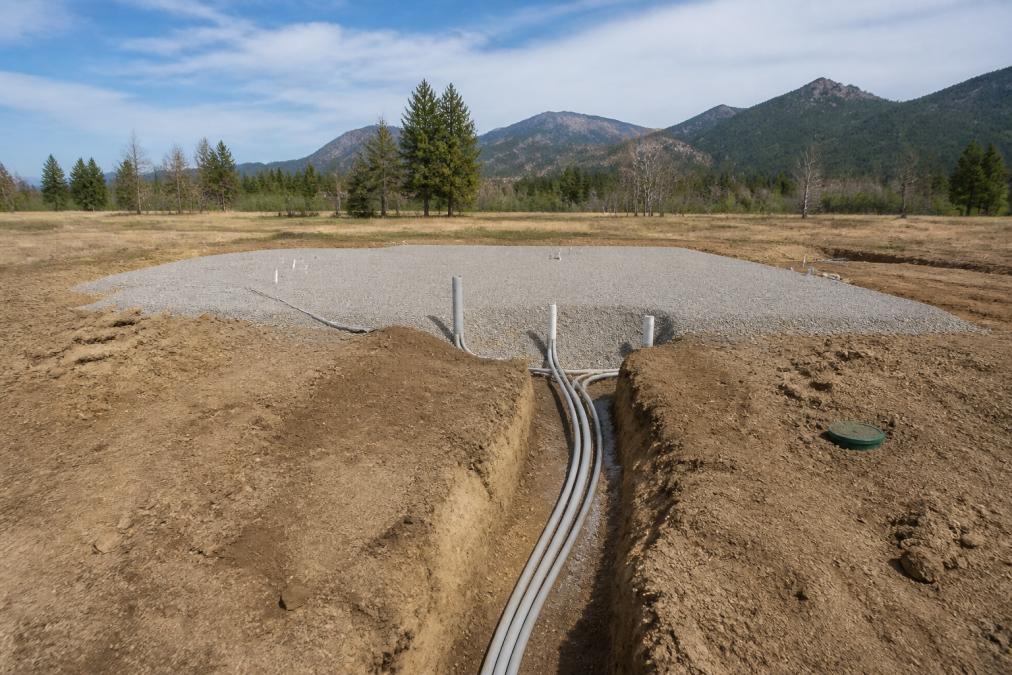
Manufactured home site preparation costs are driven by four factors: how much grading the lot needs, how far utilities must travel, whether the soil supports a standard foundation, and site access for delivery trucks. A flat, cleared lot with utilities at the street is the low end; a sloped, wooded parcel miles from the nearest connection is the high end.
Site Grading, Driveways, and Infrastructure Costs
Site grading levels the pad so the home sits flat and water drains away from the foundation. A driveway must support the delivery truck and the home, requiring proper base material and compaction. Utility trenching runs water, power, and sewer or gas lines from the connection point to the home.
Manufactured Home Foundation Types and HUD Code Compliance
Manufactured home foundation types fall into three categories: pier and beam, slab, and permanent foundation systems. Each affects financing, insurance, and whether the home is taxed as real or personal property.
- Pier and beam: Concrete or steel piers support the home above grade, with perimeter skirting. Common in dry climates and often the least expensive option. Piers must be spaced and sized per the installation manual, and the home tied down to resist wind and seismic loads. This is the default for homes that remain personal property.
- Slab: The home sits on a poured concrete slab, often thickened-edge or post-tensioned. It offers good support and a low profile but requires more site work, more concrete, and careful moisture management. Slab installations are less common for HUD-code homes, which are built to be set on supports, not poured in place.
- Permanent foundation: An engineered system, typically a reinforced concrete perimeter stem wall with footings below the frost line, plus anchor bolts or straps tying the home’s frame to the foundation. This is what lets the home qualify as real property for mortgage purposes.
What ‘Permanent Foundation’ Actually Means Under HUD Rules
The term is not marketing language. HUD publishes the Permanent Foundations Guide for Manufactured Housing (PFGMH), which sets engineering criteria for permanent installation: site conditions, frost depth, soil bearing capacity, pier and footing design, anchorage, and crawl space ventilation. A licensed engineer or architect typically must certify the as-built foundation complies.
HUD Permanent Foundations Guide for Manufactured Housing
How Foundation Choice Cascades Into Financing, Taxes, and Resale
The foundation decision drives three outcomes:
- Financing. Personal property (chattel) loans carry higher rates and shorter terms than mortgages. To qualify for an FHA, VA, USDA, or conventional mortgage, the home must be real property, requiring a permanent foundation and a recorded title conversion.
- Taxation. Real property is taxed as part of the land, often at a lower effective rate than personal property, which many states tax like a vehicle. Over 15 to 30 years, the difference can be substantial.
- Resale. Appraisers value real-property manufactured homes using comparable site-built and manufactured sales. Personal-property homes are often excluded from those sets, narrowing the buyer pool and compressing the sale price.
If financing or long-term equity matters, confirm the foundation type and engineer’s certification before you buy. Retrofitting pier-and-beam to a permanent foundation later is possible but expensive and sometimes infeasible depending on the frame and site.
A permanent foundation is the hinge that swings a manufactured home from personal property to real property. That single classification affects your interest rate, your tax bill, and your resale value.
Utility Hookups, Septic Systems, and Well Water Connections
Utility hookups are where budgets most often blow past estimates. Municipal water and sewer usually means tap fees and trenching. Well water and septic are a different animal, requiring permits, inspections, and sometimes engineered designs.
Get your septic and well permits approved before you order the home. Delivery schedules are firm, and a home sitting on a lot with no approved wastewater plan is an expensive problem.
Permits, Inspections, and Title Transfer: A Step-by-Step Checklist
The permit and title process follows a predictable sequence in most jurisdictions. Work through it in order to avoid common delays.
- Confirm zoning allows a manufactured home on the parcel
- Apply for a zoning variance if required
- Submit site plan and foundation engineering to the planning department
- Obtain a building permit and any separate utility permits
- Complete site preparation and foundation work
- Schedule foundation inspection before home delivery
- Arrange delivery and installation by a licensed installer
- Pass final inspection and obtain a certificate of occupancy
- File the title transfer or surrender the title to convert the home to real property
- Record the affidavit of affixture with your county recorder
Financing a Land-Home Package and Protecting Your Property Value
Financing a land-home package is more complex than financing either piece separately: the lender underwrites two collateral types, and the home’s legal status (personal vs. real property) determines which loan products are available.
The Loan Products That Actually Fund a Land-Home Package
Most buyers assume there is one ‘manufactured home loan.’ In practice there are several distinct products, and which you qualify for depends on whether the home will be titled as personal or real property.
- Chattel loan. Covers the home alone as personal property. Shorter terms (often 15-20 years), higher rates than a mortgage, no land included. Common when the buyer already owns the land or leases the pad.
- FHA Title I. A government-insured loan for manufactured homes and lots, with a HUD-set maximum and terms longer than a typical chattel loan. Available for personal- and real-property installations, subject to lender overlays.
- FHA Title II (Section 203(b) or 203(k)). A standard FHA mortgage that can include land and home when the home is real property on a permanent foundation. Most buyers want this product for its mortgage-style rates and terms.
- VA guaranteed loan. For eligible veterans and surviving spouses. The VA adds its own foundation and installation requirements to HUD’s, and the home must be real property.
- USDA Section 502. A direct or guaranteed loan for low- and moderate-income buyers in eligible rural areas. Can finance land, home, and site development in one package; eligibility is mapped by address.
- Conventional construction-to-permanent loan. A single-close loan funding land acquisition, site work, and the home, converting to a permanent mortgage at completion. Offered by some portfolio lenders and a few national manufactured housing specialists.
- Single-close land-home loan. Wraps land and home into one closing, avoiding the double closing costs of buying land first and financing the home second.
A chattel loan on a home you place on land you own does not automatically convert to a mortgage when you record the title. You have to refinance into a real-property loan, and that refinance has its own closing costs and appraisal. Plan for it.
How Placement on Owned Land Affects Appraisal and Long-Term Equity
Placing a manufactured home on land you own does not automatically build equity the way a site-built home does, but it can, if you set it up correctly.
Three factors drive the appraisal:
- Land ownership. A manufactured home on owned land appraises with the land included; a home in a rental park appraises as personal property only. This is the biggest equity difference.
- Real-property classification. Appraisers use comparable sales of other real-property manufactured homes and, in many markets, similar site-built homes. Personal-property homes are excluded from those sets, narrowing the buyer pool at resale.
- Market acceptance. Where manufactured homes are common and well-maintained, values track site-built homes more closely. Where they are rare or stigmatized, the discount is larger and time on market longer.
What Protects Your Value at Resale
Keep a file with the documents buyers, appraisers, and lenders ask for:
- The engineer’s foundation certification (PFGMH compliance)
- The recorded affidavit of affixture or title surrender confirming real-property status
- All building, utility, and septic permits and the final certificate of occupancy
- The home’s HUD data plate and serial numbers
- Warranty and installation documentation from the manufacturer and installer
Frequently Asked Questions
How much does it cost to put a manufactured home on a plot of land?
Site preparation costs vary based on your land’s condition and location. Expect expenses for clearing, grading, foundation piers or a permanent foundation, utility hookups, and permits. Raw land with no utilities costs more to develop than a lot with existing connections. Request quotes from local contractors and check Patriot Homes’ pricing page for current model and package pricing.
What zoning requirements for manufactured homes should I check before buying land?
Before buying, contact your local planning department to confirm zoning ordinances allow manufactured housing. Ask about minimum lot size, setback requirements, HOA covenants, and deed restrictions. Some areas require a permanent foundation or specific roof pitch. Verify whether your home must meet HUD code and whether a zoning variance is needed for non-conforming lots.
Do I need a permanent foundation to place a manufactured home on my land?
It depends on your lender and local codes. Many conventional mortgages require a permanent foundation for the home to count as real property. FHA, VA, and USDA loans also have foundation requirements. Some areas allow pier-and-anchor systems for personal property or chattel loans. Check with your building inspector and lender before choosing a manufactured home foundation type.
Is putting a manufactured home on land a good investment?
It can be a good investment when the home is on owned land with a permanent foundation and utilities. In that case, it may appreciate like a site-built home and qualify for traditional financing. Homes on leased land or without a permanent foundation may depreciate like a vehicle. Location, local demand, and how well you maintain the property all affect resale value.
The hardest part of placing a manufactured home on land isn’t the home itself. It’s the zoning research, soil testing, and permit sequence that most buyers don’t see coming. Patriot Homes offers customizable floor plans, a range of model options, competitive pricing, and 24/7 support to guide you through every stage. Get started with Patriot Homes and turn your land into the home you’ve been planning.