
Cavco vs Palm Harbor: Quality Comparison Guide
Table of Contents
- Cavco vs Palm Harbor: What Sets Them Apart
- Construction Quality and Build Standards
- Manufactured Home Quality Checklist for Buyers
- Manufactured Home Warranties: Coverage and Terms
- Customization Options and Floor Plans
- Questions to Ask a Manufactured Home Dealer
- Customer Experience and Long-Term Value
- Why Choose a Local Dealer for Your Manufactured Home
- Frequently Asked Questions
Last Updated: October 19, 2026
Cavco vs Palm Harbor: What Sets Them Apart
When you’re shopping for a manufactured home, the builder you choose matters as much as the home itself. Cavco vs Palm Harbor represents a choice between two of the largest manufacturers in the industry, each with different strengths.
At Patriot Homes, we work with buyers across California, Nevada, Arizona, and Idaho who are deciding between major manufacturers. We’ve helped hundreds of homeowners understand what actually matters when investing in a home that will last decades.
In this guide, we break down how Cavco and Palm Harbor compare on construction quality, warranties, customization, and customer experience. By the end, you’ll know exactly what questions to ask before you buy, and why working with a local dealer like Patriot Homes gives you an advantage in getting the right home at the right price.
Don’t assume bigger manufacturers always build better homes. Some of the most durable manufactured homes come from mid-sized builders who focus on quality over volume. Ask your dealer for third-party inspection reports, not just marketing materials.
Construction Quality and Build Standards
Both Cavco and Palm Harbor build to the same federal HUD code standards that govern all manufactured homes sold in the U.S. But meeting a baseline standard and exceeding it are two different things.
Framing, Materials, and Durability
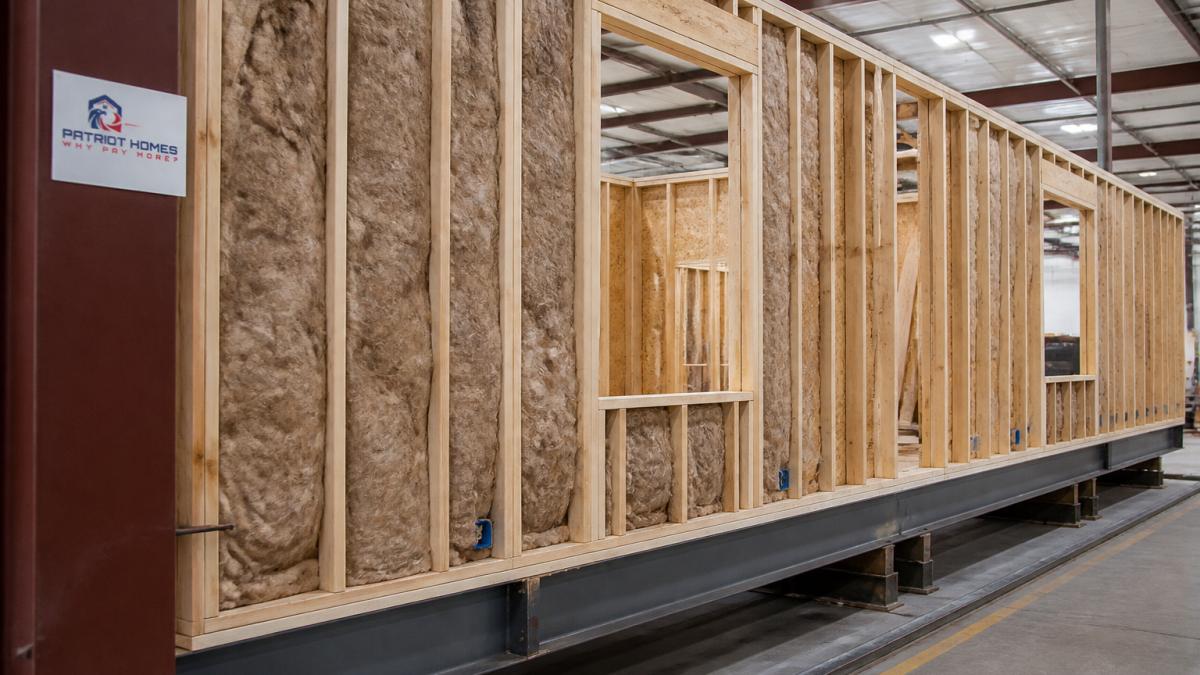
Cavco builds with wood-frame construction on steel I-beam foundations, typically using 2×4 lumber at 16-inch on-center spacing. Palm Harbor uses similar methods, though some higher-end models add engineered lumber for increased strength.
The real difference is material choice and assembly precision. Cavco’s automated manufacturing systems produce consistent wall assembly and fewer insulation gaps.
Both use OSB for wall sheathing and subfloors, which is industry standard. They diverge on roof construction: Cavco typically installs trusses at 24-inch spacing, while Palm Harbor offers 24-inch and 16-inch options.
Both offer vinyl, fiber cement, and metal siding.
Safety Standards and Code Compliance
Every manufactured home must pass HUD inspection before leaving the factory, a federal standard covering structural integrity, electrical, plumbing, fire safety, and ventilation.
But federal code is a floor, not a ceiling. Some states and counties add requirements, California, for example, mandates additional seismic standards. Both builders meet these codes, but reinforcement varies: Cavco’s California-serving plants typically add extra bracing and anchor bolt specs as standard, while Palm Harbor requires you to specify these upgrades in some cases.
Fire resistance matters too. Ask whether your home includes fire-blocking in wall cavities and what fire rating the roof assembly achieves, this should be in your HUD label and specifications sheet.
Don’t assume your home meets your state’s specific building codes just because it’s HUD-certified. HUD code is federal minimum. Your state or county may require additional upgrades. Confirm this with your dealer before you buy, not after delivery.
Manufactured Home Quality Checklist for Buyers
Before you commit to any manufacturer, use this checklist to evaluate build quality. This is what we recommend buyers ask their dealer to verify.
| What to Check | Why It Matters | What to Look For |
|---|---|---|
| Factory inspection reports | Shows whether the home passed HUD certification without defects | Ask for the HUD label and any third-party inspection records |
| Framing photos | Reveals construction precision and insulation installation | Request photos of wall framing, roof trusses, and floor system |
| Siding and roofing warranty | Protects against premature failure from weather and UV | Minimum 10-year coverage; confirm who backs the warranty |
| Plumbing and electrical specs | Ensures systems are properly sized and installed | Verify copper or PEX piping, circuit breaker panel size, wire gauge |
| Foundation and anchoring | Critical for stability and safety, especially in wind or seismic areas | Confirm concrete pad specifications and anchor bolt installation |
| Window quality and seals | Affects energy efficiency and water infiltration resistance | Ask about glass type, frame material, and condensation resistance rating |
When evaluating Cavco versus Palm Harbor, don’t just compare model names and floor plans. Request the technical spec sheet, not the marketing brochure, and ask your dealer to walk you through the framing, insulation, and roof system for the exact model you’re considering.
The best way to compare manufacturers is to compare the same information from both. Ask for identical documentation: HUD labels, spec sheets, warranty terms, and inspection reports. This levels the playing field and shows you what’s actually different.
Manufactured Home Warranties: Coverage and Terms
Both Cavco and Palm Harbor offer structural warranties, but the length and coverage differ.
Cavco typically provides a 1-year structural warranty from delivery, with some extended options, covering defects in materials and workmanship.
Most defects show up in the first year; after that, you’re responsible for maintenance and repairs. A 1-year warranty is industry standard, the question is what’s actually covered.
For component warranties (roof, siding, appliances), both offer coverage through their suppliers. Cavco’s appliance packages typically carry manufacturer warranties from brands like Whirlpool or LG, and Palm Harbor uses similar brands.
The real advantage comes from your dealer. A dealer who’s been in business for years and stands behind their sales will often extend warranty support beyond what the manufacturer requires.
Customization Options and Floor Plans
Cavco and Palm Harbor both offer customization, but the process and flexibility differ.
Cavco offers a wide range of floor plans, from 1-bedroom ADUs to spacious 4-bedroom models. Customization happens within defined parameters, exterior colors, interior finishes, and some layout options, with limited structural changes. This keeps costs down and delivery times predictable, an advantage for buyers who want a high-quality home at an affordable price.
Palm Harbor offers more extensive customization, especially in higher-end lines, modified floor plans, changed window placements, freer material upgrades. The trade-off is longer lead times and higher costs. If you have a specific vision, Palm Harbor’s flexibility may be worth it; if you want quality quickly and affordably, Cavco’s standardized approach works better.
Interior Finishes and Design Flexibility
Cavco’s standard interiors are clean and functional, durable laminate countertops, vinyl flooring, basic cabinetry, with upgrades available at a cost.
Palm Harbor’s standard interiors include more design details, with better cabinet hardware, upgraded countertop options, and flooring choices, appealing to buyers who want their home to feel more traditional.
Ask yourself: customize now or later? Factory customization is usually cheaper than retrofitting after delivery. Both manufacturers can add upgrades like granite countertops, hardwood flooring, or premium cabinetry, get pricing from your dealer before you decide.
Why pay more when you can have quality, style, and affordability all in one? That’s the Patriot Homes approach. Call us at (888) 765-1776 to discuss your customization options and what we can deliver.
Cavco homes work best for: first-time buyers, budget-conscious families, and anyone who wants a reliable home without extensive customization delays.
Palm Harbor homes work best for: buyers with specific design preferences, those willing to wait longer for customization, and anyone prioritizing interior finishes and design details.
Questions to Ask a Manufactured Home Dealer
Before you buy from any dealer, whether they’re selling Cavco, Palm Harbor, or any other manufacturer, ask these questions. Your answers will tell you whether you’re working with someone who knows their product and cares about your satisfaction.
About the specific home you’re considering:
- What factory built this home, and when was it manufactured?
- Can you provide the HUD label and complete specification sheet?
- What are the exact dimensions of the frame, roof trusses, and floor system?
- What warranty does the manufacturer provide, and what does it actually cover?
- Have you had any customer complaints or warranty claims on this model?
About customization and delivery:
- What customizations are available for this model?
- How long does customization add to the delivery timeline?
- What’s included in your delivery fee, and what’s extra?
- Do you handle foundation preparation, or does the customer?
- What happens if there’s damage during transport?
About financing and support:
- What financing options do you offer?
- Do you work with specific lenders, or can customers bring their own?
- What post-delivery support do you provide?
- How do I reach you if there’s an issue with my home?
- Are you available for questions after the sale?
A good dealer will answer all of these clearly. If a dealer gets vague or defensive, that’s a warning sign. You’re making a major investment, you deserve straight answers.
Customer Experience and Long-Term Value
Both Cavco and Palm Harbor build homes that last. The difference in long-term value comes down to your dealer and how well the home is maintained.
Cavco homes hold value well in markets where they’re common, since standardized production means consistent quality buyers appreciate at resale. Palm Harbor homes, especially higher-end models, can command premium prices in certain markets because of their design appeal.
What matters most is your dealer’s reputation and support. A Cavco home from a dealer who disappears after the sale is worth less than a Palm Harbor home from a dealer who stands behind it.
When you buy a manufactured home, you’re buying a relationship with your dealer.
Why Choose a Local Dealer for Your Manufactured Home
A local dealer gives you advantages you won’t get buying direct from the manufacturer or through a large chain.
A local dealer knows the regional market, what homes work best in your climate, your county’s foundation requirements, and what financing works for local buyers.
A local dealer is invested in your satisfaction. When you have a problem, you can drive to their office and talk to someone who knows your home, you’re a neighbor, not a ticket number in a call center.
At Patriot Homes, we’re available when you need us. Call (888) 765-1776 anytime to discuss your manufactured home options, ask about Cavco versus Palm Harbor, or request a quote, or request a quote from our website.
We proudly serve local homeowners with custom manufactured and modular options.
Frequently Asked Questions
What are the main quality differences between Cavco and Palm Harbor manufactured homes?
Both builders use similar construction standards and comply with HUD regulations for manufactured homes. The key differences lie in specific materials, warranty coverage, and customization flexibility. Cavco and Palm Harbor both offer wood-framed construction, but their choices in roofing materials, siding options, and interior finishes vary. Warranty terms also differ, some cover structural defects for longer periods than others. Your best approach is to request detailed specifications from each builder and compare their warranty documentation side by side.
What should I look for in a manufactured home quality checklist?
A solid manufactured home quality checklist should include: wood framing integrity and spacing, roof-load capacity specifications, siding durability and material type, window quality and sealing, plumbing shutoff valve accessibility, electrical system grounding, insulation R-values, flooring durability, and interior finish quality. Also verify that the home meets current HUD building codes and ask about factory inspection records. Request a pre-delivery inspection report and walk through the home yourself before accepting delivery to catch any construction issues early.
How do manufactured home warranties compare, and what should I understand about coverage?
Manufactured home warranties typically cover structural defects, appliances, and systems for varying periods. Most builders offer 1-year structural warranties and 5-10 year limited warranties on specific components. Coverage details matter: some warranties exclude cosmetic issues, wear and tear, or damage from improper maintenance. Read the fine print carefully, understand what’s covered, what’s excluded, deductibles, and claim procedures. Ask your dealer for a written warranty summary and clarify whether coverage transfers if you sell the home, as this affects resale value.
Can I customize a manufactured home to match my preferences, and what options are available?
Both Cavco and Palm Harbor offer customization options, though the extent varies by model and builder. Common customization choices include bedroom and bathroom count, flooring materials, cabinetry finishes, appliance upgrades, exterior siding colors, and roof styles. Interior finishes like countertops, paint colors, and fixtures are often customizable. Customization costs depend on the changes you select, work directly with your dealer to understand pricing for each option. Ask about available floor plans ranging from 1-bedroom ADUs to spacious 4-bedroom models to find the right fit for your lifestyle and budget.
Ready to explore your manufactured home options? Whether you’re comparing Cavco and Palm Harbor or looking for the right dealer to work with, the next step is simple: call Patriot Homes at (888) 765-1776 or request a quote on our website. Our 24/7 team is ready to discuss pricing matrices, customization options, and help you find the home that fits your life and budget. Why pay more when you can have quality, style, and affordability all in one?