
Clayton Homes vs Palm Harbor: 2026 Comparison
Table of Contents
- Clayton Homes vs Palm Harbor: How the Two Builders Stack Up
- Side-by-Side Comparison Table: Clayton Homes vs Palm Harbor
- Manufactured Home Construction Standards: HUD Code, Wind Zones, and Materials
- Customizable Manufactured Home Floor Plans and Design Options
- Manufactured Home Financing Options: Chattel Loans, Mortgages, and Eligibility
- Warranty Coverage, Customer Service, and Dealer Network Support
- Zoning, Permits, and Site Prep: The Regulatory Hurdles Buyers Face
- Resale Value, Depreciation, and Long-Term Maintenance
- Choosing Between the Two: A Buyer’s Checklist
- Frequently Asked Questions
Last Updated: October 2, 2026
Clayton Homes vs Palm Harbor: How the Two Builders Stack Up
If you’re shopping for a factory-built home, the clayton homes vs palm harbor homes comparison is one you keep running into. Both are among the largest names in manufactured housing and sell through dealer networks, not direct to buyers.
Clayton Homes is vertically integrated: it manufactures homes, owns its retail network, and owns the lending and insurance arms that finance many sales.
At Patriot Homes, we’re a dealer of brand-new, customizable manufactured homes, and we guide buyers in Arizona, California, Idaho, and Nevada through the process. Here’s a breakdown of construction standards, customization, financing, warranty, zoning, and long-term value.
Side-by-Side Comparison Table: Clayton Homes vs Palm Harbor
Line up the categories that decide your monthly payment and long-term costs.
| Category | Clayton Homes | Palm Harbor Homes |
|---|---|---|
| Business model | Manufacturer + company-owned retail + lending | Manufacturer + company-owned and independent retail |
| Construction standard | HUD Code (federal) | HUD Code (federal) |
| Customization | Wide model range, package-based options | Strong focus on mid-to-upper finish packages |
| Financing access | In-house lending arm available | Third-party lenders, dealer-arranged |
| Dealer footprint | Very large, nationwide | Regional, concentrated in certain states |
| Warranty | Written manufacturer warranty | Written manufacturer warranty |
| Best for | Buyers who want one-stop financing and scale | Buyers who prioritize finish quality and trim |
Neither column is automatically better. The right pick depends on whether you value financing convenience or finish-level focus, and what’s available near your land.
Manufactured Home Construction Standards: HUD Code, Wind Zones, and Materials
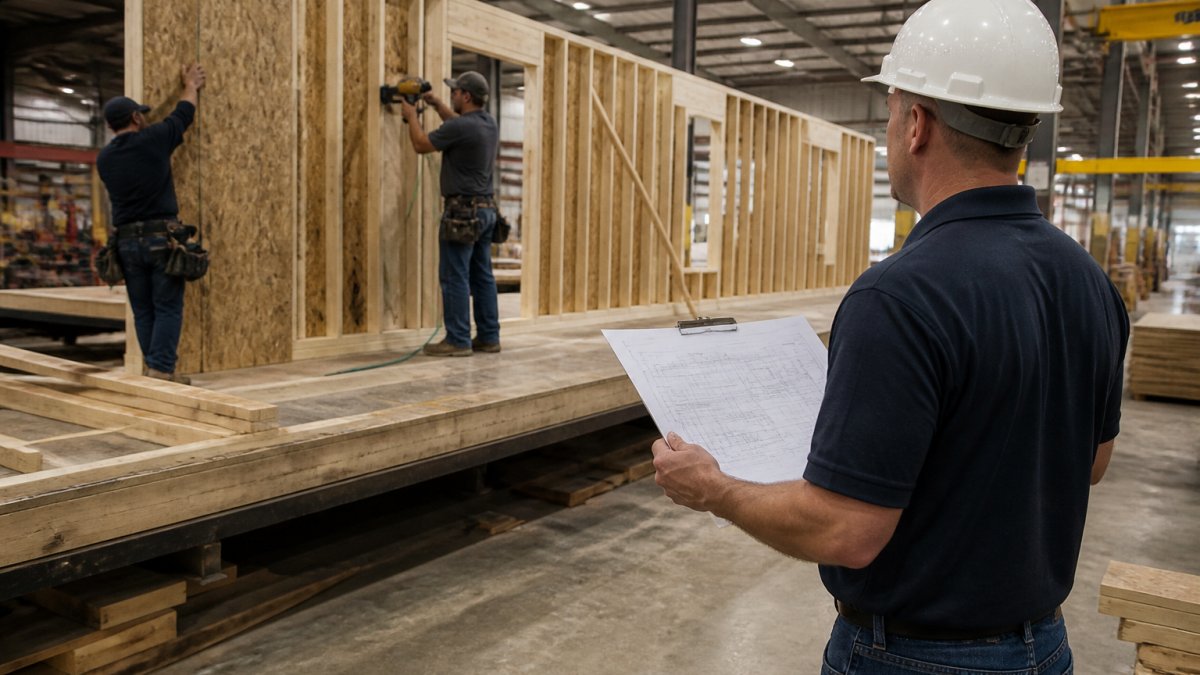
Every manufactured home sold in the U.S. must be built to the HUD Code, the federal construction standard for factory-built housing. Clayton and Palm Harbor share that baseline, so differences come down to how each builder executes above it.
What the HUD Code Requires of Every Factory-Built Home
The HUD Code sets minimum requirements for structural integrity, plumbing, heating, electrical systems, and fire safety, and assigns wind zone ratings based on where the home will be installed. Higher-wind regions require greater wind-load engineering, affecting wall bracing, roof pitch, and tie-downs.
Insulation standards and energy star certification are handled separately from the code itself, so ask each builder what insulation package and certification the specific model carries. According to HUD’s manufactured housing program overview, the HUD Code preempts state and local building codes for the home’s construction, though local rules still govern the site and installation.
Ask for the home’s data plate and wind zone rating before you sign. A model rated for a low-wind zone may need structural upgrades to be legal on your lot, and those upgrades change the price.
Customizable Manufactured Home Floor Plans and Design Options
Customization is where the two builders diverge most. Clayton offers a broad catalog of models and package-based upgrades, convenient if you want to pick from a menu. Palm Harbor emphasizes higher-end finishes and design details within a narrower set of floor plans.
Floor Plan Customization and Finish Choices
True floor plan customization means moving walls, adding bedrooms, and changing the layout, not just choosing carpet color. Some builders allow structural changes; others only allow finish selections.
Finish choices typically include siding materials, roofing, cabinetry, countertops, and flooring, where budget creep happens fastest. Treating upgrades as small line items is a common mistake; they add up across the whole home.
- Structural changes (wall moves, bedroom additions): usually limited
- Finish upgrades (flooring, cabinets, counters): widely available
- Site-dependent features (porches, garages): vary by dealer and lot
Manufactured Home Financing Options: Chattel Loans, Mortgages, and Eligibility
Financing is the most misunderstood part of buying a manufactured home, and where the two builders differ most structurally. Clayton operates an in-house lending arm, so buyers can often finance through the same company that sells the home. Palm Harbor typically relies on third-party lenders arranged through the dealer.
Chattel Loans vs. Mortgages: How the Two Products Actually Differ
A chattel loan finances the home as personal property, like a car or boat. The lender’s collateral is the home itself, not the land under it.
A mortgage on a manufactured home treats the home and land together as real property.
The gap between the two products is not small. Over 20 to 30 years, the difference in rate and term between a chattel loan and a real-property mortgage can change the total cost by tens of thousands of dollars.
The In-House Lender Question
When a builder also owns the lender, you get convenience: one application, one point of contact, and a financing path familiar with the builder’s product.
Buyers commonly report that in-house financing is fastest to close but not always the lowest rate. Independent lenders and credit unions specializing in manufactured housing sometimes beat in-house pricing, especially when the home will be titled as real property.
Eligibility Factors That Decide Your Rate
Underwriting for manufactured housing turns on a short list of variables:
- Credit score and history, the same baseline as any mortgage, but chattel lenders often apply tighter cutoffs.
- Down payment, chattel loans commonly require a larger percentage down than a conventional mortgage.
- Land ownership, owning the land unlocks real-property financing; leasing a lot usually locks you into chattel.
- Title status, personal property vs. real property changes which loan products you can even be offered.
- Home age and condition, some lenders will not finance homes past a certain age or without a foundation engineer’s certification.
- Installation type, a home on a permanent foundation is treated differently from one on piers or blocks.
According to the Consumer Financial Protection Bureau’s guide to manufactured home financing, buyers should compare loan terms carefully because chattel and mortgage products can differ substantially in cost over the life of the loan. The CFPB also flags that some manufactured home lenders operate through the dealer, which is another reason to read the disclosures rather than rely on the sales conversation.
Don’t assume your pre-approval from one lender transfers to another builder. Chattel and mortgage underwriting differ, and a home that qualifies for one may not qualify for the other. Get pre-approval in writing for the specific titling scenario you plan to use.
Ask each lender for a written Loan Estimate on the exact same home, land scenario, and down payment. Comparing two Loan Estimates side by side is the only apples-to-apples way to see which financing path is actually cheaper for you.
Warranty Coverage, Customer Service, and Dealer Network Support
Warranty terms matter more than most buyers expect, because a manufactured home is a system of components, not a single product. Both Clayton and Palm Harbor provide written manufacturer warranties, but coverage length and exclusions vary by component: structure, plumbing, electrical, and appliances are often handled separately.
What a Manufactured Home Warranty Actually Covers
A typical manufacturer warranty on a HUD Code home has layers:
- Structural warranty, covers the home’s frame, load-bearing walls, roof structure, and floor system. This is the longest component, often running for a defined multi-year period from the date of installation.
- Systems warranty, covers plumbing, electrical, heating, and cooling distribution as installed by the factory. This is usually shorter than the structural term.
- Appliance and component warranties, the refrigerator, range, water heater, furnace, and similar items carry their own warranties from their original manufacturers, not from the home builder. You will typically need to contact those manufacturers directly for service.
- Installation and site work, this is the gap most buyers miss. The warranty on the home itself usually does not cover problems caused by site prep, foundation work, or setup performed by the dealer or a third-party installer. Those items are governed by a separate agreement with whoever did the work.
Because the HUD Code is a federal construction standard, the manufacturer’s structural warranty is the primary long-term protection on build quality. Appliances, finishes, and site work go through separate channels.
How Service Calls Actually Get Routed
When something goes wrong, your first call is almost always to the retail center that sold you the home, not the factory.
A large national footprint can mean easier access to factory parts and standardized procedures, but also call-center routing and queues.
The practical takeaway: the brand on the home matters less than the specific retail center you buy from.
How to Evaluate a Dealer Before You Sign
Customer satisfaction depends heavily on the individual retail center, not just the brand. A few concrete steps will tell you more than any brochure:
- Ask for the names and contact information of three customers who bought in the last 12 to 24 months, and actually call them.
- Ask what the dealer’s average response time is for a warranty service request, and get it in writing if you can.
- Ask who performs warranty repairs, the dealer’s own crew, a subcontractor, or the factory, and how far they travel.
- Read the full written warranty document, including the exclusions section, before you sign anything.
- Visit a model home in person and look at fit and finish, not just the showroom display.
The warranty is only as good as the dealer who administers it. Read the exclusions, confirm who performs repairs, and talk to recent customers before you commit.
Zoning, Permits, and Site Prep: The Regulatory Hurdles Buyers Face
Zoning stops more manufactured home purchases than price does. Many buyers find the perfect home, then discover their county or city won’t allow it on their lot, the part most comparison guides skip.
Zoning Requirements and Permanent Foundation Rules
Local zoning requirements determine whether a manufactured home is allowed and under what conditions. Some jurisdictions restrict them to specific districts, require a minimum lot size, or mandate a permanent foundation or real-property titling.
Site prep is a separate cost and timeline. You’ll need a prepared pad, utility connections, and often a home inspection before occupancy. Delivery and setup logistics depend on road access, lot slope, and local permitting timelines.
According to HUD’s guidance on manufactured housing and local regulation, state and local governments retain authority over where manufactured homes may be sited, even though the federal code governs how they’re built. Check your jurisdiction’s rules before you choose a model.
Resale Value, Depreciation, and Long-Term Maintenance
Manufactured homes can appreciate or depreciate depending on titling, location, and maintenance. A home on owned land with a permanent foundation and real-property title behaves more like a site-built home; a home on rented land with a chattel title tends to lose value faster.
Depreciation is real for homes treated as personal property, while resale value improves when the home is affixed to land you own and financed as real estate. Long-term maintenance is similar to any home: roofing, siding, seals, and HVAC need attention, and insulation standards affect energy bills.
The title and foundation decision you make at purchase affects your resale value more than the brand name on the home. Get that part right first.
Choosing Between the Two: A Buyer’s Checklist
Use this checklist to compare any two builders on the factors that decide your outcome.
- Confirm the home’s HUD Code wind zone rating matches your lot
- Verify local zoning allows manufactured housing on your property
- Decide whether you’ll title the home as real or personal property
- Compare chattel vs. mortgage financing terms side by side
- Request the full written warranty and read the exclusions
- Visit a model home and ask for local customer references
- Get a written site prep and delivery estimate before signing
At Patriot Homes, we’re a dealer of brand-new, customizable manufactured homes, and our dedicated team is available 24/7 to guide you through every step of your home-buying journey. We empower you to create your dream space by offering a wide range of options, from selecting the number of bedrooms and bathrooms to choosing the perfect finishes, and we provide expert guidance throughout the home-buying process.
Frequently Asked Questions
Who is Clayton Homes’ biggest competitor?
Clayton Homes is the largest manufactured home builder in the U.S., and its closest competitors include Palm Harbor Homes and several other national and regional builders. Palm Harbor is often compared to Clayton because both offer a wide range of floor plans and financing through affiliated lenders. The better choice depends on your budget, the floor plan you want, and which dealer network serves your area.
Are Palm Harbor manufactured homes good quality?
Palm Harbor builds homes to the federal HUD Code, the same baseline standard Clayton follows, so structural integrity and safety meet the same minimum requirements. Palm Harbor is known for energy-efficient features and customizable floor plans, while Clayton offers a larger dealer network and more entry-level options. Ask each builder for a home inspection report and warranty coverage details before deciding.
What are the key differences between Clayton and Palm Harbor construction standards?
Both builders meet HUD Code requirements, which cover structural integrity, wind zone ratings, insulation standards, and roof pitch. Clayton builds a high volume of homes through its retail centers, while Palm Harbor emphasizes energy efficiency and design customization. The practical differences show up in siding materials, insulation packages, and optional upgrades rather than the core code compliance.
How do warranty programs compare between Clayton Homes and Palm Harbor?
Both builders offer written warranties that cover structural defects and major systems, though the length and what is included vary by model and dealer. Clayton typically provides a one-year limited warranty on workmanship plus extended structural coverage. Palm Harbor offers similar coverage, but you should read the specific warranty document for each home and ask your dealer what happens if a repair is needed after delivery and setup.
Buying a manufactured home comes down to matching the right builder to your land, your budget, and your long-term plans. Patriot Homes offers customizable manufactured homes with a wide range of model options, competitive pricing, and around-the-clock support to guide you through every step. Get started with Patriot Homes and build a home that fits your life and your budget.