
How to Time Land Grading for a Manufactured Home
Last Updated: November 12, 2026
Quick Summary
Land grading typically takes one to four days of active work on a standard house lot, with finish grading alone running half a day to two days. Large, sloped, or rocky sites can stretch to two weeks or more, and total elapsed time is longer once you add permits, utility locating, and inspections.
- Rough grading moves soil fast, while finish grading shaves the last few inches and hides extra days.
- Small backyard leveling under about a quarter acre usually takes one to two days.
- Compaction testing and topsoil handling happen after the earthmoving looks finished.
- Pre-work like permits and utility locating can add one to three weeks of calendar time.
- On a straightforward lot, on-site phases two through six can fit inside about a week.
Table of Contents
- What Is Grading in Construction and Why It Decides Your Timeline
- How Long Does Land Grading Take for a House?
- Land Grading and Excavation: Where the Extra Days Come From
- Land Grading and Leveling: Why a Flat Pad Still Takes Time
- Factors That Change the Schedule
- A Step-by-Step Schedule From Site Assessment to Final Inspection
- Phase 1: Pre-Work Dependencies (Days 1 to 10, Often Longer)
- Phase 2: Site Preparation and Clearing (Days 1 to 2 of On-Site Work)
- Phase 3: Rough Grading and Excavation (Days 2 to 5)
- Phase 4: Compaction and Testing (Days 4 to 6, Overlapping Rough Grading)
- Phase 5: Finish Grading (Days 5 to 7)
- Phase 6: Erosion Control and Stabilization (Days 7 to 8)
- Phase 7: Final Inspection (Day 8 and Beyond)
- How the Phases Stack Up
- Get Your Grading Timeline and Home Quote From Patriot Homes
- Frequently Asked Questions
What Is Grading in Construction and Why It Decides Your Timeline
Land grading is the process of reshaping the ground so it sits at the right height and slope for a home, and it decides your timeline because everything after it waits on a stable, level, well-drained base. At Patriot Homes, we walk landowners through this step constantly, and it’s the one most people underestimate.
Here’s the short version: grading moves soil, cuts high spots, fills low ones, and sets the slope that carries water away from the home. Get it right and the rest of the build runs smooth. Get it wrong and you pay for it later.
Rough Grading vs. Finish Grading
Rough grading is the big earthmoving pass. Crews cut and fill to bring the site close to the target elevation, using an excavator, bulldozer, or grader.
Finish grading is the detail work. It shaves the last few inches, sets the final slope, and prepares the pad for the foundation.
A common mistake is treating these as one step. They’re not. Rough grading can move fast. Finish grading is where patience pays off.
If you want the full picture of what comes before and after, our guide on how to prepare land for a manufactured home lays out every step.
How Long Does Land Grading Take for a House?
of active work, according to Pristine Forestry Mulching’s grading timeline guide. That figure covers small house lots, driveways, and backyard leveling. Bigger or rougher sites stretch well beyond it.
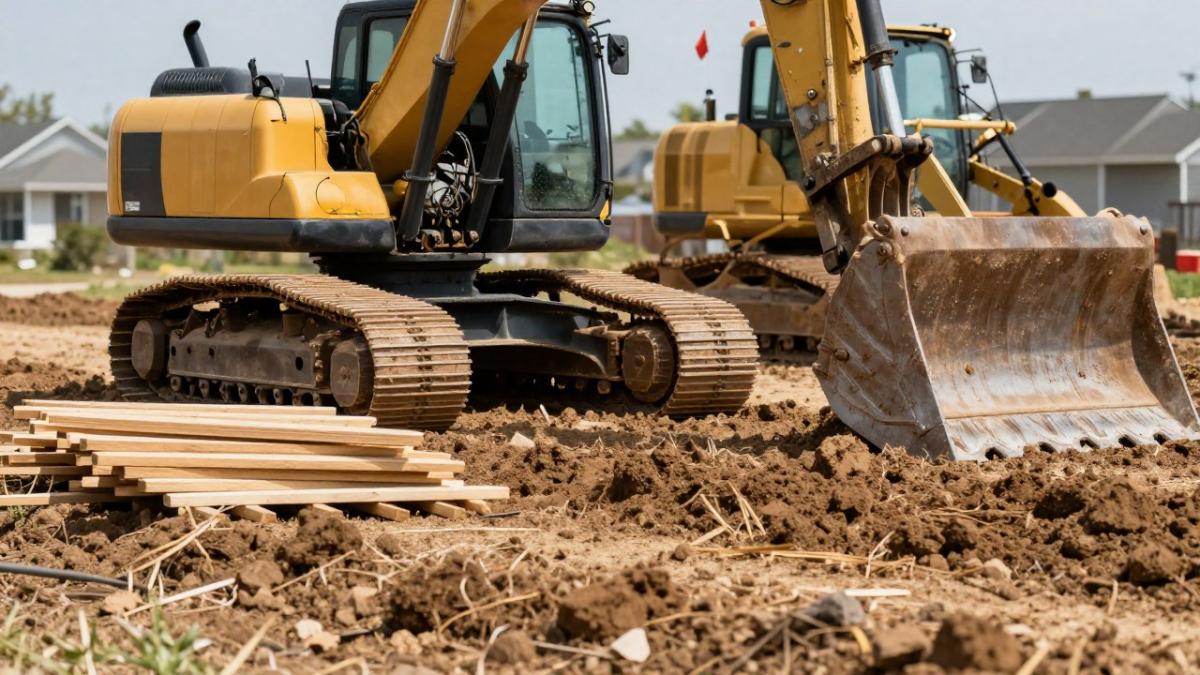
So why do some projects take weeks? Because active grading time is not the same as total elapsed time. Permits, utility locating, weather, and soil conditions all sit between the first day and the last.
Timelines by Project Size and Grading Type
Here’s how the work tends to break down by scope. Actual schedules depend on your ground and site conditions.
| Scope | Active Grading Time | What Stretches It |
|---|---|---|
| Finish grading only (pad already rough-graded) | Half a day to two days | Precision, grade checks, drainage tie-in |
| Small backyard leveling (under about a quarter acre) | One to two days | Site access, hauling spoils |
| Standard house lot (rough plus finish) | Two to four days | Soil type, compaction testing, inspections |
| Small driveway cut | One to two days | Slope, drainage tie-in |
| Large or sloped lot (significant cut and fill) | One to two weeks | Cut and fill volume, weather, haul distance |
| Heavily sloped or rocky site | Two weeks or more | Rock removal, engineered fill, stabilization |
A common pattern is that finish grading alone runs shorter than people expect, while rough grading on a sloped site runs longer. The reason is volume: finish grading shaves inches, rough grading moves yards.
Machine Time vs. Total Elapsed Time
The table above measures the days equipment is actually working. Total elapsed time is usually longer, and it’s the number you should put on your calendar.
Ask any contractor whether a quoted duration refers to working days of equipment time or calendar days from mobilization to final sign-off before you plan the rest of the build.
When you’re ready to compare that timeline against the full build, our home construction timeline puts grading in context.
Land Grading and Excavation: Where the Extra Days Come From
Excavation and grading overlap, but they’re not the same job. Excavation digs out soil for foundations, utilities, and footings. Grading shapes what’s left.
The extra days usually come from one of these:
- Cut and fill volume. Moving a lot of soil takes time. Hauling it off-site takes longer.
- Compaction testing. Soil layers must be compacted in lifts, and testing can add days.
- Topsoil handling. Stripping and stockpiling topsoil for later is its own step.
- Utility locating. Crews can’t dig safely until lines are marked.
- Site access. A tight lot slows every piece of heavy equipment.
What most guides miss is that compaction and topsoil work happen after the earthmoving looks finished. The site can look done while crews are still working.
Land Grading and Leveling: Why a Flat Pad Still Takes Time
A flat pad is not a fast pad. Leveling requires reading elevation against grid lines and grade stakes, then shaving or filling until the readings match the plan.
Think about what’s involved:
- A survey establishes the starting elevations.
- Grade stakes mark the target heights.
- The operator checks readings as the soil moves.
- Finish grading sets the final slope for drainage.
Every one of those steps takes time, and each one can turn up a surprise. Hit rock, and the schedule changes. Find soft soil, and it changes again.
The payoff is a level base that protects your foundation and keeps water moving away from the home. That’s worth a day or two of patience.
Factors That Change the Schedule
Several things can push a grading job past the estimate. Knowing them ahead of time keeps you from being blindsided.
Weather, Soil, and Site Access
Rain is the biggest wildcard. Wet soil can’t be compacted properly, so crews wait. In fire-prone areas, dust control and erosion rules add steps too. The U.S.
Soil type matters just as much. Clay holds water and slows compaction. Sandy soil drains fast but may need more fill. Rocky ground slows excavation.
Site access rounds out the list. Narrow driveways, steep entries, and tight lots slow hauling and equipment movement.
Permits can stall everything. If you’re worried about that step, our walkthrough on how to get building permits for land covers the sequence.
A Step-by-Step Schedule From Site Assessment to Final Inspection
Most guides list the grading steps but never show how the days stack up. Here’s the order we’d follow on a typical house lot, with rough day ranges for each phase. Treat these as planning ranges, not promises; your ground and your jurisdiction set the real pace.
Phase 1: Pre-Work Dependencies (Days 1 to 10, Often Longer)
This is the phase that surprises people, because no equipment is moving yet.
- Site assessment and survey. Confirm elevations, boundaries, and drainage. Usually one to three days once scheduled.
- Permits. Grading and building permits can take days to weeks depending on the jurisdiction. This is administrative lead time, not grading time.
- Utility locating. Crews can’t dig safely until lines are marked. Call 811 and allow the required notice period before any excavation.
Watch out: starting the clock on “grading” before permits and utility marks are in hand is the most common planning error. Those days belong in your total, not your machine time.
Phase 2: Site Preparation and Clearing (Days 1 to 2 of On-Site Work)
- Remove brush and debris.
- Strip topsoil and stockpile it for later use.
- Establish access for equipment and hauling.
Clearing is fast on open ground and slow on wooded or tight lots.
Phase 3: Rough Grading and Excavation (Days 2 to 5)
- Cut high spots and fill low ones to bring the site near target elevation.
- Excavate for foundations, utilities, and footings where needed.
- Haul excess soil off-site or stockpile it for fill.
This is where cut-and-fill volume drives the schedule. A lot that needs little dirt moved finishes fast; a sloped site with heavy cut and fill can run a week or more.
Phase 4: Compaction and Testing (Days 4 to 6, Overlapping Rough Grading)
- Compact soil in lifts, layer by layer.
- Verify compaction with testing before the next layer goes down.
Compaction often overlaps rough grading, but testing can add days if a layer fails and has to be reworked.
Phase 5: Finish Grading (Days 5 to 7)
- Set the final slope and pad elevation.
- Check grade against stakes and the plan.
- Tie drainage away from the home.
Finish grading is slower and more precise than rough grading, and it’s where a lot of the extra days hide.
Phase 6: Erosion Control and Stabilization (Days 7 to 8)
- Install erosion control measures.
- Seed or otherwise stabilize completed areas.
The U.S. Environmental Protection Agency’s land grading guidance calls for stabilizing completed grading areas when no further work is expected for two or more weeks, which is erosion control rather than a duration estimate.
Phase 7: Final Inspection (Day 8 and Beyond)
- Confirm the pad is ready for the home.
- Verify drainage and compaction records.
Inspection scheduling can add days depending on the jurisdiction’s backlog.
How the Phases Stack Up
On a straightforward lot, phases two through six can fit inside about a week of on-site work, with pre-work dependencies adding one to three weeks of calendar time. On a sloped or rocky site, rough grading and compaction can each stretch, and the whole sequence can run two to four weeks of on-site work. The key is that each phase depends on the one before it: you can’t finish-grade before compaction passes, and you can’t compact safely before utilities are marked.
For the full site development sequence, our site timeline planning guide shows where grading fits. To map this schedule against your own lot, call (888) 765-1776 and our 24/7 team will help you plan the sequence.
Get Your Grading Timeline and Home Quote From Patriot Homes
The grading question always leads to the same place: what happens next. We proudly serve local homeowners across the counties and cities we cover with custom manufactured and modular options, from 1-bedroom ADUs to spacious 4-bedroom models.
Call (888) 765-1776 for a pricing matrix, customization options, or immediate help. Our 24/7 team can also point you to our step-by-step guide to putting a manufactured home on your own land.
Grading is the step that sets the pace for everything after it, and guessing at the timeline costs you. Let Patriot Homes take the uncertainty out of it.
Frequently Asked Questions
What is the process of land grading?
Land grading starts with a site assessment and survey, then moves to clearing and grubbing, rough grading with an excavator or bulldozer, cut and fill to reach the planned elevation, compaction of fill layers, and finish grading to the final grade. Grade stakes and grid lines guide the equipment operator throughout. A final inspection confirms drainage slopes away from the home pad. For a standard house lot, the active earthmoving typically takes one to three days, though the full process from assessment to inspection usually spans longer.
What factors affect how long land grading takes?
The biggest factors are project size, soil type and ground conditions, site access, weather, and how much cut and fill is needed. Rocky or clay-heavy soil slows excavation, and wet ground can stop heavy equipment entirely. Steep slopes require more earthmoving than a level lot. Permits and utility locating can also delay the start. The U.S. Environmental Protection Agency recommends stabilizing completed grading areas when no further disturbance is expected for two or more weeks, which adds a step to the end of the schedule.
How long does land grading and excavation take for a manufactured home pad?
How long rough grading and excavation take for a manufactured home pad depends on the site. Level lots with good access generally move faster, while larger lots, steep terrain, or heavy rock take longer. Compaction testing and topsoil work add time beyond the earthmoving itself. Call (888) 765-1776 and our team can walk you through what your specific lot will need.
What should I do before land grading begins?
Before grading starts, confirm your permits are in place, have underground utilities located and marked, clear the site of debris and vegetation, and arrange equipment access. A survey and grading plan should be ready so the operator knows the target elevations. Decide where excavated soil will go or whether it will be reused as fill. If you are placing a manufactured home, talk to your dealer first. Patriot Homes serves homeowners across California with custom manufactured and modular options, and our 24/7 team at (888) 765-1776 can help you plan the site work around your home delivery.
