
Land-Home Packages for First-Time Buyers: Pros and Cons
Last Updated: November 12, 2026
Quick Summary
Land-home packages give first-time buyers a lower entry price and ownership of the land under the home, but they trade away some appreciation potential. Advertised package prices often exclude site work, permits, and utility connections, so compare packages on total move-in cost rather than the home line alone.
- A land-home package bundles the manufactured home, a titled parcel, and often delivery, setup, and utility hookups.
- Manufactured homes average $123,300 for a new home, per NerdWallet, though the year and inclusions are unstated.
- A land-home loan treats house and land as real property with a lower rate but usually a larger down payment.
- Run zoning, title, survey, flood, and septic checks on the parcel before signing anything.
- Site work is the phase buyers underestimate most, and weather and permits affect your move-in timeline.
Table of Contents
- What a Land-Home Package Actually Includes
- Pros and Cons of Land-Home Packages for First-Time Buyers
- Manufactured Home and Land Costs: A First-Time Buyer Budget
- Buying Land for a Manufactured Home: Due Diligence Before You Sign
- Land-Home Package Financing: How the Loan Works
- Manufactured Home Loan Requirements First-Time Buyers Should Expect
- Site Preparation, Installation, and Your Move-In Timeline
- Get Your Land-Home Package Quote: Call (888) 765-1776
- Frequently Asked Questions
What a Land-Home Package Actually Includes
A land-home package bundles the manufactured house, the land it sits on, and often the site work that connects the two. For a first-time buyer, that bundle is the appeal: one contract, one point of contact, and a path to owning dirt instead of renting a lot.
Home, land, and site work: what is usually bundled
A typical land-home package for first-time buyers includes three pieces:
- The manufactured home itself, built to federal construction standards
- A titled parcel of land, either a developed lot or raw acreage
- Delivery, setup, and utility hookups, sometimes rolled into the price
Some sellers also fold in the permanent foundation, steps, and a basic landscaping allowance. Others do not.
What often falls outside the package
The gaps are where budgets break. According to NerdWallet’s guide to buying a manufactured home, owning the land can make the purchase a more stable investment over time, but the home itself may not appreciate the way a site-built house does.
Common exclusions include:
- Well and septic installation on rural parcels
- Permit fees and impact fees charged by the county
- Extended utility runs when the power pole is far from the pad
Before you sign anything, read raw land vs developed lots so you know which category your parcel falls into.
Pros and Cons of Land-Home Packages for First-Time Buyers
Land-home packages trade some appreciation potential for a lower entry price and real ownership. That is the honest summary. The pros are strong, the cons are real, and the right answer depends on how long you plan to stay.
Where the package wins
Affordability tops the list. NerdWallet’s manufactured home overview describes manufactured homes as an affordable option, especially in rural areas, and reports an average new-home cost of $123,300. The excerpt does not state the year or what the figure includes, so treat it as a starting reference, not a quote.
Other wins:
- Land ownership. You own the dirt under your home, not a rented lot in a park.
- Speed. Factory-built homes move faster than site-built construction.
- Customization. Floor plans range from a 1-bedroom ADU to a spacious 4-bedroom model.
Where the package can cost you
The home and the land can move in opposite directions financially.
Watch out: advertised package prices often exclude site work, and land preparation costs can add up quickly. Budget a contingency before you commit.
First-time buyers who want a broader view of affordable options should read affordable manufactured homes for first-time buyers.
Manufactured Home and Land Costs: A First-Time Buyer Budget
Total cost, not sticker price, decides whether a land-home package works for you. Most first-time buyers compare the advertised package figure to a site-built list price and stop there. The gap between those two numbers and the actual cash you need at move-in is where budgets fail.
The full cost stack, in the order it hits your wallet
Work through these in sequence. Each one can be quoted separately, and each one should be in writing before you commit.
- Home price. The manufactured structure itself, including model, size, and factory options. Ask whether delivery and setup are inside this number or billed separately.
- Land price. The parcel purchase, plus title search, survey, and recording fees. Raw acreage and developed lots price very differently.
- Site work. Grading, the permanent foundation or pier system, utility trenching, and connections. On rural parcels this is frequently the largest single line after the home.
How the buckets interact
A lower home price can be erased by a harder parcel. A raw lot that looks cheap per acre may need a well, a septic system, a long power run, and a driveway before the home ever arrives.
Watch out: advertised package prices frequently exclude site work, permits, and utility connections, so a quote that looks complete can leave the largest items for you to fund separately.
Getting real numbers for your parcel
The only reliable way to build this stack is to price it against a specific parcel and a specific floor plan. Our 24/7 team at (888) 765-1776 can walk you through a pricing matrix and help you separate what a package covers from what it leaves out, and you can request a quote from our website for a written breakdown.
First-time buyers who want a broader view of affordable options should read affordable manufactured homes for first-time buyers.
Buying Land for a Manufactured Home: Due Diligence Before You Sign
Due diligence on the land matters more than due diligence on the house. The house is new and warrantied; the parcel is not, and most problems that derail a land-home purchase are sitting in the dirt, the deed, or the county file long before the home is ordered.
Zoning and local rules
Start with the jurisdiction, not the parcel. Confirm that manufactured housing is an allowed use in that zone, and ask whether approval is by right or requires a conditional-use permit or variance. Ask specifically about minimum home size, age restrictions, permanent foundation requirements, and any deed restrictions or CC&Rs that prohibit manufactured homes.
Title, survey, and access
A title search reveals liens, ownership disputes, and recorded easements. A survey confirms boundaries, the location of improvements, and whether the parcel has legal access. Access is the quiet deal-breaker: a parcel that touches a public road is different from one reached by an unrecorded dirt track across a neighbor’s land.
Buildability: slope, drainage, and soil
Walk the parcel or have it inspected. Look for steep grades that raise foundation and driveway costs, low spots that hold water, and signs of erosion. Soil matters for both the foundation and any septic system. Ask about the water table and drainage patterns, and confirm the pad location you have in mind is feasible.
Flood risk and environmental limits
Check the parcel against federal flood maps and ask the county about local flood history. A parcel in a flood zone changes insurance costs and may restrict how the home can be sited or elevated. Ask about wetlands, protected habitat, and conservation easements that limit clearing or construction.
Utilities: at the lot line or a quarter mile away?
Confirm whether power, water, gas, and sewer reach the lot line or stop short. An extended power run, a water line across a field, or a sewer connection far from the pad can each become a major line item. If municipal service is not available, confirm well and septic feasibility before you commit, a percolation test for septic and a conversation with neighboring well owners about depth and water quality.
Septic and well feasibility
A percolation test tells you whether the soil can absorb a septic system, and the result can change the design, the cost, or the viability of the parcel entirely. For a well, ask about typical depth in the area and whether water quality has required treatment nearby.
The checklist
- Confirm zoning allows manufactured housing on the parcel
- Verify whether a conditional-use permit or variance is required
- Review deed restrictions and CC&Rs for manufactured-home limits
Our guide to placing manufactured homes on private land covers each step in detail, and our 24/7 team at (888) 765-1776 can talk through what a given parcel will require before you sign. You can also request a quote from our website once you have a parcel in mind.
Land-Home Package Financing: How the Loan Works
Two loan structures cover most land-home purchases, and the difference changes your rate and your down payment. A land-home loan treats the house and land as one piece of real property. A chattel loan treats the home as personal property, like a vehicle.
Land-home loan vs. chattel loan
| Feature | Land-Home Loan | Chattel Loan |
|---|---|---|
| Collateral | Home plus land | Home only |
| Typical rate | Lower | Higher |
| Down payment | Usually larger | Usually smaller |
| Property type | Real property | Personal property |
If you already own land in California, Nevada, Arizona, or Idaho, we can build on your parcel. Call (888) 765-1776 to talk through which structure fits your situation.
Manufactured Home Loan Requirements First-Time Buyers Should Expect
Lenders typically look at credit, income, and the property. Expect to document all three.
Most lenders will ask for:
- A credit score review, with score minimums set by the lender
- Proof of stable income, usually two years of history
- A debt-to-income ratio within the lender’s limit
- A down payment sized to the loan type
Requirements vary by lender and loan program, so confirm the specifics with your loan officer rather than assuming. First-time buyer programs and grants may help with down payment and closing costs; confirm eligibility with your lender and local housing agencies.
Site Preparation, Installation, and Your Move-In Timeline
Site work is the phase buyers underestimate most.
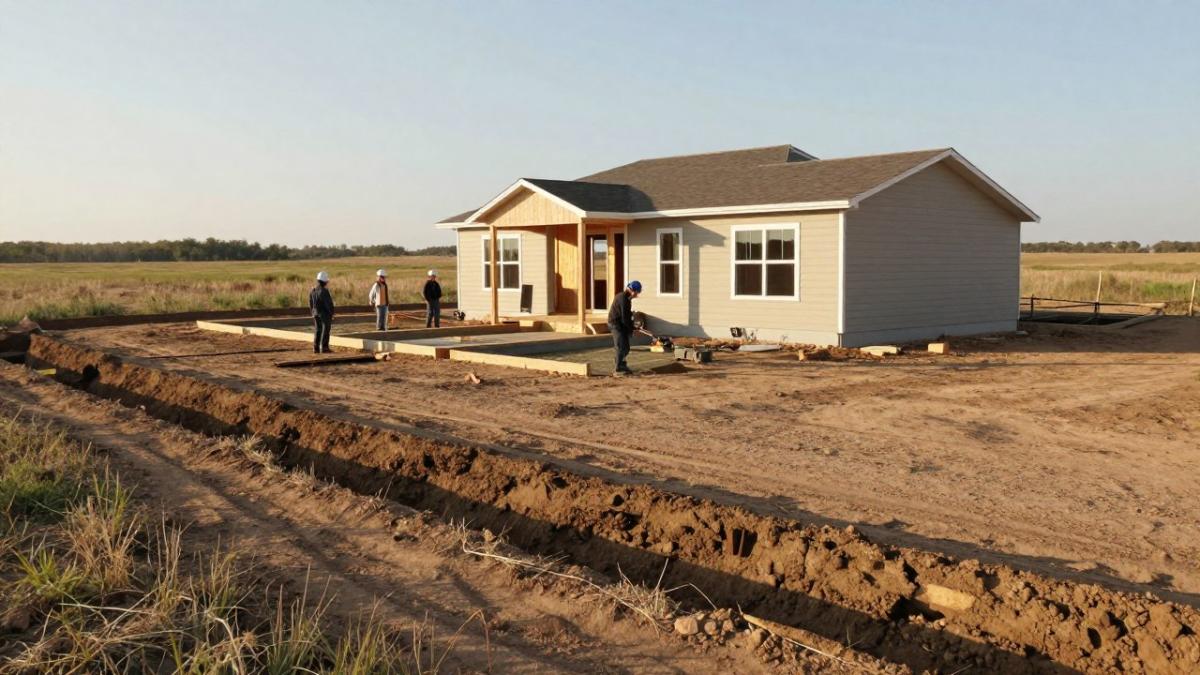
The sequence usually runs: grading, foundation, utility trenching, delivery, installation, utility connections, inspection, then move-in. Weather, permit timelines, and utility company scheduling all affect the calendar.
Two resources help here: our guide on how to prepare land for a manufactured home and our walkthrough on planning your site timeline.
Get Your Land-Home Package Quote: Call (888) 765-1776
Every buyer’s numbers are different, and the only quote that matters is the one built around your parcel, your floor plan, and your loan.
Here is what we bring to the table:
- Customizable manufactured homes with a wide range of options
- Competitive pricing with a high-quality home and strong value
- 24/7 customer support to guide you through every step of the process
- Wide range of model options so you can match the home to the land
Why pay more when you can have quality, style, and affordability all in one?
Call our 24/7 team at (888) 765-1776 for a pricing matrix, customization options, or immediate assistance. You can also request a quote from our website and we will follow up fast.
A land-home package can be the most affordable route into homeownership, or an expensive lesson in what the contract left out.
Frequently Asked Questions
What is included in a land-home package?
A land-home package typically bundles the manufactured home, the parcel of land, delivery, and some site work such as grading and utility connections. What is included varies by dealer and contract, so ask for a written scope list. Patriot Homes serves first-time buyers across California, Arizona, Idaho, and Nevada with customizable floor plans from 1-bedroom ADUs to 4-bedroom models. Call (888) 765-1776 to review what a package covers in your area.
Can you finance the land and manufactured home together?
Yes, in many cases. A land-home loan combines the home and the land under one mortgage, which can mean a lower interest rate than a chattel loan. Lenders will look at your credit score, debt-to-income ratio, down payment, and the property itself. Requirements differ by lender and by whether the home is on a permanent foundation. Ask Patriot Homes at (888) 765-1776 for guidance on which loan structure fits your situation.
What costs may not be included in a land-home package?
Common exclusions include land clearing, septic system or well installation, utility hookup fees, building permits, permanent foundation work, and landscaping. Property taxes, homeowners insurance, and any community fees are also separate ownership costs. Total carrying costs can be higher than first-time buyers expect. Get an itemized exclusion list in writing before you sign, and request a quote from Patriot Homes to see what is covered.
Is a land-home package a good option for first-time buyers?
It can be, especially if you want land ownership and a predictable monthly payment. Manufactured homes are often described as an affordable option for first-time buyers. The trade-off is that land may appreciate while the home itself may not appreciate the same way. Weigh the total cost of ownership, not just the purchase price, and call (888) 765-1776 to talk through the numbers.
