
How Long Does a Manufactured Home Last? A 2026 Guide
Table of Contents
- Manufactured Home Life Expectancy: What the Numbers Say
- The Factors That Decide How Long a Manufactured Home Lasts
- Manufactured Home vs. Modular Home Lifespan: How They Compare
- How to Maintain a Manufactured Home for the Long Haul
- Your Manufactured Home Maintenance Checklist
- How to Assess a Specific Home’s Remaining Useful Life
- Repair or Replace? Lifecycle Costs and the HUD-Code Era
- What Lifespan Means for Insurance, Financing, and Resale
- Frequently Asked Questions
Last Updated: October 9, 2026
Manufactured Home Life Expectancy: What the Numbers Say
A manufactured home lifespan typically runs 30 to 55 years with proper care, and many reach 50 years or more. That range comes from how the home is built, where it sits, and how well it is maintained. At Patriot Homes, we walk buyers through this question every day, and the honest answer is that a manufactured home lifespan depends far more on upkeep than on the label on the frame.
This guide covers how long a manufactured home lasts, what shortens its life, and how to get the most years out of one.
How Long Manufactured Homes Actually Last
Most manufactured homes built to the current federal HUD code reach 30 to 55 years. Homes in dry climates with attentive owners often land at the top of that range. Homes near the coast or in humid areas tend to fall toward the lower end without extra care.
So when someone asks “how long does a manufactured home last,” the real answer is: it depends on you.
The Factors That Decide How Long a Manufactured Home Lasts
Three things drive the answer: how it was built, where it sits, and how it is kept. Get all three right and a manufactured home can outlast the mortgage on it.
Construction Quality and Building Materials
Modern manufactured homes use the same framing, sheathing, and roofing materials as site-built homes. Since 1976, every home sold in the U.S. has had to meet the federal HUD code for safety and durability, and that standard has tightened over time. Newer homes built after 1994, when the code was updated, generally hold up better than older units.
What most guides miss is that the factory process itself helps. Walls are built square in a controlled setting, so they resist settling and warping better than many people expect.
Climate, Moisture, and Environmental Exposure
Moisture is the number one enemy of any home, manufactured or not. Water that gets behind siding, under skirting, or into the roof deck causes rot, mold, and structural damage fast. Dry climates are gentler on a home’s shell. Wet, humid, or coastal climates speed up deterioration.
- Dry heat: slower rot, but watch for sun damage to seals and roofing
- Humid air: faster mold and wood rot without ventilation
- Coastal salt air: corrodes fasteners and metal components
- Freeze-thaw cycles: stress foundations and plumbing
Manufactured Home vs. Modular Home Lifespan: How They Compare
Modular homes and manufactured homes have similar life expectancies, generally 30 to 55 years, but they follow different rules. A modular home is built in sections to state and local building codes, then assembled on a permanent foundation. A manufactured home is built to the federal HUD code and can be placed on a permanent or pier-and-beam foundation.
| Feature | Manufactured Home | Modular Home |
|---|---|---|
| Building code | Federal HUD code | State and local codes |
| Foundation | Pier, beam, or permanent | Permanent only |
| Typical lifespan | 30 to 55 years | 30 to 55 years |
| Movable after setup | Often yes | Rarely |
Neither type is inherently shorter-lived. The foundation and the maintenance matter more than the label.
How to Maintain a Manufactured Home for the Long Haul
The work is not complicated, but it has to be consistent. A home that gets checked twice a year will outlast one that only gets attention when something breaks. Here is how we tell our buyers to think about it.
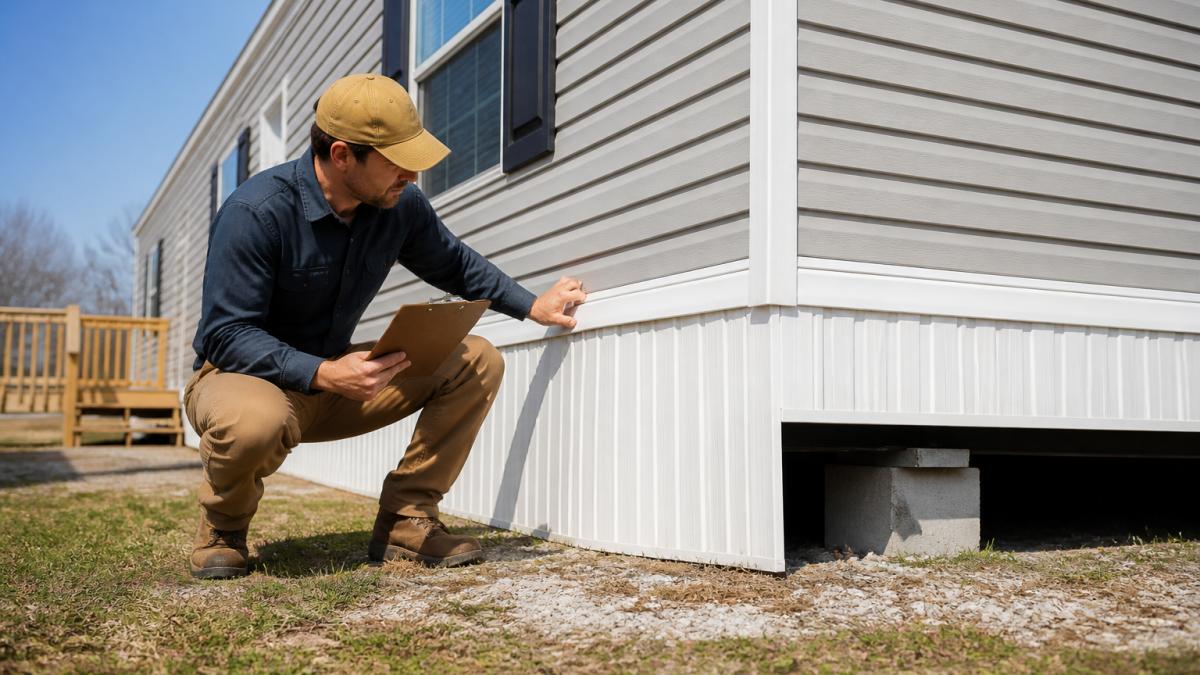
Start with water. Seal every gap you can find, keep gutters clear, and make sure the ground slopes away from the home. Then keep air moving. Ventilation stops moisture from building up inside walls and under the floor.
- Check the roof after every major storm
- Re-caulk windows and doors once a year
- Keep skirting vents clear so the underside can breathe
- Flush the water heater and check for leaks
- Clean dryer vents to cut fire risk
Take photos of the underside and roof every six months. Comparing them over time is the fastest way to spot a slow leak before it becomes a repair bill.
Your Manufactured Home Maintenance Checklist
A simple schedule beats a long to-do list. The key is to match tasks to the seasons and to know which jobs you can safely handle yourself versus which ones require a licensed professional. This is the routine we recommend to keep a manufactured home maintenance checklist realistic and repeatable.
Seasonal Maintenance Schedule
| Season | Task | How Often | Why It Matters | DIY or Pro |
|---|---|---|---|---|
| Spring | Inspect roof shingles, flashing, and vent boots | Once | Catches winter damage before spring rains | DIY visual; pro for repairs |
| Spring | Clean gutters and downspouts | Once | Prevents water backing up under the roof edge | DIY |
| Spring | Check skirting panels and vents | Once | Keeps the underside dry and pest-free | DIY |
| Spring | Test smoke and CO alarms | Monthly | Safety and code compliance | DIY |
| Summer | Service the HVAC system | Once | Extends compressor and furnace life | Pro |
| Summer | Re-caulk windows, doors, and penetrations | Once | Stops air and water intrusion | DIY |
| Summer | Inspect plumbing supply lines and shut-off valves | Once | Catches slow leaks before rot starts | DIY visual; pro for repairs |
| Fall | Clean dryer vent and exhaust hoods | Once | Cuts fire risk and improves air quality | DIY |
| Fall | Flush the water heater | Once | Removes sediment and extends tank life | DIY or pro |
| Fall | Check foundation piers, anchors, and tie-downs | Once | Protects against wind and frost movement | DIY visual; pro for adjustments |
| Winter | Watch for ice dams and condensation on windows | As needed | Early sign of insulation or ventilation problems | DIY observation |
| Winter | Keep skirting vents clear of snow and debris | As needed | Prevents moisture buildup under the floor | DIY |
When to Call a Professional
Some tasks are not worth the risk. Call a licensed professional when you see:
- Any sign of structural movement, such as cracks in interior walls, doors that no longer latch, or a floor that slopes more than a fraction of an inch over a few feet.
- Roof damage that goes beyond a missing shingle, including soft decking, exposed underlayment, or active leaks.
- Electrical issues such as warm outlets, flickering lights, or a breaker that trips repeatedly.
- Gas odors, a furnace that will not stay lit, or a water heater that leaks from the tank itself.
- Persistent moisture, musty odors, or mold that returns after cleaning.
If you only do one thing, do the roof. Water damage is the most common reason a manufactured home ages faster than it should.
How to Assess a Specific Home’s Remaining Useful Life
A broad lifespan range is not much help when you are standing in front of a specific home. What you need is a condition-based estimate. The method below walks through the five systems that matter most and gives you a way to score what you find.
The Five-Point Condition Check
Walk the home in this order and note the condition of each item.
1. Roof
- Age of the covering. Asphalt shingles typically last 15 to 25 years; metal panels often last 30 to 50 years.
- Look for curling, missing, or cracked shingles, exposed nails, and rusted flashing.
- Check the ceiling inside for stains, which point to active or past leaks.
2. Subfloor and Floor Structure
- Walk every room and press on the floor near toilets, tubs, and exterior doors.
- Soft or spongy spots usually mean water damage and possible subfloor rot.
- Look for sagging or bounce that suggests joist or pier problems.
3. Moisture and Ventilation
- Check under the home for standing water, damp soil, or a musty smell.
- Look at skirting vents and make sure they are open and unobstructed.
- Inside, check for condensation on windows, peeling paint, or mold in corners and closets.
4. Structure and Foundation
- Inspect piers, anchors, and tie-downs for rust, shifting, or missing hardware.
- Look for cracks in interior walls, doors that stick, and windows that no longer close cleanly.
- Check that the home is level; a noticeable slope is a sign of movement.
5. Major Systems
- Note the age of the HVAC system, water heater, and roof. Systems near or past their expected service life are a repair cost waiting to happen.
- Check the electrical panel for rust, scorch marks, or unlabeled breakers.
- Look at plumbing supply lines and shut-off valves for corrosion or leaks.
Turning Observations into an Estimate
A simple way to think about it: if the roof is newer, the underside is dry, the home is level, and the major systems are working, the home likely has decades of useful life left. If two or more of the five areas show significant problems, the remaining life is shorter and the repair budget is larger.
Skipping a professional inspection before you buy is the most expensive mistake in this process. A hidden leak can cost far more to fix than the inspection itself.
What to Ask Before You Buy
- When was the roof last replaced?
- Has the home ever been re-leveled, and when?
- Are there records of plumbing or HVAC repairs?
- Has the home been treated for pests or moisture problems?
- Is the home on a permanent foundation, and does it meet current anchoring requirements?
A seller who can answer these questions with documentation is giving you a much clearer picture of remaining life than any generic lifespan range.
Repair or Replace? Lifecycle Costs and the HUD-Code Era
Age and code era change the math. Homes built before 1976 predate the HUD code and often lack modern safety features. Homes from the late 1990s onward are built to stronger standards and are usually worth repairing.
The rule we use is simple: if repairs cost more than a third of what the home is worth, weigh replacement. If the structure is sound and only systems need work, repair usually wins.
What Lifespan Means for Insurance, Financing, and Resale
Lenders and insurers care about age. Older manufactured homes can be harder to finance and insure, and some policies cost more. Homes built after 1976 and placed on a permanent foundation tend to get better terms.
Resale value holds up best when you can show maintenance records. That paper trail is worth real money at sale time.
Frequently Asked Questions
How long does a manufactured home typically last?
Most manufactured homes last between 30 and 55 years, depending on construction quality, climate, and how well they’re maintained. Homes built after 1976, when HUD codes took effect, generally outlast older models because they use stronger materials and better building techniques. A manufactured home lifespan of 50 years or more is realistic when the roof, foundation, and home systems are cared for on a regular schedule.
What factors affect a manufactured home’s lifespan the most?
Roof condition and water intrusion cause the most damage over time, followed by foundation and anchoring integrity. Climate matters too: homes in dry regions avoid the moisture problems that speed up deterioration in wetter areas. Construction quality, regular maintenance, and owner diligence round out the list. A home with a sound roof, level foundation, and functioning plumbing and electrical systems will far outlast one where small repairs get postponed.
How can you make a manufactured home last longer?
Follow a preventive maintenance schedule: inspect the roof and skirting twice a year, reseal windows and doors annually, keep gutters clear, and check the foundation for shifting or settling. Address plumbing leaks and HVAC issues immediately rather than waiting. Ventilation matters too, since trapped moisture leads to mold and structural damage. Homes that receive consistent, small repairs routinely reach the upper end of the 30-to-55-year range.
Can a manufactured home last 50 years or more?
Yes, with the right conditions. A manufactured home can reach 50 years or beyond when it’s built to current HUD standards, maintained on a regular schedule, and protected from prolonged moisture exposure. The key variables are roof condition, foundation stability, and how quickly repairs get handled. Homes in dry climates with diligent owners regularly hit this mark, while neglected homes in wet regions often fall short.
A manufactured home can serve your family for decades, but only if it gets the care a site-built home gets. At Patriot Homes, we help buyers choose a customizable manufactured home built to last, with a range of model options and finishes to fit your budget. Our team is available 24/7 to guide you through every step. Get started with Patriot Homes and find a home you can count on for years to come.