
Manufactured Home vs Site-Built Resale Value: What to Expect
Table of Contents
- Manufactured Home vs Site-Built Resale Value: The Short Answer
- How Manufactured and Site-Built Homes Differ
- Manufactured Home Appreciation: What the Data Shows
- Manufactured Home Resale Value With Land vs Without
- Manufactured Home Comparable Sales and Appraisal Challenges
- Cost, Financing, and Total Cost of Ownership
- Which Option Holds Value Better for You?
- Frequently Asked Questions
Last Updated: October 18, 2026
Manufactured Home vs Site-Built Resale Value: The Short Answer
The manufactured home vs site built resale value question has a clearer answer than most buyers expect: both home types can appreciate, and the gap between them is smaller than the old “trailer park” stereotype suggests. Research from the Urban Institute’s manufactured housing analysis found that manufactured and site-built home prices appreciated at nearly identical annual rates over the period studied, with cumulative gains of 211.8% for manufactured homes and 212.6% for site-built homes. The honest answer is that land ownership, foundation type, and condition move resale value far more than the construction method alone.
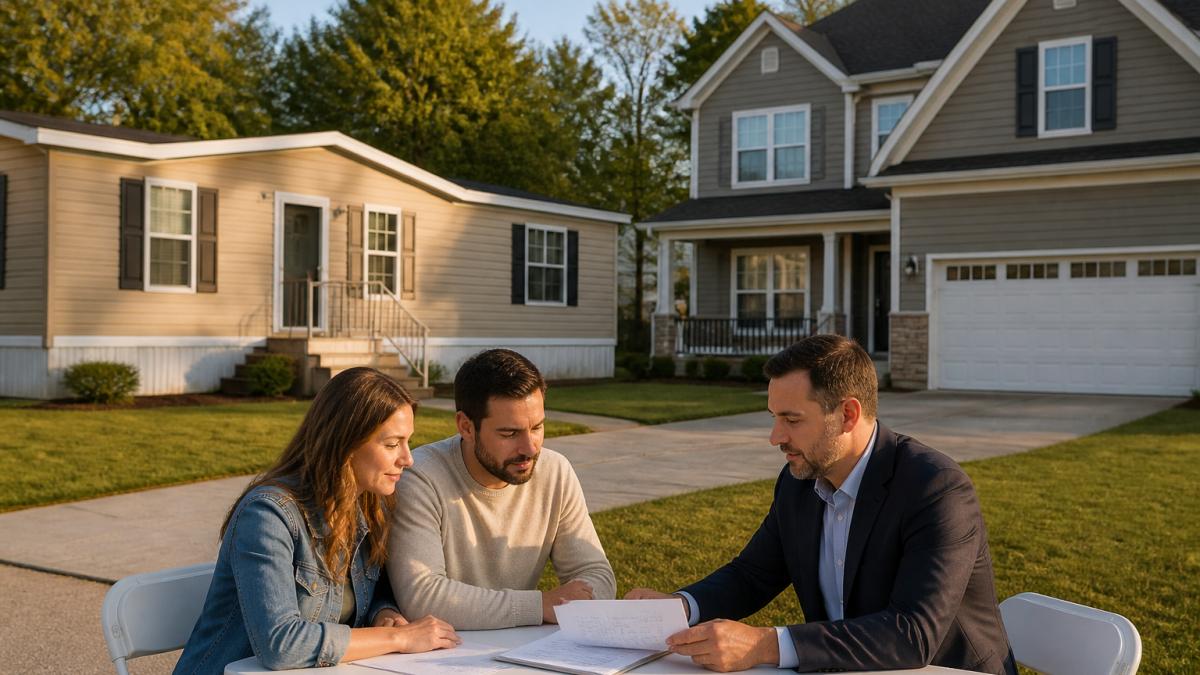
How Manufactured and Site-Built Homes Differ
The distinction starts with where the house is built and which federal rules govern it. Manufactured homes are constructed in a factory to the federal HUD code, while site-built homes are framed on the lot to local building codes.
Definitions: Manufactured, Modular, and Stick-Built
A manufactured home is a dwelling built in a factory on a permanent chassis and installed on a site, governed by federal construction standards rather than local codes.
A modular home is built in sections in a factory, transported to the site, and assembled on a permanent foundation, but it is built to the same local codes as a site-built home.
A stick-built home (also called site-built) is constructed entirely on the lot.
That modular-versus-manufactured distinction matters enormously for resale. NerdWallet’s guide to modular vs. manufactured homes notes that modular homes typically grow in value like site-built homes, while manufactured homes follow a different valuation path tied to how they are titled and sited.
Factory Construction vs On-Site Construction
Factory construction delivers tighter tolerances and less weather exposure during the build. On-site construction allows full customization to the lot and local code. Neither method is inherently lower quality; the difference shows up in financing, appraisal, and how the home is classified as property.
Manufactured Home Appreciation: What the Data Shows
Manufactured homes do appreciate, and the historical evidence is stronger than most buyers assume. The Urban Institute analysis found manufactured home prices rose roughly 5% annually in the period studied, tracking site-built homes almost exactly. But that headline number hides as much as it reveals, because it pools homes on owned land with homes on leased land, and those two groups behave nothing alike.
How to Read Resale Data by Home Type and Market
Most articles on this topic make broad claims about appreciation without showing you how to interpret comparable, location-specific sales data. That is the gap worth closing. When you look at resale data, separate the home structure’s value from the land value, then ask three questions:
- What is the land arrangement? A manufactured home on owned land is appraised with the land included, so its resale price tracks the local site-built market. A home on leased land is appraised as personal property, and its value follows a different, often declining, curve.
- What is the title status? Real-property titling lets the home appear in the same multiple listing service and comparable-sales pool as site-built houses. Personal-property titling keeps it out, which distorts both appraisals and buyer expectations.
- What is the age and condition? A 5-year-old manufactured home on a permanent foundation competes with entry-level site-built housing. A 25-year-old home on leased land competes with nothing but cash buyers.
A common pattern practitioners see: in markets where manufactured homes on owned land are common, their resale prices move with the surrounding site-built market within a few percentage points. In markets where most manufactured homes sit on leased land, resale prices lag and the gap widens with age. The lesson is not that manufactured homes appreciate or depreciate as a category.
Depreciation Versus Appreciation Over Time
The cleanest way to think about it is to split the asset in two. The land under a manufactured home behaves like land anywhere: it can appreciate with the local market. The structure depreciates with age and wear, just as a site-built structure does, but the rate depends on construction quality, maintenance, and whether the home is permanently attached. When the two are titled together as real property, the land’s appreciation usually outpaces the structure’s depreciation, and the combined asset gains value.
Manufactured home appreciation is real, but it is conditional. Land ownership, foundation type, and real-property titling are the three levers that separate a home that appreciates from one that loses value. Read any resale statistic with those three factors in mind before you apply it to your situation.
Manufactured Home Resale Value With Land vs Without
Land ownership is the single biggest factor in manufactured home resale value with land versus without. A manufactured home on owned land, titled as real property, is appraised and sold like any site-built house, using comparable sales in the local market. A home on leased land is titled as personal property, and buyers often struggle to finance it, which shrinks the pool of eligible purchasers and pressures the resale price.
- Owned land + permanent foundation: strongest resale, full mortgage eligibility
- Owned land + no permanent foundation: moderate resale, limited financing
- Leased land (park): weakest resale, cash or chattel loans only
How Classification and Titling Affect Financing, Appraisal, and Resale
The mechanism behind those bullets is worth spelling out, because it is where most buyers get surprised. When a manufactured home is permanently attached to owned land and the title is surrendered in favor of a real-property deed, three things change at once:
- Financing widens. The home becomes eligible for conventional and government-backed mortgages on the same terms as site-built housing, which lowers the buyer’s monthly cost and expands your buyer pool.
- Appraisal normalizes. Appraisers can use site-built comparable sales alongside manufactured comps, and the appraisal is more likely to land at or near the contract price.
- Resale proceeds improve. A broader buyer pool and smoother financing typically mean fewer concessions, fewer cash-only discounts, and a faster sale.
Leave the home titled as personal property on leased land, and each of those advantages reverses. Chattel loans carry higher rates and shorter terms, appraisers have few qualifying comps, and the buyer pool narrows to cash offers that typically price in a discount.
Total Cost of Ownership and Net Resale Proceeds
The manufactured home vs site built resale value comparison is misleading when you look at price alone. Compare net proceeds instead: purchase price, site preparation and installation, property taxes, insurance, maintenance, financing costs, and selling costs all come out of the final number. A manufactured home on owned land may carry a lower purchase price and lower construction cost, but site prep, foundation work, and utility hookups add to the basis.
Skipping the permanent foundation or leaving the home titled as personal property can knock a buyer’s financing out entirely. That shrinks your buyer pool to cash offers, which typically means a lower resale price and a longer time on market.
If you own land in Arizona and want to place a home on it, installation and site preparation can be handled so the home is set up for real-property titling from day one.
Manufactured Home Comparable Sales and Appraisal Challenges
Manufactured home comparable sales are harder to assemble than site-built comps, and that is where appraisals get tricky. Appraisers need recent sales of similar manufactured homes in the same market, on similar land arrangements, with similar foundations and titling. In rural areas, there may be only a handful of qualifying comps, which can slow a sale or push an appraised value below the contract price.
Cost, Financing, and Total Cost of Ownership
The upfront cost advantage of manufactured housing is real, but resale value only makes sense when you weigh it against financing and long-term ownership costs. A Pew Charitable Trusts comparison of manufactured and site-built housing costs documents meaningful cost advantages for manufactured housing on the initial purchase side.
Initial Purchase and Construction Costs
Manufactured homes generally carry a lower purchase price and construction cost than site-built homes of similar size, largely because factory construction reduces labor and waste. Site-built homes cost more upfront but tend to command higher resale prices in most markets. Our website lays out current model pricing so you can compare against local site-built quotes directly.
Mortgage Financing and Loan Eligibility
Financing is where the two paths diverge most. Site-built homes qualify for standard conventional and government-backed mortgages. Manufactured homes can qualify for similar loans when they are on a permanent foundation, titled as real property, and meet lender and program requirements. Homes on leased land usually require chattel loans, which carry higher rates and shorter terms. Loan eligibility, not construction type, is often the real driver of resale price.
| Factor | Manufactured (owned land, real property) | Manufactured (leased land) | Site-Built |
|---|---|---|---|
| Typical financing | Conventional / government-backed | Chattel loan | Conventional / government-backed |
| Appraisal comps | Limited, market-specific | Very limited | Deep pool |
| Appreciation pattern | Tracks local market | Often depreciates | Tracks local market |
| Buyer pool | Broad | Narrow (cash-heavy) | Broad |
Which Option Holds Value Better for You?
Site-built homes hold value more predictably across markets, but manufactured homes on owned land with real-property titling can match that performance in the right conditions. If you are a first-time buyer priced out of the traditional market, a manufactured home on owned land gives you an affordable entry point with genuine resale potential. If you are retiring and downsizing, a manufactured home on your own land offers low maintenance and a real asset.
Ask your dealer to confirm how the home will be titled before you sign. A real-property title on owned land is the difference between an appreciating asset and a depreciating one.
Frequently Asked Questions
Do manufactured homes have lower resale value than site-built homes?
Not necessarily. An Urban Institute analysis found manufactured and site-built home prices appreciated at about the same annual rate, with cumulative increases of 211.8 percent and 212.6 percent respectively over the period studied. The gap appears when a manufactured home sits on rented land or is titled as personal property. When it sits on owned land with a permanent foundation and real-property title, its manufactured home resale value tracks local comparable sales much like a site-built home.
Does owning the land affect manufactured home resale value with land?
Yes, land ownership is one of the strongest factors. A manufactured home on owned land is typically classified as real property, which makes it eligible for conventional mortgage financing and standard appraisals. That widens the pool of buyers and supports manufactured home resale value with land. A home on leased land is often titled as personal property, which limits financing options and can slow resale because buyers must assume the lease or move the home.
Can a manufactured home go up in value?
It can. Manufactured home appreciation depends on location, land ownership, condition, and local market demand. The Urban Institute research found manufactured-home prices rose roughly 5 percent annually in the period analyzed, close to site-built homes. Homes on owned land in strong markets tend to appreciate most. Homes on leased land in declining parks can lose value. Maintenance, updates, and curb appeal also affect how well a manufactured home holds value over time.
What factors influence the resale value of a manufactured home?
The biggest factors are land ownership, title status (real property vs personal property), foundation type, age and condition, home size, and location. Energy efficiency and maintenance history also matter. Local market perception and the availability of manufactured home comparable sales affect appraisals. In areas with few recent sales, appraisers may struggle to establish market value, which can delay financing. Documenting upgrades and keeping inspection records helps support a higher resale price.
Can a manufactured home be used as a comparable property when selling?
Yes, but appraisers must use manufactured homes that are similar in size, age, condition, and land status. A home on owned land should be compared with other manufactured homes on owned land, not with homes in leased-land communities. Lenders and appraisers follow Fannie Mae and FHA guidelines for manufactured home comparable sales. If few similar sales exist, the appraisal may rely on broader market data, which can affect the appraised value and loan approval.
The manufactured home vs site-built resale value gap comes down to how you set the home up, not the construction method itself. If you are ready to buy a home that holds value on your own land, Patriot Homes offers customizable manufactured homes, transparent pricing on our website, and 24/7 support to walk you through every step from model selection to installation. Get started with Patriot Homes and build a home that protects your investment.