
Financing Manufactured Homes With Low Credit: 2026 Guide
Table of Contents
- How Low Credit Affects Manufactured Home Financing
- Chattel Loans for Manufactured Homes: How They Work
- FHA Title I Manufactured Home Loan Requirements
- Manufactured Home Down Payment Requirements
- How to Improve Your Credit Before You Apply
- The Hidden Costs of Low-Credit Loans
- Conclusion
- Frequently Asked Questions
Last Updated: September 19, 2026
How Low Credit Affects Manufactured Home Financing
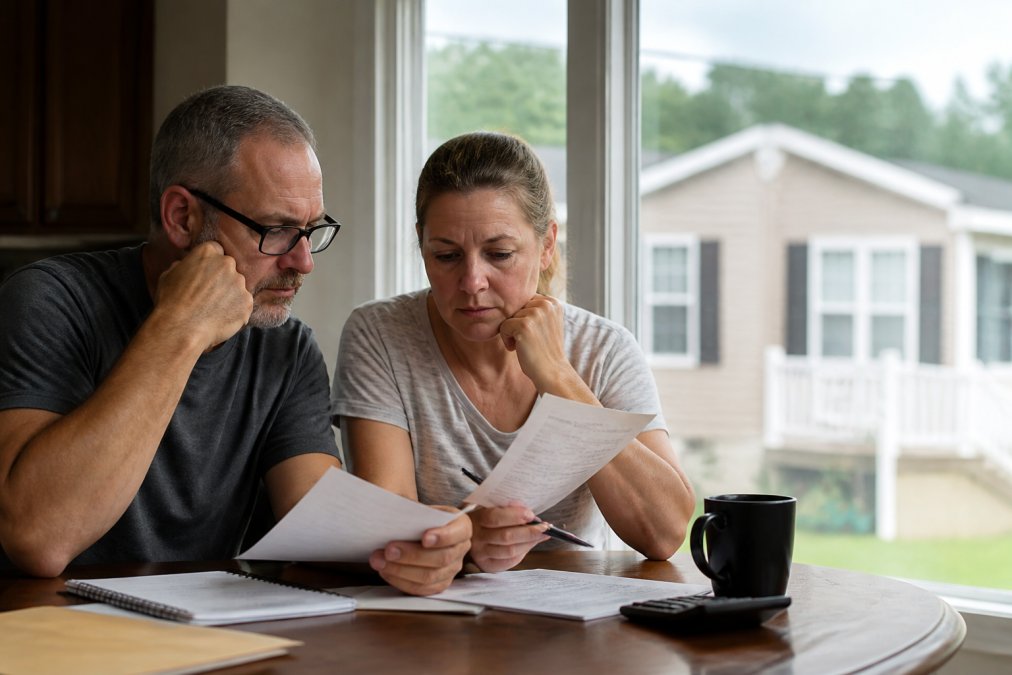
Financing manufactured homes with low credit is possible, but your credit score changes the loan you qualify for, how much you pay upfront, and what you pay each month. At Patriot Homes, we guide buyers through the financing process, and the first thing to understand is that a low score rarely blocks a purchase outright. It changes the terms.
Here is what matters most before you apply:
- Your score decides which loan programs are open to you
- Your down payment often matters more than your score
- Your debt-to-income ratio can offset a weak credit history
- The type of loan (chattel vs. mortgage) changes your rate
What Lenders Look At Beyond Your Score
Lenders review four things together, not one. Your credit score is only the headline number.
- Payment history: Late payments hurt more than almost anything else
- Debt-to-income ratio: Your monthly debts divided by your monthly income
- Down payment size: More cash down lowers the lender’s risk
- Collateral type: Whether the home is titled as real estate or personal property
If you have savings, put them toward the down payment before you pay down small debts. A larger down payment lowers your loan-to-value ratio, and that can move your rate more than a modest score bump.
Chattel Loans for Manufactured Homes: How They Work
A chattel loan is a loan secured by the home itself as personal property, not by the land under it. That is the key difference from a traditional mortgage.
Here is what that means for you:
- Rates are usually higher than a mortgage
- Terms are often shorter
- Down payment requirements are typically larger
- Approval standards can be more flexible on credit
Chattel Loan vs. Conventional Mortgage
The right choice depends on whether you own the land. If you own it, a conventional mortgage usually wins.
| Feature | Chattel Loan | Conventional Mortgage |
|---|---|---|
| Secured by | The home only | Home and land |
| Typical rate | Higher | Lower |
| Down payment | Often larger | Often smaller |
| Credit flexibility | More forgiving | Stricter |
| Best for | Leased or park land | Land you own |
FHA Title I Manufactured Home Loan Requirements
FHA Title I loans are government-backed loans designed for manufactured homes, and they are one of the most forgiving options for buyers with weaker credit. The HUD FHA Title I program overview explains the program structure, including how the government insures the lender against loss.
Key requirements to expect:
- A credit score that meets the lender’s minimum, which varies by lender
- A debt-to-income ratio the lender considers manageable
- A down payment, typically a percentage of the loan
- The home must meet FHA standards for the program
Credit Score and Debt-to-Income Minimums
There is no single national credit score cutoff for these loans. Each lender sets its own floor within program rules.
Do not apply to five lenders in one week to “see what sticks.” Multiple hard credit pulls in a short window can lower your score further. Get pre-qualified with one or two lenders first, then apply.
Manufactured Home Down Payment Requirements
Down payment requirements for a manufactured home depend on the loan type, not on a single fixed rule. Chattel loans generally require more down than conventional mortgages, and FHA-backed loans often require less than chattel.
Here is how the major program categories typically compare:
| Loan Type | Typical Down Payment | Notes |
|---|---|---|
| FHA Title I | About 5% | Government-insured; the most forgiving for lower credit |
| Conventional (land-home) | 3%-5% | Lower rates, stricter credit standards |
| Chattel | 10%-20% | Higher down because the lender only holds the home as collateral |
| Seller-financed / in-house | Varies widely | Terms set by the seller or dealer, not a bank |
A larger down payment does three things at once:
- Lowers your monthly payment
- Lowers your loan-to-value ratio
- Improves your odds of approval
State and Local Down Payment Assistance for Manufactured Homes
What these programs typically look like:
- State housing finance agency (HFA) programs. Nearly every state has an HFA that offers below-market interest rates and down payment help to first-time buyers, sometimes with a manufactured-home carve-out.
- Forgivable second mortgages. Many DPAs are structured as a silent second loan that is forgiven if you stay in the home for a set number of years.
- Grants for specific buyer groups. Teachers, veterans, rural buyers, and public-safety workers often qualify for targeted programs.
- USDA Section 502 loans. For homes in eligible rural areas, this program can cover up to 100% of the purchase price, which effectively eliminates the down payment requirement.
How to find what you qualify for:
- Search your state housing finance agency’s website for “manufactured home” and “down payment assistance.”
- Ask your lender whether they are an approved participating lender for any DPA program, not all are.
- Contact a HUD-approved housing counselor. Counseling is free, and counselors often know about programs that do not show up in a simple search.
DPA funds are usually limited and distributed first-come, first-served. If you find a program you qualify for, apply early in your home search rather than waiting until you have a property under contract.
One caution: many DPA programs require you to complete a homebuyer education course before closing. Budget a few weeks for that, and confirm the course is HUD-approved or program-approved before you pay for it.
How to Improve Your Credit Before You Apply
Most guides tell you to “improve your credit” and stop there. What low-credit buyers actually need is a timeline: how long does it take to move from a 500 to a 620, and what do you do in each month? Here is a realistic six-month roadmap.
The Six-Month Roadmap from 500 to 620
Month 1, Audit and dispute. Pull all three credit reports at AnnualCreditReport.com. Look for collections, late payments, and accounts you do not recognize. File disputes for anything inaccurate. Under the Fair Credit Reporting Act, the bureaus generally must investigate within 30 days. This is the only step that can produce a large score jump in a single month.
What Actually Moves the Needle
Not every fix is equal. Ranked by typical impact for a low-credit buyer:
- Removing errors and unauthorized accounts, can be worth dozens of points
- Paying down revolving balances, often the fastest controllable gain
- Catching up on late payments, stops ongoing damage
- Adding on-time payment history, slow but durable
- Reducing hard inquiries, small, but easy to control
A realistic timeline for most buyers:
- Errors and disputes: a few weeks to a couple of months
- Paying down balances: one to two billing cycles
- Rebuilding after late payments: several months to a year
- Rebuilding after a bankruptcy or foreclosure: longer, and program-specific waiting periods apply
Co-Signers and Guarantors
If your score is stuck below a lender’s floor, a co-signer or guarantor can sometimes bridge the gap. The rules vary sharply by program:
- FHA Title I generally allows co-signers, but the co-signer typically must be a relative or someone with a documented interest in the property.
- Conventional loans usually allow co-signers, and the co-signer’s income and debts are counted in the debt-to-income calculation.
- Chattel loans are the most restrictive. Many chattel lenders do not accept co-signers at all, because the loan is secured only by the home.
If you have six months before you need to buy, spend month one on disputes and months two through six paying down balances. Those two moves alone account for most of the score improvement a low-credit buyer can realistically achieve.
FTC guide to fixing your credit
The Hidden Costs of Low-Credit Loans
Low-credit loans carry costs that do not show up in the advertised rate. Buyers who plan for them are not caught off guard at closing.
Watch for these:
- Higher interest rates over the full loan term
- Origination fees that vary by lender
- Mortgage insurance on some loan types
- Funding fees on certain government-backed loans
- Prepayment penalties on some chattel loans
Conclusion
Financing manufactured homes with low credit comes down to matching the right loan to your situation. A chattel loan fits leased land. A conventional mortgage fits land you own. FHA Title I fits buyers who need a more forgiving program.
Frequently Asked Questions
What credit score is needed for a manufactured home loan?
Most lenders look for a 620 or higher score on conventional loans. FHA Title I loans may go lower, and some chattel lenders work with scores in the 500s if other factors are strong. A larger down payment, steady income, and low debt-to-income ratio can offset a weaker score. Ask each lender for its specific cutoff before you apply.
Can I get a loan for a mobile home with a 500 credit score?
It is possible but harder. Some chattel lenders and seller-financed deals accept scores around 500, usually with a bigger down payment and a higher interest rate. FHA Title I may approve lower scores with compensating factors. Improving your score by even 40 to 50 points before applying can widen your options and lower your rate.
What is a chattel loan for manufactured homes?
A chattel loan finances the home itself, not the land under it. Because the home is treated as personal property, the lender cannot use real estate as collateral, so rates and down payments are usually higher than a traditional mortgage. Chattel loans work well when you already own land or are buying in a community where you lease the lot.
How can I improve my chances of getting approved for a manufactured home loan?
Pull your credit reports and dispute errors, pay down credit card balances below 30 percent of your limits, and avoid new credit inquiries for six months. Save for a larger down payment, gather two years of tax returns and recent pay stubs, and get pre-approved before you shop. A co-signer or guarantor can also strengthen a thin file.
A low credit score adds cost and complexity to buying a manufactured home, but it rarely closes the door. Patriot Homes helps buyers work through that process with customizable manufactured homes, competitive pricing, and a team available 24/7 to answer questions at every step. We offer a range of model options so you can match a home to your budget, not the other way around. Get started with Patriot Homes and find out what you actually qualify for.