
Find Manufactured Home Builders in California: 2026 Guide
Table of Contents
- Quick Comparison: Top Manufactured Home Builders in California
- Patriot Homes: Customizable Manufactured Homes with Transparent Pricing
- KIT Custom Homebuilders: Custom Prefab for Western Building Codes
- Homes Direct: Wide Inventory of Ready-to-Order Floor Plans
- Can I Put a Manufactured Home on Land in California?
- Cost of Site Preparation for Manufactured Homes in California
- Manufactured Home Financing Requirements: What California Lenders Need
- Zoning, Permits, and Foundation Options for California Placements
- How to Find Manufactured Home Builders in California: A Step-by-Step Checklist
- Frequently Asked Questions
Last Updated: September 29, 2026
Quick Comparison: Top Manufactured Home Builders in California
Finding manufactured home builders in California starts with knowing which companies actually serve the state, publish real specs, and understand placement rules. Patriot Homes leads this list for customization, competitive pricing, and 24/7 buyer support. Below is a side-by-side look at the builders and resources worth your time in 2026.

| Builder / Resource | Best For | Pricing Model | Standout Strength |
|---|---|---|---|
| Patriot Homes | Custom layouts and finishes | See pricing page | 24/7 buyer support, wide model range |
| KIT Custom Homebuilders | Fully custom prefab builds | Custom quote | Western regional code expertise |
| Homes Direct | Ready-to-order floor plans | Unit purchase | Large inventory network |
| ManufacturedHomes.com | Browsing and comparing | Free directory | 3D home tours |
| PrefabReview | Vetting builders first | Free editorial | Unbiased builder analysis |
| PrefabNearMe | Local zip-code searches | Free directory | Filters by ADU and modular type |
A quick note on method: the directory sites help you research, but they do not build anything. The companies in the first three rows do.
Patriot Homes: Customizable Manufactured Homes with Transparent Pricing
Patriot Homes is a dealer of brand-new, customizable manufactured homes built around your budget. Buyers choose bedroom and bathroom counts, then pick finishes to match how they actually live.
What separates it from most dealers is the combination of personalization and competitive pricing. You can see current numbers on the Patriot Homes pricing page. That matters when you are comparing different home options and trying to keep square footage honest.
The support structure is the other differentiator. The team is available 24/7 to walk first-time buyers through land questions, financing, and delivery logistics.
First-time buyers and retirees who want a personalized home without a traditional builder’s price tag or a weeks-long quote process.
KIT Custom Homebuilders: Custom Prefab for Western Building Codes
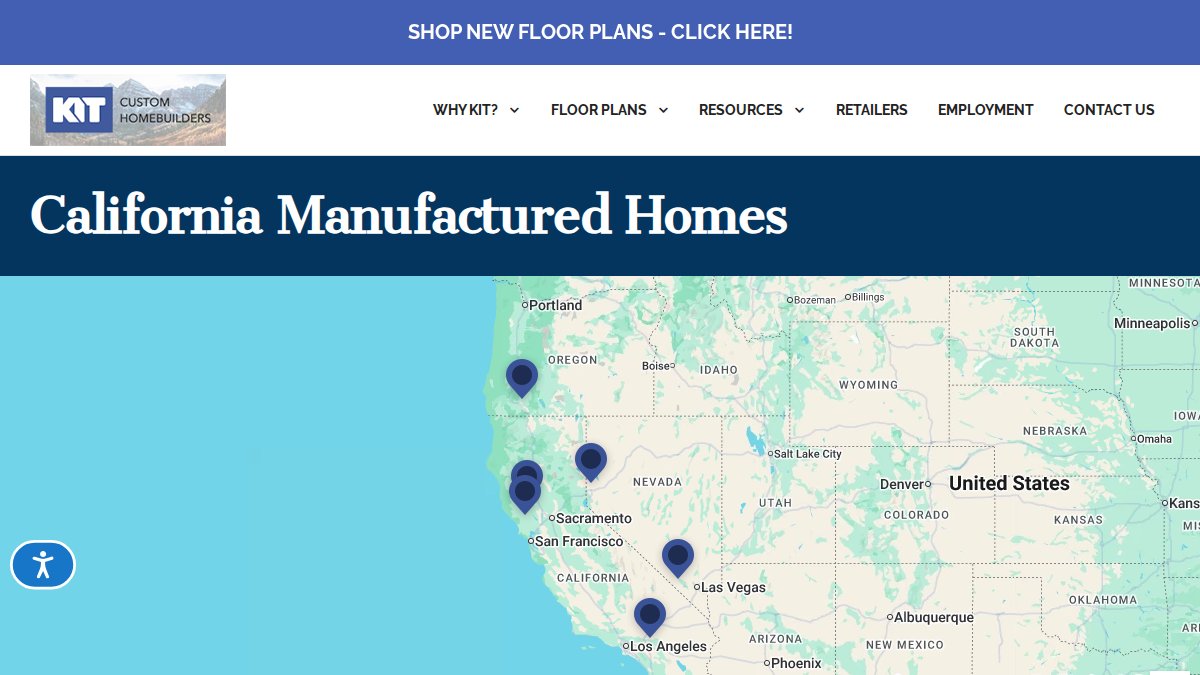
KIT Custom Homebuilders specializes in custom prefab and manufactured homes with an eye on Western construction standards. If your site has unusual grading, wind exposure, or local code quirks, a builder with regional experience saves headaches.
Homes Direct: Wide Inventory of Ready-to-Order Floor Plans
Homes Direct runs a large retail network with broad inventory across the state, which makes it useful when you want to see many floor plans fast. The direct-to-consumer model and comparison tools help you weigh specs side by side.
Can I Put a Manufactured Home on Land in California?
Yes, you can put a manufactured home on land in California, provided the home meets federal HUD code standards and your local jurisdiction approves the placement. The land itself must be zoned for residential use, and you will need permits before any delivery happens.
Cost of Site Preparation for Manufactured Homes in California
Site preparation is where budgets quietly move. The cost of site preparation for manufactured homes depends on your land, not the home itself, so two buyers with identical models can pay very different totals. Site work can run a meaningful fraction of the home’s purchase price, which is why a turnkey quote matters more than a sticker price.
- Land grading and clearing, Cost scales with slope, tree cover, and how much cut-and-fill is needed to create a level pad. A flat, cleared lot is the cheapest case; a wooded hillside is the most expensive.
- Foundation system, Pier-and-beam, a poured slab, and an engineered permanent foundation carry very different price tags and very different financing consequences (see the foundation section below).
- Utility hookups, Water, sewer or septic, power, and gas. Distance from the nearest connection is the single biggest variable. A lot with utilities at the street is far cheaper than one requiring a new well and septic system.
- Driveway and access, Delivery trucks and cranes need a wide, load-rated path. If your access road cannot handle the equipment, you pay to build one or pay more for a smaller delivery method.
- Permits and inspections, County and city fees vary widely by jurisdiction and by the scope of the project.
- Delivery and installation, Frequently quoted separately from the home price. Ask specifically whether transport, set, and utility tie-ins are included.
Skipping a soil or slope assessment is the most expensive mistake in this process. A lot that looks flat can still need engineered fill, and that bill lands after you have already ordered the home.
Build a total-cost-of-ownership worksheet before you shop floor plans: home price + delivery + foundation + utilities + grading + permits + driveway + landscaping. Buyers who compare only the home price are the ones surprised at closing.
Manufactured Home Financing Requirements: What California Lenders Need
Manufactured home financing requirements differ from traditional mortgages, and knowing them early keeps your offer credible. Lenders typically want a credit check, proof of income, a down payment, and documentation that the home will be permanently affixed to owned land.
Three financing paths exist, and they behave differently:
- Personal property loans treat the home like a vehicle. Easier to qualify for, higher rates.
- FHA Title I loans insure personal property manufactured home loans through approved lenders.
- Conventional mortgages (including FHA and VA programs) require the home to be titled as real estate on owned land.
Zoning, Permits, and Foundation Options for California Placements
Zoning and permitting decide whether your project moves or stalls. Every jurisdiction sets its own rules on minimum lot size, setbacks, and whether manufactured homes are allowed in a given zone, so the same home can be approved on one street and rejected on the next. There is no statewide shortcut, you are dealing with your county or city planning department directly.
The permitting sequence that actually works:
- Pre-application inquiry, Call or visit the planning counter with your parcel number and the home’s HUD label. Ask whether manufactured homes are a permitted or conditional use in that zone.
- Written zoning determination, Request it in writing. A one-page letter confirming your lot allows a manufactured home prevents a rejected permit later and speeds up lender approval.
- Building permit application, Submit site plans, foundation engineering, and utility plans. This is where an engineered foundation letter becomes mandatory in most jurisdictions.
- Inspections, Foundation, utility rough-in, and final. Do not schedule delivery until the foundation inspection passes.
- Pier and beam, Cheapest and fastest to install, but typically keeps the home titled as personal property, which means personal-property loan rates and weaker resale financing.
- Permanent slab, More expensive upfront, but supports real-property titling and conventional mortgage financing.
- Engineered permanent foundation, Certified for seismic and wind loads, required in many jurisdictions, and the strongest path to real-property status and resale value. This is the option most lenders prefer.
Ask your county planning office for the written zoning determination in advance. A one-page letter confirming your lot allows a manufactured home prevents a rejected permit later and speeds up lender approval.
How to Find Manufactured Home Builders in California: A Step-by-Step Checklist
Use this checklist to separate serious builders from lead-generation sites. Work through it in order and you will have a shortlist within a week.
- Confirm your land is zoned for a manufactured home
- Request the written zoning determination from your planning office
- Get a site preparation estimate from a local contractor
- Check lender pre-approval before shopping floor plans
- Compare at least three builders on specs, not marketing
- Ask each builder for their delivery and installation process
- Verify the home meets current HUD code standards
- Review the warranty and after-sale service terms in writing
- Confirm turnaround time from order to move-in
- Read the final contract for hidden site-work charges
Frequently Asked Questions
Who are some reputable manufactured home builders in California?
Reputable manufactured home builders in California include Patriot Homes, which offers customizable designs and transparent pricing through its website, and KIT Custom Homebuilders, which specializes in custom prefab construction that meets Western regional building codes. For a broader search, directories like ManufacturedHomes.com and PrefabNearMe let you filter by location and project type. Always verify a builder’s state license and check reviews before signing a contract.
Can I put a manufactured home on my own land in California?
Yes, you can put a manufactured home on land you own in California, but the property must be zoned for residential use and you will need building permits from the local jurisdiction. The home must meet HUD code standards, and you will need utility hookups, a foundation system, and a delivery route that accommodates the home’s dimensions. Check with your county planning department before purchasing a home to confirm zoning allows manufactured housing.
What is the cost of site preparation for manufactured homes in California?
Site preparation costs for manufactured homes in California vary based on land conditions, foundation type, and utility distance. Typical expenses include grading, foundation installation, utility hookups, and permits. Costs are higher on sloped or remote lots. Request itemized quotes from your builder and a local contractor. Patriot Homes can guide you through site prep requirements and connect you with trusted local partners for your specific location.
What are the manufactured home financing requirements in California?
Manufactured home financing requirements in California depend on the lender and loan type. If the home is on owned land and meets HUD code, you may qualify for conventional or FHA financing. Chattel loans, which finance the home without land, may have stricter terms and higher rates.
What is cheaper, a modular or manufactured home in California?
Manufactured homes are built to HUD code, while modular homes are built to state building codes. The right choice depends on your budget, land status, and long-term plans.
Finding manufactured home builders in California is less about picking a logo and more about matching a builder to your land, your lender, and your timeline. Patriot Homes handles the parts that trip up first-time buyers: customizable layouts, published pricing you can actually review, and a support team reachable at any hour to walk you through land, financing, and delivery questions. Start with the pricing page, then let the team guide you from floor plan to move-in day.