
Manufactured Home Energy Saving Features That Cut Bills
Last Updated: November 4, 2026
Quick Summary
The key energy saving features to consider in a manufactured home are insulation and the building envelope, ENERGY STAR or Zero Energy Ready certification, efficient HVAC, and air sealing. Certified new homes can cut monthly utility bills by 30% to 50% compared with standard construction. Specify these features at the factory when possible, and seal air leaks before upgrading equipment.
- A new manufactured home with ENERGY STAR or Zero Energy Ready certification can cut utility bills by 30% to 50%.
- Inefficient older manufactured homes can rack up an estimated $475 in additional annual energy costs.
- A weatherization kit costs around $50 and pays back in weeks to months.
- Handle upgrades in order: air sealing and insulation first, then equipment, then controls.
- Get pre-approval for utility rebates before installation, since installing first can lose the money.
Table of Contents
- Energy Saving Features Built Into New Manufactured Homes
- Manufactured Home vs Site Built Cost Comparison
- Energy Efficient Manufactured Home Upgrades Worth the Investment
- Air Sealing, Weatherization, and Moisture Control
- Indoor Air Quality and Ventilation in a Tightly Sealed Home
- Financing and Rebates for Efficiency Upgrades
- A Seasonal Maintenance Schedule That Protects Your Savings
- Call Patriot Homes for a Custom Quote on an Efficient Floor Plan
- Frequently Asked Questions
Energy Saving Features Built Into New Manufactured Homes
A new manufactured home can cut your monthly utility bills by 30% to 50% when it carries ENERGY STAR® or Zero Energy Ready certification, according to Next Step’s guide to energy-efficient manufactured homes.
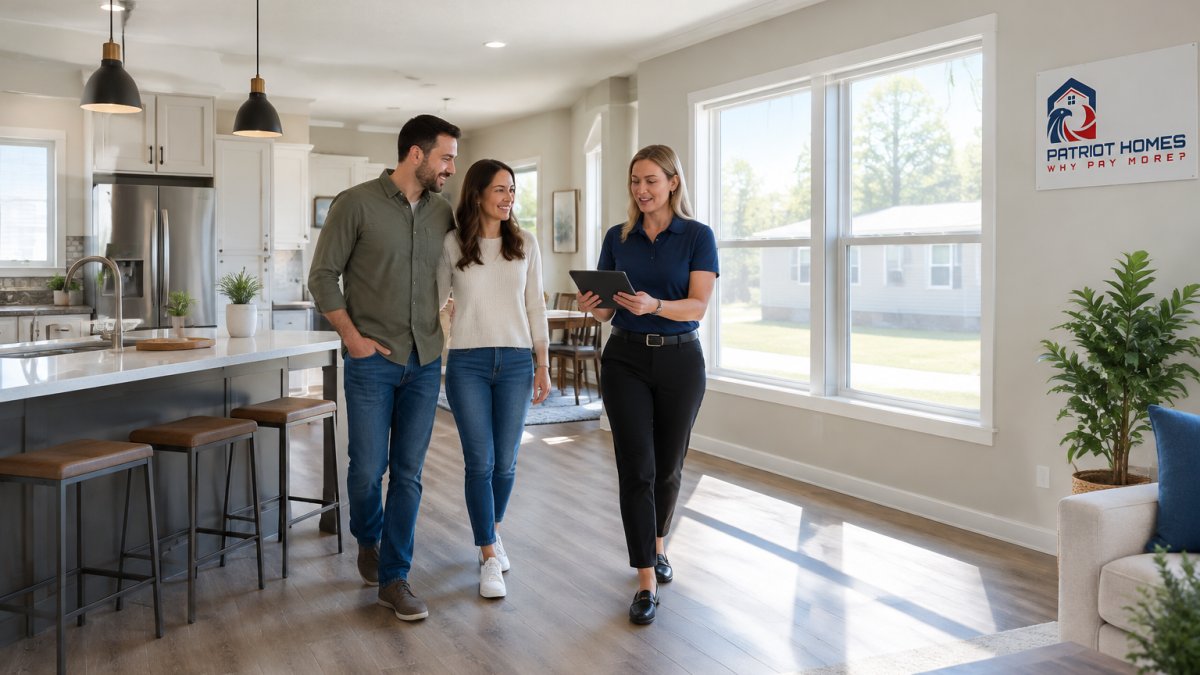
The key energy saving features to consider are insulation, the building envelope, certification, HVAC, and air sealing.
Insulation, R-Value, and the Building Envelope
R-value is a measure of how well a material resists heat flow, and higher numbers mean better insulation. The building envelope, meaning the walls, floor, ceiling, and windows that separate indoors from outdoors, is where efficiency is won or lost. Older manufactured homes often have thin insulation and poor thermal performance, partly because manufactured housing has historically been exempt from state and local energy codes, as Canary Media’s reporting on manufactured housing efficiency notes.
When evaluating a home, you can look for:
- Blown or batt insulation in floors, walls, and ceilings rated for your climate zone
- Thermal breaks that stop thermal bridging through the frame
- Low-E double-pane windows that reflect heat back outside in summer
- Sealed floor and wall joints to close the biggest leak paths
ENERGY STAR Certification and HUD Code Standards
ENERGY STAR certification is a government-backed label confirming a home meets strict, third-party-verified efficiency guidelines. Every manufactured home is built to the HUD Code, the federal construction standard, but HUD Code compliance alone does not guarantee low bills. ENERGY STAR and Zero Energy Ready go further. The U.S.
Upgrade costs vary widely. Contact us at (888) 765-1776 for current pricing.
| Feature | Typical Upfront Cost | Best For | Payback Style |
|---|---|---|---|
| Weatherization kit | Around $50 | Budget buyers | Weeks to months |
| Smart thermostat | Around $100 | Anyone with a routine | 1-2 seasons |
| Heat pump water heater | From about $1,200 | Replacing old electric tanks | Several years |
| High-efficiency heat pump | From about $3,000 | Aging HVAC replacement | Several years |
Manufactured Home vs Site Built Cost Comparison
The manufactured home vs site built cost comparison starts with the purchase price: a new manufactured home can save a buyer $50,000 to more than $100,000 compared with a site-built home, according to The Pew Charitable Trusts’ analysis of manufactured housing. For a full side-by-side of monthly payments and total ownership costs, see our manufactured vs site-built monthly payment breakdown.
Where the Lifetime Savings Come From
Lifetime savings come from three places: a lower purchase price, lower monthly utility bills, and lower maintenance on a smaller, tighter structure. Inefficient older manufactured homes can rack up an estimated $475 in additional annual energy costs, per the American Council for an Energy-Efficient Economy. Multiply that across a decade and the case for buying efficient from day one gets obvious. Our guide on how to compare manufactured home prices walks through it line by line.
Energy Efficient Manufactured Home Upgrades Worth the Investment
The upgrades that pay back fastest are the ones that cut the biggest energy loads: heating, cooling, and hot water. Energy efficient manufactured home upgrades in these categories tend to outperform cosmetic changes on ROI. Modern heat pumps and high-SEER air conditioning units are replacing older, wasteful systems across the industry, per CMH’s 2024 industry reporting.
Heat Pumps, Heat Pump Water Heaters, and Smart Thermostats
A heat pump moves heat rather than generating it, which is why it can heat and cool a home on far less electricity than a traditional furnace.
A smart thermostat learns your schedule, reports your usage, and stops conditioning an empty house. Pairing it with a heat pump can improve efficiency. Watch out: a heat pump sized for the wrong climate zone will underperform, so have the spec matched to your region before you commit.
When you compare equipment, read the efficiency ratings rather than the marketing copy:
- SEER2 rates cooling efficiency. Higher is better, and
- HSPF2 rates heating efficiency for heat pumps. A higher number means more heat per unit of electricity in heating season.
- UEF rates water heaters.
- ENERGY STAR labels mean the unit cleared a third-party efficiency threshold, not just the federal minimum.
What Older Manufactured Homes Can and Cannot Upgrade
This is where most guides go quiet. The upgrades that make sense depend on the structure you start with.
- Roof-mounted solar: Older manufactured homes with lighter roof framing may not carry the added load without an engineering review. Newer builds and homes designed for solar-ready loads handle it far more easily. Have the roof structure checked before you buy panels.
- Duct sealing and insulation: Accessible belly and chase areas make duct sealing straightforward. Homes with sealed undersides may need a different approach.
- Heat pump replacement: The electrical panel and available amperage often decide whether a heat pump swap is simple or requires an electrical upgrade. A 200-amp panel gives you far more room than an older 100-amp service.
- Window replacement: Low-E double-pane windows retrofit cleanly into most standard rough openings, but odd sizes in older homes can push the job into custom-order territory.
- Wall insulation: Blowing insulation into existing walls is possible in many homes, but homes with certain panel systems may not have a cavity to fill.
A common pattern is that buyers of newer manufactured homes can specify most of these features at the factory, while owners of older homes pick the retrofits their structure and electrical service can support. Either way, the order of operations matters: air sealing and insulation first, then equipment, then controls.
Air Sealing, Weatherization, and Moisture Control
Air leaks are the cheapest problem to fix and the easiest to ignore. Weatherization kits, meaning weatherstripping, door sweeps, caulk, and sealing tape, close the gaps around doors, windows, and floor joints for very little money. A common mistake is sealing the envelope tight without thinking about moisture.
Seal the big gaps, then manage moisture with ventilation and low-flow fixtures. That combination protects both your savings and the structure itself.
Indoor Air Quality and Ventilation in a Tightly Sealed Home
A tightly sealed home holds its temperature well, but it also traps indoor air. That is why whole-house ventilation matters. If anyone in your household has allergies or asthma, ventilation is not a nice-to-have. It is the difference between a comfortable home and a stuffy one.
Financing and Rebates for Efficiency Upgrades
Financing and rebates can shrink the real cost of efficiency upgrades, and most buyers never ask. This is the part of the process almost no guide covers, so here is how the money side actually works.
Where the Incentive Money Comes From
Efficiency incentives can come from several sources, including the following:
- Utility rebates: Many electric utilities run rebate programs for heat pumps, heat pump water heaters, smart thermostats, and sometimes insulation. Rebates are usually paid after installation and often require pre-approval, so apply before you buy the equipment.
- State and local programs: State energy offices and some local housing agencies run efficiency programs, and manufactured housing sometimes qualifies for targeted set-asides. Eligibility rules vary widely, so check the program terms for manufactured homes specifically.
How to Apply Without Losing the Money
The sequence matters more than the paperwork:
- Confirm eligibility first. Check that the specific model you are buying appears on the program’s qualified products list. A high-efficiency unit that is not on the list earns nothing.
- Get pre-approval for rebates. Many utilities require approval before installation. Installing first and applying later is a common way to lose a rebate.
- Keep the documentation. Manufacturer certification statements, itemized invoices, and proof of installation address are the three items most often requested.
- Coordinate with your tax preparer. Tax credits and rebates are treated differently, and a rebate that reduces your cost basis can affect the credit calculation.
Upgrades Worth Pricing Into Your Build
Specifying efficiency features at the factory can be more practical than adding them later:
- ENERGY STAR certification as a factory option rather than a retrofit
- Heat pump HVAC instead of electric-resistance heat
- Heat pump water heater
- Smart thermostat
- Low-flow fixtures and aerators
We proudly serve local homeowners across Alameda, Los Angeles, Orange, Riverside, San Bernardino, San Diego, Sacramento, and dozens more counties and cities with custom manufactured and modular options. Why pay more when you can have quality, style, and affordability all in one? Call (888) 765-1776 for a pricing matrix, to talk through customization options, or to request a quote from our website, and our 24/7 team will help you match incentives to the floor plan you want.
A Seasonal Maintenance Schedule That Protects Your Savings
Efficiency is not a one-time purchase. It is a habit. A seasonal maintenance schedule keeps your savings from quietly leaking away:
| Season | Task | Why It Matters |
|---|---|---|
| Spring | Replace HVAC air filters, check caulk and weatherstripping | Clear airflow, sealed gaps |
| Summer | Inspect door sweeps, clean AC coils | Keeps cooling costs down |
| Fall | Schedule HVAC tune-up, re-seal windows | Preps system for heating season |
| Winter | Check for condensation, test ventilation | Prevents moisture damage |
Our manufactured home maintenance checklist lays out the full season-by-season list so nothing slips.
Call Patriot Homes for a Custom Quote on an Efficient Floor Plan
When comparing homes, consider monthly costs as well as purchase price. Why pay more when you can have quality, style, and affordability all in one?
Patriot Homes proudly serves homeowners across Alameda, Los Angeles, Orange, Riverside, San Bernardino, San Diego, Sacramento, and dozens more counties and cities, with custom manufactured and modular options built around your budget. Browse our best manufactured home floor plans for 2026 to find a starting point, then call (888) 765-1776 or request a quote from our website.
Frequently Asked Questions
Are modern manufactured homes energy efficient?
Yes. Homes built to ENERGY STAR or Zero Energy Ready standards are designed to use energy more efficiently than non-certified homes. The gains come from upgraded insulation, sealed ductwork, high-performance windows, and efficient HVAC equipment. Checking for a current certification label is a sensible way to evaluate a home’s efficiency. Ask to see the certification before you buy.
How do energy-efficient windows impact manufactured home utility costs?
Windows are the weakest point in any building envelope, and manufactured homes are no exception. Low-E coatings, double glazing, and properly sealed frames reduce heat gain in summer and heat loss in winter, which lowers the load on your HVAC system. Combined with air sealing around frames, efficient windows can contribute to energy savings. Patriot Homes can walk you through window options for your floor plan at (888) 765-1776.
Can I customize my manufactured home with energy-saving upgrades?
Yes, and it is cheaper to specify them at the factory than to retrofit later. Common upgrades include enhanced insulation, a high-efficiency heat pump, a heat pump water heater, a smart thermostat, and LED lighting throughout. Upgrades can be discussed with our team when you request a quote. Call (888) 765-1776 to request a quote with the upgrades you want on a 1-bedroom ADU or a spacious 4-bedroom model.
Do manufactured homes have better energy ratings than older site-built homes?
Not automatically, but a new certified manufactured home often outperforms an older site-built house. ENERGY STAR certification adds third-party verification to a home’s efficiency rating. An aging site-built home with original insulation and single-pane windows typically leaks far more air. The fair comparison is new certified manufactured versus old site-built, not new versus new.
The smartest move is to price efficiency into the build, not bolt it on later. Call Patriot Homes at (888) 765-1776 for a custom quote, and our 24/7 team will match you with a floor plan, walk you through customization options, and help you compare monthly costs before you commit.
