
7 Facts About Manufactured Home Storm Safety
Last Updated: November 5, 2026
Quick Summary
Modern manufactured home safety depends on federal HUD Code construction and correct anchoring, and a home built to current standards handles wind far better than most people assume. Older, unanchored units carry nearly all the danger, so confirm the data plate and wind zone before you buy.
- Since June 15, 1976, every manufactured home sold in the U.S. must be built to the federal HUD Code.
- The data plate, usually near the electrical panel or in a bedroom closet, lists the design wind zone.
- A complete anchoring system combines ground anchors, galvanized steel tie-down straps, and a pier and beam foundation.
- Evacuate a manufactured home for any tornado warning, without exception.
- Residents in mobile and manufactured homes are 15 to 20 times more likely to die in a tornado than site-built residents.
Table of Contents
- The Storm Safety Record Nobody Explains Properly
- HUD Code Manufactured Home Safety: What Federal Standards Actually Require
- Manufactured Home Wind Zone Requirements Explained
- Anchoring Systems for Manufactured Homes: Tie-Downs, Straps, and Piers
- How to Prepare a Manufactured Home for Severe Weather
- When to Evacuate: Knowing Your Safety Threshold
- After the Storm: A Post-Storm Inspection Checklist
- Get a Storm-Ready Home Built for Your Land
- Frequently Asked Questions
The Storm Safety Record Nobody Explains Properly
The short answer to “are manufactured homes safe in storms” is this: a modern home built to current federal standards and anchored correctly handles wind far better than most people assume.
At Patriot Homes, we walk buyers through this question every week. We sell brand-new, customizable manufactured homes across the West, and we would rather you understand the real risks than hear a sales pitch.
Below, we break down seven facts that separate modern manufactured housing from the old trailer stigma.
HUD Code Manufactured Home Safety: What Federal Standards Actually Require
HUD code manufactured home safety starts with one fact: since June 15, 1976, every manufactured home sold in the U.S. must be built to the federal Manufactured Home Construction and Safety Standards, enforced by HUD rather than a patchwork of state and local rules.
A manufactured home is a dwelling built in a factory to the federal HUD Code, transported to a site, and installed on a permanent foundation system. That definition matters because it separates a modern manufactured home from a pre-1976 mobile home built with no federal wind standard at all.
The American Meteorological Society’s research on manufactured housing safety found that today’s safety stigma traces back to damage in older, unregulated units, not to modern construction.
How the HUD Code Changed Over Time
The dates matter, because they tell you whether a specific home was built to the standards in force at the time. Check the date of manufacture on any home you consider.
If you are shopping, ask for the data plate and the date of manufacture, those two pieces of information tell you which version of the code you are actually getting.
What This Means If You Own an Older Home
An older home is not automatically unsafe, but its anchoring may predate modern tie-down systems. The practical move is an inspection by a certified installer who can compare the existing anchors, straps, and piers against what the current code would require for your wind zone. Some older homes can be upgraded without replacement.
If you are weighing a new build against upgrading an existing unit, our 24/7 team at (888) 765-1776 can walk you through how current-code homes are engineered for your specific area, and we proudly serve local homeowners with custom manufactured and modular options from 1-bedroom ADUs to spacious 4-bedroom models. Why pay more when you can have quality, style, and affordability all in one?
Manufactured Home Wind Zone Requirements Explained
Manufactured home wind zone requirements tie the wind load a home must resist to the area where it will sit. The home’s data plate records the design wind zone it was built for. Before you buy any home, new or used, find the data plate, confirm the zone, and confirm that the zone matches the location where the home will sit. A mismatch is a red flag that should stop the deal until it is resolved.
Wind Speed Ratings and What They Mean for Your Roof
The roof is where wind load concentrates. Wind does not just push on a roof; it creates uplift as air moves faster over the top surface than underneath, which tries to peel the roof off the walls. Modern homes counter this with engineered roof pitch, reinforced connections between roof and walls, and impact-resistant roof coverings in higher zones.
A Washington Post report on a mobile home wind test described researchers exposing a home to 110 mph winds and finding that manufactured housing can be built safely, though rules may need updating to reflect it.
Reading Your Data Plate and Verifying Your Zone
The data plate is a paper label, usually inside the home near the electrical panel or in a bedroom closet, that lists the manufacturer, date of manufacture, and the design wind zone the home was built to. If the plate is missing, the home’s serial number can be traced back to the manufacturer for the original build record. Do this before storm season, not during a warning.
A home can underperform if it was anchored to a plan designed for a lower wind load than the site requires. The build standard and the installation have to match the site.
If you are unsure which zone applies to your property or want a home engineered for the wind load where you live, call our 24/7 team at (888) 765-1776 for a pricing matrix and customization options. We proudly serve local homeowners with custom manufactured and modular options, and we can confirm the right zone before you commit. You can also request a quote from our website and our team will walk you through every step.
Here are the key wind-zone facts to confirm before you buy or install a manufactured home.
| Item | Value | Note |
|---|---|---|
| Data plate location | Near electrical panel or bedroom closet | Lists manufacturer, date of manufacture, design wind zone |
| Data plate missing | Trace serial number to manufacturer | Recovers the original build record |
| Wind test described by Washington Post | 110 mph winds | Tested home held together because connections and anchoring were engineered as a system |
| Weak point in any home | Roof-to-wall and wall-to-chassis connections | Rarely the panel itself |
| Zone mismatch | Red flag that should stop the deal | Build standard and installation must match the site |
| When to verify your zone | Before storm season, not during a warning | Confirm zone matches where the home will sit |
Anchoring Systems for Manufactured Homes: Tie-Downs, Straps, and Piers
Anchoring systems for manufactured homes are what keep the structure tied to the ground when lateral force and uplift hit at once.
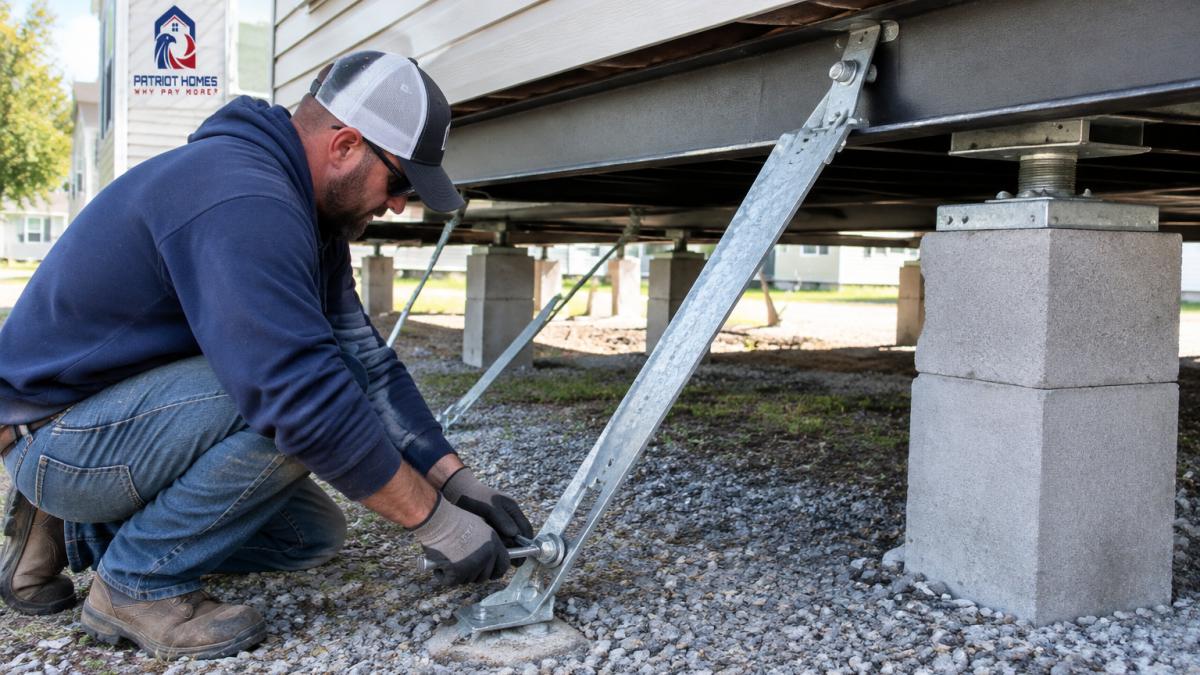
Hurricane straps and frame ties connect the home’s steel chassis to the anchors. Skip this step and even a well-built home can shift off its piers.
Site preparation drives the anchoring plan, so it helps to understand raw land versus developed lots before you commit to a property. The right land survey for home placement also determines where anchors and piers can go.
Retrofitting an Older Home With Modern Anchoring
Older homes can be upgraded. Industry guidance from Triad Financial Services on anchoring retrofits stresses that existing homes need retrofitting to meet current safety standards, since they were installed before modern tie-down systems existed. A certified installer can add anchors, straps, and stabilization hardware without replacing the home.
How to Prepare a Manufactured Home for Severe Weather
Preparation is a checklist, not a feeling. Do these before storm season starts:
- Confirm your home’s wind zone rating on the data plate
- Have a certified installer inspect anchors, straps, and piers
- Clear gutters and trim branches away from the roof
- Photograph the home and contents for insurance
- Store a battery radio, water, and medications in a go-bag
- Write your evacuation plan and share it with everyone in the home
- Secure outdoor items: furniture, grills, trash cans, and skirting panels
Skirting deserves a mention. Loose panels become projectiles in high wind, so fasten them down before a tornado warning, not during one. For a deeper look at your options, compare custom manufactured homes versus standard models.
When to Evacuate: Knowing Your Safety Threshold
Evacuate a manufactured home for any tornado warning, without exception. The National Weather Service is blunt on this point: no manufactured home is a safe shelter during a tornado, no matter how well it was built. Residents in mobile and manufactured homes are 15 to 20 times more likely to die in a tornado than residents of site-built homes, per Fox Weather tornado safety analysis.
That is not a knock on modern construction. A tornado can exceed any residential wind rating.
Your safety threshold should be a plan, not a judgment call. Consider the following:
- Tornado warning issued: leave immediately for a designated shelter
- Hurricane evacuation order: go, and go early
- Severe thunderstorm warning with damaging wind: shelter in a sturdy site-built building
After the Storm: A Post-Storm Inspection Checklist
Do not move back in until the structure has been checked. Walk the exterior first, then work inward:
- Look for shifted piers, slack straps, or pulled anchors
- Check the roof for lifted shingles and impact damage
- Inspect skirting and siding for gaps or missing panels
- Test doors and windows for sticking, a sign of frame shift
- Smell for gas and check for water intrusion
- Photograph every issue before any repair begins
- Call a certified installer before you reconnect utilities
A home that looks fine can still have a compromised anchoring system, so have it inspected before reoccupying it.
Get a Storm-Ready Home Built for Your Land
The right home, built to the right wind zone and anchored by a certified installer, makes a real difference in storm readiness. We proudly serve local homeowners across our service areas with custom manufactured and modular options, from 1-bedroom ADUs to spacious 4-bedroom models. Why pay more when you can have quality, style, and affordability all in one?
Call (888) 765-1776 any time, day or night, for a pricing matrix, customization options, or immediate help. You can also request a quote from our website and our 24/7 team will walk you through every step.
Frequently Asked Questions
Are modern manufactured homes as safe as site-built homes in high winds?
Modern homes built to the HUD code are engineered for the wind zone where they are installed, The gap is not the construction standard itself but the anchoring, installation, and age of the unit. A new home set on a certified foundation with proper tie-downs performs very differently from an older mobile home on blocking. Ask for the wind zone rating and anchoring details before you buy.
What do manufactured home wind zone requirements mean for my area?
The HUD code divides the country into wind zones, and each zone sets the wind load a home must resist. Your dealer should match the home to the zone where it will sit. If you are placing a home on your own land, confirm the zone with your local building department first, then have the home ordered for that rating. Call (888) 765-1776 and our team can walk you through the options for your property.
Can I upgrade my manufactured home for better storm protection?
Yes. The most common upgrades are a heavier anchoring system with more tie-downs, hurricane straps connecting the frame to the piers, and structural reinforcement at the roof-to-wall connection. Older homes benefit most from retrofitting, since industry guidance notes that units built before current anchoring standards often need updated tie-down systems. A certified installer should assess your home and soil conditions before any work starts. Upgrades are priced by scope, so request a quote rather than guessing at cost.
Is it safe to ride out a tornado or hurricane in a manufactured home?
No. The National Weather Service and state emergency management offices are clear that no manufactured home is a safe shelter during a severe weather event, regardless of how well it was engineered. The statistics explain why: 54% of housing fatalities occur in manufactured homes even though those homes are only about 6% of the housing stock, and residents are 15 to 20 times more likely to be killed in a tornado than people in a permanent home. Have an evacuation plan and a designated sturdy shelter before storm season.
Storm safety comes down to three things: a modern HUD-code home, a correctly engineered anchoring system, and a plan to leave when the warning sounds. We build homes that hold up, and we will tell you honestly when to evacuate. Call Patriot Homes at (888) 765-1776 and let our team help you choose a storm-ready home with the floor plan and finishes you actually want.
