
Modular vs Site-Built Homes: Full Cost Comparison
Last Updated: November 5, 2026
Quick Summary
Modular versus site-built homes differ mainly in where construction happens, and that drives the price gap. Modular homes are built in climate-controlled factories and set on your lot, while site-built homes are framed and finished on the property. Compare both on the same scope, including delivery, foundation, and permits, before judging cost.
- Published modular costs run about $80 to $175 per square foot, versus $150 to $300 for site-built homes.
- The headline per-square-foot ranges often cover different scopes, so compare fully installed totals instead.
- Delivery, crane setting, foundation, and permits can be excluded from modular base figures, so confirm them.
- Modular builds often run about 10% to 20% below comparable site-built homes when all-in costs are included.
- Site conditions such as slope, access, and utility distance can shift the comparison more than construction method.
Table of Contents
- How Modular and Site-Built Homes Are Built
- Upfront Cost Comparison: Modular vs Site-Built Per Square Foot
- Modular Home Cost for 2,000 Square Feet
- Site Preparation, Foundation, and Installation Costs
- Manufactured Home vs. Stick-Built Cost and Resale Value
- Timelines, Hidden Costs, and Long-Term Ownership
- Request Your Patriot Homes Quote Today
- Frequently Asked Questions
How Modular and Site-Built Homes Are Built
If you’re comparing costs, start with how each home gets made, because the modular versus site-built decision drives most of the price difference.
Modular homes are built in climate-controlled facilities, then transported by truck and assembled on a permanent foundation. Learn which option fits your land with a clear comparison of modular and manufactured construction.
Factory construction runs on a repeatable schedule, so crews are not waiting on rain to stop. Site-built projects depend on subcontractors arriving in sequence, and every delay pushes the next trade back.
Upfront Cost Comparison: Modular vs Site-Built Per Square Foot
Published 2026 cost guides put modular construction at roughly $80 to $175 per square foot, while site-built homes range from about $150 to $300 per square foot. HomeNation 2026 modular home cost breakdown Those ranges look far apart, but they rarely describe the same project. One guide notes that its modular figure may cover only the build scope and leave out delivery, crane setup, and site work.
Why the Headline Ranges Do Not Line Up
The two numbers are measuring different scopes. A modular per-square-foot figure is often quoted as the factory-built package: the box, the finishes, the mechanical rough-ins, and the delivery of the modules to the site. A site-built per-square-foot figure is usually quoted as a full turnkey build: land prep, foundation, framing, trades, finishes, and the general contractor’s overhead and profit.
To make the comparison honest, put both options on the same scope. That means asking each builder for a fully installed number that includes:
- Factory construction or on-site framing and finish
- Transportation of modules and crane setting, or on-site material delivery
- Foundation and permanent anchoring
When you line those up side by side, the gap between modular and site-built usually narrows. The modular advantage can vary, and it depends on the site as well as the house.
What Drives the Per-Square-Foot Number Up or Down
Several factors move the number more than the construction method itself:
- Size. Larger homes spread fixed costs (permits, foundation, utility hookups, crane) over more square feet, so the per-square-foot figure falls as the home grows. Smaller homes can carry a higher per-square-foot cost than larger ones because fixed site costs do not shrink with the house.
- Finish level. Standard finishes and builder-grade fixtures sit at the low end; custom kitchens, hard-surface flooring, and upgraded windows push toward the high end. This is true for both methods.
- Site complexity. A flat, cleared lot with utilities at the street is the cheapest scenario. A sloped lot, a long driveway, a well and septic system, or a remote parcel adds cost that has nothing to do with whether the home is modular or stick-built.
A Worked Example Framework
Rather than trust a single per-square-foot number, build your own comparison.
Watch out: a quote that lists a per-square-foot price without stating whether delivery, crane, foundation, and permits are included is not a comparable number, and treating it as one is the most common way buyers misjudge the gap.
Our 24/7 team at (888) 765-1776 can walk you through a line-by-line pricing matrix for any floor plan, from one-bedroom ADUs to spacious four-bedroom models, so you can see exactly what is included before you compare. Why pay more when you can have quality, style, and affordability all in one?
The headline ranges are easier to compare once you see what each figure typically includes.
| Cost item | Modular | Site-built |
|---|---|---|
| Published per sq ft range | $80 to $175 | $150 to $300 |
| Delivery and crane setting | Often excluded from base figure | Not applicable |
| Foundation and site work | Separate line item | Included in turnkey figure |
| Permits and inspections | Confirm if included | Confirm if included |
| Finish work after set | Required on site | Built on site |
Modular Home Cost for 2,000 Square Feet
A 2,000-square-foot home is a common size for first-time buyers, so it is worth looking at closely.
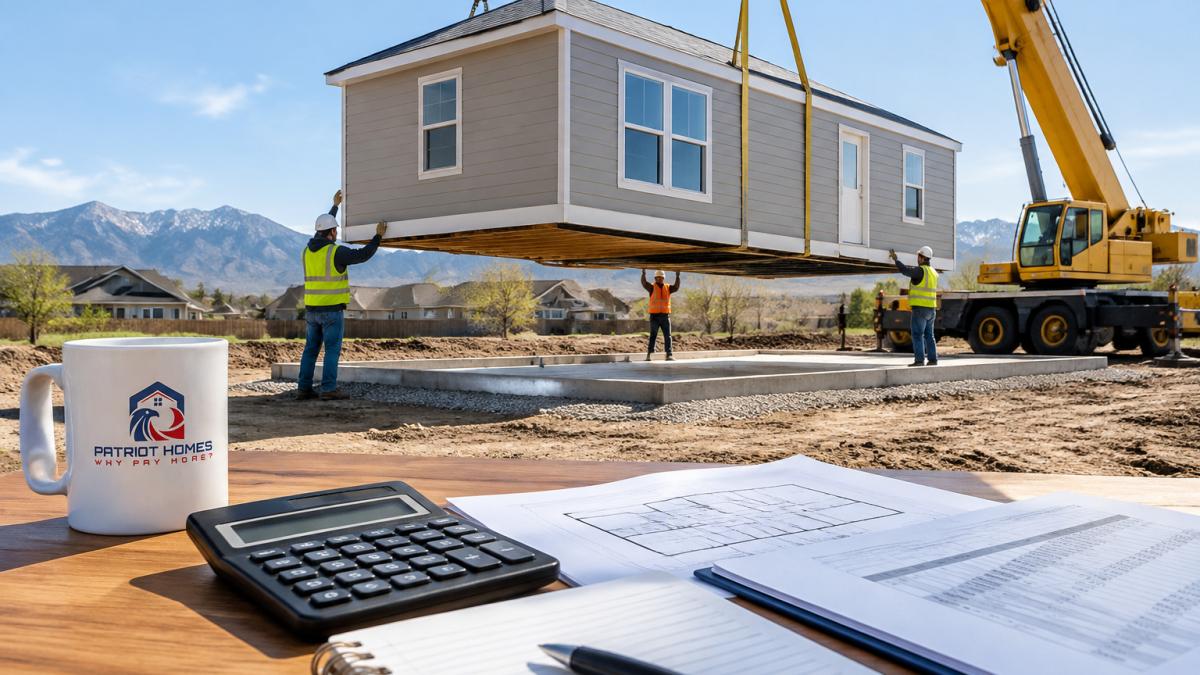
Because the square-foot range is so wide, treat any single number with caution. A 2,000-square-foot plan with standard finishes will land far below the same footprint with custom upgrades.
Patriot Homes offers floor plans from one-bedroom ADUs up to spacious four-bedroom models, so you can match the size to your budget and your land.
Site Preparation, Foundation, and Installation Costs
Many buyers focus on the home and forget the site. Site preparation, foundation work, utility hookups, and crane installation can add significant cost to either option, and on some lots these line items decide the comparison more than the house itself. This is the part of the budget most published cost guides skip, so it is worth walking through line by line.
The Site Cost Line Items That Apply to Both Methods
Whether the home is modular or stick-built, the lot has to be ready before construction starts. The common line items are:
- Grading and excavation. Clearing, leveling, and cutting a pad for the foundation. Sloped or wooded lots cost more.
- Foundation. A poured perimeter foundation, a crawl space, or a slab, engineered for local soil and seismic conditions.
- Utility trenching and connections. Water, sewer or septic, electrical service, and gas brought from the street or installed on site.
What Changes for Modular
Modular homes add a few steps that site-built homes do not have:
- Crane setting. Each module is lifted off the delivery truck and set on the foundation. The crane, its operator, and the rigging crew are a separate cost, and it scales with the number of modules and how far the crane has to reach.
- Transportation. Modules travel by truck from the factory. Distance, road restrictions, and permits for oversize loads all affect the delivery cost.
- Site finish work. After the modules are set, the seams, roof connections, and utility tie-ins are completed on site. This is a smaller scope than a full stick-built finish, but it is not zero.
What Changes for Site-Built
Site-built homes spread the work across more trades and more time on the lot:
- Weather exposure. Framing, roofing, and exterior finish happen outdoors, so rain and wind can stall the schedule.
- Trade sequencing. Framing, electrical, plumbing, HVAC, insulation, drywall, and finish trades each arrive in order, and any delay pushes the next trade back.
- Material storage and site security. Lumber and materials sit on site and can be damaged or stolen, which adds to the general contractor’s cost.
- Longer site overhead. The general contractor’s supervision, temporary power, and portable facilities run for the full build, not just the set.
How the Site Changes the Comparison
A common pattern is that modular builds often run about 10% to 20% below comparable site-built homes when all-in costs are included. OwnPerch 2026 modular home pros and cons guide Treat that as a starting point, because the savings depend heavily on the site. Here is how the math shifts:
- Flat, cleared lot with utilities at the street. The modular advantage is usually strongest, because site costs are low and the factory’s controlled labor and schedule savings carry through.
- Sloped or remote lot. Site costs rise for both methods, but the modular advantage can shrink or disappear if crane access is difficult or the delivery distance is long.
- High-cost labor market. The factory’s controlled labor cost becomes a bigger advantage, because on-site trades cost more per hour.
- Tight urban infill lot. Crane placement and truck access can be the deciding factor, and some lots simply cannot take a module delivery without extra cost or a different approach.
A Site Cost Checklist to Bring to Your Builder
Before you compare totals, get a written answer to each of these:
- Is the foundation included, and is it engineered for my soil and seismic zone?
- Are utility connections included, or are they a separate contract?
- Is the crane and delivery cost included, and does it assume clear access?
- Are permits and inspection fees included?
Watch out: a quote that assumes a flat, cleared lot with utilities at the street can look far cheaper than the same home on a sloped or remote parcel, so confirm the site assumptions in writing before you compare totals.
Call our 24/7 team at (888) 765-1776 to walk through a site-cost checklist for your property, and we will help you compare a fully installed modular total against a site-built total on the same lot. We proudly serve local homeowners across the region with custom manufactured and modular options, from one-bedroom ADUs to spacious four-bedroom models.
Manufactured Home vs. Stick-Built Cost and Resale Value
Manufactured homes and modular homes are often confused, but they differ in how they are built and how they are financed.
Cost is only half the story. Buyers also want to know how the home will hold value over time, and that depends on location, land ownership, and maintenance. Ask any dealer how a specific model has appraised in your area.
Modular Home vs. Stick-Built Resale Value
Resale value depends on whether the home sits on owned land and how it was financed. Homes built to local code and placed on permanent foundations are generally appraised differently from homes on leased land or without a permanent foundation, so check with a lender before you buy. Compare how each home type holds its value in more detail. Homes on leased land or without a permanent foundation can behave differently, so check with a lender before you buy.
Timelines, Hidden Costs, and Long-Term Ownership
Timing is where many buyers get surprised. See a realistic breakdown of how long construction and placement take before you set a move-in date.
Long-term costs matter too. Maintenance, insurance, property taxes, and energy use all change the total picture over 10 or 20 years. Ask for a lifecycle estimate, not just a sticker price, so you compare what you will actually pay.
Request Your Patriot Homes Quote Today
Modular and site-built homes can both make sense, but the right choice depends on your land, your timeline, and your budget.
Why pay more when you can have quality, style, and affordability all in one? Call our 24/7 team at (888) 765-1776 for pricing matrices, customization options, or immediate help, or request a quote from our website today.
Request a quote from Patriot Homes and see exactly what your home will cost, installed and ready to live in.
Frequently Asked Questions
Are modular homes typically cheaper than site-built homes?
Often, but not always. Modular and site-built pricing depends on scope, site work, delivery, and installation, so compare written quotes that list the same items. Patriot Homes can walk you through a line-item breakdown by phone at (888) 765-1776.
How much does a 2,000-square-foot modular house cost?
The cost of a 2,000-square-foot home depends on finishes, customization, and scope. Site preparation, foundation, utility connections, and crane installation are separate line items to include in any quote. Patriot Homes offers a wide range of floor plans and finish options, so call (888) 765-1776 or request a quote on our website for pricing that matches your specific design.
Do modular homes have the same resale value as site-built homes?
Resale value depends heavily on whether the home is permanently affixed to land the owner holds, the local market, and the quality of construction. Modular homes built to local building codes and placed on permanent foundations are generally financed and appraised more like site-built homes than personal property. Ask a local lender or appraiser how a specific property would be valued, and call Patriot Homes at (888) 765-1776 to discuss construction quality and features that support long-term value.
How long does it take to build a modular home compared with a site-built home?
Modular homes are built in a controlled factory while site work proceeds, which can shorten overall timelines because weather delays affect the factory less. Site-built homes are constructed entirely on the lot and are more exposed to weather and scheduling delays. Actual timing varies with permits, foundation work, and inspections. Call Patriot Homes at (888) 765-1776, available 24/7, to review a realistic schedule for your project.
