
How to Understand the Lifespan of a Manufactured Home
Last Updated: November 6, 2026
Quick Summary
The manufactured home lifespan most sources point to runs roughly 30 to 55 years with proper care, and many homes reach 50 years or more. That range comes from a 1990 Manufactured Housing Institute study that put average life expectancy at 55.8 years, so treat it as a reference point rather than a promise.
- A permanent foundation with correct anchoring, leveling, and ventilation is one of the biggest longevity levers you control.
- The HUD Code took effect on June 15, 1976, and is the single biggest construction dividing line between homes.
- Asphalt shingle roofs last roughly 20 to 30 years, while metal roofing often runs longer.
- HVAC systems last roughly 12 to 20 years, with filters and service determining where in that range you land.
- Walk away or negotiate hard if you see rust-through on the chassis or soft floor spots near bathrooms.
Table of Contents
- What Is the Lifespan of a Manufactured Home?
- Manufactured Home Lifespan on a Permanent Foundation
- Can a Mobile Home Last 100 Years?
- When Is a Mobile Home Too Old?
- Manufactured Home Maintenance Tips That Extend Useful Life
- What Affects a Manufactured Home Lifespan: Construction, Climate, and Care
- Call Patriot Homes for Lifespan and Customization Answers
- Frequently Asked Questions
What Is the Lifespan of a Manufactured Home?
The manufactured home lifespan most sources point to runs roughly 30 to 55 years with proper care, and many homes reach 50 years or more.
Here’s what most guides get wrong: they quote a single figure and move on.
Below, we’ll show you exactly what drives those numbers, how to spot a home nearing the end of its useful life, and what you can do to push yours toward the top of the range.
Here are the key lifespan figures and component timelines the article cites.
| Item | Value | Note |
|---|---|---|
| Manufactured home lifespan | Roughly 30 to 55 years | With proper care; many reach 50 years or more |
| Average life expectancy | 55.8 years | From a 1990 Manufactured Housing Institute study |
| Asphalt shingle roof | Roughly 20 to 30 years | Metal roofing often runs longer |
| HVAC system | Roughly 12 to 20 years | Filters and service determine where in range |
| Water heater | Roughly 8 to 12 years | Shorter in hard-water areas |
| Flooring | Every 10 to 15 years | Carpet and vinyl; subfloor matters more |
| Windows and doors | 15 to 25 years | Seals fail before frames do |
| Appliances | 10 to 15 years | A reasonable planning horizon |
Manufactured Home Lifespan on a Permanent Foundation
A permanent foundation is one of the biggest longevity levers a homeowner controls. A manufactured home set on a proper foundation with correct anchoring, leveling, and ventilation tends to hold structural integrity far better than one sitting on temporary supports.
A home that shifts with frost, soil settling, or seasonal moisture can put stress on the frame and finishes, so a stable foundation helps limit that movement.
- Anchoring and tie-downs keep the home from lifting or sliding in high wind.
- Leveling prevents doors from sticking and floors from flexing.
- Vapor barriers and skirting ventilation keep moisture from rotting the chassis and floor system.
Watch out: skipping a professional foundation inspection before you buy used can be a costly mistake.
Can a Mobile Home Last 100 Years?
Realistically, a century of service is not a reasonable expectation for a manufactured home. Longevity depends on maintenance and climate.
That said, longevity depends on care, and a well-kept home can last considerably longer than a neglected one.
When Is a Mobile Home Too Old?
Age alone doesn’t disqualify a home. Condition and code compliance do. A 40-year-old home with a sound chassis, a dry roof, and updated systems can be a smart buy. A 20-year-old home with water intrusion and a sagging floor may already be past saving.
A buyer should consider walking away, or negotiating hard, when they see:
- Rust-through on the metal chassis or outriggers
- Soft spots in floors near bathrooms and water heaters
- A roof past its service life with repeated patch repairs
- Polybutylene plumbing or an original HVAC system at end of life
- Doors and windows that no longer close square, signaling structural movement
Lenders and insurers apply their own age and inspection standards, so confirm both before you commit to a vintage home.
Manufactured Home Maintenance Tips That Extend Useful Life
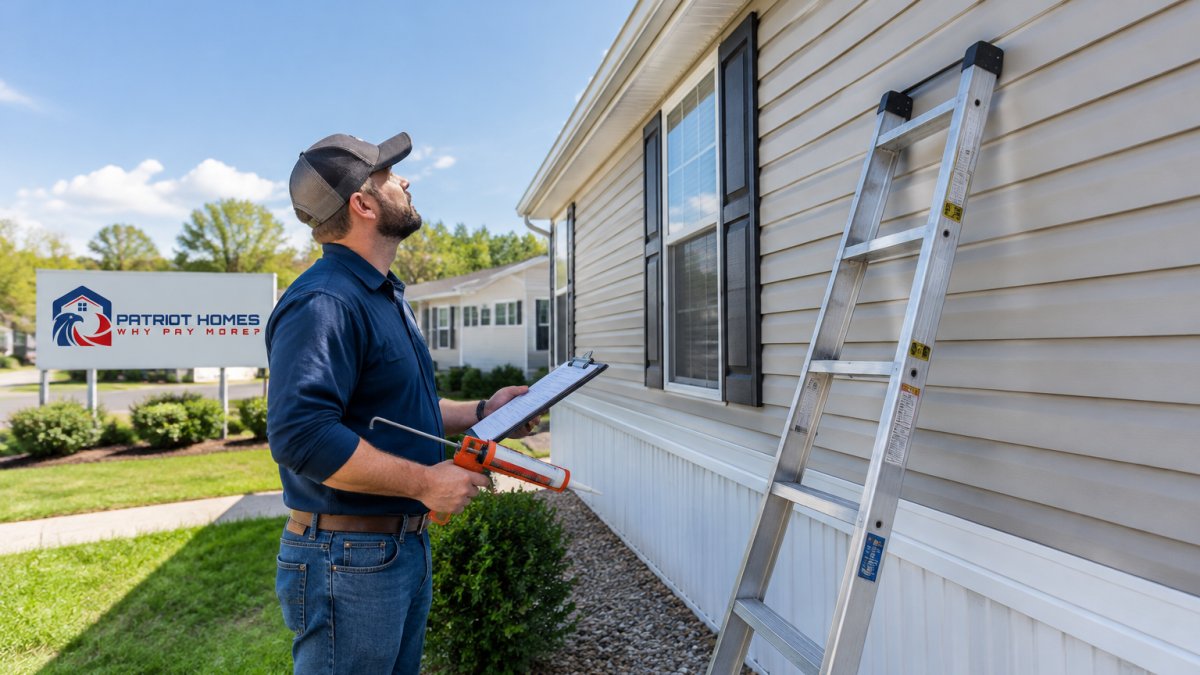
Maintenance plays a major role in lifespan, and knowing which components wear out on a predictable schedule, what to inspect each season, and when a repair stops making sense can help. Our manufactured home maintenance checklist covers the month-by-month routine; this section covers the component timelines behind it.
Component-by-component replacement timelines
A manufactured home doesn’t have one lifespan, each system has its own. The following ranges are general planning guides, though climate and care move them in either direction:
- Asphalt shingle roof: roughly 20 to 30 years. Metal roofing often runs longer. Flat or low-slope roof coatings need reapplication every few years.
- HVAC system: roughly 12 to 20 years for the condenser and furnace, with filters and service determining where in that range you land.
- Water heater: roughly 8 to 12 years, shorter in hard-water areas.
- Plumbing: copper and PEX generally outlast the home; polybutylene (common in homes from the late 1970s through mid-1990s) is a known failure risk and often worth replacing proactively.
- Siding: vinyl and hardboard vary widely; hardboard from certain eras is prone to moisture swelling and is a common repair item.
- Flooring: carpet and vinyl typically need replacement every 10 to 15 years; the subfloor beneath matters more than the finish.
- Windows and doors: seals fail before frames do; expect seal replacement in the 15-to-25-year range.
Use these as budgeting guides, not warranties.
Seasonal inspection routine
- Spring: inspect roof seams and flashing, clear gutters, check skirting for winter damage, and test the HVAC cooling cycle before the first heat wave.
- Summer: watch for caulk failure around windows and penetrations, and check the underbelly vapor barrier for tears.
- Fall: clear gutters again, seal penetrations before rain, service the furnace, and confirm drainage slopes away from the home.
- Winter: check for ice dams and snow load at roof edges, keep skirting vents clear, and watch for condensation inside windows that signals a moisture problem.
Repair-versus-replace decision framework
Age alone shouldn’t decide whether to repair or replace. Work through these questions in order:
- Is the structure sound? Rust-through on the chassis or outriggers, soft subfloor near bathrooms, and doors that no longer close square are structural signals. Structural problems change the math on every other repair.
- Is the repair cost reasonable relative to remaining useful life? A roof replacement on a home with a sound frame and dry interior is usually worth it. The same roof on a home with active water intrusion and a failing chassis rarely is.
- Is it a safety issue? Electrical problems, gas leaks, and failed anchoring are not deferrable.
- What do lenders and insurers say? Financing and insurance standards often decide the question before you do, so confirm both before committing to a major repair on an older home.
Watch out: waiting for a leak to announce itself is the most common and most expensive mistake. By the time a ceiling stain shows up, the damage has usually been growing for months, and what looked like a small repair becomes a roof and subfloor project.
If you’re evaluating a specific home and want a straight answer on what to expect from it, call our 24/7 team at (888) 765-1776, we’re glad to talk through pricing matrices, customization options, and immediate assistance.
What Affects a Manufactured Home Lifespan: Construction, Climate, and Care
Three forces shape the answer: how the home was built, where it sits, and how it’s treated. Most guides list those three and stop. Here’s what each one actually means when you’re evaluating a specific home.
Construction era and the HUD Code
The single biggest construction dividing line is June 15, 1976, when the federal Manufactured Home Construction and Safety Standards, commonly called the HUD Code, took effect.
The HUD Code has been updated since 1976. In practical terms:
- Pre-1976 mobile homes vary wildly in quality. Some were built well; many were not. Parts availability, aluminum wiring, and undersized framing are common concerns.
- 1976 to mid-1990s manufactured homes meet the original federal standard but predate later wind-zone and energy updates.
- Mid-1990s and newer homes are generally built to later standards.
To date a home, look for the data plate inside (often in a bedroom closet or near the electrical panel) and the HUD label on the exterior. If either is missing, treat the home as undocumented and inspect it more aggressively.
Climate and location risks
Climate doesn’t just age a home faster, it ages specific components faster. Match your prevention plan to the risk:
- Coastal salt air accelerates corrosion on the chassis, fasteners, and metal roofing. Rinse and treat exposed metal annually and inspect tie-downs for rust.
- Desert heat and sun degrade roofing membranes, sealants, and siding. Re-caulk more often than the national average and check roof coatings yearly.
- Heavy snow loads stress roof structure and can bow trusses. Keep snow cleared from roof edges and verify the home’s design load before a hard winter.
- Humidity and flooding drive mold, rot, and floor-system decay. Grade soil away from the home, keep skirting vents open, and maintain the vapor barrier under the belly.
- High-wind zones demand correct anchoring and tie-downs. A home built for a moderate wind zone installed in a high-wind area is a durability problem no maintenance routine fixes.
Care and the factors you control
Two homes from the same year can end up in very different condition depending on how they are maintained. The factors you control are roof and seal integrity, moisture management, HVAC service, and prompt repair of small water intrusions. The factors you don’t control are build era, original installation quality, and climate, which is why a pre-purchase inspection matters more than any single maintenance task.
If you’re weighing climate and construction quality together, it’s worth looking at energy saving features that cut bills, since efficiency and durability often travel together. And if you want help matching a floor plan to your climate and lot, our team is reachable 24/7 at (888) 765-1776.
Call Patriot Homes for Lifespan and Customization Answers
Here’s the challenge: lifespan estimates are broad, and your situation is specific. Whether you’re buying new, customizing a build, or wondering how long a home will serve you, guessing is expensive.
At Patriot Homes, we proudly serve local homeowners with custom manufactured and modular options, and we’re here to help across the region.
Call (888) 765-1776 today, or request a quote from our website. You can also read our guide to customizing a manufactured home or compare customization options on a budget before you call.
Frequently Asked Questions
What is the downfall of a manufactured home?
The main drawbacks are depreciation risk, financing that can be stricter than site-built loans, and longevity that depends heavily on installation and upkeep. Lifespan depends on build quality, installation, climate, and maintenance. Poor foundation work, moisture intrusion, and skipped maintenance shorten that window. Buying new from a dealer and keeping up with roof, plumbing, and HVAC care protects resale value.
How long will a manufactured home last on a permanent foundation?
A manufactured home lifespan on a permanent foundation is generally at the longer end of published ranges because a proper foundation reduces settling, moisture, and structural stress. Estimates vary, and the outcome depends on the factors above. Foundation type, anchoring, leveling, and drainage matter as much as the home itself. Ask for an installation and foundation inspection before you buy.
When is a mobile home too old?
Age alone rarely disqualifies a mobile home. The practical cutoff is when repair costs outpace replacement value, when the chassis or foundation shows structural failure, or when financing and insurance become hard to obtain. Some lenders and insurers set age limits, so check before you buy. A pre-1976 home built before HUD Code standards is a different risk category entirely. Call (888) 765-1776 to talk through new versus used options.
Can a mobile home last 100 years?
Reaching 100 years is uncommon but not impossible. Lifespan depends on build quality, installation, climate, and maintenance. A home that hits triple digits would need a permanent foundation, regular roof and plumbing replacement, moisture control, and climate protection over decades. Treat any 100-year claim as an outlier, not a planning assumption. For a new home built to last, call (888) 765-1776 for floor plans from 1-bedroom ADUs to 4-bedroom models.
The difference between a home that lasts 30 years and one that lasts 60 usually comes down to choices made before and after delivery. Get those right and you protect the investment. Get them wrong and you inherit someone else’s repair bill. Call Patriot Homes at (888) 765-1776 and let our 24/7 team help you choose a home built to go the distance.
