
What Do Manufactured Home Wind Zone Requirements Mean?
Last Updated: November 7, 2026
Quick Summary
A manufactured home wind zone is a geographic rating that sets the wind speed a home must withstand at its site, and the HUD Code sorts every home into one of three zones. Your home must be built for the zone where it will sit, because a home cannot be installed where the site’s wind zone exceeds its design wind loads.
- Inland counties generally fall in Wind Zone I, while coastal and hurricane-prone regions can require higher zones.
- A 2026 buyer’s guide describes Zone II as requiring a 100 mph design wind speed.
- The same 2026 guide puts Zone III at a 110 mph design wind speed.
- Find the data plate inside the home, usually in a cabinet or near the electrical panel, to read its design wind zone.
- Part 3280 covers construction and Part 3285 covers installation under the HUD Code.
Table of Contents
- Manufactured Home Wind Zone Requirements: What Buyers Need to Know
- How the HUD Wind Zone Map Assigns Your County
- Wind Zone 1 Mobile Home: The Inland Standard
- Wind Zone 2 Manufactured Homes: Coastal and High-Wind Counties
- Wind Zone 3 Manufactured Homes: Hurricane-Prone Coastlines
- How to Verify a Home’s Wind-Zone Certification in 5 Steps
- Installation, Anchoring, and Real-World Storm Performance
- Request a Quote and Confirm Your Wind Zone With Our Team
- Frequently Asked Questions
Manufactured Home Wind Zone Requirements: What Buyers Need to Know
Manufactured home wind zone requirements explained simply: the federal HUD Code sorts every manufactured home into one of three wind zones, and your home must be built for the zone where it will sit. Get that match wrong and the home may not pass inspection. At Patriot Homes, we walk buyers through this before they pick a floor plan, and our team is available 24/7 at (888) 765-1776 to talk it through.
Here’s the short version. A wind zone is a geographic rating that sets the wind speed a manufactured home must withstand at its site.
That single rule causes more confusion than anything else in this process. So let’s break down what each zone means, how to read your county map, and how to confirm a home’s certification before you sign.
How the HUD Wind Zone Map Assigns Your County
The HUD wind zone map is a county-level overlay, and your county’s position on it sets the minimum construction standard for any manufactured home installed there. Inland counties generally fall in Wind Zone I, while coastal and hurricane-prone regions can require higher zones. The map is part of the federal HUD Code, and the installation side is governed separately under federal installation standards.
Three inputs decide your zone:
- Basic wind speed. This is the fastest-mile wind speed your area is expected to see, measured in miles per hour. Each zone corresponds to a specific design wind speed set by HUD. Check the current HUD standard for the exact figures.
- Distance from the coast. Counties closest to open water usually carry the highest rating, and the Zone III footprint is deliberately narrow.
- Local amendments. Some states and counties add their own building code requirements on top of the federal map.
How to Read the Map Correctly
The map is a starting point, not the final word. A county can sit in Zone I on the federal map while local rules require more. That is why we tell every buyer to check both, and to check them in this order:
- Start with the federal map. Locate the installation address at the county level and note the assigned zone.
- Pull the state administrative code. Many states adopt the HUD Code plus amendments; the state agency that regulates manufactured housing usually publishes the current version.
- Call the local building department. Ask the permit desk which wind zone they enforce for the specific parcel, and ask whether the parcel sits in a special wind region or near a coastal boundary.
- Confirm in writing. Ask for the zone in an email or permit comment so it is documented before you order a home.
A common pattern is a buyer who checks only the federal map, orders a Zone I home, and then discovers at permitting that the county enforces a higher standard. The home is fine. The siting is wrong, and the fix is expensive.
Why the Map Alone Is Not Enough
The federal map is updated on a slow cycle, and local amendments move faster. Coastal counties in particular tend to layer on their own wind, flood, and anchoring requirements that go beyond the HUD minimum. If you are shopping in a coastal or high-wind county, our team at (888) 765-1776 can help you confirm which zone applies to your address before you pick a floor plan.
Wind Zone 1 Mobile Home: The Inland Standard
Wind Zone I is the base standard, and it covers most of the country’s inland areas. A Wind Zone 1 mobile home is designed for sites where wind exposure stays below the Zone II threshold.
What that means in practice:
- The home is built to resist the wind loads expected at a Zone I site.
- Anchoring still matters, since design standard and installation standard are two different things.
- A Zone I home installed in a Zone II county is a compliance problem, not a bargain.
We see this mistake often. A buyer finds a great deal on a home rated for Zone I, then tries to place it on a coastal lot. The home itself is fine.
Wind Zone 2 Manufactured Homes: Coastal and High-Wind Counties
Wind Zone 2 manufactured homes are built for higher wind loads, and they’re required in many coastal counties and areas with greater wind exposure. A 2026 buyer’s guide describes Zone II as requiring a 100 mph design wind speed, with Zone II covering most coastal counties from Texas to North Carolina (modular home hurricane code guide).
If you’re shopping in a coastal or high-wind county, here’s what to confirm:
- The home’s data plate lists its design wind zone.
- The site’s required zone matches or is lower than the home’s rating.
- Local permitting accepts the installation plan for that zone.
Coastal buyers also tend to care about resale and insurance. A home correctly rated for its zone is easier to insure and easier to sell. If you’re shopping in a high-wind area, our Santa Barbara mobile home buying guide covers what local buyers should check before committing.
Wind Zone 3 Manufactured Homes: Hurricane-Prone Coastlines
Wind Zone 3 manufactured homes carry the highest wind rating under the HUD Code and are required in the most hurricane-prone coastal areas. The same 2026 guide puts Zone III at a 110 mph design wind speed (modular home hurricane code guide).
Zone III homes cost more to build because they use more material and stronger connections. That’s expected. What surprises buyers is how narrow the Zone III footprint is. Most of the country never touches it.
A wind-zone rating alone doesn’t make a home storm-proof. Clayton Homes notes that performance depends on the home being properly built and installed to the standards for its designated zone (Clayton Homes on storm and wind performance).
How to Verify a Home’s Wind-Zone Certification in 5 Steps
Verification takes about fifteen minutes and saves months of headaches. Here’s the process we walk buyers through.
- Find the data plate. It’s a paper label inside the home, usually in a cabinet or near the electrical panel. It lists the design wind zone.
- Read the certification label. The red HUD label on the exterior confirms the home was built to the federal code.
- Check the county map. Confirm the zone assigned to the installation address.
- Compare the two numbers. The home’s rating must meet or exceed the site’s required zone.
- Get it in writing. Ask the installer to confirm the anchoring plan meets the requirements for that zone.
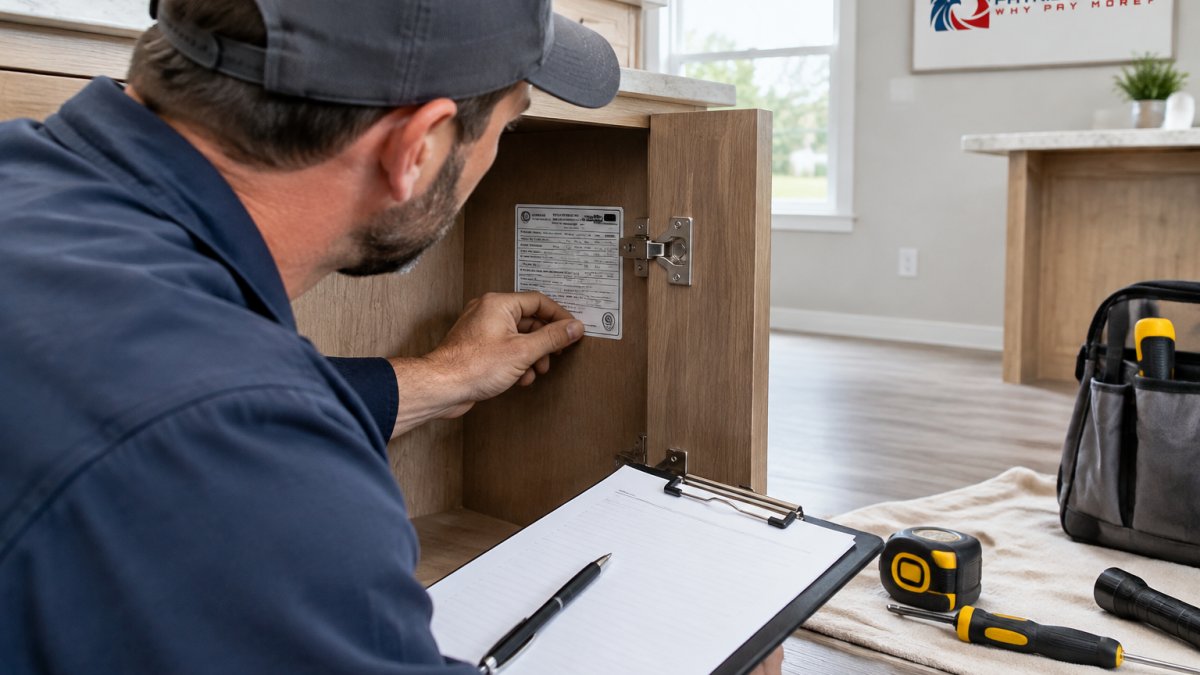
Watch out: the data plate is a key source for a home’s assigned zone. A seller’s verbal assurance does not replace documentation at permitting time.
| Step | What You Check | Where to Look | Time Needed |
|---|---|---|---|
| 1 | Design wind zone | Data plate inside home | 5 min |
| 2 | HUD certification | Red label on exterior | 2 min |
| 3 | Site zone | County wind-zone map | 5 min |
| 4 | Rating vs. site | Compare steps 1 and 3 | 2 min |
| 5 | Anchoring plan | Installer documentation | 10 min |
Installation, Anchoring, and Real-World Storm Performance
Wind zone ratings describe design and construction. They do not describe how a specific home performs on a specific lot. That gap is where the real risk lives, and it is the part of the process most buyers underestimate.
Design Standard vs. Installation Standard
A home’s wind zone rating tells you the wind load the structure was engineered to resist. It says nothing about whether the home was tied down, blocked, and founded correctly for its site. Those are two separate jobs governed by two separate parts of the HUD Code: Part 3280 covers construction, and Part 3285 covers installation. A Zone III home installed with a Zone I anchoring plan is still a compliance problem.
What Actually Determines Performance
Real-world storm performance generally depends on several factors working together:
- The construction rating. The home must be built for the zone where it will sit.
- The foundation and anchoring system. This includes the piers, the longitudinal and vertical tie-downs, and the soil conditions at the site.
- Site conditions. Slope, drainage, exposure, and proximity to open water all change the wind load the home actually sees.
Researchers at Florida International University’s Wall of Wind have tested a full-scale manufactured home using installation practices from different wind zones to see how each configuration holds up (FIU Wall of Wind manufactured home testing). The tests measure how wind loads transfer across the marriage line, the joint where the two halves of a double-wide meet (Idaho National Laboratory manufactured home wind testing).
Installation rules can change over time. Confirm with your installer that the anchoring plan reflects the current requirement.
How to Check Current Local Requirements
Do not rely on a map you found online. Use this process instead:
- Call the county building department for the installation address and ask which wind zone they enforce for that parcel.
- Check the state agency that regulates manufactured housing for the current adopted code and any amendments.
- Ask the installer for the anchoring plan in writing, and confirm it matches the zone the county enforces.
- Keep the documentation with the home’s data plate and certification label for resale and insurance purposes.
Watch out: a higher-rated home does not remove local installation obligations. A Zone III rating does not excuse a weak foundation or an anchoring plan that was never reviewed by the permit desk.
What This Means for Insurance and Resale
A home correctly rated for its zone and installed to the current anchoring standard is easier to insure and easier to sell. Insurer and lender requirements vary, so confirm with your carrier before you commit to a site. If you want help walking through the installation side, our guides on manufactured home storm safety, the installation process, and foundation requirements cover the details.
Request a Quote and Confirm Your Wind Zone With Our Team
Matching a home to its zone is the one step you can’t skip, and it’s the step most buyers need help with. Patriot Homes proudly serves local homeowners across California with custom manufactured and modular options, from 1-bedroom ADUs to spacious 4-bedroom models.
Call our 24/7 team at (888) 765-1776 for pricing matrices, customization options, or immediate assistance. You can also request a quote from our website and we’ll confirm your wind zone, walk you through floor plans, and help you choose finishes that fit your budget.
Have a county map and a floor plan in front of you but no idea whether they match? That’s the call to make.
Frequently Asked Questions
How do I know what wind zone my manufactured home is?
Check the certification label, often called the data plate, usually mounted inside a kitchen cabinet or near the electrical panel. It lists the home’s design wind zone and the standard it was built to. Cross-check that rating against the HUD wind zone map for the county where the home will sit. If the label is missing, ask the manufacturer or dealer for the home’s build records before you buy, and call (888) 765-1776 for help reading the paperwork.
Can a manufactured home built for Wind Zone 1 be installed in Wind Zone 2?
No. Federal installation standards say a home must not be installed where the site’s wind zone exceeds the home’s design wind loads. A Wind Zone 1 home placed in a Wind Zone 2 county would be under-rated for that location and would not pass a permitted installation. Match the home’s rating to the site before you sign, and confirm the county’s zone on the HUD wind zone map.
What does Wind Zone 3 mean on a mobile home?
Wind Zone 3 is the highest HUD wind zone, reserved for coastal areas exposed to hurricane-force winds. Homes built for Wind Zone 3 use stronger design and construction standards than Zones 1 or 2. If you own land near the coast, confirm the county’s zone on the HUD wind zone map before ordering, because a lower-rated home cannot legally be installed there.
Do wind-zone requirements apply to the home, the installation, or both?
Both. The home must be built to the design wind load for its zone, and the installation must meet the anchoring and foundation requirements for that same zone. Installation rules can change over time, which is why it pays to confirm current requirements. Confirm both the home’s rating and the site’s anchoring requirements before delivery.
