
How to Buy Land for Manufactured Homes
Table of Contents
- Understand Zoning and Land Use Requirements
- Can I Put a Manufactured Home on Land I Own?
- Evaluate Utilities and Site Accessibility
- Manufactured Home Site Preparation Checklist
- How to Finance Land and Manufactured Home Together
- Find and Purchase the Right Land
- Secure Permits and Approvals
- Frequently Asked Questions
Last Updated: September 25, 2026
Understand Zoning and Land Use Requirements
Before you search for land as part of learning how to buy land for manufactured homes, you need to understand whether your local zoning ordinances allow them. Many jurisdictions restrict manufactured housing to specific zones or require special permits, so this is your first critical step. Contact your county assessor’s office or planning department to request zoning documentation for any parcel you’re considering. They’ll provide information about permitted uses, setback requirements, and minimum lot sizes.
Zoning regulations vary dramatically by location. Some areas embrace manufactured housing as an affordable solution, while others impose restrictions that make placement impossible. Arizona and Nevada tend to have more flexible zoning for manufactured homes compared to California’s stricter regulations. Idaho falls somewhere in the middle. The difference between a zone that permits manufactured housing outright and one that doesn’t can mean the difference between your dream home and a dead deal.
Ask specifically about:
- Whether manufactured homes are permitted in the residential zone
- Minimum acreage requirements (typically 1-5 acres)
- Setback distances from property lines
- Local building codes that apply to manufactured housing placement
- Whether a permanent foundation is required (most jurisdictions now mandate this)
Getting this answer before you fall in love with a specific parcel saves time and money. A property that looks perfect on the surface becomes worthless if zoning prohibits what you want to build.
Can I Put a Manufactured Home on Land I Own?
Yes, you can put a manufactured home on land you already own, but only if local zoning allows it and you meet site preparation requirements. Ownership alone doesn’t guarantee you can place a manufactured home there. The real question is whether your land meets the infrastructure and regulatory requirements.
Start by reviewing your property deed and any restrictive covenants that might apply. Some properties have deed restrictions limiting the type of housing allowed, even if zoning permits it. An easement on your land could also complicate placement. Title insurance and a property survey will reveal these issues before you invest in site preparation.
Next, verify your land has access to utilities or can support well water and septic systems. If municipal water and sewer aren’t available, you’ll need a perc test to confirm your soil can handle a septic system. Well drilling costs typically range from reasonable to substantial depending on your water table depth. These hidden costs often surprise landowners who assume they can simply place a home and move in.
The Patriot Homes team can help you evaluate whether your existing land is suitable for a manufactured home. We review zoning requirements, utility access, and site preparation needs to determine feasibility before you commit to financing.
Evaluate Utilities and Site Accessibility
Utility access determines whether your land is buildable and how much site preparation will cost. You need water, sewer or septic capability, electricity, and ideally natural gas. Without these utilities or the ability to install them, your land becomes significantly more expensive to develop.
Check whether your property has municipal water and sewer connections. If yes, confirm the connection points are accessible and the utility company will serve your address. If not, you’ll need well water and a septic system. A perc test evaluates whether your soil can absorb wastewater properly. Clay-heavy soil often fails perc tests, requiring expensive alternatives like sand mounds or engineered systems.
Electricity access is equally critical. Utility companies must agree to extend service to your property if it’s not already there. Request a utility easement survey showing where lines cross your land. Underground utilities require careful coordination during site preparation to avoid expensive damage.
Road access matters too. Your property needs legal access via a public or private road. If access crosses another person’s land, you need a recorded easement granting you the right to use it. Without documented access rights, you cannot legally reach your property, and lenders won’t finance the purchase.
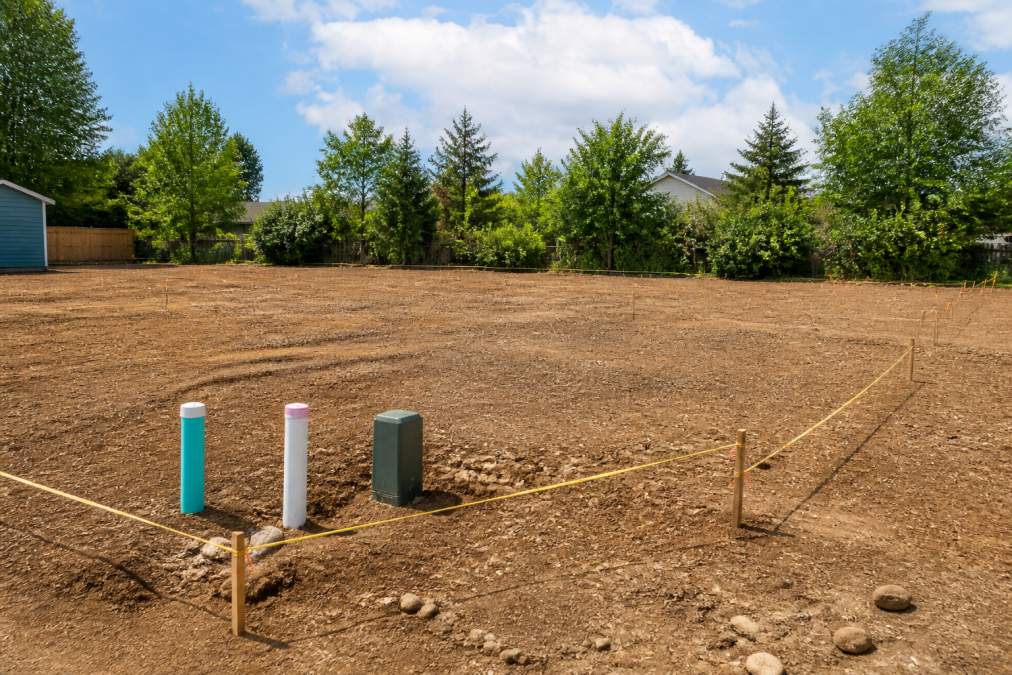
Topography affects site preparation costs significantly. Steep slopes require more grading and potentially retaining walls. Flat land is cheaper to prepare. Flood zones complicate everything, lenders require flood insurance, and some zones prohibit permanent structures entirely. Request a topographical survey and flood zone determination before committing to purchase.
Manufactured Home Site Preparation Checklist
Site preparation transforms raw land into a buildable lot. This process includes lot clearing, grading, utility hookups, and foundation installation. The scope depends on your land’s current condition and local building codes.
Start with lot clearing. Remove trees, brush, rocks, and debris from the building area. This typically costs between moderate and significant depending on vegetation density. Grade the land to create a level building pad and proper drainage away from the home. Poor drainage causes foundation problems and water damage, so this step is non-negotiable.
Install utility hookups next. If you’re using municipal water and sewer, coordinate with the utility company to run lines to your property. If you’re installing a well, hire a licensed well driller to locate and drill. Septic system installation requires a licensed contractor and must pass local health department inspection. These utility connections are often the largest site preparation expense.
Foundation work comes last. Most jurisdictions now require a permanent foundation for manufactured homes, concrete piers, a full basement, or a crawl space. This requirement transformed manufactured housing from temporary to permanent real property. Foundation installation typically takes 2-4 weeks and must be inspected and approved before the home arrives.
Key checklist items:
- Property survey completed and recorded
- Zoning approval confirmed in writing
- Utility easements documented
- Perc test completed (if septic system planned)
- Well drilling completed (if applicable)
- Septic system installed and inspected
- Lot clearing and grading finished
- Utility connections installed
- Foundation constructed and inspected
- Building permits obtained
How to Finance Land and Manufactured Home Together
Financing land and a manufactured home together is simpler than buying them separately, but requires understanding chattel loans and real property financing. Most lenders offer land-home packages where you finance both in a single transaction.
When a manufactured home sits on a permanent foundation with real property deed, it becomes real property rather than personal property. This distinction matters enormously for financing. Real property loans carry lower interest rates than chattel loans (which finance the home as personal property separate from land). Lenders view permanent foundations as proof the home is a permanent structure, not a mobile asset.
The financing process typically works like this: you secure a pre-approval letter based on your credit and income. You find land that meets zoning and utility requirements. You contract with a manufactured home dealer, like Patriot Homes, to build your home. The lender finances both the land and home in one loan, disbursing funds as the home is built and delivered.
Pre-approval is critical. Lenders want to know your debt-to-income ratio, credit history, and down payment amount before you start shopping. A pre-approval letter strengthens your offer when negotiating land purchases.
Find and Purchase the Right Land
Finding land suitable for a manufactured home requires evaluating location, price, zoning, and long-term value, essential steps in how to buy land for manufactured homes. Start with online real estate platforms, but understand that many listings don’t specify whether manufactured homes are permitted. Call the real estate agent and ask directly about zoning restrictions.
Secure Permits and Approvals
Building permits and local government approvals are non-negotiable before your manufactured home arrives. Permits verify that your site preparation meets local building codes and that the home installation complies with regulations.
| Step | Key Action | Timeline |
|---|---|---|
| Zoning verification | Contact planning department for permitted uses | 1 week |
| Land evaluation | Review utilities, topography, access, restrictions | 2-3 weeks |
| Pre-approval | Secure financing approval for land and home | 1-2 weeks |
| Land purchase | Negotiate, inspect title, close transaction | 4-6 weeks |
| Site preparation | Clear, grade, install utilities, build foundation | 8-12 weeks |
| Permits | Obtain building, electrical, gas permits | 2-6 weeks |
| Home delivery | Manufactured home arrives and is installed | 1-2 weeks |
| Final inspection | Building department approves installation | 1 week |
Frequently Asked Questions
What type of loan do I need to buy land and a manufactured home together?
A land-home package loan (also called a construction-to-permanent loan) finances both the land acquisition and manufactured home placement in one transaction. This is simpler than securing two separate loans. Some lenders offer chattel loans for the home and land loans separately, but combined financing typically offers better rates. Pre-approval for a land-home package depends on your credit score, debt-to-income ratio, and down payment amount. Contact lenders who specialize in manufactured housing to compare options.
How much land do I need for a manufactured home?
Most manufactured homes require a minimum of 0.25 to 1 acre, depending on local zoning ordinances and utility requirements. Larger lots provide space for septic systems, well water infrastructure, and future expansion. Check your county’s specific lot-size requirements before purchasing land. Some areas allow smaller parcels in planned communities, while rural properties may require larger acreage. Your real estate agent or local zoning office can confirm minimum parcel size for your intended location.
Is it cheaper to buy land and place a manufactured home on it?
Yes, buying land and placing a manufactured home is typically more affordable than purchasing a traditional site-built home. However, total costs include land acquisition, site preparation, utility hookups, foundation installation, permitting, and the home itself. Site preparation and infrastructure costs can range significantly based on soil conditions, utility access, and local labor rates. A complete cost analysis should account for all these factors, not just the home price. Patriot Homes can help you understand total ownership costs for your specific situation.
What should I check before buying land for a manufactured home?
Before purchasing, verify zoning ordinances allow manufactured homes, confirm utility access (water, sewer, electricity), check flood zone status, review easements and restrictive covenants, and obtain a property survey. Conduct a perc test if you’ll need a septic system, and assess soil conditions for foundation compatibility. Review the title for liens or claims. Work with a real estate agent experienced in manufactured housing and consult local building codes. These steps prevent costly surprises after purchase.