
Modular Housing Cost Savings: Energy Efficiency Pays Off
Last Updated: November 16, 2026
Quick Summary
Energy efficient modular housing cost savings come mainly from a tight, well-insulated envelope that cuts monthly heating and cooling demand, with updated federal efficiency standards estimated to save residents up to $475 per year on average. Actual savings depend on climate, home size, windows, and the systems behind the walls, so we estimate your range from your own numbers rather than a national average.
- A modular case study reported heating and cooling thermal loads cut by about 57% versus the same housing system.
- Build your monthly estimate in four steps: square footage, climate multiplier, envelope quality, then appliance and hot-water load.
- Reduce demand with insulation, air sealing, and good windows before shopping for high-efficiency HVAC equipment.
- Compare modular and site-built on delivered-and-installed totals across a 15- or 30-year holding period, not catalog prices.
- Efficiency upgrade payback depends on climate zone, and utility rebates may shorten it but eligibility varies by program.
Table of Contents
- How Energy-Efficient Modular Housing Creates Real Cost Savings
- Modular Home Utility Costs: What You Can Expect Month to Month
- Modular Home Insulation and Air Sealing: The Hidden Savings Engine
- Energy-Efficient Home Features That Lower Your Bills
- Modular vs. Site-Built Home Cost: A Transparent Lifetime Comparison
- Upfront Premiums, Payback Periods, and Regional Climate Differences
- Get Your Custom Modular Home Quote from Patriot Homes
- Frequently Asked Questions
How Energy-Efficient Modular Housing Creates Real Cost Savings
The modular housing cost savings of energy efficient homes start with a simple fact: a tight, well-insulated home uses less energy every single month. According to the U.S. Department of Energy’s update on manufactured-home efficiency standards, those updated rules were estimated to save residents up to $475 per year on average.
Savings depend on the building envelope, the windows, and the systems behind the walls.
At Patriot Homes, we walk buyers through exactly where modular housing cost savings come from and where they don’t. Call our 24/7 team at (888) 765-1776 or request a quote from our website for current pricing on our 1-bedroom through 4-bedroom floor plans.
Modular Home Utility Costs: What You Can Expect Month to Month
Monthly utility costs in a modular home depend on climate, home size, and system choices, not on the word “modular” alone. A smaller, tightly sealed home in a mild climate generally costs less to run than a large, leaky one in extreme heat or cold. What most articles skip is the arithmetic behind that statement, so here is a framework you can actually run on your own numbers.
The Four Line Items That Make Up Your Bill
- Heating and cooling: usually the largest line item, driven by insulation quality, air sealing, and duct placement
- Water heating: lower with efficient appliances and fixtures
- Lighting and plug loads: reduced by LED fixtures and smart-home technology
- Water and sewer: smaller with low-flow fixtures and efficient landscaping
A Simple Way to Estimate Your Own Monthly Range
Rather than quote a single national average that will not fit your household, build an estimate in four steps:
- Start with square footage. Energy use scales roughly with conditioned floor area, so a 1-bedroom ADU and a 4-bedroom model should never be compared on the same per-month figure.
- Apply a climate multiplier. Cooling-dominated climates push summer bills up and winter bills down; heating-dominated climates do the reverse; mild coastal climates flatten both. Your local utility’s published residential average use per household is a reasonable starting benchmark.
- Adjust for envelope quality. A tightly sealed, well-insulated modular shell reduces the heating and cooling line item relative to a typical older home of the same size. The adjustment is largest in extreme climates and smallest in mild ones.
- Add your appliance and hot-water load. Heat pumps, heat-pump water heaters, and induction cooking change the mix, and electric resistance heating or an older AC unit will erase much of the envelope advantage.
Run those four steps and you get a defensible range instead of a marketing number. Two households in identical homes can still land far apart because thermostat setpoints, occupancy, and shade trees matter as much as construction.
Watch out: a quoted “average monthly utility bill” from any builder is meaningless without the home size, climate, and rate assumptions behind it. Ask for those three inputs before you trust the figure.
Why the Envelope Comes Before the Equipment
It is tempting to shop for the highest-efficiency HVAC system first. In practice, reducing demand with insulation, air sealing, and good windows shrinks the equipment you need to buy and the energy it consumes. A smaller heat pump in a tight house usually beats a larger one in a leaky house on both upfront and operating cost.
For a full monthly picture that includes utilities alongside the mortgage, see our manufactured vs site-built monthly payment breakdown. To talk through realistic ranges for the floor plan you are considering, call our 24/7 team at (888) 765-1776 and we will walk through the assumptions with you.
Modular Home Insulation and Air Sealing: The Hidden Savings Engine
Insulation and air sealing are important parts of energy-efficient construction.
A modular housing case study by C. Hachem-Vermette and coauthors reported that its modular system could cut heating and cooling thermal loads by about 57% compared with the same housing system. That is a thermal-load result, not a promise about your utility bill.
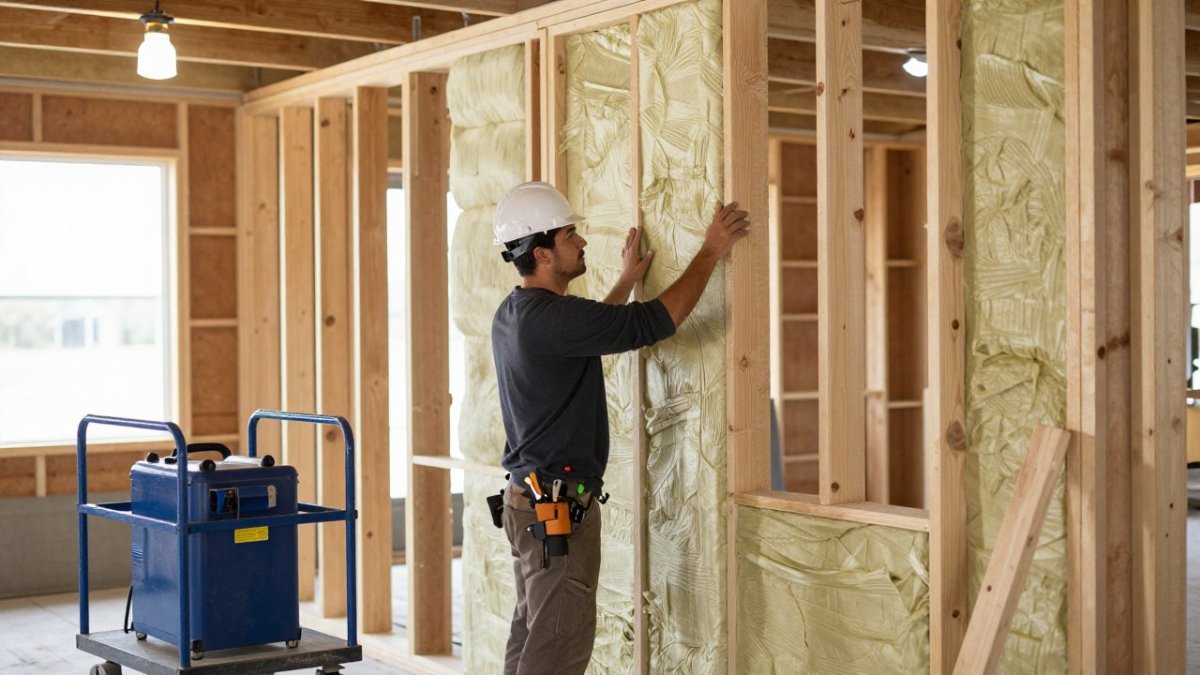
Air leakage is an important consideration. A wall can hold plenty of insulation and still leak conditioned air around outlets, seams, and penetrations, so airtight construction matters as much as R-value.
Energy-Efficient Home Features That Lower Your Bills
Which features actually move the needle? The ones that reduce demand before your HVAC system ever turns on.
- High-performance windows that limit heat gain and loss
- Airtight construction with sealed penetrations and joints
- Efficient appliances and LED lighting
- Water efficiency fixtures that trim water bills
For a closer look at the specific options we offer, read our guide to manufactured home energy saving features that cut bills. Every feature you add has an upfront cost, so the goal is matching upgrades to your climate rather than buying everything.
Modular vs. Site-Built Home Cost: A Transparent Lifetime Comparison
Lifetime cost is where the real comparison happens, and it is rarely a clean win for either side. McKinsey’s 2019 modular construction research found modular projects were completed 20% to 50% faster than traditional construction, while noting a mixed track record on cost savings. Speed is real, but speed is not the same as savings, so the honest comparison has to stretch across a stated ownership period.
The Five Cost Buckets to Compare
Pick a holding period, commonly 15 or 30 years for a first mortgage, and total each of these buckets for both options:
- Purchase price and site work: the home itself, land, foundation, utility hookups, and delivery or crane costs for modular
- Financing: interest rate, term, and any difference in loan type or down payment between manufactured, modular, and site-built lending
- Utilities: heating, cooling, water heating, and water, using the estimate method in the section above
- Maintenance and repair: roof, siding, paint, HVAC service, and the replacement schedule for major systems
- Replacement and end-of-life: appliances, water heater, and roofing that will likely be replaced once or twice inside a 30-year window
What Usually Tips the Comparison
- Upfront price can vary by home and land, and site-built homes on owned land may appreciate with the land.
- Energy performance favors a consistently built modular envelope, but only if the systems inside match the shell.
- Maintenance is a wash on quality and a loss on cheap materials, in either category.
- Resale and land depend far more on land ownership and location than on construction method.
That last point deserves emphasis: a modular home on owned land and a manufactured home in a leased-land community are not comparable assets, even if the structures look similar. Land tenure drives resale, financing terms, and long-run equity more than any efficiency upgrade.
| Factor | Modular / Manufactured | Site-Built |
|---|---|---|
| Construction time | Faster, factory-built | Longer, weather-dependent |
| Upfront price | Generally lower entry point | Higher and less predictable |
| Construction waste | Reduced by factory precision | Higher on-site waste |
| Energy performance | Consistent insulation and sealing | Varies by builder |
| Financing | Loan type depends on classification and land | Conventional mortgage common |
| Resale and land | Depends on land ownership | Typically appreciates with land |
Watch out: comparing a modular sticker price to a site-built sticker price without adding land, foundation, utility hookups, and delivery is the most common way buyers get a misleading answer. Compare delivered-and-installed totals, not catalog prices.
For the full numbers, see our modular vs site-built cost comparison and our guide to manufactured home vs site-built resale value. Not sure which category fits you? Our explainer on manufactured vs modular homes covers the difference, and our 24/7 team at (888) 765-1776 can build a side-by-side estimate for the floor plans you are weighing.
Upfront Premiums, Payback Periods, and Regional Climate Differences
Efficiency upgrades carry an upfront premium, and the payback period depends on where you live. A heat pump that pays for itself quickly in a harsh climate may take far longer in a mild one.
Climate zone changes the math:
- Hot, dry regions reward efficient cooling, shading, and tight ducts
- Cold regions reward insulation depth and air sealing
- Coastal, mild regions see smaller heating and cooling loads overall
Utility rebates and incentive programs may shorten payback, but eligibility rules change and vary by program. Ask your tax advisor and check current program terms before counting on any incentive.
Get Your Custom Modular Home Quote from Patriot Homes
We proudly serve local homeowners across California with custom manufactured and modular options. Why pay more when you can have quality, style, and affordability all in one?
Here’s what you get when you call:
- Many floor plans, from 1-bedroom ADUs to spacious 4-bedroom models
- Custom finishes and layouts you choose yourself
- Expert guidance through every step of the home-buying process
- Support from our 24/7 team
Call (888) 765-1776 or request a quote from our website to get started.
The math on efficiency only works when the home is built right and priced honestly. Call Patriot Homes at (888) 765-1776 for a pricing matrix and customization options, and get a home that delivers quality, style, and affordability in one package.
Frequently Asked Questions
How much can an energy-efficient modular home save on utility bills?
Actual savings depend on your climate, home size, and the efficiency features you choose. Call Patriot Homes at (888) 765-1776 to discuss which options fit your budget.
Are modular homes more energy-efficient than site-built homes?
Factory-built construction allows for tighter quality control on insulation and air sealing, which can reduce air leakage and improve thermal performance. However, efficiency depends on the specific materials and systems in each home. Patriot Homes offers customizable options so you can prioritize the energy-efficient home features that matter most to you.
What are the drawbacks of energy-efficient modular homes?
Upfront costs for high-performance windows, upgraded insulation, and heat pumps can be higher than standard finishes, so the payback period varies by climate and usage. Faster construction does not automatically guarantee lower total cost. The key is to compare lifetime costs, not just sticker price. Patriot Homes can walk you through options and financing at (888) 765-1776.
How long does it take for energy-efficient upgrades to pay for themselves?
Payback periods depend on your local utility rates, climate zone, and the specific upgrades selected. A home with a tight building envelope, high-performance windows, and a heat pump may see faster returns in extreme climates where heating and cooling demand is high. Patriot Homes recommends requesting a personalized quote to compare feature costs against projected savings for your area.
