
Is Buying Raw Land Worth the Investment in 2026
Table of Contents
- Is Buying Raw Land Worth the Investment: The Core Question
- Raw Land Investment Pros and Cons: What You Need to Know
- Raw Land Due Diligence Checklist: Research Before You Buy
- How to Make Money from Vacant Land: Real Strategies
- Can You Build a Manufactured Home on Raw Land: Your Path to Affordable Ownership
- Land Appreciation, Carrying Costs, and Long-Term Returns
- Should You Buy Raw Land: Who It Makes Sense For
- Frequently Asked Questions
Last Updated: October 20, 2026
Is Buying Raw Land Worth the Investment: The Core Question
Is buying raw land worth the investment? The answer depends on your financial goals, timeline, and tolerance for illiquidity. Raw land can appreciate over decades, but it generates no rental income, carries ongoing carrying costs, and requires careful due diligence to avoid costly mistakes.
At Patriot Homes, we work with landowners across the region asking this exact question, whether holding raw parcels makes sense or whether converting that land into a productive asset like a manufactured home is smarter. This guide covers what makes land valuable, what drains your returns, and whether raw land fits your strategy.
The short version: raw land can work as a long-term wealth play if you buy in the right location, understand carrying costs upfront, and can hold for years. But it’s not passive income, not liquid, and not for everyone.
If you own raw land and are considering putting a home on it, call our 24/7 team at (888) 765-1776. We help landowners across the region convert vacant parcels into affordable, customizable homes, often at a fraction of traditional site-built costs.
Raw Land Investment Pros and Cons: What You Need to Know
Key Advantages of Land Ownership
Land doesn’t depreciate the way buildings do. A house deteriorates. A manufactured home requires maintenance. Raw land, if you own it free and clear, simply sits there. If the area develops around it, your asset appreciates.
Finite resource. They’re not making more land. As populations grow and development spreads, desirable locations become scarcer, driving value up over time, especially if you buy before an area becomes hot.
Flexibility. You control what happens on your land: hold it, develop it, lease it for farming or grazing, or sell it.
No tenant headaches. Unlike rental property, raw land requires no tenant management, midnight maintenance calls, or evictions, just property taxes and, if applicable, land loans.
Potential inflation hedge. Real assets like land tend to hold value or appreciate when currency weakens, not a perfect hedge, but better than holding cash.
Significant Drawbacks to Consider
Zero cash flow. Raw land produces no income while you own it. You pay property taxes and carrying costs out of pocket, year after year. If your goal is passive income, raw land fails immediately.
Illiquidity. Selling land takes time, finding a buyer, negotiating, and closing can take months or years. If you need cash fast, you’re stuck.
Carrying costs add up. Property taxes rarely disappear, loan payments continue regardless of appreciation, and insurance, road maintenance, surveys, and legal fees all chip away at returns.
Market risk. Not all land appreciates. If the area doesn’t develop as expected or the local economy weakens, your land might stagnate for decades. Location is everything, and hard to predict.
Development uncertainty. Zoning can change. Environmental regulations can tighten. A highway project can reroute. Easements can limit your use. These external factors can drastically reduce a parcel’s value or development potential.
Financing challenges. Banks are pickier about raw land loans than mortgages, with higher rates and larger down payments. If you can’t pay cash, financing raw land is expensive.
| Factor | Advantage | Disadvantage |
|---|---|---|
| Cash Flow | None | Pays nothing while you hold |
| Appreciation Potential | Can grow over decades | No guarantee; depends on location |
| Liquidity | Flexible use | Hard to sell quickly |
| Carrying Costs | Low if debt-free | Taxes + maintenance ongoing |
| Income Generation | Lease potential | Requires active management |
| Simplicity | No tenants to manage | Complex due diligence needed |
Raw Land Due Diligence Checklist: Research Before You Buy
Before you commit capital to raw land, investigate these factors. A parcel that looks cheap might be cheap for a reason.
Location and market demand. Is the area growing? Are nearby properties selling?
Access and utilities. Can you actually reach the land, public road frontage or private easement?
Zoning and permitted use. Check the county zoning code to confirm what you can legally do, residential, agricultural, commercial.
Environmental issues. Is the land in a flood zone? Wildfire zone? Wetlands? Contaminated? Get an environmental assessment. Some land is undevelopable because of environmental constraints.
Soil conditions and buildability. If you plan to build, get a soil test.
Comparable sales. Check county assessor records and recent MLS listings for what similar parcels sold for.
Tax assessment and carrying costs. Request the current property tax bill, calculate annual carrying costs, and factor this into return projections. High-tax areas erode returns quickly.
Easements and restrictions. Review the deed for easements (rights others have to cross or use your land), covenants, and restrictions.
How to Make Money from Vacant Land: Real Strategies
Raw land can generate returns through several paths. Not all work for every parcel.
Long-term appreciation. Buy in an area you believe will develop, hold 10 to 30 years, and sell when the area is hot. This works if you pick the right location and have patience; it fails if the area stagnates or you need the money sooner.
Lease for agriculture, grazing, or hunting. If suitable, lease to a farmer, rancher, or hunting club. Returns are modest, typically a few hundred to a few thousand per year depending on acreage and location, but they offset carrying costs.
Hold for development. Assemble parcels, get them rezoned, install infrastructure, and develop into a subdivision or commercial project. This is capital-intensive, time-consuming, and risky, not a passive strategy.
Sell to a developer. Developers often pay premiums for assemblies of contiguous land. If a development boom is coming to your area, you might sell at an inflated price. Timing is everything.
Convert to a productive asset. If you own raw land and want value without selling, consider placing a manufactured home on it.
Don’t assume appreciation. Many landowners buy raw land expecting it to double in value, then watch it stagnate for 15 years because the area didn’t develop as hoped. Have a realistic plan for how and when you’ll profit.
Can You Build a Manufactured Home on Raw Land: Your Path to Affordable Ownership
Yes.
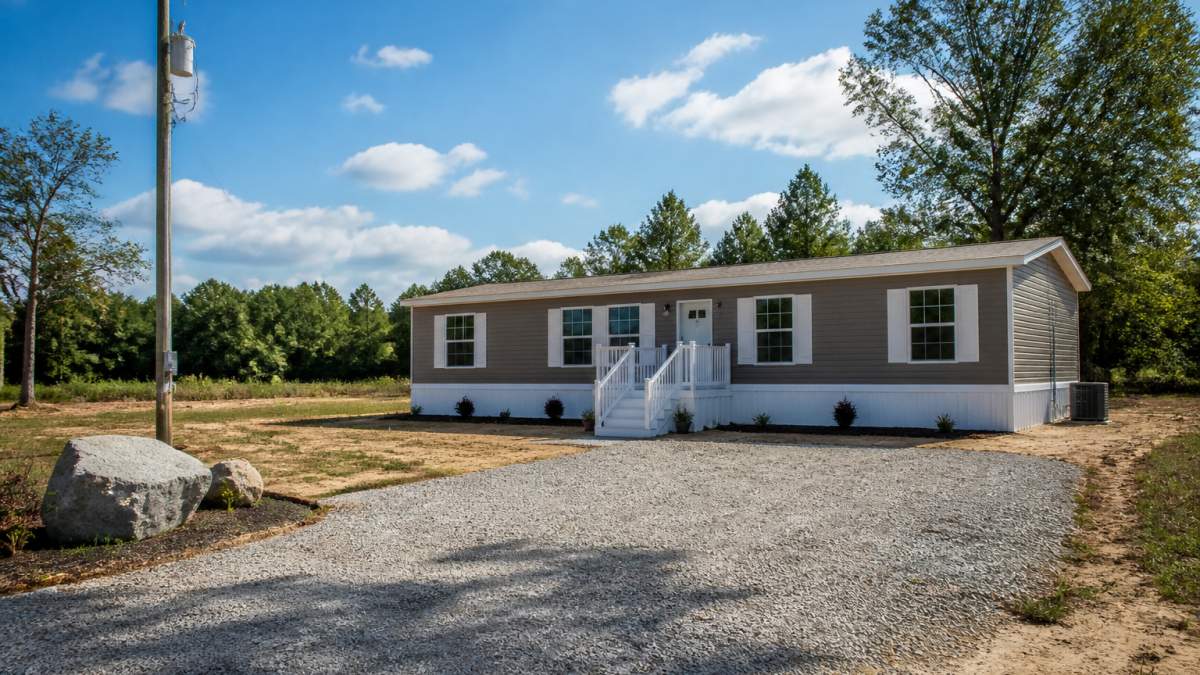
Why this works. Manufactured homes cost a fraction of site-built homes, avoiding contractor markup, permitting delays, and construction defects.
Foundation and site prep. Your land needs a level, prepared foundation, a concrete pad, pier-and-beam, or basement. Site prep costs vary by location and soil conditions, so budget upfront.
Utilities. Manufactured homes need water, sewer, electric, and ideally gas. If these aren’t available on your land, installation costs can be substantial. Check availability before you commit.
Financing. Manufactured home loans are available through banks, credit unions, and specialty lenders. At Patriot Homes, our 24/7 team helps you navigate financing options.
Customization. This is where Patriot Homes stands apart. You’re not buying a cookie-cutter home, you choose the floor plan, bedrooms and bathrooms, finishes, and layout.
Zoning and permits. Confirm that your land’s zoning allows a manufactured home. Some areas restrict them. Get local permits before placing the home. Your lender will require proof of compliance.
Land Appreciation, Carrying Costs, and Long-Term Returns
The math on raw land is simple but brutal if you ignore carrying costs.
Scenario 1: Land appreciates 3% annually. You buy 5 acres for $50,000 with $500 annual property taxes. Over 20 years, the land appreciates to roughly $90,000. After $10,000 in taxes, your net gain is $30,000, about a 2.3% annualized return, worse than a savings account.
Scenario 2: Land appreciates 5% annually in a hot market. Same 5 acres for $50,000. Same $500 annual taxes. Over 20 years, your land is worth roughly $132,000. Taxes paid: $10,000. Net gain: $72,000. Annualized return: about 4.5% after taxes. Better, but still modest compared to stock market returns.
Scenario 3: You place a manufactured home on the land. You own 5 acres. You place a manufactured home on it. Your asset is productive. You’re generating housing value, not just waiting for appreciation. You can live in it, rent it, or sell it.
The key insight: raw land is a long-term play that only works if appreciation exceeds carrying costs significantly or if you have a concrete plan to make the land productive.
Raw land returns depend entirely on location and timing. If you buy in an area that develops, you win. If you buy in a stagnant area, you lose to carrying costs. Most landowners underestimate how much taxes and maintenance drain returns over decades.
Should You Buy Raw Land: Who It Makes Sense For
Raw land is right for some investors and wrong for others.
Buy raw land if:
- You have a 10+ year horizon and can afford carrying costs without stress
- You believe strongly in a specific area’s development trajectory
- You’re diversifying a portfolio and want a real asset hedge
- You have cash reserves for taxes, maintenance, and surprises
- You can afford to be illiquid and don’t need the money soon
Don’t buy raw land if:
- You need cash flow or passive income now
- You can’t afford carrying costs without strain
- You’re hoping to flip it quickly for a profit
- You don’t have time to research location and market fundamentals
- You’re using use you can’t comfortably service
Consider a manufactured home instead if:
- You own land and want to stop paying carrying costs
- You want affordable housing without a traditional mortgage
- You value customization and control over your home
- You want an asset that generates value, not just appreciation potential
- You’re priced out of traditional homeownership
At Patriot Homes, we serve homeowners and landowners across the region who fall into this last category. We help you convert raw land into a real home, customizable, affordable, and built to last. Our 24/7 team is here to answer questions about floor plans, financing, customization options, and how manufactured homes work on your land.
Making your raw land decision comes down to honest self-assessment. Can you afford carrying costs for years without income? Do you believe in the location’s future? Can you stay patient if appreciation is slow?
If the answer is no to any of these, raw land might drain your wealth instead of building it. But if you own land and want to make it productive, Patriot Homes offers a proven path.
Call our 24/7 team at (888) 765-1776 today. We’re ready to discuss pricing matrices, customization options, and how to transform your raw land into the home you deserve. You can also request a quote from our website. Let’s turn that vacant land into value.
Frequently Asked Questions
Is buying raw land a good investment compared to other real estate?
Raw land can appreciate over time, especially in growing areas, but it differs from rental property or developed real estate. Land produces no rental income while you own it, making it a long-term appreciation play rather than a cash flow investment. Success depends heavily on location, local market demand, zoning potential, and your holding period. It suits investors with capital to hold for years and tolerance for illiquidity.
What are the main risks of investing in raw land?
Key risks include illiquidity (difficulty selling quickly), no income generation, carrying costs (taxes, maintenance, insurance), zoning restrictions limiting use, environmental or title issues, financing challenges, and market uncertainty. Appreciation is not guaranteed. Before purchasing, verify zoning, survey the property, check for easements, research local development trends, and understand all carrying costs to avoid surprises.
Can you build a manufactured home on raw land you own?
Yes, you can often build a manufactured home on your own raw land if zoning permits residential use and utilities are accessible. Patriot Homes serves homeowners across the region with customizable manufactured and modular options designed to fit your land and budget. Our 24/7 team can guide you through the process, from site preparation to final placement. Call (888) 765-1776 to discuss your specific land and explore affordable home solutions.
How long does raw land typically take to appreciate?
Raw land appreciation timelines vary widely, typically ranging from 5 to 20+ years depending on location, local market growth, zoning changes, and infrastructure development. Rural or undeveloped land may appreciate slowly; land near growing urban areas or slated for development may appreciate faster. This is why land investment suits long-term holders, not quick-flip investors. Research local market trends and development plans before committing.
What should you check before buying raw land?
Complete due diligence by verifying zoning and permitted uses, obtaining a professional survey, checking title and easements, confirming utility access and costs, reviewing property taxes and carrying costs, researching local market demand and development plans, inspecting soil and drainage conditions, and understanding environmental regulations. Many buyers overlook carrying costs and resale difficulty, factor these into your investment decision before making an offer.