
Manufactured Home vs Modular Home: Which Fits Your Land?
Last Updated: October 29, 2026
Quick Summary
The manufactured home vs modular home difference comes down to the building code each is built to: manufactured homes follow the federal HUD code, while modular homes follow state and local building codes like a site-built house. That single distinction shapes financing, foundations, and resale value.
- Manufactured homes are factory-inspected to the HUD code; modular homes are inspected by local building inspectors.
- Manufactured homes commonly use chattel or land-home loans, while modular homes typically use conventional mortgages.
- A permanent foundation and real-property title can help a manufactured home qualify for mainstream mortgage programs.
- Modular homes generally follow traditional real estate appreciation because they are real property on owned land.
- Check with your local building department about zoning and permit requirements before you commit to a design.
Table of Contents
- Manufactured Home vs Modular Home: The Core Difference
- HUD Code vs Local Building Codes: Why the Standard Decides Everything
- Manufactured Home Financing Requirements and Your Loan Options
- Foundation, Zoning, and Permits: What Your Land Will Allow
- Customizable Floor Plans for Manufactured Homes: What You Can Actually Change
- Appreciation, Insurance, and Long-Term Costs Compared
- Get a Quote and Pricing Matrix From Our 24/7 Team
- Frequently Asked Questions
Manufactured Home vs Modular Home: The Core Difference
The manufactured home vs modular home difference comes down to one thing: the building code each home is constructed to meet. Manufactured homes follow the federal HUD code. Modular homes follow state and local building codes, just like a site-built house. That single distinction shapes everything else, from financing and foundations to resale value and where you can legally place the home.
If you own land and are considering a home, modular is one option to explore. For information about Patriot Homes’ customizable manufactured homes, call our 24/7 team at (888) 765-1776 or request a quote from our website.
What Makes a Home Manufactured
A manufactured home is a factory-built house constructed to the federal HUD code, which governs design, construction, and performance.
Key traits:
- Built to the HUD code
What Makes a Home Modular
A modular home is a factory-built house constructed to local building codes.
HUD Code vs Local Building Codes: Why the Standard Decides Everything
The code a home is built to determines its financing, its foundation, and its resale future. Manufactured homes must meet HUD building codes, while modular homes must follow local, state, and regional codes, according to Nationwide’s guide to manufactured vs. modular homes. That is not a technical footnote. It is the root of nearly every practical difference buyers care about.
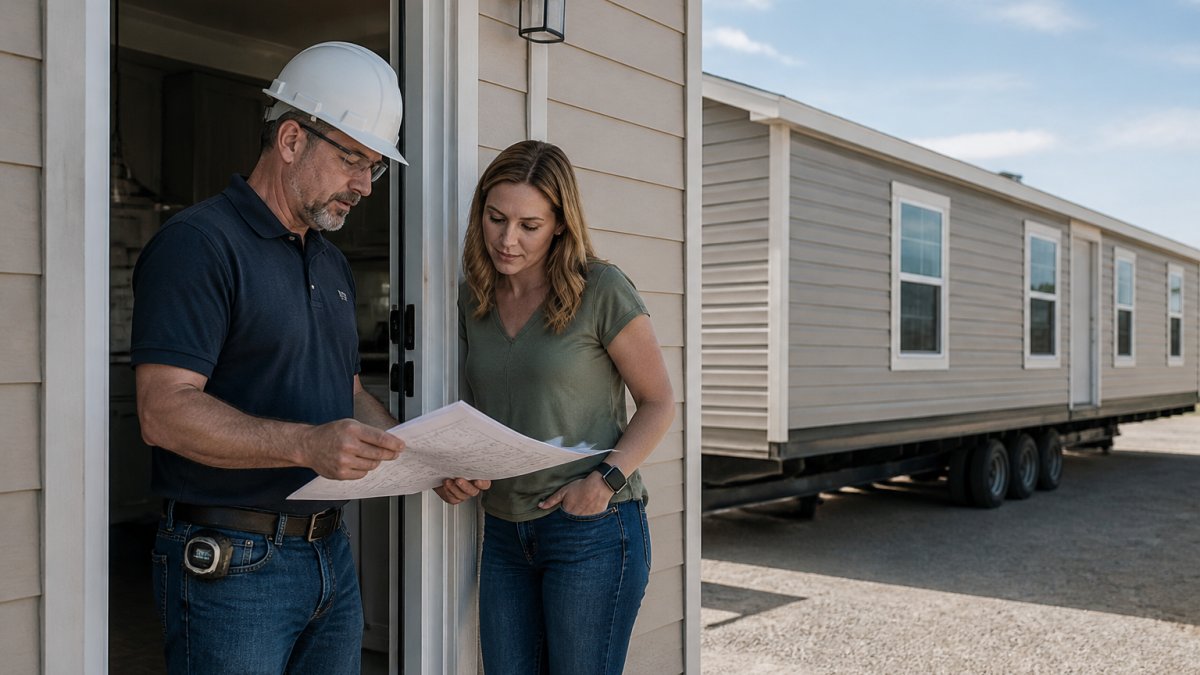
Confirm with your local building department which standard applies to your lot before you commit to a design.
A useful way to think about it:
| Feature | Manufactured Home | Modular Home |
|---|---|---|
| Building code | Federal HUD code | Local and state codes |
| Inspection | Factory inspection | Local building inspector |
| Foundation | Chassis, often permanent foundation | Permanent foundation required |
| Financing | Chattel or land-home loan common | Conventional mortgage common |
| Appraisal | Treated differently by lenders | Appraises like site-built |
| Best for | Budget-first buyers with land | Buyers wanting site-built parity |
Manufactured Home Financing Requirements and Your Loan Options
Financing is one consideration when comparing manufactured and modular homes. A manufactured home’s financing depends on how it is titled and whether the land is included.
The Three Financing Paths for a Manufactured Home
- Conventional, FHA, or VA mortgage. Once permanently affixed, titled as real property, and appraised to lender guidelines, the home can qualify for mainstream mortgage programs. VA loans have specific manufactured home requirements and FHA has its own foundation and titling rules, so confirm eligibility before you commit to a design.
What Lenders Actually Ask For
A common pattern among lenders financing a manufactured home as real property:
- A permanent foundation system meeting the lender’s engineering requirements, often including an engineer’s certification
- The home titled as real property, with the title retired or converted per state rules
- A clear chain of title and no outstanding liens on the home or land
- An appraisal from an appraiser approved for manufactured housing
- Utility connections and a certificate of occupancy in place
Miss any one of these and the loan can fall back to chattel terms, which is why the titling and foundation steps matter more than the rate quote you see first.
Why the Rate Spread Matters Over 30 Years
For a deeper walkthrough of financing a manufactured home on private land, see our guide on how manufactured home financing works on private land. For a pricing matrix, call our 24/7 team at (888) 765-1776.
Foundation, Zoning, and Permits: What Your Land Will Allow
Check with your local building department about zoning and permit requirements for your lot.
Before you buy, check with your local building department about requirements for your lot.
If you are still at the land-prep stage, our guide on preparing land for a manufactured home covers grading, access, and utility work before delivery day. And if you own land in California, Arizona, Nevada, or Idaho, we proudly serve local homeowners with custom manufactured and modular options across the region. Call (888) 765-1776 for assistance.
Customizable Floor Plans for Manufactured Homes: What You Can Actually Change
Patriot Homes offers customizable manufactured homes, with options for the number of bedrooms and bathrooms and home finishes.
Our range runs from compact 1-bedroom ADUs to spacious 4-bedroom models. Call us for information about customization options.
Browse the best manufactured home floor plans for 2026 to see layouts side by side, or read our breakdown of what customizing a manufactured home layout actually costs before you request changes.
Appreciation, Insurance, and Long-Term Costs Compared
Resale value is a consideration for homebuyers. This section explains the difference between manufactured and modular homes.
Appreciation: What Actually Drives Value
Modular homes generally follow traditional real estate appreciation because they are real property on owned land, appraised alongside site-built homes. Manufactured homes have historically seen different value-retention outcomes, and the biggest factor is whether you own the land under the home. A manufactured home on owned land, permanently affixed and titled as real property, behaves far more like a site-built house on resale than one on rented land or a chattel title. Placement, community rules, and upkeep do the rest.
Insurance: The Cost Competitors Ignore
This is the gap most articles leave out. Insurance carriers categorize manufactured homes differently from site-built and modular homes, and that drives your premium and coverage terms. A few patterns worth knowing before you shop:
- Carrier appetite varies. Not every carrier writes manufactured homes, and some that do restrict age, foundation type, or tie-down requirements. Modular homes are typically underwritten like site-built construction.
- Foundation and tie-downs affect terms. A permanent foundation and an engineered tie-down system can open up better carrier options and policy terms than a home on blocks or piers.
- Land status matters. Owned land with the home affixed usually produces more standard policy options than a home on rented land.
- Get quotes early. Insurance is a line item in your total cost of ownership, and a quote before you buy tells you whether a given home and foundation setup is insurable on terms you can live with.
Long-Term Maintenance: A Realistic Breakdown
Factory-built homes typically need less weather-related repair because the build happens in a controlled environment, but upkeep does not disappear. Budget for it like any house:
- Roof and siding: Inspect annually and plan for replacement on the same cycle as a site-built home.
- HVAC: Service the system yearly; factory-installed units age on the same schedule as any other.
- Foundation and tie-downs: Check the foundation, piers, and tie-downs periodically, especially after severe weather. This is the maintenance item unique to manufactured homes.
- Sealants and weatherstripping: Modular homes have more field-assembled seams, so check the marriage-line joints and exterior seals on a schedule.
- Utilities and connections: Inspect the utility connections and any skirting on a manufactured home each season.
Durability Has Real Evidence Behind It
Durability has real evidence behind it. A FEMA study cited by the National Association of Certified Home Inspectors found that modular homes withstood the wind and water of Hurricane Andrew better than most other homes in the area. Structural integrity starts at the factory.
Putting Total Cost of Ownership Together
Consider the factors relevant to your situation when comparing manufactured and modular homes.
Why pay more when you can have quality, style, and affordability all in one? Our range runs from compact 1-bedroom ADUs to spacious 4-bedroom models, and we proudly serve local homeowners with custom manufactured and modular options across the region. Call (888) 765-1776 for a pricing matrix, customization options, or immediate assistance, or request a quote from our website.
Get a Quote and Pricing Matrix From Our 24/7 Team
The manufactured home vs modular home difference is a topic to consider when comparing home types. Neither is wrong. The wrong move is guessing.
Why pay more when you can have quality, style, and affordability all in one? We serve homeowners across California, Arizona, Nevada, Idaho, and surrounding communities, and our team is available around the clock to help. Our guide on how to compare manufactured home prices will help you ask the right questions.
Ready for real numbers? Call (888) 765-1776 for a pricing matrix, customization options, or immediate assistance, or request a quote from our website.
Frequently Asked Questions
What is the primary legal difference between a manufactured and modular home?
The building-code distinction is one way to describe the difference. A manufactured home is built to the federal HUD code. A modular home is built to local building codes.
Do manufactured and modular homes appreciate in value differently?
They can. Modular homes generally follow the same appreciation patterns as site-built homes because they sit on a permanent foundation and are financed as real property. Manufactured homes placed on land you own and titled as real property can build equity too, while homes in leased communities often depreciate. Land ownership and foundation type matter more than the label on the home.
Are modular homes considered site-built for financing purposes?
Yes, in most cases. Because modular homes meet local building codes and are permanently attached to a foundation, lenders treat them like site-built houses. That opens up conventional mortgages, FHA loans, and VA loans with rates in the 6 to 7 percent APR range. Manufactured homes often use chattel or land-home loans, which run roughly 8 to 11 percent APR, so ask about financing eligibility early.
Which home type offers more customization for my budget?
Patriot Homes offers customizable manufactured homes, with options for the number of bedrooms and bathrooms and home finishes. Call (888) 765-1776 for a pricing matrix on 1-bedroom through 4-bedroom models.
The gap between a good decision and an expensive one usually comes down to information. We would rather answer your questions now than have you discover a zoning snag after delivery. Patriot Homes offers brand-new, customizable manufactured homes with a wide range of model options, 24/7 customer support, and pricing built to keep homeownership within reach. Get started with Patriot Homes and find the floor plan that fits your land, your life, and your budget. Call (888) 765-1776 today.
