
How to Inspect a Manufactured Home Before You Buy
Table of Contents
- Start With the Right Tools and a Safety-First Walkthrough
- Your Mobile Home Inspection Checklist: Foundation, Frame, and Skirting
- Roof, Siding, Windows, and Doors: The Exterior Envelope
- Inside the Home: Walls, Floors, Ceilings, and Systems
- Manufactured Home Inspection Red Flags That Should Stop a Deal
- When to Hire Manufactured Home Inspectors Near Me
- Download a Used Mobile Home Inspection Checklist PDF and Documents to Review
- Call Patriot Homes to Request a Quote on a New Manufactured Home
- Frequently Asked Questions
Last Updated: November 8, 2026
Start With the Right Tools and a Safety-First Walkthrough
Learning how to inspect a manufactured home starts with one honest truth: your eyes and a flashlight will catch more problems than any gadget. The smartest buyers bring a short kit and a cautious attitude. Call our 24/7 team at (888) 765-1776 and we will talk you through what to look for before you ever step onto the lot.
Bring these basics:
- A bright flashlight and a spare battery
- A screwdriver for outlet covers and access panels
- A tape measure and a level
- Work gloves and closed-toe boots
- A phone camera and a notebook
Safety comes first. Never crawl under a home alone, and never enter a crawlspace with standing water or a strong chemical smell. Watch out: touching exposed wiring or stepping onto soft flooring can turn a cheap inspection into an injury.
A manufactured home inspection is a visual review of the structure, exterior, interior, and systems before you commit to buying. It is not a warranty. It is your chance to spot trouble early.
Your Mobile Home Inspection Checklist: Foundation, Frame, and Skirting
The foundation decides whether everything above it stays square, so inspect it in a set order: piers, then frame and undercarriage, then skirting and crawlspace access, then the ground around the home. Work from the outside in and document each finding with a photo and a note before you move on.
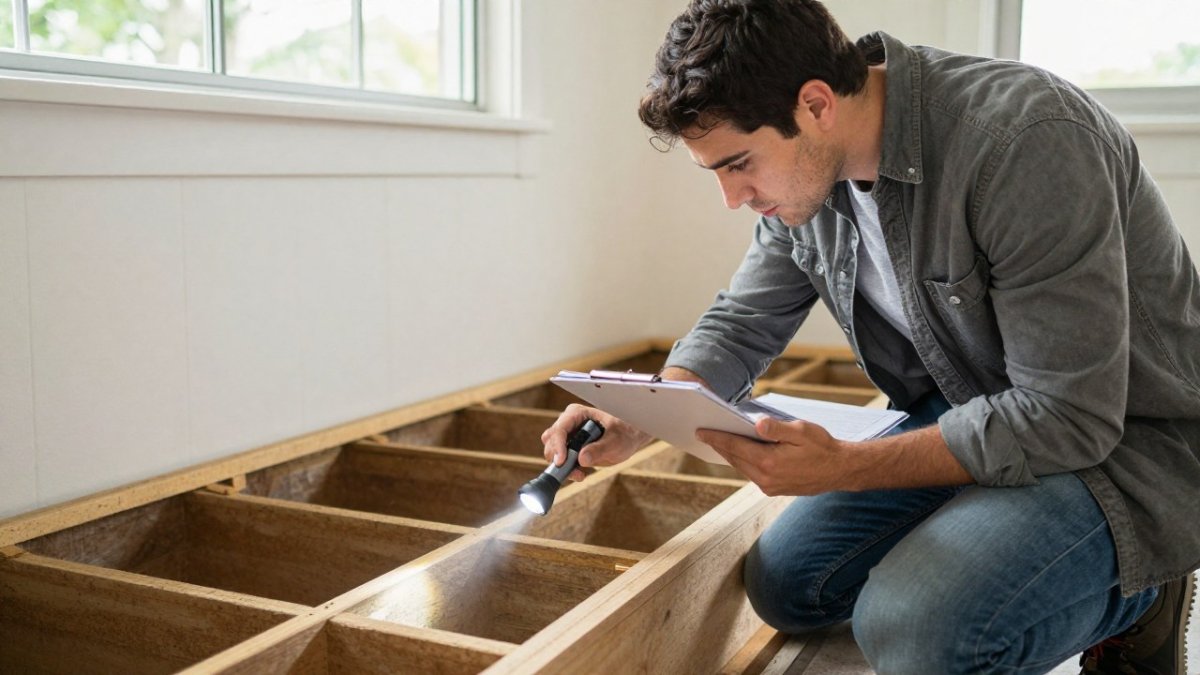
Piers and leveling. Kneel at the skirting and look along the pier line with your flashlight. Piers should sit plumb, with no cracked blocks, crushed shims, or rusted stands. Lay a four-foot level on the floor inside near exterior walls and doorways; a bubble that drifts consistently in one direction points to settlement. A single low corner often points to a leveling issue, while a wavy floor across several rooms can suggest a deeper frame problem.
Frame and undercarriage. With the access panel open and a bright light, scan the steel beams for heavy rust, bent flanges, or sagging sections. Surface rust is common on older units; flaking rust that leaves pits, or beams that visibly bow, is a different story. Check that the marriage wall beam on a multi-section home is straight and that the sections are drawn tight together.
Skirting and crawlspace access. Skirting should be complete, vented, and fitted with a clear access panel. Missing panels invite animals and moisture. Confirm vents are open and not blocked by insulation or debris.
Ground and drainage. The soil under and around the home should be dry and graded away from the foundation. Standing water, a strong chemical smell, or soggy insulation means stop and call a professional before you go further.
Never crawl under a home alone, and never enter a crawlspace with standing water or exposed wiring.
How standards and documentation differ by age.
If you want the full picture on how these systems work, our guide on manufactured home foundation types explained compares pier-and-beam, slab, and crawl space setups. Landowners weighing options can also read how to choose the right foundation for manufactured homes.
- Piers: plumb, uncracked, properly shimmed
- Frame: no heavy rust, bent beams, or sagging
- Marriage wall: straight and drawn tight
- Skirting: complete, vented, accessible
- Ground: dry, graded away from the home
- Labels: HUD tag and data plate present and matching
If you are weighing a used unit against a new build, call our 24/7 team at (888) 765-1776 and we will walk you through what a sound foundation should look like before you commit.
Roof, Siding, Windows, and Doors: The Exterior Envelope
Water is the enemy, and the exterior is where it gets in. Walk the roofline from the ground and look for lifted shingles, dark stains, or sagging spots. Inside, check the ceiling near vents for brown rings.
Siding and trim come next. Press on panels for softness, and look for gaps where caulk has failed. Peeling paint around windows usually means moisture is already working its way in.
Open and close every door and window. They should latch smoothly and sit flush. Drafts or daylight around a frame point to settling or worn seals.
Comparing exterior materials? Our breakdown of the best manufactured home exterior siding options covers what holds up and what to avoid.
- Roof: missing shingles, stains, soft spots
- Siding: cracks, loose panels, failed caulk
- Windows: drafts, foggy glass, stuck frames
- Doors: poor fit, daylight gaps, damaged seals
Inside the Home: Walls, Floors, Ceilings, and Systems
Walk each room slowly and let your feet do the testing. Soft spots in floors often mean old leaks. Bounce slightly at doorways and near bathrooms, where water damage hides most often. Carry your flashlight low along the baseboards and high along the ceiling line; water leaves a tide mark at both.
Walls and ceilings. Look for bubbling paint, dark streaks, or sagging panels. Pay attention to the marriage wall, the seam where the two halves join, since that line is a common trouble spot. A hairline crack is normal settling; a crack you can slide a coin into, or one that runs diagonally from a door corner, deserves a professional look.
Electrical. Test outlets with a small circuit tester, confirm GFCI protection in kitchens, bathrooms, and near water, and look for scorch marks, warm cover plates, or a burning smell. Open the panel only if you are comfortable and the power is off; otherwise leave it to a licensed electrician.
Plumbing. Run every faucet hot and cold, watch under sinks for drips, flush toilets, and check the water heater for rust or leaks at the base. Low pressure at one fixture often means a clogged aerator; low pressure everywhere points to a supply problem.
HVAC and ventilation. Turn the system on, listen for odd noises, and feel for airflow at each register. Confirm bath and range fans actually pull air and that vents are clear. A musty smell with no visible stains usually means moisture is trapped behind a wall, that is a job for a pro.
Where a walkthrough ends and a professional begins. A buyer walkthrough is visual and non-invasive. A licensed inspector or structural engineer uses moisture meters, outlet testers, and sometimes a crawlspace camera to find what you cannot see. Hire one when the home is older or has sat vacant, when you spot any red flag, when the seller cannot show recent repair records, or when you are paying cash and skipping lender inspections. Ask for a written report with photos, and compare scope before you book, since services vary.
Watch out: a home that smells musty but shows no visible stains usually has moisture trapped behind a wall, do not assume fresh paint solved it.
- Electrical: test outlets, confirm GFCI, look for scorch marks
- Plumbing: run every faucet, watch under sinks, check the water heater
- HVAC: turn it on, listen, feel for airflow
- Ventilation: fans pull air, vents clear
- Marriage wall: no wide or diagonal cracks
Searching for manufactured home inspectors near me? Start with your state’s licensing board, then ask for referrals from recent buyers. And if you would rather skip the unknowns of a used unit, call (888) 765-1776 to talk through new construction options with our 24/7 team.
Manufactured Home Inspection Red Flags That Should Stop a Deal
Some findings are bargaining chips. Others are reasons to walk away. Here is how we sort them.
| Red Flag | Why It Matters | What to Do |
|---|---|---|
| Sagging roofline | Possible structural failure | Get a structural engineer |
| Heavy frame rust | Undercarriage may be unsafe | Skip the home |
| Soft floors in several rooms | Widespread water damage | Request repair estimates |
| Scorched outlets or burning smell | Fire risk | Bring in a licensed electrician |
| Missing ID label or data plate | Ownership and age unclear | Verify documents first |
| Active pests or droppings | Health and structural risk | Call a pest pro |
Pests and moisture intrusion top the list for a reason. Both spread quietly and cost real money to fix. If you are shopping in the Fresno area, our article on Fresno mobile homes for sale lists seven things to verify before you sign.
When to Hire Manufactured Home Inspectors Near Me
A visual walkthrough has limits. A licensed inspector or structural engineer sees things you cannot: hidden moisture, wiring faults, and frame damage under the home.
Hire a professional when:
- The home is older or has sat vacant
- You spot any red flag above
- The seller cannot show recent repair records
- You are paying cash and skipping lender inspections
Ask for a written inspection report with photos. Compare scope before you book, since services vary. Federal guidance from HUD’s manufactured housing program notes that a qualified inspector verifies installation compliance, which is a different job from a general home inspection.
Searching for manufactured home inspectors near me? Start with your state’s licensing board, then ask for referrals from recent buyers.
Download a Used Mobile Home Inspection Checklist PDF and Documents to Review
Before you fall for a floor plan, check the paperwork. A missing document can stall a sale or cost you money later.
Bring this list:
- Title and ownership records
- Identification label and data plate
- Installation and permit records
- Recent repair and service receipts
- Utility bills from the last year
- Seller disclosure statement
A used mobile home inspection checklist PDF helps you stay organized, but the documents matter just as much. Ask the seller for everything in writing, and confirm the home’s age and certification match the listing.
An older field inspection study of mobile homes published by HUD USER found thousands of problems across the units researchers examined, a reminder that age and upkeep change everything. Practical checklists from Arrivy’s mobile home inspection guide also stress foundation cracks, roof leaks, and missing shingles.
Call Patriot Homes to Request a Quote on a New Manufactured Home
A new home lets you choose its finishes yourself and comes with modern construction. That is where we come in.
Patriot Homes is a premier dealer of brand-new, customizable manufactured homes, and we proudly serve local homeowners with custom manufactured and modular options. Choose your bedrooms, bathrooms, and finishes, and explore our wide range of floor plans, from 1-bedroom ADUs to spacious 4-bedroom models. Why pay more when you can have quality, style, and affordability all in one?
Our team is available 24/7 to walk you through floor plans, customization, and options. Call (888) 765-1776 for immediate help, or request a quote from our website. You can also browse our model homes to see what is available right now.
Stop guessing about someone else’s repairs. Call Patriot Homes at (888) 765-1776 and let our 24/7 team help you compare a used unit against a brand-new home built to your budget, with the floor plans and finishes you actually want.
Frequently Asked Questions
How much does it cost to have a manufactured home inspected?
The cost of a professional manufactured home inspection depends on the home’s size, age, and location, so ask the inspector for a written quote. Many buyers treat it as money well spent because a written report can reveal foundation, roof, or electrical problems that cost far more to fix. Ask the inspector for a written scope before booking, and call Patriot Homes at (888) 765-1776 for guidance on what a new build includes so you know what to expect.
Can a home inspector inspect a manufactured home?
Yes, but choose one with manufactured housing experience. A general home inspector may not be familiar with HUD certification labels, marriage wall construction, or tie-down systems. Ask whether the inspector verifies installation against HUD standards and whether they inspect the crawlspace and undercarriage. If they hesitate, find a specialist. A manufactured home inspection is different enough from a site-built inspection that experience matters.
What is the biggest red flag in a home inspection?
Water damage is the red flag that should make you pause. Stained ceilings, soft spots in floors, musty odors, and bubbling paint usually point to roof or plumbing leaks that may have spread into walls and insulation. Foundation problems, like cracked piers or a home that is visibly out of level, run a close second. Either issue can mean thousands in repairs, so get a professional opinion before you sign anything.
What documents should I review before buying a manufactured home?
Ask for the HUD certification label, the data plate, the title, and any installation or permit records. For a used home, review the title history and any attached additions or carport permits. Missing paperwork can complicate financing, so confirm everything is in order before you commit.
