
Developed vs Raw Land: Which Lot Fits Your Home Build
Last Updated: November 8, 2026
Quick Summary
Raw land costs less up front but requires you to pay for utilities, road access, site work, and permits, while developed land costs more but includes infrastructure and shortens your build timeline. Compare total cost of ownership, not listing prices, before choosing.
- Raw land typically requires larger down payments, shorter loan terms, and higher rates than a home mortgage.
- Confirm zoning allows a manufactured home and verify legal road access before making an offer.
- Get a utility connection quote, a site-work bid, and a carry-cost estimate in writing.
- Developed land usually offers a shorter path from purchase to move-in for a manufactured home.
- Call our 24/7 team at (888) 765-1776 for pricing matrices and lot guidance.
Table of Contents
- Developed vs Raw Land: The Core Differences
- Raw Land Costs, Loans, and Risks to Know Before You Sign
- Can You Build on Undeveloped Land? What Has to Happen First
- Land Utilities and Site Preparation: The Costs Buyers Underestimate
- Total Cost of Ownership: Raw vs Developed Side by Side
- Is Buying Land a Good Investment for Your Situation?
- Your Due Diligence Checklist Before You Buy Any Lot
- Get a Custom Manufactured Home Quote for Your Lot
- Frequently Asked Questions
Developed vs Raw Land: The Core Differences
The pros and cons of buying developed vs raw land come down to one trade: raw land costs less up front, developed land costs less to actually use. Rocket Mortgage notes that undeveloped land tends to cost less than improved land, but it may come with no structures, utilities, or road access. At Patriot Homes, we help buyers think through this decision, and the answer is rarely about price alone.
What Counts as Raw, Undeveloped, and Vacant Land
Raw land is property with no improvements at all: no utilities, no driveway, no cleared building pad. Undeveloped land is often used interchangeably, though it may have minimal access. Vacant land simply means no structures sit on it, even if power and water reach the property line. The distinction matters because each one starts your project at a different point.
What Improved and Developed Land Already Includes
Improved or developed land has infrastructure in place: utility connections, road access, grading, and often a cleared building site. You pay more for the lot, but you skip the sequencing headaches. For a manufactured home, a developed lot generally offers a shorter path from purchase to move-in.
Raw Land Costs, Loans, and Risks to Know Before You Sign
Raw land looks cheaper per acre, and it often is. Classic Country Land’s raw vs developed land comparison describes raw land as almost always significantly cheaper per acre than developed land. But cheaper entry does not mean cheaper ownership, and the gap between the two shows up in three places: how the purchase is financed, what it costs to hold, and what can go wrong after closing.
Why Land Loans Are Priced and Structured Differently
A land loan is not a home loan with a different address. Lenders treat raw land as collateral with no structure, no utility hookups, and a thin resale market, so they price in more risk. A common pattern in the industry:
- Larger down payments. Raw land typically requires a bigger down payment than a home purchase, and the more remote or unimproved the parcel, the larger the cushion lenders want.
- Shorter terms and higher rates. Land loans are frequently structured as shorter-term notes that may need to be refinanced or paid off once construction begins, rather than the long fixed terms buyers expect on a mortgage.
- Stricter underwriting. Lenders commonly ask for a survey, proof of legal access, zoning confirmation, and sometimes a buildability or utility feasibility letter before they will lend at all.
Watch out: assuming a pre-approval letter for a home purchase transfers to a raw parcel is one of the most common and costly assumptions buyers make, confirm the loan product before you make an offer.
Carrying Costs That Continue While Nothing Is Built
Raw land produces no rent and no structure to depreciate, but it still bills you every year:
- Property taxes, assessed on the land’s value, which can rise if the area is rezoned or reassessed.
- Loan interest, which accrues on the full note while the parcel sits idle.
- Insurance, since vacant land still needs liability coverage and some lenders require it.
A parcel that looks affordable at closing can become a multi-year carrying-cost commitment before the first permit is issued.
The Risks That Actually Sink Raw-Land Deals
Most failed raw-land purchases fail on the same handful of issues, and nearly all of them are discoverable before closing:
- Zoning that does not permit the intended use, including manufactured or modular homes, which some jurisdictions restrict to specific districts.
- No legal access. A parcel that touches a road on a map may not have a recorded easement or right-of-way, which can make it unbuildable and hard to resell.
- Utility infeasibility. Power and water may be miles away, and a perc test may fail, ruling out a septic system.
If you are weighing this route, our guide on how to buy land for manufactured homes walks through the financing and site questions to settle first. When you are ready to compare loan structures against your build plan, call our 24/7 team at (888) 765-1776 for pricing matrices and lot guidance.
Can You Build on Undeveloped Land? What Has to Happen First
Yes, you can build on undeveloped land, but only after several steps clear. You need zoning that permits a manufactured home, a perc test or utility plan, a survey, and permits before any site work begins. Buildability also depends on slope, soil, floodplain status, and access easements. For a direct answer on placement rules, read can I put a manufactured home on land.
Land Utilities and Site Preparation: The Costs Buyers Underestimate
The costs buyers underestimate most are the ones that arrive after closing: trenching for water and power, septic or sewer tie-ins, clearing, grading, and driveway construction. Each item depends on distance to the nearest connection and the terrain.
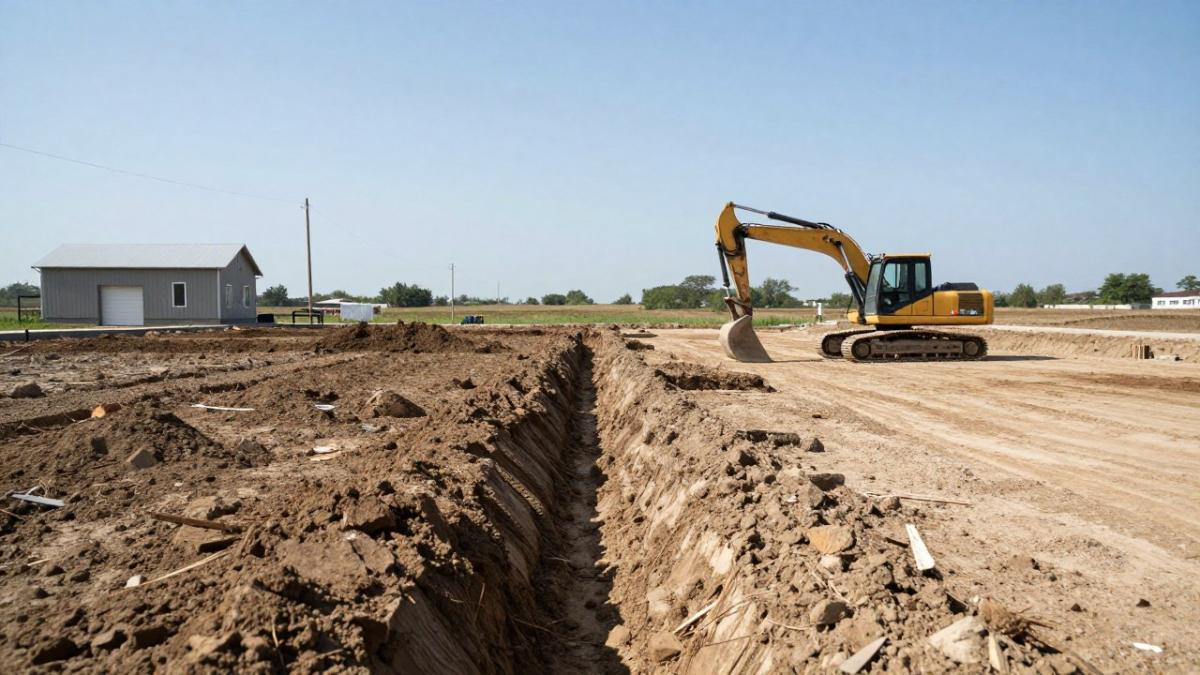
Sequencing matters as much as cost. Our breakdown of how to plan your site timeline shows the order that keeps a build on schedule.
Total Cost of Ownership: Raw vs Developed Side by Side
Raw land wins on purchase price. Developed land wins on total cost once you add infrastructure, and the gap narrows fast. The mistake buyers make is comparing listing prices instead of total cost of ownership. Here is the framework that shows the real number.
The Cost Stack, Line by Line
Total cost of ownership is the purchase price plus every cost you will pay to make the parcel usable, plus every cost you carry while you wait. Build the comparison in this order:
| Cost layer | Raw Land | Developed Land |
|---|---|---|
| Purchase price | Lower per acre | Higher per acre |
| Due diligence (survey, perc test, title, environmental review) | Almost always required | Often partially completed by the seller |
| Utility connection (power, water, sewer or septic) | Paid by you, priced by distance and terrain | Already connected or stubbed |
| Road and driveway access | May require construction or an easement | Usually in place |
| Site work (clearing, grading, pad prep) | Full scope | Often partially done |
| Permits and approvals | Full sequence, full fees | Reduced sequence |
| Financing cost | Higher rate, larger down payment, shorter term | Standard mortgage terms |
| Carrying cost during the wait | Taxes, interest, insurance, maintenance for the full timeline | Shorter timeline, lower carry |
| Resale liquidity | Smaller buyer pool | Broader buyer pool |
The table is a checklist, not an answer. The answer comes from filling in your own numbers for each row.
A Worked Scenario: When the Cheaper Parcel Costs More
Consider two parcels a buyer might compare in the same market:
- Parcel A, raw land. Lower purchase price, no utilities, no driveway, no cleared pad. The buyer pays for a survey, a perc test, power trenching to the nearest pole, a well or water connection, a septic system, clearing, grading, and a driveway, then carries taxes, insurance, and loan interest through a permit and construction timeline that may run well past a year.
- Parcel B, developed land. Higher purchase price, but utilities are at the property line, access is paved, and the pad is graded. The buyer pays for a survey and a perc test, then moves to permitting and construction on a shorter timeline with a standard mortgage.
Costs for utilities, site work, and carrying a parcel through the wait can offset a lower purchase price, so the two totals may converge. The only way to know which is cheaper for you is to fill in both columns with written quotes rather than estimates.
The Three Numbers That Decide It
Before you choose, get three figures in writing:
- A utility connection quote from the actual provider, not a rule of thumb, based on the distance from the nearest connection point to your building pad.
- A site-work bid from a contractor who has walked the parcel, covering clearing, grading, driveway, and erosion control.
- A carry-cost estimate covering taxes, insurance, and loan interest for the realistic timeline from closing to move-in.
Watch out: comparing a raw parcel’s purchase price to a developed parcel’s purchase price without those three numbers is not a comparison, it is a guess, and it usually favors the wrong lot.
Developed land can shorten the timeline, which may reduce carrying costs during the wait. Raw land, by contrast, trades certainty for savings, and whether that trade pays off depends entirely on your timeline and budget.
Is Buying Land a Good Investment for Your Situation?
Buying land can be a sound investment, but only when it matches your intended use. Raw land may appreciate and offers flexibility, yet it produces no income while you hold it and can be harder to resell. Development Resource Group lists the lack of immediate income and the need for careful research as key drawbacks. Our guide on whether a custom home build is worth the cost helps you compare the full picture before committing.
Your Due Diligence Checklist Before You Buy Any Lot
Run this checklist before signing anything, whether the lot is raw or developed:
- Confirm zoning allows a manufactured home
- Verify utility availability and connection distance
- Order a boundary and topographic survey
A survey is not optional. Our residential land survey cost review explains what the survey covers and why it protects your purchase.
Get a Custom Manufactured Home Quote for Your Lot
Whether you choose raw or developed land, the home you place on it should fit both your lot and your budget.
The lot decision is only half the build. The other half is choosing a home that fits the site, the budget, and the life you want. Patriot Homes builds customizable manufactured homes with the floor plans, finishes, and layout options to match your lot and your numbers.
Frequently Asked Questions
What are the pros and cons of buying land?
Raw land usually costs less per acre and gives you room to design the site your way, which is why many buyers start there. The tradeoffs are real: no utilities, no road access in some cases, and a longer path to a finished home. Developed land costs more upfront but shortens the build. Weigh purchase price against site work, carrying costs, and how soon you need to move in before you commit.
What are the key differences between raw land and developed land?
Raw land is undeveloped acreage with no structures, utilities, or guaranteed road access. Developed land, also called improved land, already has the infrastructure a home needs: utility connections, an access road, and often a prepared building site. That difference shows up in purchase price, financing options, and how much site work you manage after closing. A developed lot trades a higher price for fewer unknowns.
Does unimproved land mean no utilities?
Not always, but assume nothing until you verify. Unimproved land may have no utility connections at all, or utilities may run nearby without a tap to the property. Before buying, call the local utility providers and ask what service is available at the property line and what it costs to connect. If power and water are far away, connection costs can change your budget significantly.
What should you check before buying raw land?
Start with zoning and land-use restrictions, then confirm legal road access. Ask about utility availability at the property line, and get a survey so you know exactly what you are buying. Check for environmental constraints such as flood zones or protected areas, and review property taxes and carrying costs. Finally, confirm financing: land loans often carry different terms than a standard mortgage.
Is developed land easier to build on than raw land?
Yes, in most cases. A developed lot already has utilities, access, and often a graded building site, so site preparation is shorter and the timeline is more predictable. Raw land can still work well, especially if you want a specific layout or a manufactured home placed on your own acreage. Call Patriot Homes at (888) 765-1776 to talk through what your lot needs before you build.
