
Energy Efficient Manufactured Homes in Arizona
Table of Contents
- Quick Comparison: Energy Efficient Manufactured Homes in Arizona
- Patriot Homes: Customizable Efficiency With 24/7 Support
- Stillwater Dwellings: Passive Solar Luxury Modular Homes
- Champion Homes (Picacho B): Open-Concept Desert Performance
- Desert Manufactured Homes: Low-Maintenance Options for Retirees
- Irontown Modular: Fast, Factory-Built Energy Efficiency
- Pacesetter Home Centers: Custom Comfort and Climate Control
- How We Evaluated These Energy Efficient Manufactured Homes in Arizona
- Frequently Asked Questions
Last Updated: September 30, 2026
Quick Comparison: Energy Efficient Manufactured Homes in Arizona
Shopping for energy efficient manufactured homes in Arizona means balancing three costs that rarely move together: the purchase price, the monthly utility bill, and the long-term maintenance tab. Patriot Homes helps buyers navigate the math of homeownership. Homes built to modern federal construction standards hold heat out far better than the older units many shoppers toured as kids, and the gap shows up on every summer statement.
According to U.S. Department of Energy guidance on manufactured housing efficiency, today’s factory-built homes can be built to the same energy codes as site-built houses, which matters enormously when July afternoons push past 110°F.
Below is a side-by-side look at six options, followed by a closer review of each and the criteria we used to rank them.
| Option | Starting Price | Best For | Standout Feature |
|---|---|---|---|
| Patriot Homes | See pricing page | Custom layouts, 24/7 guidance | Fully customizable finishes |
| Stillwater Dwellings | Contact for pricing | Luxury passive solar design | Architect-driven modular plans |
| Champion Homes (Picacho B) | Contact for pricing | Open-concept family living | 1,324 sq. ft. layout |
| Desert Manufactured Homes | $60,000 | Retirees, low maintenance | Desert-specific exteriors |
| Irontown Modular | $80,000 | Speed of construction | Fast factory build times |
| Pacesetter Home Centers | Contact for pricing | Custom comfort packages | Climate control focus |
Patriot Homes: Customizable Efficiency With 24/7 Support
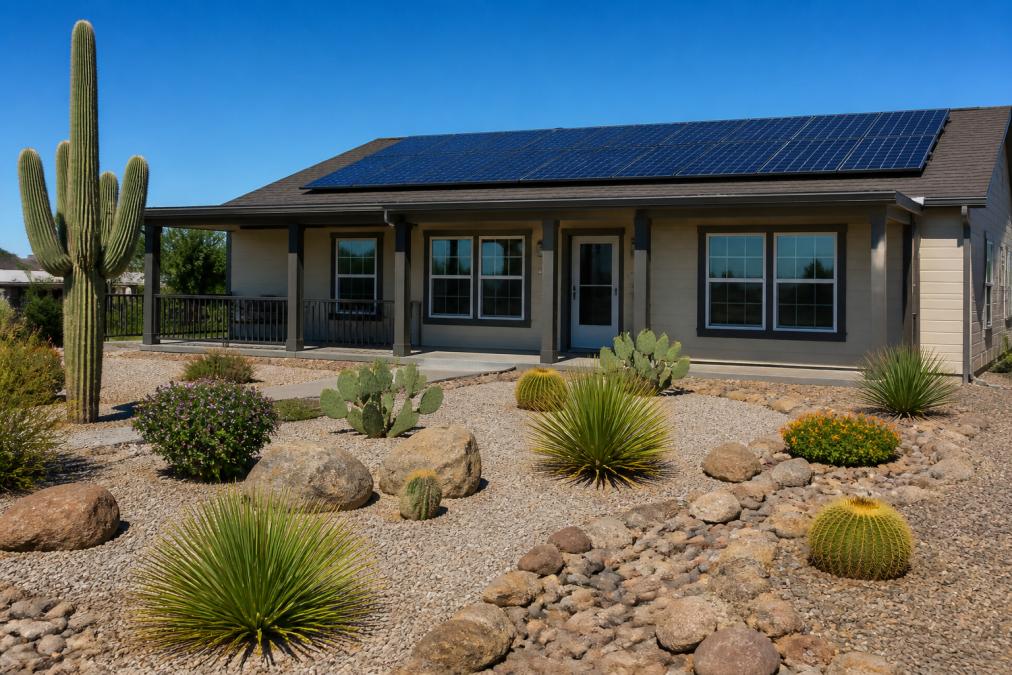
For buyers who want a say in every detail, Patriot Homes offers extensive customization. You choose the number of bedrooms and bathrooms, then work through finishes and layout preferences with a team that stays reachable around the clock.
The energy story comes down to the thermal envelope the factory delivers. A common mistake is assuming all new manufactured homes perform the same. In practice, the difference between a builder who takes envelope sealing seriously and one who does not shows up in cooling costs by August.
Customization and efficiency are not opposites in factory construction. Choosing your layout early lets the builder optimize duct placement and window orientation before the home is framed.
Pricing lives on the Patriot Homes pricing page, and the 24/7 support line is a real differentiator for first-time buyers who have questions at 9 p.m. on a Sunday.
Stillwater Dwellings: Passive Solar Luxury Modular Homes
Stillwater Dwellings sits at the high end, and it earns the spot. The company builds luxury modular homes around passive solar design, which means the structure itself manages heat gain rather than relying entirely on the HVAC system. Sustainable material sourcing rounds out the package.
Where it falls short: pricing is not published for standard models, so budgeting requires a conversation before you can compare anything. Buyers who want a modern architectural look and are comfortable with project-based quotes will find a lot to like. Buyers who need a firm number this week will not.
Champion Homes (Picacho B): Open-Concept Desert Performance
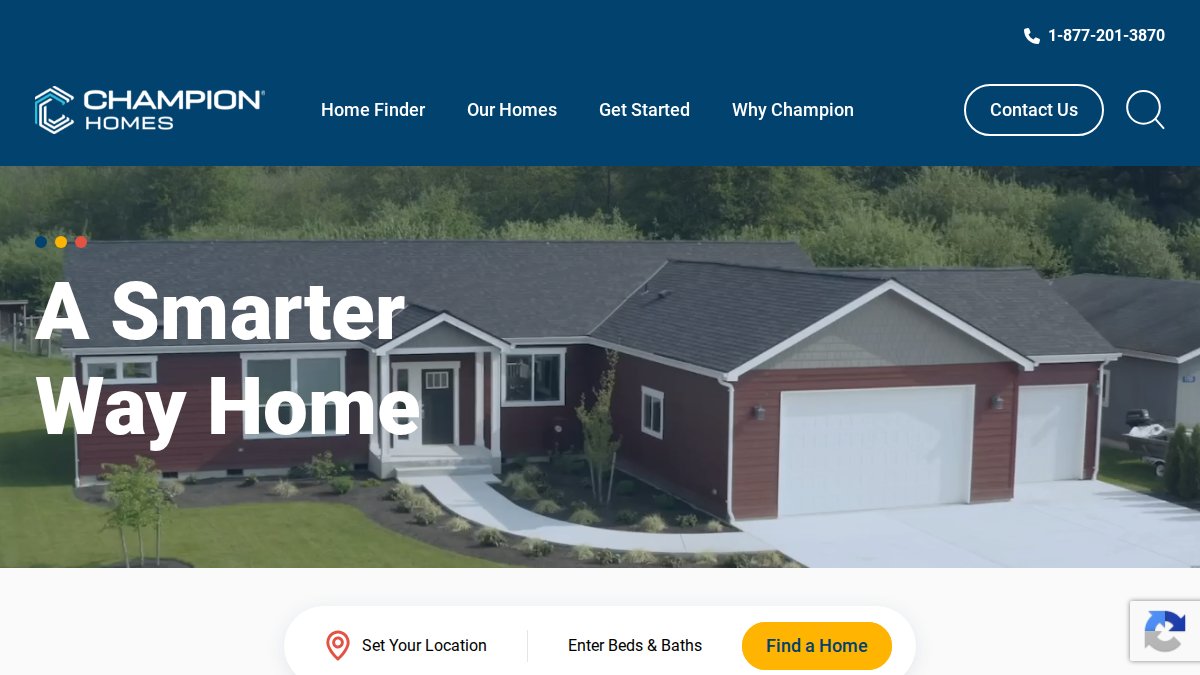
The Picacho B model from Champion Homes offers 1,324 square feet in an open-concept layout, built to modern energy-efficient construction standards. For families who want a mid-sized home with a regional climate focus, this is a sensible middle path.
What most shoppers miss is that pricing varies significantly by dealer and customization. Two buyers can walk away with very different numbers for the same floor plan. Get quotes in writing before committing, and confirm which efficiency upgrades are included versus added later.
Desert Manufactured Homes: Low-Maintenance Options for Retirees
Retirees and downsizers get a purpose-built option here. Desert Manufactured Homes focuses on low-maintenance exterior materials and floor plans designed for simpler living, with published price ranges starting at $60,000 for single and double-wide units.
The tradeoff is inventory. You are choosing from what the retailer carries rather than designing from scratch. If your priority is moving in without a renovation project, that constraint is a feature, not a bug. If you have strong opinions about finishes, look elsewhere.
What “Low-Maintenance” Actually Means in Extreme Heat
Most retailers use “low-maintenance” loosely. In a desert climate, the phrase should map to specific systems, and buyers should ask about each one before signing:
- Roof coating and reflectivity. A reflective or “cool” roof coating reduces heat gain through the ceiling assembly. Coatings degrade under intense UV, so plan on reapplication on a multi-year cycle rather than treating it as permanent.
- HVAC servicing cadence. Filters clog faster in dusty air. Most practitioners recommend checking filters monthly during cooling season and scheduling a professional coil and refrigerant check before summer, not during it.
- Exterior sealant and trim. Sun exposure dries out caulk and weatherstripping around windows, doors, and penetrations. A yearly walk-around to reseal gaps protects the thermal envelope more than any single upgrade.
- Shade and landscape. Native desert plantings and shade structures reduce radiant heat on walls and windows without irrigation demand.
- Duct inspection. In factory-built homes, duct connections at the marriage line and crossover are a common leak point. A pressure test or visual inspection after transport and setup catches problems early.
The Efficiency Question to Ask First
Before comparing finishes, ask the retailer for the home’s insulation R-values for walls, floor, and ceiling, the window U-factor and Solar Heat Gain Coefficient (SHGC), and the SEER2 rating of the installed HVAC unit. These four numbers tell you more about summer utility bills than any brochure photo. If a retailer cannot produce them, that is your answer.
U.S. Department of Energy guidance on cool roofs and reflective surfaces
Low-maintenance in a desert climate is a maintenance schedule, not a material. Buyers who plan for annual roof, sealant, and HVAC checks get far more out of an efficient home than buyers who assume “low-maintenance” means “no maintenance.”
Irontown Modular: Fast, Factory-Built Energy Efficiency
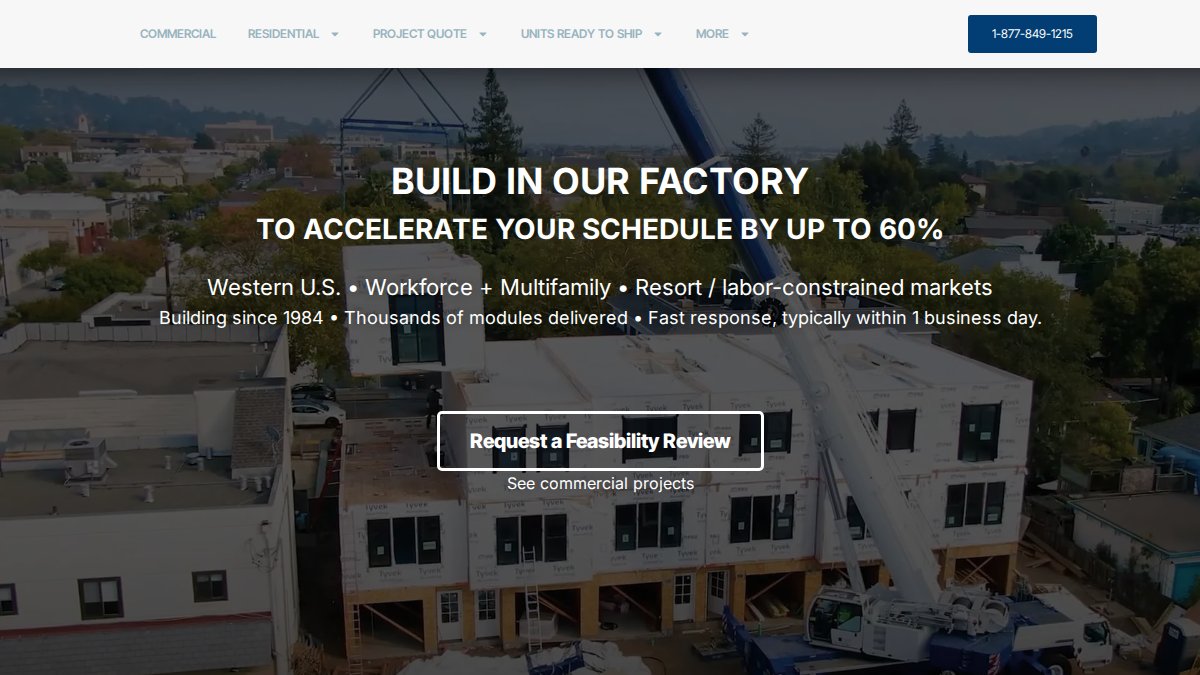
Speed is the pitch, and it holds up. Irontown Modular builds energy-efficient homes in a factory setting, which compresses the construction timeline compared with site-built work. The company offers a free initial consultation and a starting price around $80,000.
Read the fine print, though.
Pacesetter Home Centers: Custom Comfort and Climate Control
Comfort is the organizing principle at Pacesetter Home Centers. The builder emphasizes customizable floor plans and enhanced efficiency packages, with a clear focus on interior climate control. In a desert climate, that focus matters more than curb appeal.
How We Evaluated These Energy Efficient Manufactured Homes in Arizona
Every home on this list was judged against four criteria: insulation R-value and thermal envelope quality, window performance and UV protection, HVAC efficiency for desert conditions, and published pricing transparency.
The Two Numbers Most Buyers Forget: Incentives and Financing
Efficiency upgrades only pencil out when you account for what you get back and how you pay for them. Two levers matter most, and neither shows up in a typical dealer brochure.
Incentive programs, tax credit amounts, and lender guidelines change frequently. Verify current terms with the IRS, your utility, and a HUD-approved housing counselor or lender before making purchase decisions based on projected savings.
A Realistic Way to Compare Two Homes
Ask each builder for the same four data points, R-values, window U-factor and SHGC, HVAC SEER2, and whether the unit meets Energy Star, then ask your lender what an EEM would look like on each. A home that costs a few thousand dollars more up front but qualifies for a rebate and a lower effective mortgage payment often wins on total cost of ownership.
Frequently Asked Questions
Which manufactured homes are the most energy efficient?
The most energy efficient manufactured homes carry Energy Star certification, which requires a thermal envelope that reduces heat gain, high-performance windows with UV protection, and HVAC efficiency that meets or exceeds federal standards. In Arizona, look for models with insulation R-value of at least R-22 in walls and R-30 in the roof. Brands like Patriot Homes offer customizable packages that can include these upgrades, helping cut cooling costs in desert climates.
How much can you save on utility bills with an energy-efficient manufactured home?
Savings vary by model and usage, but Energy Star certified homes typically use 10-20% less energy than standard manufactured homes. In Arizona’s desert climate, where cooling costs can dominate summer bills, a home with a tight thermal envelope and efficient HVAC system may reduce monthly cooling expenses by 15-25%. Actual savings depend on your home’s size, insulation, window quality, and thermostat habits.
What insulation standards should I look for in a manufactured home?
Focus on insulation R-value, which measures resistance to heat flow. For Arizona’s desert climate, aim for walls rated R-22 or higher, roofs at R-30 or higher, and floors at R-22. Also check for a sealed thermal envelope, low-E windows with UV protection, and ductwork located within the conditioned space. These features reduce heat gain and help your HVAC system run less, lowering energy bills.
Are manufactured homes more energy efficient than site-built homes?
Not always, but modern manufactured homes built to Energy Star standards can match or exceed site-built efficiency. Factory construction allows for precision engineering and climate-controlled assembly, which reduces air leaks. However, site-built homes can be customized with higher insulation. The key is comparing specific features like insulation R-value, window quality, and HVAC efficiency rather than assuming one type is always better.
How much does a 2000 sq ft manufactured home cost in Arizona?
Pricing for a 2000 sq ft manufactured home depends on customization, location, and site preparation. Base prices from retailers like Desert Manufactured Homes start around $60,000 for smaller units, while larger, highly customized models can exceed $150,000. For a 2000 sq ft home, expect a range of $80,000 to $180,000 before land and installation. Check Patriot Homes’ pricing page for current quotes.
The hard part of buying in this market is not finding a home. It is finding one that stays affordable after the first summer. Patriot Homes exists to close that gap, pairing customizable layouts and finish choices with pricing built to respect your budget, plus a support team available 24/7 to answer questions before and after the sale. Get started with Patriot Homes and build a home that fits both your life and your monthly costs.