
Tiny Homes vs Manufactured Homes: Which Fits Your Budget
Last Updated: November 9, 2026
Quick Summary
Tiny homes cost less up front and can be moved, while manufactured homes offer more living space and stronger financing and resale options. Your household size, plans to relocate, and the land you will place the home on should decide the choice. Total cost, including site preparation, foundation, utilities and financing, matters more than the sticker price.
- Tiny homes usually have a lower initial price tag than manufactured homes.
- Manufactured homes generally offer more living area for families and remote workers.
- Tiny homes on wheels can be towed to a new location, unlike permanent manufactured homes.
- Personal property classification usually means a chattel loan with higher rates and shorter terms.
- Check local zoning and minimum dwelling size before buying either type of home.
Table of Contents
- Tiny Homes vs Manufactured Homes: The Core Differences
- Size, Layout and Floor Plan Options
- Purchase Price, Total Cost of Ownership and Financing
- Construction Standards, Durability and Resale Value
- Land, Zoning and Placement in Sacramento and the Western US
- Choosing the Right Option for Your Household
- Request Your Quote With Patriot Homes
- Frequently Asked Questions
Tiny Homes vs Manufactured Homes: The Core Differences
Choosing between a tiny home and a manufactured home is one of the biggest budget decisions most buyers make. Patriot Homes helps families, retirees and first-time buyers across Arizona, California, Idaho and Nevada compare both options side by side. Why pay more when you can have quality, style, and affordability all in one? Our 24/7 team can walk you through customization options right now. Call us at (888) 765-1776 or request a quote from our website.
The two terms get mixed up constantly, so start with the basics. A tiny home is usually a compact dwelling that may sit on wheels or on a foundation. A manufactured home is built in a factory to the federal HUD code and moved to a site, where it sits on a permanent foundation.
Our view is simple: the right choice depends on how you plan to live, not on which option sounds more trendy. Tiny homes offer mobility and a lower entry cost. Manufactured homes offer more space and living area.
Size, Layout and Floor Plan Options
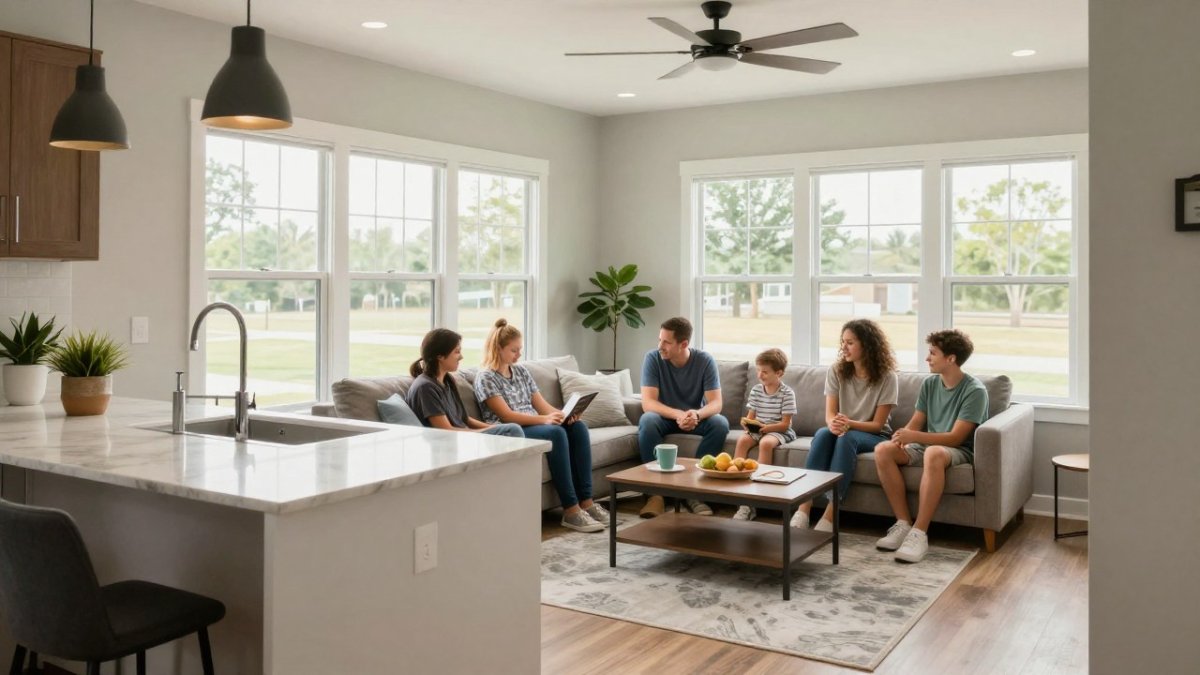
Floor plan is where the two options separate most clearly. We offer manufactured homes in many layouts, from 1-bedroom ADUs to spacious 4-bedroom models, so you can match the home to your household rather than squeezing your household into the home.
Where Tiny Homes Win on Mobility
A tiny home on a trailer frame can be towed to a new location, which gives owners flexibility that a permanent manufactured home cannot match. Retirees who want to relocate or buyers who expect to move often value this. Keep in mind that moving any home requires a licensed transport company and proper permits, and costs add up quickly.
Where Manufactured Homes Win on Space
Manufactured homes provide more room for families and anyone who works from home. We can also customize the layout and finishes to fit how you live.
Purchase Price, Total Cost of Ownership and Financing
Sticker price is only part of the picture. A realistic comparison includes the home, land, site preparation, delivery, foundation, utility connections, insurance, property taxes, financing costs and ongoing maintenance. Buyers who compare only the home price often underestimate the total by a wide margin, and the gap between a tiny home and a manufactured home shows up mostly in these secondary costs.
The Total Cost of Ownership Checklist
Use this list to build an apples-to-apples budget for either option:
- Home price, the structure itself, including delivery to the site.
- Land, purchase price if you are buying a lot, or lot rent if you are leasing space in a community.
- Site preparation, grading, clearing, driveway, and access for the delivery truck.
- Foundation, a permanent foundation for a manufactured home, or a pad, piers, or trailer chassis for a tiny home.
- Delivery and setup, transport permits, escort vehicles, crane or towing charges, and connection labor.
- Utility hookups, water, sewer or septic, electrical service, and gas, plus any trenching.
- Insurance, manufactured home policies and tiny-home policies are priced differently, and a home on wheels may need a different policy form than a home on a foundation.
- Property taxes, depends on whether the home is classified as real property or personal property.
- Financing costs, interest rate, term, and down payment vary sharply by loan type.
- Ongoing maintenance, roofing, siding, seals, and systems, plus any lot rent increases if you lease land.
Tiny homes often have a lower initial price tag, while manufactured homes generally offer more living space. We offer a wide range of floor plans, from 1-bedroom ADUs to spacious 4-bedroom models, so you can match the size to your household. Why pay more when you can have quality, style, and affordability all in one?
How Legal Classification Drives Financing
The single biggest financing variable is whether the home is treated as personal property or real property.
- Personal property, a manufactured home titled like a vehicle, or a tiny home on wheels, is generally financed with a chattel loan. These loans usually carry higher interest rates and shorter terms than a conventional mortgage.
- Real property, a manufactured home placed on land you own and affixed to a permanent foundation can often be classified as real property. That opens the door to conventional mortgage products, which typically offer lower rates and longer terms.
Ask about financing early so you know your real budget before you fall in love with a floor plan.
Watch out: a builder who quotes a home price without confirming how the home will be titled and financed can leave you with a structure you cannot easily borrow against or insure. Our page on how to finance a custom home explains each option step by step.
Our 24/7 team can walk you through pricing matrices and explain what your financing options look like for each floor plan. Call (888) 765-1776 or request a quote from our website.
The table below summarises the main cost categories and financing points covered in this section.
| Item | Key point | Note |
|---|---|---|
| Home price | Structure, including delivery to site | Compare totals, not sticker price |
| Site preparation | Grading, clearing, driveway, delivery access | Often overlooked in budgets |
| Foundation | Permanent for manufactured; pad or chassis for tiny | Depends on placement |
| Utility hookups | Water, sewer or septic, electrical, gas | May need trenching |
| Personal property | Chattel loan, higher rates, shorter terms | Typical for titled-as-vehicle homes |
| Real property | Conventional mortgage, lower rates, longer terms | Requires foundation and owned land |
| Ongoing maintenance | Roofing, siding, seals, systems, lot rent | Affects long-term cost |
Construction Standards, Durability and Resale Value
Resale value is harder to predict. Our advice: treat resale as a question of land and foundation, not just the home itself.
Land, Zoning and Placement in Sacramento and the Western US
Where you put the home matters as much as which home you choose. Zoning rules, minimum lot sizes, setback requirements and permit processes vary by county and city. A design that works in one part of California may face restrictions a few miles away, and the same is true across the communities we serve.
A Practical Placement Checklist
Before you buy, work through these questions with your local planning department:
- Is the home allowed as a primary residence? Some jurisdictions permit manufactured homes on individual lots but restrict tiny homes on wheels to RV parks or temporary use.
- What is the minimum dwelling size? Many local codes set a minimum square footage for a permanent dwelling, which can rule out very small tiny homes.
- What foundation is required? Tiny homes on wheels usually do not meet permanent-dwelling foundation rules.
- What are the setback and lot coverage limits? These determine where on the parcel the home can sit and how much of the lot can be built on.
- Are accessory dwelling unit rules relevant? If you are placing a small home in a backyard, ADU ordinances may apply instead of standard single-family rules.
- What utility connections are required? Confirm water, sewer or septic, and electrical service requirements, plus whether a separate meter is needed.
- Are there transport and permit limits? Oversize load permits, route restrictions, and escort requirements apply to moving either type of home.
Why the Two Options Face Different Rules
Many buyers in the Sacramento area and across the Western US find that placement rules shape their decision more than the home itself. A land survey is often one of the first steps, so review our guide on the best land survey types for home placement before you commit to a lot.
If you are still deciding between a developed lot and raw land, our comparison of developed vs raw land will help you weigh the cost and timeline. For buyers focused on the Sacramento area, our guide to manufactured homes in Sacramento covers local considerations in more detail.
We proudly serve local homeowners with custom manufactured and modular options across the region, and our team can help you think through placement questions before you commit. Call (888) 765-1776 for immediate assistance or request a quote from our website.
Choosing the Right Option for Your Household
Use this quick framework to narrow your choice:
- Choose a tiny home if you live alone or as a couple, value mobility, and want the lowest possible entry cost.
- Choose a manufactured home if you have a family, work from home, plan to stay put, or want stronger financing and resale options.
- Choose a custom manufactured home if you want a permanent home with specific layouts and finishes at a competitive price.
Retirees who want low-maintenance housing often land on a manufactured home with a single-level layout. You can read a complete buying guide for manufactured homes in Sacramento to compare local options. First-time buyers on a tight budget may find a smaller manufactured home gives them a stable path into ownership. Landowners can use their own parcel for a home they design around their needs.
Our team is available 24/7 to help you sort through the options. You can also find a custom manufactured home builder serving the Western US when you are ready to act. Call (888) 765-1776 to talk through your budget and household needs.
Request Your Quote With Patriot Homes
Ready to see what fits your budget? Patriot Homes offers customizable manufactured homes with many floor plans, finishes and options. Call our 24/7 team at (888) 765-1776 for pricing matrices, customization options and immediate help, or request a quote directly from our website. Why pay more when you can have quality, style, and affordability all in one?
Frequently Asked Questions
Which is a better investment, a tiny home or a manufactured home?
For most buyers who plan to stay long term, a manufactured home is usually the stronger financial choice. Tiny homes can hold value well when they sit on owned land and are built to a high standard, but resale pools are smaller. Patriot Homes can walk you through floor plans and pricing options by phone at (888) 765-1776.
What are the primary differences between a tiny home and a manufactured home?
The biggest differences are size, construction standard and mobility. Tiny homes can be moved, while manufactured homes are typically placed on a foundation once installed. Both can be customized. Call (888) 765-1776 to compare floor plans side by side.
Are manufactured homes a better long-term investment than tiny homes?
Their value depends heavily on whether the home is placed on owned land, how well it is maintained and local market conditions. Tiny homes can be a strong choice for buyers who value mobility and low upkeep. Our team at Patriot Homes is available 24/7 at (888) 765-1776 to discuss long-term value for your situation.
